

Kirjahaku
Etsi kirjoja tekijän nimen, kirjan nimen tai ISBN:n perusteella.
1000 tulosta hakusanalla Solomon Spaulding

Following the disappearance of his brother, Sir Henry Curtis tracks down Allan Quartermain, a trader and hunter who knows Africa as well as any white man. Curtis's brother has taken an expedition into the uncharted interior of Africa in search of the fabled diamond mines of King Solomon, but has not returned. Quartermain possesses an ancient map drawn in blood purporting to show the way to the mines and agrees to mount a rescue in return for a share of the bounty. The expedition journeys over perilous mountains, through scorching deserts and tribal war, but upon reaching the mines Quartermain must face his toughest challenge: the evil and clever Gagaoola. Haggard's Quatermain adventures have been used as the template for the Hollywood movies about Indiana Jones. Sir Henry Rider Haggard, KBE was an English writer of adventure novels set in exotic locations, predominantly Africa, and a founder of the Lost World literary genre. He was also involved in agricultural reform around the British Empire. His stories, situated at the lighter end of Victorian literature, continue to be popular and influential.


King Solomon's Mines (1885) is a popular novel by the English Victorian adventure writer and fabulist Sir H. Rider Haggard. It tells of a search of an unexplored region of Africa by a group of adventurers led by Allan Quatermain for the missing brother of one of the party. It is the first English adventure novel set in Africa, and is considered to be the genesis of the Lost World literary genre.

King Solomon Lib/E: The Temptations of Money, Sex, and Power
Philip Graham Ryken
Blackstone Publishing
2019
cd
King Solomon had all the fame and fortune that any man could want. He was the world's wisest and wealthiest king. And yet, tragically, he threw it all away for the love of money, the pleasures of sex, and the powers of an earthly kingdom.In studying the life of Solomon, we see both the true greatness and the tragic failure of our own humanity-from godly devotion to self-serving excess. Even in the midst of our best intentions, we are all prone to succumb to the same temptations of money, sex, and power. And if Solomon's incredible wisdom could not prevent him from such tragic mistakes, then how are we to triumph over the same temptations?Philip Graham Ryken shows us how, by the grace of God, to prevent those downfalls and to seek God's glory amid earthly temptations through this rich, Christ-centered study of the life of Solomon.

King Solomon: The Temptations of Money, Sex, and Power
Philip Graham Ryken
Blackstone Publishing
2019
cd
King Solomon had all the fame and fortune that any man could want. He was the world's wisest and wealthiest king. And yet, tragically, he threw it all away for the love of money, the pleasures of sex, and the powers of an earthly kingdom.In studying the life of Solomon, we see both the true greatness and the tragic failure of our own humanity-from godly devotion to self-serving excess. Even in the midst of our best intentions, we are all prone to succumb to the same temptations of money, sex, and power. And if Solomon's incredible wisdom could not prevent him from such tragic mistakes, then how are we to triumph over the same temptations?Philip Graham Ryken shows us how, by the grace of God, to prevent those downfalls and to seek God's glory amid earthly temptations through this rich, Christ-centered study of the life of Solomon.
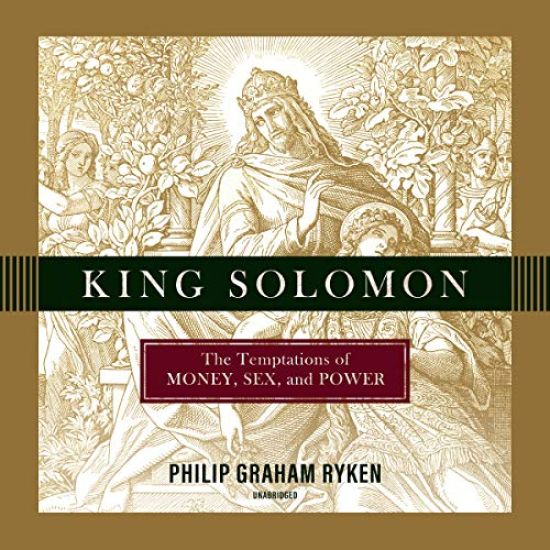
King Solomon: The Temptations of Money, Sex, and Power
Philip Graham Ryken
Blackstone Publishing
2019
mp3 cd-levyllä
King Solomon had all the fame and fortune that any man could want. He was the world's wisest and wealthiest king. And yet, tragically, he threw it all away for the love of money, the pleasures of sex, and the powers of an earthly kingdom.In studying the life of Solomon, we see both the true greatness and the tragic failure of our own humanity-from godly devotion to self-serving excess. Even in the midst of our best intentions, we are all prone to succumb to the same temptations of money, sex, and power. And if Solomon's incredible wisdom could not prevent him from such tragic mistakes, then how are we to triumph over the same temptations?Philip Graham Ryken shows us how, by the grace of God, to prevent those downfalls and to seek God's glory amid earthly temptations through this rich, Christ-centered study of the life of Solomon.

H. Rider Haggard's King Solomon's Mines tells of a group of adventurers journeying into unexplored Africa in order to find the missing brother of one of the party. The book became an immediate bestseller after publication in 1885. At the time large parts of Africa remained unexplored by Europeans and the book captured the imagination of the public.
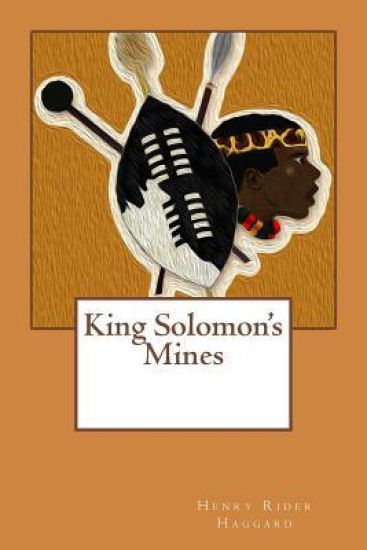
King Solomon's Mines is a popular novel by the Victorian adventure writer and fabulist, Sir H. Rider Haggard. It tells of a quest into an unexplored region of Africa by a group of adventurers led by Allan Quatermain in search of the missing brother of one of the party. It is significant as the first English fictional adventure novel set in Africa, and is considered the genesis of the Lost World literary genre.
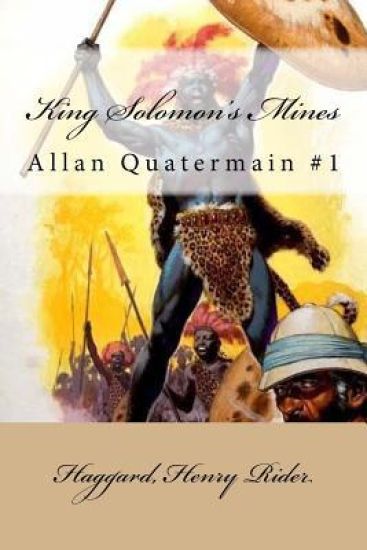
King Solomon's Mines: Allan Quatermain #1
Haggard Henry Rider
Createspace Independent Publishing Platform
2018
nidottu
King Solomon's Mines (1885) is a popular novel by the English Victorian adventure writer and fabulist Sir H. Rider Haggard. It tells of a search of an unexplored region of Africa by a group of adventurers led by Allan Quatermain for the missing brother of one of the party. It is the first English adventure novel set in Africa, and is considered to be the genesis of the Lost World literary genre.
DEDICATION This faithful but unpretending record of a remarkable adventure is hereby respectfully dedicated by the narrator, ALLAN QUATERMAIN, to all the big and little boys who read it. AUTHOR'S NOTE The author ventures to take this opportunity to thank his readers for the kind reception they have accorded to the successive editions of this tale during the last twelve years. He hopes that in its present form it will fall into the hands of an even wider public, and that in years to come it may continue to afford amusement to those who are still young enough at heart to love a story of treasure, war, and wild adventure. Ditchingham, 11 March, 1898. POST SCRIPTUM Now, in 1907, on the occasion of the issue of this edition, I can only add how glad I am that my romance should continue to please so many readers.

King Solomon's Mines: Allan Quatermain #1
Henry Rider Haggard
Createspace Independent Publishing Platform
2018
nidottu
King Solomon's Mines (1885) is a popular novel by the English Victorian adventure writer and fabulist Sir H. Rider Haggard. It tells of a search of an unexplored region of Africa by a group of adventurers led by Allan Quatermain for the missing brother of one of the party. It is the first English adventure novel set in Africa, and is considered to be the genesis of the Lost World literary genre.
King Solomon's Mines tells a story of expedition and search in the unexplored region of Africa by a group of adventurers led by Allan Quatermain for the missing brother of one of the party. Haggard knew Africa well, having travelled deep within the continent during the Anglo-Zulu War and the First Boer War, where he had been impressed by South Africa's vast mineral wealth and by the ruins of ancient lost cities being uncovered, such as Great Zimbabwe.

Septuagint - Solomon
Digital Ink Productions
2024
pokkari
The final version of the Septuagint was published in 132 BC, and included the books of Proverbs, Ecclesiastes, Song of Songs, and Wisdom of Solomon within the Wisdom Section of the Septuagint, while the Psalms of Solomon were added as an appendix later, sometime in the 1st century BC. It appears to have been translated between 200 and 140 BC from Aramaic translations.The book of Proverbs is generally attributed to King Solomon, who is explicitly referred to as the author of some of the proverbs. A number of proverbs are known to have been copied from older collections of proverbs, most notably the Wisdom of Amenemope, which was apparently written by Amenemope son of Kanakht sometime before Pharaoh Akhenaten, circa 1350 BC.The book of Ecclesiastes is generally attributed to King Solomon, however, he is not mentioned anywhere by name. The current view of the academic community is to regard the text as a Persian or Greek era text, something that dates to long after the time of Solomon.The Song of Songs appears to be love poetry, exchanged between Solomon and one of his wives, however, is not clear who exactly the wife was. The wife describes herself as black, suggesting a Kushite woman. She also refers to herself as a Shulammitess, and makes clear she was not from Jerusalem. The town of Shunaam was located near the Jezreel Valley north of Mount Gilboa, in the tribal lands of Issachar at the time. It was also listed as one of the towns conquered by the Egyptian Pharaoh Thutmose III circa 1450 BC, and then again by Pharaoh Shoshenk I circa 925 BC, meaning there was a significant town was there for over 500 years. It was the hometown of King David's last concubine, the 12-year-old Abishag, who Adonijah attempted to marry after David's death, which suggests the author was Abishag the Shulamite.The Wisdom of Solomon was added to the Septuagint sometime between 250 and 132 BC, and while it was traditionally attributed to King Solomon, this book was never copied by the Masoretes, and no fragments of it have been found among the Dead Sea Scrolls, indicating it was not used much in Judea, if at all. A Syriac version of it is included in the Peshitta, the Syrian Orthodox Bible, which the Syrian Orthodox Church has always claimed was transcribed from the Aramaic text that the Jews translated into Hebrew, however, most modern scholars believe the Peshitta was a Syriac translation of the Septuagint.Like the Wisdom of Solomon, the Psalms of Solomon were not copied by the Masoretes, and no fragments of it have been found among the Dead Sea Scrolls, indicating it was not used much in Judea, if at all. There is also a Syriac version of it in the Peshitta, which the Syrian Orthodox Church has always claimed was transcribed from an Aramaic copy, however, most modern scholars believe the Peshitta was a Syriac translation of the Septuagint.The origin of the book is unclear and widely debated. The name Solomon is used in this translation, as it is the name used in the Codex Alexandrinus, however, it should be noted that about half the manuscripts use the name Salom n (Σαλομών) or Sal m n (Σαλωμών) instead of Solom n (Σολομῶν) or Sol m n (Σολωμών). This could be a transliteration error, however, the name Solomon must have been well known by the time these Psalms were translated into Greek, so the consistent use of the alternate spelling appears to be intentional. It is possible that the translators and scribes who used the alternate spelling did so in the belief that the author of these Psalms was named Salomon, as he certainly could not have been King Solomon.

Septuagint - Solomon
Digital Ink Productions
2024
sidottu
The final version of the Septuagint was published in 132 BC, and included the books of Proverbs, Ecclesiastes, Song of Songs, and Wisdom of Solomon within the Wisdom Section of the Septuagint, while the Psalms of Solomon were added as an appendix later, sometime in the 1st century BC. It appears to have been translated between 200 and 140 BC from Aramaic translations.The book of Proverbs is generally attributed to King Solomon, who is explicitly referred to as the author of some of the proverbs. A number of proverbs are known to have been copied from older collections of proverbs, most notably the Wisdom of Amenemope, which was apparently written by Amenemope son of Kanakht sometime before Pharaoh Akhenaten, circa 1350 BC.The book of Ecclesiastes is generally attributed to King Solomon, however, he is not mentioned anywhere by name. The current view of the academic community is to regard the text as a Persian or Greek era text, something that dates to long after the time of Solomon.The Song of Songs appears to be love poetry, exchanged between Solomon and one of his wives, however, is not clear who exactly the wife was. The wife describes herself as black, suggesting a Kushite woman. She also refers to herself as a Shulammitess, and makes clear she was not from Jerusalem. The town of Shunaam was located near the Jezreel Valley north of Mount Gilboa, in the tribal lands of Issachar at the time. It was also listed as one of the towns conquered by the Egyptian Pharaoh Thutmose III circa 1450 BC, and then again by Pharaoh Shoshenk I circa 925 BC, meaning there was a significant town was there for over 500 years. It was the hometown of King David's last concubine, the 12-year-old Abishag, who Adonijah attempted to marry after David's death, which suggests the author was Abishag the Shulamite.The Wisdom of Solomon was added to the Septuagint sometime between 250 and 132 BC, and while it was traditionally attributed to King Solomon, this book was never copied by the Masoretes, and no fragments of it have been found among the Dead Sea Scrolls, indicating it was not used much in Judea, if at all. A Syriac version of it is included in the Peshitta, the Syrian Orthodox Bible, which the Syrian Orthodox Church has always claimed was transcribed from the Aramaic text that the Jews translated into Hebrew, however, most modern scholars believe the Peshitta was a Syriac translation of the Septuagint.Like the Wisdom of Solomon, the Psalms of Solomon were not copied by the Masoretes, and no fragments of it have been found among the Dead Sea Scrolls, indicating it was not used much in Judea, if at all. There is also a Syriac version of it in the Peshitta, which the Syrian Orthodox Church has always claimed was transcribed from an Aramaic copy, however, most modern scholars believe the Peshitta was a Syriac translation of the Septuagint.The origin of the book is unclear and widely debated. The name Solomon is used in this translation, as it is the name used in the Codex Alexandrinus, however, it should be noted that about half the manuscripts use the name Salom n (Σαλομών) or Sal m n (Σαλωμών) instead of Solom n (Σολομῶν) or Sol m n (Σολωμών). This could be a transliteration error, however, the name Solomon must have been well known by the time these Psalms were translated into Greek, so the consistent use of the alternate spelling appears to be intentional. It is possible that the translators and scribes who used the alternate spelling did so in the belief that the author of these Psalms was named Salomon, as he certainly could not have been King Solomon.
King Solomon's Mines (Collector's Edition) (Laminated Hardback with Jacket)
H Rider Haggard
Revive Classics
2024
sidottu
Collector's Edition Laminated Hardback with Jacket Hidden in the heart of Africa lies a secret so tantalizing it lures adventurers into a world of unimaginable danger and ancient mystery. Allan Quatermain, a seasoned hunter with nothing to lose, joins a desperate quest to uncover the legendary diamond mines of King Solomon. Through scorching deserts and shadowy mountains, the group faces betrayal, deadly traps, and an eerie prophecy that haunts their journey. Every step draws them closer to riches-or ruin-in this pulse-pounding tale of courage and survival.As one of the first adventure novels set in Africa, King Solomon's Mines by H. Rider Haggard revolutionized popular fiction and inspired the "lost world" genre. Published in 1885, it captivated Victorian readers with its blend of thrilling exploration, vivid landscapes, and ancient mysteries. The book not only influenced countless authors and films but also reflected colonial attitudes of its time, sparking conversations about imperialism and cultural representation. Its enduring legacy lies in its ability to ignite the imagination, paving the way for generations of adventure storytelling.

In the sun-drenched tapestry of literary adventure, few works resonate with the vibrancy and allure as H. Rider Haggard's magnum opus, "King Solomon's Mines." Crafted with the precision of a master storyteller, this seminal novel beckons readers into a world where the uncharted heart of Africa becomes the crucible for a tale that blends the heady concoction of treasure hunting, perilous quests, and the mysteries of a bygone era.As the sun ascends over the sprawling savannah, casting its golden hues upon the landscape, the reader is transported into the rugged terrain of Kukuanaland, an unexplored realm teeming with secrets and dangers. Haggard's pen, akin to a seasoned explorer's compass, navigates through the lush descriptions of untamed wilderness, where the air is redolent with the scent of exotic flora and the symphony of indigenous creatures creates an orchestral backdrop to the unfolding drama.At the narrative epicenter stands Allan Quatermain, the archetypal adventurer with a visage etched by the scars of countless escapades. His journey, spurred by the promise of unimaginable wealth hidden within the eponymous mines, unfolds as a riveting odyssey through landscapes both beautiful and treacherous. The reader becomes a companion to Quatermain's party - a motley crew of characters, each harboring their own motivations and fears, whose destinies intertwine against the backdrop of this African Eden.The eponymous mines themselves emerge as a tantalizing enigma, shrouded in the mystique of ancient legends and guarded by the specter of an ageless civilization. Haggard's meticulous prose mines the depths of imagination, carving caverns of wonder and intrigue within the reader's mind. The mines are not merely a destination; they are a metaphorical crucible, where the characters' mettle is tested and their fates sealed amidst the glittering allure of untold riches.As the narrative unfurls, Haggard's literary brush paints a chiaroscuro of moral dilemmas and existential quandaries. The characters grapple not only with external adversaries but with the shadows of their own souls, adding layers of psychological complexity to the overarching adventure. Quatermain, with his world-weary wisdom, becomes more than a mere protagonist; he embodies the spirit of human resilience, confronting mortality and the fragility of existence in the face of ancient mysteries.Haggard's keen observations of the African landscape and its indigenous peoples, though tinged with the biases of his era, also serve as a time capsule, capturing the ethos of an age when the continent was perceived through the lens of imperialistic wonder. The clash of civilizations, the juxtaposition of ancient traditions and Western ambition, becomes a subtext that invites readers to grapple with the complexities of cultural encounters.In "King Solomon's Mines," Haggard weaves a narrative tapestry that transcends the boundaries of time, beckoning readers to embark on an expedition of the mind. The prose, like a compass needle pointing towards uncharted realms, invites exploration not only of the African wilderness but of the human spirit itself. As the pages turn, and the echoes of distant drums reverberate through the literary savannah, the allure of King Solomon's Mines remains an indelible testament to the enduring power of adventure and the inexhaustible allure of the unknown.
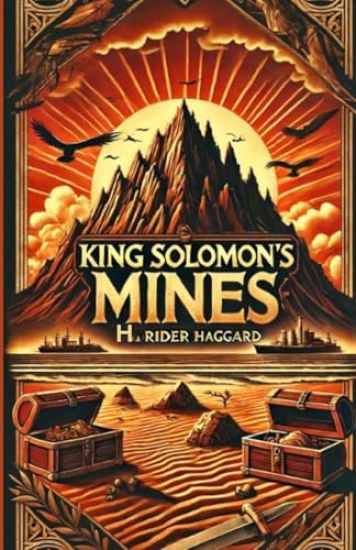
Illustrated Edition containing Illustrations, Summary, Author Biography, and Characters List"King Solomon's Mines" is a thrilling adventure novel written by H. Rider Haggard, first published in 1885. The story follows the daring expedition of Allan Quatermain, a seasoned hunter, as he leads a group of explorers in search of the fabled treasure hidden within the lost kingdom of King Solomon. Set against the backdrop of the African wilderness, the tale is rich with suspense, danger, and exotic landscapes, capturing the imagination of readers with its vivid descriptions and action-packed plot.As Quatermain and his companions venture into uncharted territories, they encounter perilous challenges, including treacherous terrain, hostile tribes, and wild animals. Along the way, they also uncover a mysterious and ancient civilization, bringing them closer to the long-lost riches of King Solomon.This illustrated edition enhances the reader's experience, offering captivating visuals that bring the narrative to life. Along with the gripping story, the book features a detailed summary, an insightful biography of the author H. Rider Haggard, and a comprehensive list of the key characters, providing valuable context for both new readers and long-time fans of the classic adventure genre.Prepare to embark on an unforgettable journey into the heart of Africa, where adventure and mystery await at every turn in "King Solomon's Mines."