Kirjahaku
Etsi kirjoja tekijän nimen, kirjan nimen tai ISBN:n perusteella.
1000 tulosta hakusanalla Stephen Drake

Stephen King
Salem Press Inc
2010
sidottu
Stephen King has been terrorizing America ever since Carrie was published in 1974. For nearly forty years, he has fed our imaginations with a panoply of spooks and monsters, from telekinetic teenagers, vampires, and malevolent clowns to space aliens, crazed fans, haunted hotels, and our own psyches. Moreover, he is one of the country's most commercially successful writers: His books regularly shoot to the tops of best-seller lists, and in 2009 alone he earned an estimated $30 million. Yet for all of King's popular success, critics have long been hesitant to welcome him into the pantheon of American literature. Though the National Book Foundation awarded King its Medal for Distinguished Contribution to American Letters in 2003, critics such as Harold Bloom have continued to dismiss him as just another catalyst in "the shocking process of dumbing down our cultural life."Edited and with an introduction by Gary Hoppenstand, Professor of American Cultures at Michigan State University, this volume in the Critical Insights series brings together a variety of perspectives on King's contribution to American literature and popular culture. Hoppenstand's introduction situates King within the horror genre and American popular and literary fiction, and Nathaniel Rich of The Paris Review offers a writer's appreciation of King's fictive powers.A brief biography acquaints readers with the essential details of King's life, and a quartet of new essays helps them build a framework for in-depth study. Amy Palko describes how King has attempted to straddle the gap between popular fiction and serious literature, and Philip L. Simpson reviews King's popular and critical reception. Dominick Grace examines the metafictional elements of three King works, and Matthew J. Bolton demonstrates how Robert Browning and T. S. Eliot were sources of inspiration for King's Dark Tower series.Continuing the discussion is a selection of essays from the growing body of King criticism. Horror novelist Clive Barker meditates on King's imaginative abilities and his relation to the horror genre, and Michael R. Collings surveys King's fortunes among book reviewers, academics, and his peers and readers. Douglas E. Winter explores the tensions between fantasy and reality across King's work, and Heidi Strengel analyzes how American culture has shaped King's body of work. Through a series of close readings, Samuel Schuman makes a case for King's artistry, and Jonathan P. Davis turns his attention to King's particular brand of morality. Tony Magistrale links King to the American gothic and romance traditions, and James Egan offers an examination of King's dystopian attitude toward science and technology. Patrick McAleer analyzes the ending of King's Dark Tower series, and Tom Newhouse attends to King's teenaged characters and their revolts against the modern world. Edward J. Ingebretsen argues that, in his novels and short stories, King transmutes American culture's religious discourse into fictional horror. Finally, Mary Findley attempts to re-vision the film adaptation of Misery to cast it, along with The Shawshank Redemption and The Green Mile, as part of King's "prison film trilogy.

Works of Stephen Charnock, Volume 01 of 05, Hardback
Stephen Charnock
Sovereign Grace Publishers
2001
sidottu

Work of Stephen Charnock, Volume 02 of 05, Hardback
Stephen Charnock
Sovereign Grace Publishers
2001
sidottu
Works of Stephen Charnock, Volume 03 of 05, Hardback
Stephen Charnock
Sovereign Grace Publishers
2001
sidottu

Works of Stephen Charnock, Volume 04 of 05, Hardback
Stephen Charnock
Sovereign Grace Publishers
2001
sidottu

" Works of Stephen Charnock, Volume 05 of 05, Hardback"
Stephen Charnock
Sovereign Grace Publishers
2001
sidottu
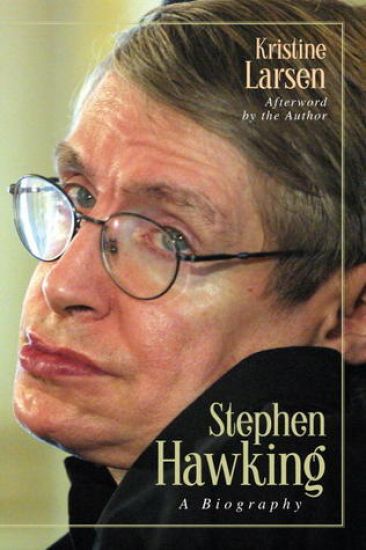
Stephen Hawking is arguably the most famous physicist since Albert Einstein. His decades-long struggle with ALS (Lou Gehrig's disease), combined with his singular brilliance as a cosmologist, has fascinated both the public and his colleagues in science. In this engagingly written biography, Kristine Larsen, a physicist and astronomer herself, presents a candid and insightful portrait of Hawking's personal and professional life. Avoiding the hero-worship sometimes found in popular works on Hawking, Larsen emphasizes that Hawking is first and foremost a scientist whose work has made significant contributions to our understanding of the nature and origins of the universe. Writing in nontechnical language for the lay reader, Larsen clearly explains Hawking's complex scientific accomplishments, while telling the story of his challenging life. Topics include Hawking's early lack of focus as a college student; the impact of ALS on his career and personal life; his groundbreaking work on radiating black holes; his later cutting-edge theories of black holes, cosmology, and the anthropic principle; the amazing publishing success of A Brief History of Time; and his status as a pop icon and spokesperson for the interplay of science and society. Larsen situates Hawking's sometimes-controversial work within the broader context of scientific peer review and public debate, and discusses his personal life with compassion, respect, and honesty.

Originally published in 1982, Stephen Shore's legendary "Uncommon Places" has influenced more than a generation of photographers. Shore was among the first artists to take color beyond the domain of advertising and fashion photography, and his large-format color work on the American vernacular landscape inaugurated a vital photographic tradition. "Uncommon Places: The Complete Works," published by Aperture in 2005, presented a definitive collection of the landmark series, and in the span of a decade has become a contemporary classic. Now, for this lushly produced reissue, the artist has added nearly 20 rediscovered images and a statement explaining what it means to expand a classic series. Like Robert Frank and Walker Evans before him, Shore discovered a hitherto unarticulated vision of America via highway and camera. Approaching his subjects with cool objectivity, Shore retains precise systems of gestures in composition and light through which a hotel bedroom or a building on a side street assumes both an archetypal aura and an ambiguously personal importance. An essay by critic and curator Stephan Schmidt-Wulffen and a conversation with Shore by writer Lynne Tillman examine his methodology and elucidate his roots in Pop and Conceptual art. The texts are illustrated with reproductions from Shore's earlier series "American Surfaces" and "Amarillo: Tall in Texas."

Stephen Shore
Aperture
2014
sidottu
Stephen Shore has had a significant influence on multiple generations of artists and photographers. Even for the youngest photographers working today, his work remains an ongoing and indisputable reference point. This book copublished with Fundación MAPFRE in conjunction with the first-ever retrospective exhibition, includes over 250 images that span Shore’s impressive and productive career. The images range from 1969 to 2013, with series such as Early Works, Amarillo, New York City, American Surfaces, and Uncommon Places, among others. Stephen Shore: Survey elucidates Shore’s contributions, as well as the historiographical interpretations of his work that have influenced photographic culture over the past four decades. Both the exhibition and the narrative of the catalogue are conceptualized around three particularly revealing aspects of Shore’s work, including his analysis of photographic and visual language, his topographical approach to the contemporary landscape, and his significant use of color within a photographic context.
Stephen Shore’s Uncommon Places is indisputably a canonic body of work—a touchstone for those interested in photography and the American landscape. Remarkably, despite having been the focus of numerous shows and books, including the eponymous 1982 Aperture classic (expanded and reissued several times), this series of photographs has yet to be explored in its entirety. Over the past five years, Shore has scanned hundreds of negatives shot between 1973 and 1981. In this volume, Aperture has invited an international group of fifteen photographers, curators, authors, and cultural figures to select ten images apiece from this rarely seen cache of images. Each portfolio offers an idiosyncratic and revealing commentary on why this body of work continues to astound; how it has impacted the work of new generations of photography and the medium at large; and proposes new insight on Shore’s unique vision of America as transmuted in this totemic series.


Saints and Their Cults: Studies in Religious Sociology, Folklore and History Edited with Introduction and Annotated Bibliography by Stephen Wi
Stephen Wilson
ACLS History E-Book Project
2008
nidottu

Leacock (1869-1944) did have his serious side -- for he wrote learnedly of Twain and Dickens, and was a professor of political science and economics at McGill University . . . but it was when he set aside seriousness for levity, with such sketches as "How Tennyson Killed the May Queen" or "Hoodoo McFiggin's Christmas," that he has won over the English-reading public everywhere.

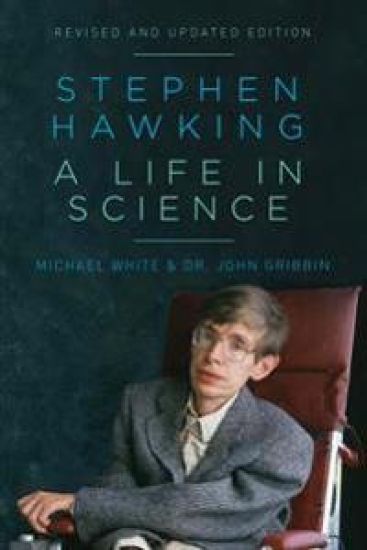
Stephen Hawking is no ordinary scientist. Perhaps more than any other scientist, he has broadened our basic understanding of the universe. His theoretical work on black holes and the origins and nature of the cosmos have been groundbreaking--if not downright revolutionary. He has also spent much of his adult life confined to a wheelchair, a victim of ALS. But his physical limitations have done nothing to confine him intellectually or hinder his scientific development. Hawking would already be remarkable for his cutting-edge work in theoretical physics alone. However, he has also managed to popularize science unlike any one else. Today, he is a household name and achieved almost cult-like fame with the release of A Brief History of Time. Although this book is steeped in the complexities of cosmology, millions of people were eager to learn just some of what he had to offer. Science writers White and Gribbin have painted a compelling portrait of a scientific mind that seemingly knows no bounds. Weaving together clear explanations of Hawking's science with a detailed, balanced, and sensitive personal history, we come to know and appreciate both sides of this incredible man. Includes new updates in Hawking's biography and the recent discovery of the Higgs-Boson (or God) particle.

Stephen bar Sudaili, The Syrian Mystic and The Book of Hierotheos
Arthur Lincoln Frothingham
Wipf Stock Publishers
2010
pokkari

Stephen Hawking Smoked My Socks: How beliefs contaminate our opinions: an astrophysicist's perspective
Hilton Ratcliffe
Muse Harbor Publishing
2014
nidottu
"Stephen Hawking Smoked My Socks is a prism-free lens with which forgotten basic skills in objectivity are seen again, and the innate art of existence is set free from the dictates of fear and power." - Ian Campbell-Gillies Why did Stephen Hawking become so famous? What exactly brought world renown to Albert Einstein? Why are those particular individuals household names across the globe whilst other achievers are not; why have they become icons to rival film stars; and why they are adored and protected by a fiercely loyal fan base? In Stephen Hawking Smoked My Socks, Hilton Ratcliffe seeks out the answers to those questions, and discovers that they have nothing at all to do with science.