Special Agent Steve Williams, still reeling from the death of Chris Ryan and his unexpected inheritance, isn't ready to step back in the line of fire. Relations with his wife are strained at best, and now he's saddled with a new partner and a not so silent guardian angel. But when his boss calls with news of another killer, one targeting the children of Atlanta, Steve can't walk away from the case. This time he's armed with more than just a gun, but will it be enough to stop a heinous serial killer before another child dies?
Ballad of Steve Biker is the second volume of the Greatest Game series, which recounts an exciting overseas holiday of the Pack, who are friends of the central character Rupertheimer. There is the Englishman Nick Jarvis and Peter Khumalo the Zulu, along with an enigmatic Afrikaner named Hofmeyr, who travel abroad where they meet their future wives. Rupertheimer receives a harsh lesson in Ireland, from the media tycoon Darby O'Gill, while Khumalo falls under the influence of a mysterious motorcyclist named Steve Biker. This alter ego of the famous Steve Biko, has a profound impact on the Pack, especially on young Peter Khumalo who returns home to join the Struggle. Peter Khumalo joins up with his fiery Aunt Willie Khumalo and her husband Matthew, who lead an South African liberation group named AZIPPO, but Peter's liberation struggle ends abruptly at Rupertheimer's wedding. When a series of bizarre events culminate, in a fierce standoff with counterinsurgency forces, where freedom fighter Peter Khumalo surrenders to fearsome police Colonel Kokkenbull. So the Rupertheimer wedding ends with a message of hope for South Africa, that violence will be renounced and democratic negotiations will come about, which portends the pivotal rote that Rupertheimer must play in the future transition to democracy. These inexplicable events in Rupertheimer's life seem to point the way, to the vital contribution he will make to democratic negotiations, because Rupertheimer is destined to become a key player in the 1994 democratic elections. The South African liberal press has covered this historic event extensively, with hastily scrawled cover-ups, but unfortunately for the press there remain the newspaper archives. Where the craven journalistic scepticism is starkly portrayed, which impacted negatively on the transition to democracy, so it was indeed fortunate that our man Rupertheimer was there. To unerringly guide his troubled land, and steer the good ship South Africa to a democratic landing.
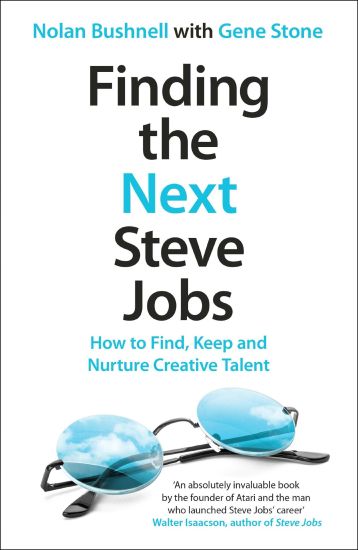
From the legendary founder of Atari and Chuck E. Cheese's and Steve Jobs's first boss, the secrets to finding, hiring, keeping, and nurturing creative talent. The business world is changing faster than ever, and every day your company faces new complications and difficulties. The only way to resolve these issues is to have a staff of wildly creative people who live as much in the future as the present, who thrive on being different, and whose ideas will guarantee that your company will prosper when other companies fail. A celebrated visionary and iconoclast, Nolan Bushnell founded the groundbreaking gaming company Atari before he went on to found Chuck E. Cheese's and two dozen other companies. He also happened to launch the career of the late Steve Jobs, along with those of many other bril-liant creatives over the course of his five decades in business. With refreshing candor, keen psychological insight, and robust humor, Bushnell explains in Finding the Next Steve Jobs how to think boldly and differently about companies and organizations--and spe-cifically the people who work within them. For anyone trying to turn a company into the next Atari or Apple, build a more creative workforce, or fashion a career in a changing world, this book will enlighten, challenge, surprise, and amuse.
Hide and Seek with Steve is based on the author's remembrance of the many hours spent playing hide and seek, among other games, with her little brother, Steve. Every night he would beg her, "Tell me a story." Reaves would read him books such as Goldilocks and the Three Bears and change her voice with each character. This is for everyone with little siblings who like stories About the Author Katie Reaves is an author living in Florence, Alabama. She hopes you enjoy her story
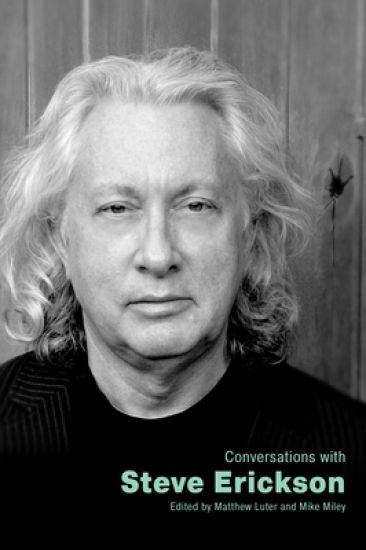
Much like his novels, Steve Erickson (b. 1950) exists on the periphery of our perception, a shadow figure lurking on the margins, threatening to break through, but never fully emerging. Despite receiving prestigious honors, Erickson has remained a subterranean literary figure, receiving effusive praise from his fans, befuddled or cautious assessments from reviewers, and scant scholarly attention. Erickson's obscurity comes in part from the difficulty of categorizing his work within current trends in fiction, and in part from the wide variety of concerns that populate his writing: literature, music, film, politics, history, time, and his fascination with his home city of Los Angeles. His dream-fueled blend of European modernism, American pulp, and paranoid late-century postmodernism makes him essential to an appreciation of the last forty years of American fiction but difficult to classify neatly within that same realm. He is at once thoroughly of his time and distinctly outside it. In these twenty-four interviews Erickson clarifies how his aesthetic and political visions are inextricable from each other. He diagnoses the American condition since World War II, only to reveal that America's triumphs and failures have been consistent since its inception-and that he presciently described decades ago certain features of our present. Additionally, the interviews expose the remarkable consistency of Erickson's vision over time while simultaneously capturing the new threads that appear in his later fiction as they emerge in his thought. Conversations with Steve Erickson will deepen readers' understanding of how Erickson's books work-and why this utterly singular writer deserves greater attention.
Much like his novels, Steve Erickson (b. 1950) exists on the periphery of our perception, a shadow figure lurking on the margins, threatening to break through, but never fully emerging. Despite receiving prestigious honors, Erickson has remained a subterranean literary figure, receiving effusive praise from his fans, befuddled or cautious assessments from reviewers, and scant scholarly attention. Erickson's obscurity comes in part from the difficulty of categorizing his work within current trends in fiction, and in part from the wide variety of concerns that populate his writing: literature, music, film, politics, history, time, and his fascination with his home city of Los Angeles. His dream-fueled blend of European modernism, American pulp, and paranoid late-century postmodernism makes him essential to an appreciation of the last forty years of American fiction but difficult to classify neatly within that same realm. He is at once thoroughly of his time and distinctly outside it. In these twenty-four interviews Erickson clarifies how his aesthetic and political visions are inextricable from each other. He diagnoses the American condition since World War II, only to reveal that America's triumphs and failures have been consistent since its inception-and that he presciently described decades ago certain features of our present. Additionally, the interviews expose the remarkable consistency of Erickson's vision over time while simultaneously capturing the new threads that appear in his later fiction as they emerge in his thought. Conversations with Steve Erickson will deepen readers' understanding of how Erickson's books work-and why this utterly singular writer deserves greater attention.
With a trace of skidmarks and a gleam in his eye, Steve Silverado shows his girlfriend, Debbie Durango that old fashioned love can keep their 4 wheels on the pavement even in the most dire conditions. So hop in the passengers seat and get ready for a ride you won't forget.