Kirjojen hintavertailu. Mukana 11 342 296 kirjaa ja 12 kauppaa.

Kirjahaku

Etsi kirjoja tekijän nimen, kirjan nimen tai ISBN:n perusteella.

1000 tulosta hakusanalla Steven Connor

Building Choral Excellence

Building Choral Excellence

Steven M. Demorest

Oxford University Press Inc
2001
sidottu
Designed for both the practicing choral director and the choral methods student, this is a compact and comprehensive overview of the many teaching methods, strategies, materials, and assessments available for choral sight-singing instruction. Sight-singing is an important, if sometimes neglected, facet of choral music education that often inspires fear and uncertainty in student and teacher alike. Written in an accessible style, this book takes the mystery out of teaching music reading Topics covered include the history of sight-singing pedagogy and research, prominent methods and materials, and practical strategies for teaching and assessment. This is the only book to provide such a wealth of information under one cover and will become an essential part of every choral conductor's library.
Singing the Body of God

Singing the Body of God

Steven Paul Hopkins

Oxford University Press Inc
2002
sidottu
This is the first full-length study of the devotional poetry and poetics of the 14th-century poet-philosopher Vedantadesika, one of the most outstanding and influential figures in the hindu tradition of Sri-Vaishnavism (the cult of Lord Vishnu). Despite their intrinsic beauty and theological importance, the poetry and philosophy of Vedantadesika have received very little scholarly attention. However, for millions who belong to the Vaishnava tradition these poems are not just classical literature; they are committed to memory, recited, sung and enacted in ritual both in India and throughout the Hindu diaspora. Steven Hopkins here offers a comparative study of the Sanskrit, Pakrit and Tamil poems composed by Vedantadesika in praise of important Vaishnava shrines and their icons - poems that are considered to be the apogee of South Indian devotional literature.
Imperial Cults and the Apocalypse of John

Imperial Cults and the Apocalypse of John

Steven J. Friesen

Oxford University Press Inc
2001
sidottu
After more than a century of debate about the significance of imperial cults for the interpretation of Revelation, this is the first study to examine both the archaeological evidence and the Biblical text in depth. Friesen argues that a detailed analysis of imperial cults as they were practised in the first century CE in the region where John was active allows us to understand John's criticism of his society's dominant values. He demonstrates the importance of imperial cults for society at the time when Revelation was written, and shows the ways in which John refuted imperial cosmology.
King David

King David

Steven L. McKenzie

Oxford University Press Inc
2000
sidottu
One of the most important and complex characters in the Bible, King David has been the subject of innumerable portraits, both artistic and literary. Michaelangelo's magnificent sculpture of him is perhaps the single best known work of art in the world, and the story of the humble shepherd who slew Goliath and became king has assumed a powerful mythological status. But was David a real person--and if so what kind of person was he? Through a close and critical reading of biblical texts, ancient history, and recent archeological discoveries, Steven L. McKenzie concludes that David was indeed a real person. This David, however, was no hero but a usurper, adulterer, and murderer--a Middle Eastern despot of a familiar type. McKenzie shows that the story of humble beginnings is utterly misleading: "shepherd" is a metaphor for "king," and David came from a wealthy, upper-class background. Similarly, McKenzie reveals how David's ascent to power, traditionally attributed to popularity and divine blessing, in fact resulted from a campaign of terror and assassination. While instituting a full-blown Middle Eastern monarchy, David was an aggressive leader, a devious politician, and a ruthless war chief. Throughout his scandalous reign, important figures who stood in his way died at convenient times, under questionable circumstances. Even his own sons were not spared. David's story, writes McKenzie, "reads like a modern soap opera, with plenty of sex, violence, and struggles for power." Carefully researched and vividly written, King David: An Unauthorized Biography offers a provocative reappraisal of the life of one of the Bible's most compelling figures.
A Handbook of Slavic Clitics

A Handbook of Slavic Clitics

Steven Franks; Tracy Holloway King

Oxford University Press Inc
2000
nidottu
Clitics are grammatical elements that are treated as independent words in syntax but form a phonological unit with the word that precedes or follows it. This volume brings together the facts about clitics in the Slavic languages, where they have become a focal points of recent research. The authors draw relevant generalizations across the Slavic languages and highlight the importance of these phenomena for linguistic theory.
Cautious Crusade

Cautious Crusade

Steven Casey

Oxford University Press Inc
2001
sidottu
This title explores how Americans viewed Nazi Germany during World War II, the extent to which the public opposed the president's vision for planning both Germany's defeat and future, and how opinion and policy interacted as the Roosevelt administration grappled with various aspects of the German problem during this period.
King David

King David

Steven L. McKenzie

Oxford University Press Inc
2002
nidottu
Through a close and critical reading of biblical texts, ancient history, and recent archeological discoveries, Steven L. McKenzie concludes that David was indeed a real person. This David was not the humble shepherd who slew Goliath and became king, however, but was a usurper, adulterer, and murderer--a Middle Eastern despot of a familiar type. McKenzie shows that the story of humble beginnings is utterly misleading: "shepherd" is a metaphor for "king," and David came from a wealthy, upper-class background. Similarly, McKenzie reveals how David's ascent to power, traditionally attributed to popularity and divine blessing, in fact resulted from a campaign of terror and assassination. While instituting a full-blown Middle Eastern monarchy, David was an aggressive leader, a devious politician, and a ruthless war chief. Throughout his scandalous reign, important figures who stood in his way died at convenient times, under questionable circumstances. Even his own sons were not spared. David's story, writes McKenzie, "reads like a modern soap opera, with plenty of sex, violence, and struggles for power."
Philosophy for the 21st Century

Philosophy for the 21st Century

Steven M. Cahn

Oxford University Press Inc
2003
nidottu
This will be the most comprehensive and challenging of available topically organized introductory anthologies. The volume draws on the judgments of a new generation of scholars as the selections were chosen by a team of young associate editors highly regarded in their respective fields. All the major subjects of philosophy are covered: metaphysics, epistemology, ethics, philosophy of religion, philosophy of language, philosophy of mind, political philosophy, philosophy of science, and philosophy of art.
Wildflowers in the Field and Forest

Wildflowers in the Field and Forest

Steven Clemants; Carol Gracie

Oxford University Press Inc
2006
nidottu
Many of us have stopped to pick wildflowers or have admired them as they flourished in fields and along hiking trails and roads. Always appreciated, but not always recognized, these beauties can now be identified with Wildflowers in the Field and Forest, the most inclusive field guide available to the wildflowers of the Northeastern United States. Designed for easy use, the book features two-page spreads with descriptive text and range maps on the left page and color photos on the right. The descriptions are concise, but thorough, and the range maps show both where the plant grows and at what time of year it is likely to be in bloom. Plants are grouped by flower color, usually the feature first noticed by the observer. The species are subsequently grouped by leaf arrangement, type of leaves, and number of flower parts as indicated in the "quick characters" box at the top of each page. There is also a simple key in the beginning of the book that allows one to quickly narrow the search to a few pages. In addition to the more common and conspicuous wildflowers, many of the lesser known, and often overlooked, species are depicted. Over 1400 species are described with nearly all of them illustrated with full-color photos. While these photos generally show the flowers of the plant, insets of leaves and occasionally fruits are often included as well. A bar on each photo allows users to accurately judge the actual size of each flower. Both serious botanists and casual nature observers will welcome this beautifully photographed and expertly detailed guide.
Lifelines

Lifelines

Steven P R Rose; Steven Rose

Oxford University Press
2003
pokkari
A distinct voice in the nature/nurture debate, Rose's series of essays are a response to the biological reductionism of Richard Dawkins's book, The Selfish Gene (OUP, 1990), which insists that all aspects of human life are in our genes, and everything arises as a consequence of natural selection. Rose argues that life depends on the elaborate web of interactions that occur within cells, organisms, and ecosystems, and in which DNA has but one part to play.
The Jewish Cultural Tapestry

The Jewish Cultural Tapestry

Steven M. Lowenstein

Oxford University Press Inc
2002
nidottu
Here, in one compact volume, is an illuminating survey of Jewish folkways on five continents. Filled with fascinating facts and keen insights, The Jewish Cultural Tapestry is a richly woven fabric that vividly captures the diversity of Jewish life. All traditional Jews are bound together by the common thread of the Torah and the Talmud, notes author Steven Lowenstein, but this thread takes on a different coloration in different parts of the world as Jewish tradition and local non-Jewish customs intertwine. Lowenstein describes these widely varying regional Jewish cultures with needlepoint accuracy, highlighting the often surprising similarities between Jewish and non-Jewish local traditions, and revealing why Jewish customs vary as much as they do from region to region. From Europe to India, Israel to America, The Jewish Cultural Tapestry offers an engaging overview of the customs and folkways of a people united by tradition, yet scattered to the far corners of the earth.
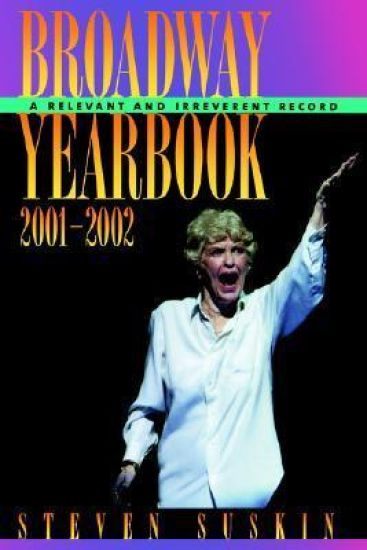
Broadway Yearbook 2001-2002

Broadway Yearbook 2001-2002

Steven Suskin

Oxford University Press Inc
2003
nidottu
Called the "theater equivalent of longtime New Yorker film critic Pauline Kael" by Matinee Magazine, critic and producer Steven Suskin chronicles the 2001-2002 theater season in his latest installment in the Broadway Yearbook series. Commenting with wit and erudition on each show that opened on Broadway between May 2001 and May 2002, Suskin's vivid descriptions recall Tony winners like Thoroughly Modern Millie and Urinetown and commercial smashes like Mamma Mia! and The Graduate. A great read for theater buffs, the book is also a valuable sourcebook for critics, Broadway historians, and theater professionals, providing an array of statistics on every Broadway production of the season, as well as noteworthy off-Broadway performances. The intelligent and witty Broadway Yearbook, 2001-2002 will engage theater lovers, performers, and critics alike.
No Margin, No Mission

No Margin, No Mission

Steven D. Pearson; James Sabin; Ezekiel J. Emanuel

Oxford University Press Inc
2003
sidottu
Can the ethical mission of health care survive among organizations competing for survival in the marketplace? On this question hinges not only the future of health care in the US, but that of the health care systems of all advanced countries. This book presents both an analytic framework and a menu of pragmatic answers. The team of authors, physician-ethicists from Harvard Medical School and the National Institutes of Health, worked with a consortium of health care organizations to explore some of the most challenging dilemmas in health care today: How can health plans determine medical necessity in a way that ensures quality care, controls costs, and builds trust with patients and physicians? What are the strategies for caring for vulnerable populations that meet their special needs without dramatically increasing costs? To answer these and other similar questions the authors blend ethical analysis with real-world example. The outcome is a rich analysis of the ethical challenges facing health care organizations, combined with tangible examples of exemplary methods to address these challenges. This book will help health care leaders, regulators, and policy makers incorporate exemplary practices, and the underlying themes they embody, into the very heart and soul of health care organizations.
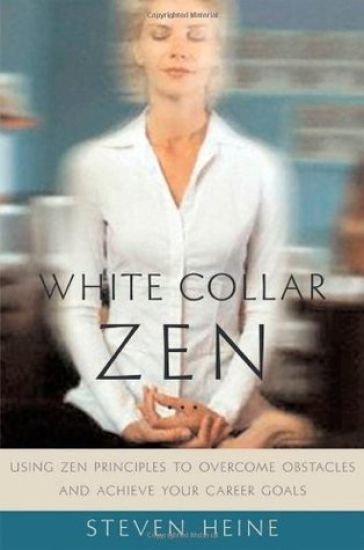
White Collar Zen

White Collar Zen

Steven Heine

Oxford University Press Inc
2005
sidottu
It is said that in traditional Japan the samurai embraced Zen because it helped them to be fearless in adversity, to act quickly and decisively, and to keep focused on their ultimate goal. In White Collar Zen, Steven Heine shows how, by applying Zen principles in our working lives, we can achieve the same results for ourselves. Heine describes the way Zen embraces two different yet harmonious paths. The Way of the Hermit teaches detachment--the mental clarity you need to view your situation dispassionately and impartially, to perceive who is an ally and who is a competitor, to understand what is possible and what is not. The Way of the Warrior teaches the ability to act without hesitation at the proper moment. Together, they can prepare you to meet the challenges of the modern professional world. Heine offers a step-by-step approach to attaining these skills and applying them in daily life. Using real-world examples interwoven with sayings and stories from the Zen tradition, he shows how Zen can help in situations ranging from gaining a deserved promotion to overcoming obstacles that arise from a breakdown in teamwork. He makes it clear that in Zen the path to personal success must be one that values integrity, respects every individual, emphasizes cooperation, and serves the goals of the larger group. Replete with practical advice, White Collar Zen will appeal to many of the same readers who have made The Art of War and The Book of Five Rings so successful. It will certainly fascinate anyone interested in applying Zen principles to achieving professional excellence.
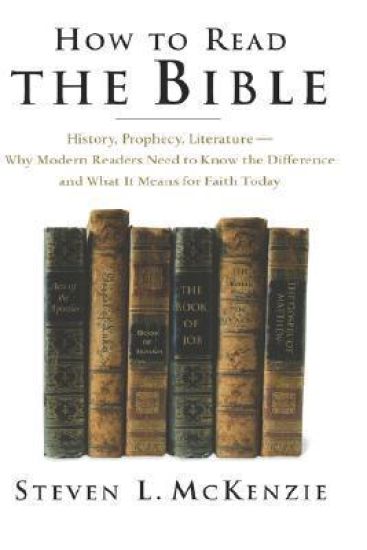
How to Read the Bible

How to Read the Bible

Steven L. McKenzie

Oxford University Press Inc
2006
sidottu
More people read the Bible than any other book. Indeed, many try to live their lives according to its words. The question is, do they understand what they're reading? As Steven McKenzie shows in this provocative book, quite often the answer is, "No." McKenzie argues that to comprehend the Bible we must grasp the intentions of the biblical authors themselves--what sort of texts they thought they were writing and how they would have been understood by their intended audience. In short, we must recognize the genres to which these texts belong. McKenzie examines several genres that are typically misunderstood, offering careful readings of specific texts to show how the confusion arises, and how knowing the genre produces a correct reading. The book of Jonah, for example, offers many clues that it is meant as a humorous satire, not a straight-faced historical account of a man who was swallowed by a fish. Likewise, McKenzie explains that the very names "Adam" and "Eve" tell us that these are not historical characters, but figures who symbolize human origins ("Adam" means man, "Eve" is related to the word for life). Similarly, the authors of apocalyptic texts--including the Book of Revelation--were writing allegories of events that were happening in their own time. Not for a moment could they imagine that centuries afterwards, readers would be poring over their works for clues to the date of the Second Coming of Christ, or when and how the world would end. For anyone who takes reading the Bible seriously and who wants to get it right, this book will be both heartening and enlightening.
Ten Essential Texts in Philososphy of Religion

Ten Essential Texts in Philososphy of Religion

Steven M. Cahn

Oxford University Press Inc
2004
nidottu
Offering a new approach to teaching the philosophy of religion, this anthology is organized around ten of the most widely read texts in the field. Presented in their entirety, these classics serve as a framework for a variety of accessible contemporary essays that are also included. The book's unique structure gives students the opportunity to study in depth complete historical works while also conveying a sense of how today's philosophers have explored related issues. Editor Steven M. Cahn has annotated each text to clarify all unfamiliar references. He has also provided introductions that contain biographical profiles of the authors and philosophical commentaries on their writings. Ten Essential Texts in the Philosophy of Religion: Classics and Contemporary Issues may be supplemented by Questions about God: Today's Philosophers Ponder the Divine, a provocative collection of recent articles on the nature of God, edited by Steven M. Cahn and David Shatz (OUP, 2002). Ten Essential Texts in the Philosophy of Religion includes the following unabridged classic works: Euthyphro, Plato The Consolation of Philosophy, Boethius Proslogion, Anselm; On Behalf of the Fool, Gaunilo: and Reply to Gaunilo, Anselm Summa Theologiae, Thomas Aquinas Of Miracles, David Hume Dialogues Concerning Natural Religion, David Hume Concluding Unscientific Postscript, Søren Kierkegaard The Will to Believe, William James The Varieties of Religious Experience, William James Theology and Falsification, Antony Flew, R.M. Hare, and Basil Mitchell
Cautious Crusade

Cautious Crusade

Steven Casey

Oxford University Press Inc
2004
nidottu
America's struggle against Nazism is one of the few aspects of World War II that has escaped controversy. Historians agree that it was a widely popular war, different from the subsequent conflicts in Korea and Vietnam because of the absence of partisan sniping, ebbing morale, or calls for a negotiated peace. In this provocative book, Steven Casey challenges conventional wisdom about America's participation in World War II. Drawing on the numerous opinion polls and surveys conducted by the U.S. government, he traces the development of elite and mass attitudes toward Germany, from the early days of the war up to its conclusion. Casey persuasively argues that the president and the public rarely saw eye to eye on the nature of the enemy, the threat it posed, or the best methods for countering it. He describes the extensive propaganda campaign that Roosevelt designed to build support for the war effort, and shows that Roosevelt had to take public opinion into account when formulating a host of policies, from the Allied bombing campaign to the Morgenthau plan to pastoralize the Third Reich. By examining the previously unrecognized relationship between public opinion and policy making during World War II, Casey's groundbreaking book sheds new light on a crucial era in American history.
Opening a Mountain

Opening a Mountain

Steven Heine

Oxford University Press Inc
2004
nidottu
With the growing popularity of Zen Buddhism in the West, virtually everyone knows, or thinks they know, what a koan is: a brief and baffling question or statement that cannot be solved by the logical mind and which, after sustained concentration, can lead to sudden enlightenment. But the truth about koans is both simpler--and more complicated--than this. In Opening a Mountain, Steven Heine shows that koans, and the questions we associate with them--such as "What is the sound of one hand clapping?"--are embedded in larger narratives and belong to an ancient Buddhist tradition of "encounter dialogues." These dialogues feature dramatic and often inscrutable contests between masters and disciples, or between masters and an array of natural and supernatural forces: rouge priests, "wild foxes," hermits, wizards, shapeshifters, magical animals, and dangerous women. To establish a new monastery, "to open a mountain," the Zen master had to tame these wild forces in regions most remote from civilization. In these extraordinary encounters, fingers and arms are cut off, pitchers are kicked over, masters appear in and interpret each other's dreams, and seemingly absurd statements are shown to reveal the deepest insights. Heine restores these koans to their original traditions, allowing readers to see both the complex elements of Chinese culture and religion that they reflect and the role they played in Zen's transformation of local superstitions into its own teachings. Offering a fresh approach to one of the most crucial elements of Zen Buddhism, Opening a Mountain is essential reading for anyone seeking to understand the full story behind koans and the mysterious worlds they come from.
Hollywood Left and Right

Hollywood Left and Right

Steven Ross

Oxford University Press Inc
2011
sidottu
Ever since the film industry relocated to Hollywood early in the twentieth century, it has had an outsized influence on American politics. Through a series of gripping chapters on larger-than-life figures in American cinema--Charlie Chaplin, Louis Mayer, Edward G. Robinson, Harry Belafonte, Ronald Reagan, George Murphy, Jane Fonda, Charlton Heston, Warren Beatty, and Arnold Schwarzenegger--Hollywood Left and Right tells the compelling story of how Hollywood emerged as a vital center of American politics. From Chaplin, whose movies almost always displayed his leftist convictions, to Schwarznegger's nearly seamless transition from action blockbusters to the California governor's mansion, Steve Ross traces the intersection of Hollywood and political activism through the twentieth century and into the 21st. Significantly, Hollywood Left and Right challenges the commonly held belief that Hollywood is a bastion of liberalism. The real story, as Ross shows in this passionate yet highly entertaining work, is a far more complicated one. The Left and the Right each gained ascendancy in Tinseltown at different times, but while the Hollywood Left was usually more vocal and visible, it was the Right that achieved the most, capturing a Senate seat (Murphy), a governorship (Schwarzenegger), and--ultimately--the Presidency (Reagan).
Lawyers' Poker

Lawyers' Poker

Steven Lubet

Oxford University Press Inc
2006
sidottu
Great poker players are master tacticians. Not only do they calculate odds with lightning speed and astonishing precision, but they also cunningly anticipate and manipulate the actions of their adversaries. In short, they boast skills that every lawyer can envy. This highly entertaining work might best be summed up as "better lawyering through poker." Steven Lubet shows exactly how the tactics of the poker table can be adapted to litigation, negotiation, and virtually every aspect of law practice. In a series of engaging and informative lessons, Lubet describes concepts like "betting for value," "slow playing," and "reverse bluffing," and explains how they can be used by lawyers to win their cases. The best card players, like the best lawyers, have a knack for getting their adversaries to react exactly as they want, and that talent separates the winners from the losers. Lawyers' Poker is an irresistible guide to successful lawyering and an enjoyable read for anyone with an interest in law. No poker knowledge required.