Kirjojen hintavertailu. Mukana 12 016 292 kirjaa ja 12 kauppaa.

Kirjahaku

Etsi kirjoja tekijän nimen, kirjan nimen tai ISBN:n perusteella.

1000 tulosta hakusanalla Wauter Mannaert

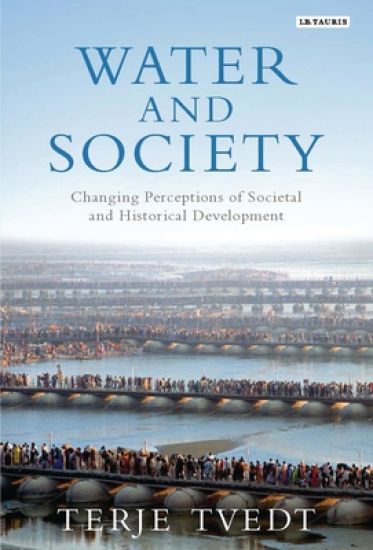
Water and Society

Water and Society

Terje Tvedt

I.B. Tauris
2021
nidottu
This book is available as open access through the Bloomsbury Open Access programme and is available on www.bloomsburycollections.com. Despite the central importance that water has held for civilizations both ancient and modern, its social significance has made surprisingly little impact on our contemporary understanding of human history and development. Dominant interpretations of the relationship between society and nature have remained water blind. In this book, historian and leading water expert Terje Tvedt argues for a change that acknowledges the significant role played by water in societal development. Reflecting his expertise as a geographer, historian and a political scientist, and drawing on his wide experience of water issues around the world, Terje Tvedt's Water and Society provides a long overdue reappraisal of the relationship between water and society, one that gives water its rightful place as central to any true understanding of human history and development.
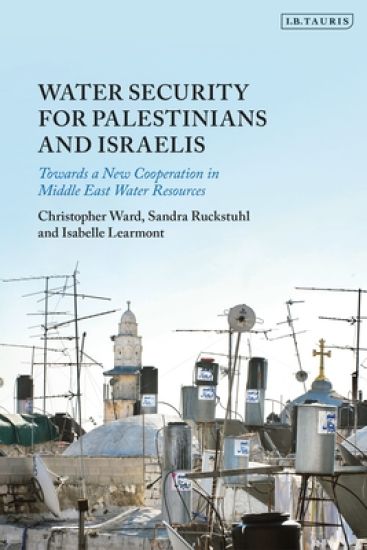
Water Security for Palestinians and Israelis

Water Security for Palestinians and Israelis

Christopher Ward; Isabelle Learmont; Sandra Ruckstuhl

BLOOMSBURY PUBLISHING PLC
2021
sidottu
Shared water resources in Israel and Palestine are often the site of political, economic, historical, legal and ethical contestation. In this, the second of two volumes on the subject, the authors look beyond the political tensions of the region, to argue for the need for shared water security and co-operative resource management. Winning Water Security for Palestinians and Israelis, the authors assess water security in terms of security of access to water resources, security of access to water services and security against risks to and from water. The volume compares and contrasts Israelis remarkable water security with the corresponding water insecurity of the Palestinians. The authors also set out the practical, economic, legal and ethical rationale for a revised cooperation on water security between the two peoples, proposing a workable scheme for putting into practice a new form of cooperation that would hope to benefit both peoples and strengthen their water security.
Water Security for Palestinians and Israelis

Water Security for Palestinians and Israelis

Christopher Ward; Isabelle Learmont; Sandra Ruckstuhl

BLOOMSBURY PUBLISHING PLC
2023
nidottu
Shared water resources in Israel and Palestine are often the site of political, economic, historical, legal and ethical contestation. In this, the second of two volumes on the subject, the authors look beyond the political tensions of the region, to argue for the need for shared water security and co-operative resource management. This book assesses water security in terms of security of access to water resources, security of access to water services and security against risks to and from water. The volume compares and contrasts Israelis remarkable water security with the corresponding water insecurity of the Palestinians. The authors also set out the practical, economic, legal and ethical rationale for a revised cooperation on water security between the two peoples, proposing a workable scheme for putting into practice a new form of cooperation that would hope to benefit both peoples and strengthen their water security.
Water Gardens and Natural Pools

Water Gardens and Natural Pools

Peter Himmelhuber

Schiffer Publishing Ltd
2009
sidottu
A guide to planning large or small water features for your garden, including safe, natural pools. With over 300 beautiful color photos and an informative text offers practical knowledge for the planning, building, and care of water features in gardens. From design to maintenance, all necessary steps are made clear, including planning, building processes, material uses and techniques, and using rainwater as they apply to fountains, biotopes, brooks, swimming pools and ponds, plants and animals. Step-by-step instructions, informative suggestions, maintenance tips, lists of plants, and plans are included. This book is essential for anyone intending to include a water feature in their landscape design.
Water-Based Texturing

Water-Based Texturing

Tucker Stouch

Schiffer Publishing Ltd
2014
nidottu
Explore the use of acrylic textural finishes for home decor projects and wall art. Versatile acrylics can be applied as washes, glazes, pastes, or putties to a variety of grounds, including wood, paper, cloth, canvas, and polystyrene. Their unique qualities allow them to be used to create forms that reflect the textures of the natural world. The text introduces the creative process, explores the tools used, and then takes readers through each texturing method. The techniques, demonstrated in over 290 color photos, include crackle, polystyrene relief, thick impasto, scratching, combing, mixes, embedded elements, sponging, tissue and paper textures, metallic paints, sprays, splashes, drizzles, smearing, stamping, impressions, and stenciling. The tools involved are readily available and include sticks, fingers, sponges, brushes, pallet knives, jar lids, erasers, stamps, a hot wire tool for working with polystyrene, and more. This book is for anyone who wishes to create textural art.
Water Jet Shiphandler's Guide

Water Jet Shiphandler's Guide

John Kinkela

Schiffer Publishing Ltd
2021
pokkari
The increasing popularity of water jet–propelled vessels both in the civilian and military sectors of the maritime industry has outpaced the commonly available and approachable books on these ships. Many mariners who operate these styles of vessels have received training in their operation from vessel-specific instruction. This has left a knowledge gap between the various different vessel types in what works and what does not. Inside are descriptions and pictures of the various parts of water jet propulsion and control systems. Also included are explanations and suggestions on how to make full use of the remarkable maneuvering potential that water jet propulsion offers, followed by an explanation of how to efficiently and safely make use of the higher speeds that water jet vessels can obtain. Last, there is an extensive glossary of terms typically used in the community of high-speed water jets.
Water Sheikhs and Dam Builders

Water Sheikhs and Dam Builders

Francesca de Chatel

Transaction Publishers
2007
sidottu
Francesca de Chatel explores the problems and paradoxes of water resources in the Middle East and North Africa. She takes an entirely new angle on the much-discussed question of water scarcity by examining the history and culture of water from a human perspective. Unlike other books on the subject that provide specialized geopolitical, economic, and hydrological analyses, this book presents the reality of water scarcity through the eyes of those confronting the problem on a daily basis.The author provides a colorful and diverse portrait of a resource that is inextricably entwined with the history and future of the region and its peoples. Using research obtained in her travels, she combines lively character sketches, interviews, travel descriptions, historical anecdotes, and hard facts to reveal the complexity of this invaluable resource.Besides identifying the causes of the current water crisis, the book also discusses the reason for a lack of awareness among the general public, and deals with a variety of themes: the role of water in religions and ideologies, the impact of large-scale water projects on people's perception of the resource, and the politics of water pricing. In exploring the past, present, and future of water in the region, de Chatel exposes the roots of the current water crisis.
Walter Lippmann and the American Century

Walter Lippmann and the American Century

Ronald Steel

Transaction Publishers
1999
nidottu
Walter Lippmann began his career as a brilliant young man at Harvard—studying under George Santayana, taking tea with William James, a radical outsider arguing socialism with anyone who would listen—and he ended it in his eighties, writing passionately about the agony of rioting in the streets, war in Asia, and the collapse of a presidency. In between he lived through two world wars, and a depression that shook the foundations of American capitalism.Walter Lippmann (1889-1974) has been hailed as the greatest journalist of his age. For more than sixty years he exerted unprecedented influence on American public opinion through his writing, especially his famous newspaper column "Today and Tomorrow." Beginning with The New Republic in the halcyon days prior to Woodrow Wilson and the First World War, millions of Americans gradually came to rely on Lippmann to comprehend the vital issues of the day.In this absorbing biography, Ronald Steel meticulously documents the philosophers and politics, the friendships and quarrels, the trials and triumphs of this man who for six decades stood at the center of American political life. Lippmann's experience spanned a period when the American empire was born, matured, and began to wane, a time some have called "the American Century." No one better captured its possibilities and wrote about them so wisely and so well, no one was more the mind, the voice, and the conscience of that era than Walter Lippmann: journalist, moralist, public philosopher.
Water into Wine?

Water into Wine?

Robert A. Larmer

McGill-Queen's University Press
1988
sidottu
The first is that a miracle, understood as an event produced by a transcendent agent overriding the usual course of nature, involves a violation of the laws of nature. Larmer argues that events are explained by reference to both relevant laws and units of mass/energy in the sequences to be explained. He contends that a miracle need not be conceived as involving a violation of natural law, but rather as the creation or annihilation of mass/energy by a transcendent agent. In reply to the objection that this account would violate the first law of thermo-dynamics, he distinguishes two forms of the principle -- one metaphysical, one scientific -- and aruges that a miracle would not violate the principle considered as a scientific law. The second assumption is that miracle testimony cannot serve as evidence for theism. Larmer demonstrates that the logical ties connecting the concept of miracle to theism need not imply that one must be a theist to evaluate miracle testimony properly. All that is required is that one is prepared to entertain theism as a hypothesis. Attacking these assumptions allows Larmer to show that Humean balance-of-probabilities arguments, based on a presumed conflict between evidence which establishes belief in the laws of nature and evidence in favour of miracles, miss the point if miracles need not be defined as violations of the laws of nature. He argues that, in the absence of a general argument demonstrating that the testimonial evidence in favour of miracles conflicts with the evidence for the laws of nature, it is up to the atheist to demonstrate, on a case-by-case basis, why the testimonial evidence is to be rejected. His conclusion is that, contrary to what is usually thought, the burden of proof lies not upon the shoulders of the theist, but upon the shoulders of the atheist.
Walter Long, Ireland, and the Union, 1905-1920

Walter Long, Ireland, and the Union, 1905-1920

John Kendle

McGill-Queen's University Press
1992
sidottu
Chief Secretary for Ireland in the last months of the Balfour government in 1905, a Unionist leader with many friends and supporters in southern Ireland, and a politician who held ministerial office in the wartime coalition governments, Long had great influence in establishing attitudes toward Ireland. John Kendle shows that whatever hopes Irish Unionists cherished of combatting the home rule movement depended in great part on the support of individuals such as Long. Covering the fifteen years during which Long was closely caught up in Irish affairs, Walter Long, Ireland, and the Union, 1905 1920 provides an analysis of Long's attitudes and actions, and underlines his contribution to the resolution of the political and constitutional dilemma confronting the United Kingdom. Kendle concludes that Long, by advocating a federal solution to Anglo-Irish problems, was a principal architect of the partition of the United Kingdom and the post-1922 constitutional map of the British Isles.
Water into Wine?

Water into Wine?

Robert A. Larmer

McGill-Queen's University Press
1996
nidottu
The first is that a miracle, understood as an event produced by a transcendent agent overriding the usual course of nature, involves a violation of the laws of nature. Larmer argues that events are explained by reference to both relevant laws and units of mass/energy in the sequences to be explained. He contends that a miracle need not be conceived as involving a violation of natural law, but rather as the creation or annihilation of mass/energy by a transcendent agent. In reply to the objection that this account would violate the first law of thermo-dynamics, he distinguishes two forms of the principle -- one metaphysical, one scientific -- and aruges that a miracle would not violate the principle considered as a scientific law. The second assumption is that miracle testimony cannot serve as evidence for theism. Larmer demonstrates that the logical ties connecting the concept of miracle to theism need not imply that one must be a theist to evaluate miracle testimony properly. All that is required is that one is prepared to entertain theism as a hypothesis. Attacking these assumptions allows Larmer to show that Humean balance-of-probabilities arguments, based on a presumed conflict between evidence which establishes belief in the laws of nature and evidence in favour of miracles, miss the point if miracles need not be defined as violations of the laws of nature. He argues that, in the absence of a general argument demonstrating that the testimonial evidence in favour of miracles conflicts with the evidence for the laws of nature, it is up to the atheist to demonstrate, on a case-by-case basis, why the testimonial evidence is to be rejected. His conclusion is that, contrary to what is usually thought, the burden of proof lies not upon the shoulders of the theist, but upon the shoulders of the atheist.
Walter Gordon and the Rise of Canadian Nationalism

Walter Gordon and the Rise of Canadian Nationalism

Stephen Azzi

McGill-Queen's University Press
1999
sidottu
Walter Gordon and the Rise of Canadian Nationalism is an examination of the origins of Walter Gordon's nationalist ideology and its impact on Canada. It traces his ideas from his family influences and the intellectual currents present in his early years to his work as a chartered accountant, public servant, and head of a small conglomerate. Drawing on extensive interviews and impressive research, Azzi provides not only a biography of an important political figure but a significant study of the political and intellectual controversies that Gordon and his ideas created, shedding light on the larger political and economic questions of the postwar era.
Water Habitats

Water Habitats

Molly Aloian

Crabtree Publishing Co,Canada
2006
nidottu
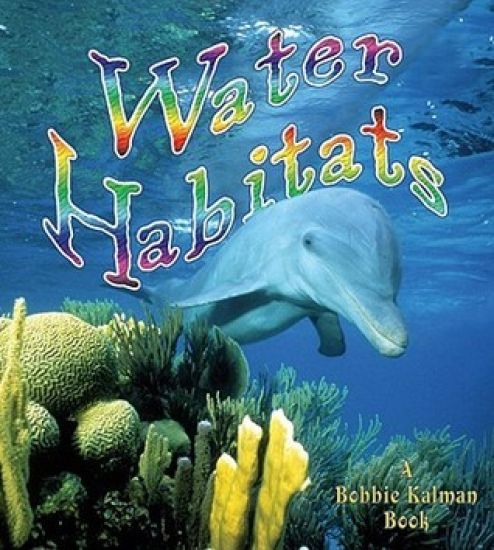
Young readers will enjoy learning about different types of water habitats, including oceans, lakes, rivers, and swamps. This book also discusses the differences between saltwater and freshwater habitats.
Water Changes

Water Changes

Bobbie Kalman

Crabtree Classics
2011
nidottu
Often called the Blue Planet, Earth is made up mostly of water. In this simple science book, children will learn about the different states of water - liquid, vapor, and solid, and what happens when water changes from one state to another. An illustration of the water cycle helps explain how water evaporates, moves to the sky, and falls back down as rain or snow.
Water Engineering with the Spreadsheet

Water Engineering with the Spreadsheet

Ashok Pandit

American Society of Civil Engineers
2016
nidottu
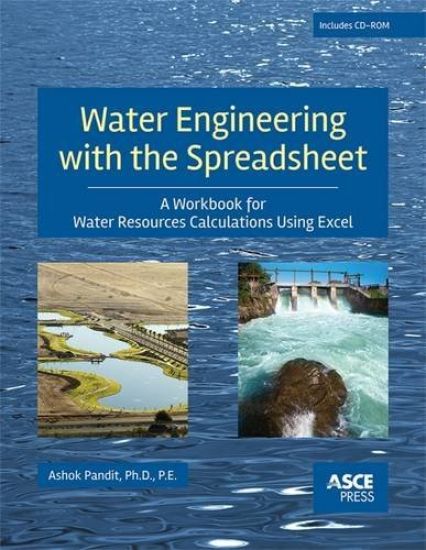
Water Engineering with the Spreadsheet: A Workbook for Water Resources Calculations Using Excel presents more than 90 problems, from easy to difficult, in the areas of fluid mechanics, hydraulics, hydrology, and stormwater management. The accompanying unlocked spreadsheets are used to solve the problems and provide hands-on experience with Excel.Ashok Pandit, Ph.D., P.E., has been employing spreadsheets in the classroom and in practice for more than 20 years. Used as a supplement to undergraduate and graduate texts and lectures, Pandit’s book will help students gain a solid foundation in using spreadsheets for applications in water engineering.Topics include: force calculations under static and dynamic conditions, pipe design, and pipe network analysis; open channel flow; normal and critical depth calculations; channel designs and transitions; lake evaporation; unit hydrographs and S-hydrographs; convolution and deconvolution; reservoir and channel routing; and analysis and design of stormwater management systems for land development, including retention/detention basins and storm sewers.Pandit provides background information, helpful hints, assumptions, equations to be used, solutions, and a what-if analysis to provide an in-depth examination of the problem. Advanced features of Excel spreadsheets, such as Goal Seek, Circulation Cells, and Trendlines, are explored.Students will find this book an excellent preparation for the fundamentals of engineering or professional engineering exams. Practitioners may also find this a convenient collection of ready-to-use spreadsheets for a professional practice.