Kirjojen hintavertailu. Mukana 11 447 140 kirjaa ja 12 kauppaa.

Kirjahaku

Etsi kirjoja tekijän nimen, kirjan nimen tai ISBN:n perusteella.

1000 tulosta hakusanalla Adam Harrell

Adam Thielen: Football's Underdog Star

Adam Thielen: Football's Underdog Star

Matt Chandler

Capstone Press
2020
sidottu
Adam Thielen always knew he wanted to play in the NFL. From growing up watching Randy Moss and the Vikings to playing at a small Division II college, his path to the NFL hasn't always been a straight line. After initially making the Vikings roster in 2013, he was cut to the practice squad. Now, he's Minnesota's top wide receiver. Learn more about Thielen's path to football fame in this exciting biography in the Stars of Sports series.
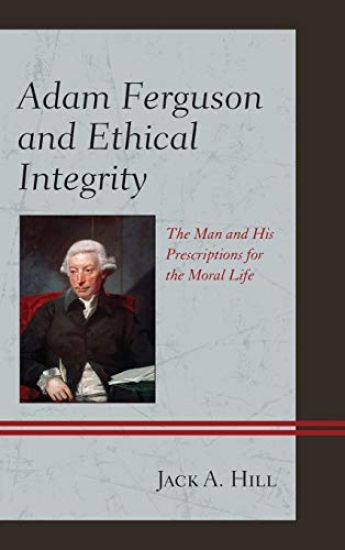
Adam Ferguson and Ethical Integrity

Adam Ferguson and Ethical Integrity

Jack A. Hill

Lexington Books
2017
sidottu
This book is about learning how to live the good life. Part biography and part philosophical inquiry, it is a fresh, original interpretation of the intellectual world of the largely forgotten, eighteenth-century professor, Adam Ferguson. Although less well-known today than his famous Scottish contemporaries, Adam Smith and David Hume, Ferguson was considered their equal in the 18th century. The book shows how Ferguson, who grew up speaking Gaelic and English, and spent a decade ministering to a Highlander regiment, developed a distinctive, cross-cultural approach to moral philosophy that is relevant for doing comparative ethics in today’s global village. The premise is that life in the twenty-first century is plagued by a moral disorientation that has affinities with the materialism, privatization, social fragmentation and spiritual crises that were emerging in 18th-century, urban Scotland. Like his peers in medical science, Ferguson pursued what was then known as moral science with a particular concern to diagnose and treat moral “dis-ease.” The book contends that his moral philosophy lectures became strikingly modern experiments in recovering moral moorings—disclosing epitomes of moral dynamics, investigating the use of moral terms in ordinary language, and crafting moral principles, such as probity, which preserved classical moral virtues but also incorporated the practical wisdom of ‘peoples of the mountains.’ Although focused on re-discovering Ferguson as a full-blown ethicist before his time, the book is also intended as a primer for the reader’s own quest for living a life which is emblematic of ethical integrity The primary audience for this book is philosophers, historians, religious studies scholars who specialize in ethics, eighteenth-century English literature scholars, and social scientists (anthropologists, sociologists and political scientists) who focus on the eighteenth-century.
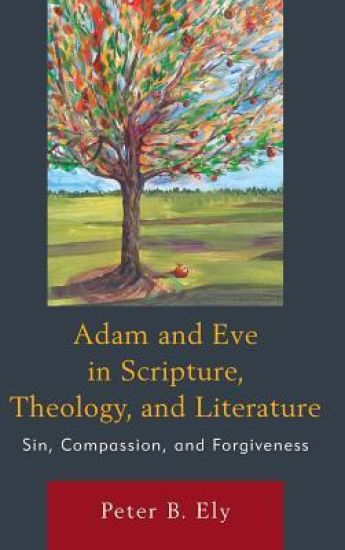
Adam and Eve in Scripture, Theology, and Literature
Adam and Eve in Scripture, Theology, and Literature: Sin, Compassion, and Forgiveness is an extended consideration of the narrative of Adam and Eve, first seen in the Hebrew Bible but given new life by St. Paul in the New Testament. Paul’s treatment of Adam and Eve, especially his designation of Christ as a second Adam, has had an enormous influence in Christianity. Peter Ely follows this rich narrative as it develops in history, providing the basis of the doctrine of original sin in Christianity, giving rise in modern times to theological speculation, and entering thematically into mysticism and literature. The power of the adamic narrative can only be realized if one treats it as a true but non-historical myth. The “truth” of the myth lies in its ability to stimulate thinking and so reveal the depths of human experience. Augustine understood that, so did Julian of Norwich, and even the Belgian author of mystery stories, Georges Simenon, who had a deep sense of the universality of human weakness and the possibilities of redeeming what was lost. Simenon’s detective Maigret saw himself as a “mender of destinies.” The doctrine of original sin, the notion that human beings share a common vulnerability, can open the way to compassion and forgiveness. As Shakespeare illustrates in Measure for Measure, the awareness of weakness in ourselves should move us to compassion for others. The recognition of a kind of “democracy of sin” can keep us from considering ourselves better than others, unlike them in their weakness, and entitled to stand in judgment of them. Thus, compassion opens the door to forgiveness. The progress from sin to compassion to forgiveness forms the heart of this work.
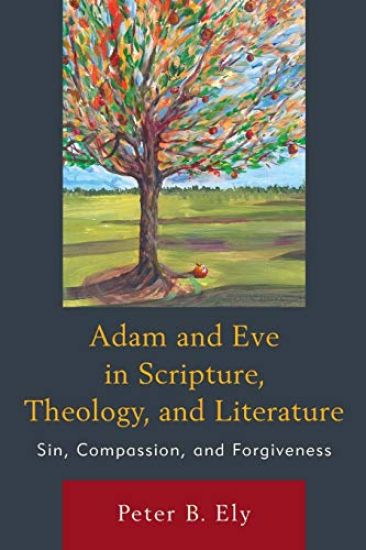
Adam and Eve in Scripture, Theology, and Literature
Adam and Eve in Scripture, Theology, and Literature: Sin, Compassion, and Forgiveness is an extended consideration of the narrative of Adam and Eve, first seen in the Hebrew Bible but given new life by St. Paul in the New Testament. Paul’s treatment of Adam and Eve, especially his designation of Christ as a second Adam, has had an enormous influence in Christianity. Peter Ely follows this rich narrative as it develops in history, providing the basis of the doctrine of original sin in Christianity, giving rise in modern times to theological speculation, and entering thematically into mysticism and literature. The power of the adamic narrative can only be realized if one treats it as a true but non-historical myth. The “truth” of the myth lies in its ability to stimulate thinking and so reveal the depths of human experience. Augustine understood that, so did Julian of Norwich, and even the Belgian author of mystery stories, Georges Simenon, who had a deep sense of the universality of human weakness and the possibilities of redeeming what was lost. Simenon’s detective Maigret saw himself as a “mender of destinies.” The doctrine of original sin, the notion that human beings share a common vulnerability, can open the way to compassion and forgiveness. As Shakespeare illustrates in Measure for Measure, the awareness of weakness in ourselves should move us to compassion for others. The recognition of a kind of “democracy of sin” can keep us from considering ourselves better than others, unlike them in their weakness, and entitled to stand in judgment of them. Thus, compassion opens the door to forgiveness. The progress from sin to compassion to forgiveness forms the heart of this work.
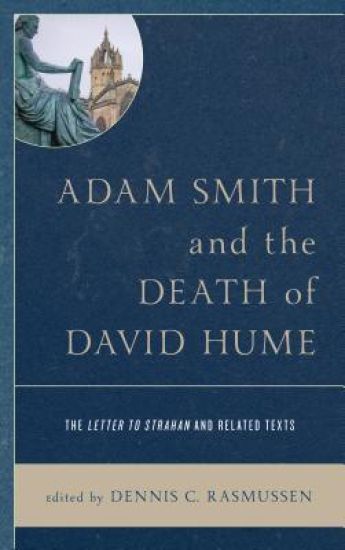
Adam Smith and the Death of David Hume
The Letter to Strahan is an ostensible letter that Adam Smith wrote on the last days, death, and character of his closest friend, the philosopher David Hume, and published alongside Hume’s autobiography, My Own Life, in 1777. Other than his two books, it is the only work that Smith published under his name during his lifetime, and it elicited a great deal of commentary and controversy. Because of Hume’s reputation for impiety, Smith’s portrayal of his friend’s cheerfulness and equanimity during his final days provoked outrage among the devout. Smith later commented that this work “brought upon me ten times more abuse than the very violent attack I had made upon the whole commercial system of Great Britain”—meaning, of course, The Wealth of Nations. This is the first annotated version of this fascinating and important work. Along with the Letter to Strahan, the volume also includes Hume’s My Own Life, the work to which the Letter was a kind of companion piece; two personal letters related to the Letter; and three published responses to the Letter—two viciously critical and one generally favorable. A substantial editor’s introduction discusses the context, composition, publication, and significance of the Letter, along with the strong reaction that it provoked. Taken together, the works included in the volume provide an entertaining and accessible entrée into some of the most controversial debates over religion and morality in the eighteenth century.