Kirjojen hintavertailu. Mukana 12 016 292 kirjaa ja 12 kauppaa.

Kirjahaku

Etsi kirjoja tekijän nimen, kirjan nimen tai ISBN:n perusteella.

1000 tulosta hakusanalla Adolf Calmberg

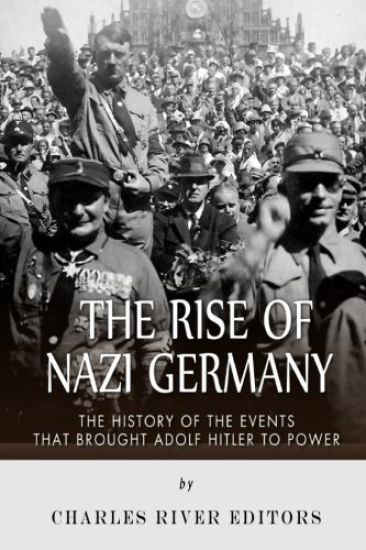
The Rise of Nazi Germany: The History of the Events that Brought Adolf Hitler to Power
*Includes pictures *Profiles the seminal events that helped Hitler rise to power and consolidate his position, including the end of World War I, the Beer Hall Putsch, the Burning of the Reichstag, and the Night of the Long Knives *Includes online resources for further reading *Includes a table of contents "I cannot remember in my entire life such a change in the attitude of a crowd in a few minutes, almost a few seconds ... Hitler had turned them inside out, as one turns a glove inside out, with a few sentences. It had almost something of hocus-pocus, or magic about it." - Dr. Karl Alexander von Mueller It is often claimed that Adolf Hitler rose to power in Germany through democratic means, and while that is a stretch, it is true that he managed to become an absolute dictator as Chancellor of Germany in the 1930s through a mixture of politics and intimidation. Ironically, he had set such a course only because of the failure of an outright coup attempt known as the Beer Hall Putsch about a decade earlier. At the close of World War I, Hitler was an impoverished young artist who scrapped by through selling souvenir paintings, but within a few years, his powerful oratory brought him to the forefront of the Nazi party in Munich and helped make the party much more popular. A smattering of followers in the hundreds quickly became a party of thousands, with paramilitary forces like the SA backing them, and at the head of it all was a man whose fiery orations denounced Jews, communists and other "traitors" for bringing upon the German nation the Treaty of Versailles, which had led to hyperinflation and a wrecked economy. The early 1930s were a tumultuous period for German politics, even in comparison to the ongoing transition to the modern era that caused various forms of chaos throughout the rest of the world. In the United States, reliance on the outdated gold standard and an absurdly parsimonious monetary policy helped bring about the Great Depression. Meanwhile, the Empire of Japan began its ultimately fatal adventurism with the invasion of Manchuria, alienating the rest of the world with the atrocities it committed. Around the same time, Gandhi began his drive for the peaceful independence of India through nonviolent protests against the British. It was in Germany, however, that the strongest seeds of future tragedy were sown. The struggling Weimar Republic had become a breeding ground for extremist politics, including two opposed and powerful authoritarian entities: the right-wing National Socialists and the left-wing KPD Communist Party. As the 1930s dawned, these two totalitarian groups held one another in a temporary stalemate, enabling the fragile ghost of democracy to continue a largely illusory survival for a few more years. That stalemate was broken in dramatic fashion on a bitterly cold night in late February 1933, and it was the Nazis who emerged decisively as the victors. A single act of arson against the famous Reichstag building proved to be the catalyst that propelled Adolf Hitler to victory in the elections of March 1933, which set the German nation irrevocably on the path towards World War II. Like other totalitarian regimes, the leader of the Nazis kept an iron grip on power in part by making sure nobody else could attain too much of it, leading to purges of high-ranking officials in the Nazi party. Of these purges, the most notorious was the Night of the Long Knives, a purge in the summer of 1934 that came about when Hitler ordered the surprise executions of several dozen leaders of the SA. This fanatically National Socialist paramilitary organization had been a key instrument in overthrowing democratic government in Germany and raising Hitler to dictatorial power in the first place. However, the SA was an arm of the Nazi phenomenon which had socialist leanings and which was the private army of Ernst R hm, which was enough for Hitler to consider the organization dangerous.
The Great False Economy is now DEBUNKED!: (Adolf Hitler had a much Better Economic System!)

The Great False Economy is now DEBUNKED!: (Adolf Hitler had a much Better Economic System!)

Worldwide People's Revolution!

Createspace Independent Publishing Platform
2016
nidottu
The Great False Economy is now Debunked by the Divine Sword of Provable Truths, which every Honest Righteous Person in this World of Wonders will no doubt quickly Agree with; but, X-amount of Rebels will no doubt Disagree with it: beCause they are in Love with their Great False Economy, in spite of the Fact that many books have been written about the EVILS of such a False Economy, which is forever Proving itself to be WRong. However, as far as we know, not one of those books presents any Reasonable Solutions for the Massive Problems that we have now gotten ourselves into by having a False Economy, which Relies Heavily on BORROWED Money from Foreign Nations, whereby American Tax Slaves and Interest Slaves have gotten themselves into tens of Trillions of Dollars-worth of DEBTS, which no one plans on Repaying. After all, according to the Way that the Lying Red Jews in New Yuck City have set it all up with their Lovers in Washington, District of Criminals, there is no Way to get Out of the Red-Jew Debt Trap, whereby they have Enriched themselves by TRILLIONS of Dollars, and also plan on Collecting Trillions more from us SLAVES Indeed, if Bonnie and Clyde had done such an Evil Thing as setting up the Bursting Housing Bubble, for Example, they would have been Sentenced to 10,000,000 Lifetimes in Prisons, just for Robbing the General Public of so much Money. However, when you have Puppet Politicians on your Side, there is not much to Worry about: beCause they will just Naturally OBEY when their Strings are Pulled on by their Puppet Masters. And thus we have the Military Industrial Congressional Red-Jew Bankers' COMPLEX, which is perfectly Legal in "The Divided States of United Lies," which Complex is never Mentioned by the Red-Jew-Controlled News Media, much less Explained like this Inspired Book Explains it, which also Presents HOW to have a GOOD Workable Economic System that almost everyone will LOVE: beCause it is "God's Plan," you might say, which is rather Difficult to Beat by any Means: because it is the Invention of an Honest and Generous WHITE Jew, who is our Elected King of the Economic Mountain. Indeed, we Challenge you to Present a Better Master Plan than that of The Worldwide People's Revolution (R)
The Rise of Nazi Germany: The History of the Events that Brought Adolf Hitler to Power
*Includes pictures *Profiles the seminal events that helped Hitler rise to power and consolidate his position, including the end of World War I, the Beer Hall Putsch, the Burning of the Reichstag, and the Night of the Long Knives *Includes online resources for further reading *Includes a table of contents "I cannot remember in my entire life such a change in the attitude of a crowd in a few minutes, almost a few seconds ... Hitler had turned them inside out, as one turns a glove inside out, with a few sentences. It had almost something of hocus-pocus, or magic about it." - Dr. Karl Alexander von Mueller It is often claimed that Adolf Hitler rose to power in Germany through democratic means, and while that is a stretch, it is true that he managed to become an absolute dictator as Chancellor of Germany in the 1930s through a mixture of politics and intimidation. Ironically, he had set such a course only because of the failure of an outright coup attempt known as the Beer Hall Putsch about a decade earlier. At the close of World War I, Hitler was an impoverished young artist who scrapped by through selling souvenir paintings, but within a few years, his powerful oratory brought him to the forefront of the Nazi party in Munich and helped make the party much more popular. A smattering of followers in the hundreds quickly became a party of thousands, with paramilitary forces like the SA backing them, and at the head of it all was a man whose fiery orations denounced Jews, communists and other "traitors" for bringing upon the German nation the Treaty of Versailles, which had led to hyperinflation and a wrecked economy. The early 1930s were a tumultuous period for German politics, even in comparison to the ongoing transition to the modern era that caused various forms of chaos throughout the rest of the world. In the United States, reliance on the outdated gold standard and an absurdly parsimonious monetary policy helped bring about the Great Depression. Meanwhile, the Empire of Japan began its ultimately fatal adventurism with the invasion of Manchuria, alienating the rest of the world with the atrocities it committed. Around the same time, Gandhi began his drive for the peaceful independence of India through nonviolent protests against the British. It was in Germany, however, that the strongest seeds of future tragedy were sown. The struggling Weimar Republic had become a breeding ground for extremist politics, including two opposed and powerful authoritarian entities: the right-wing National Socialists and the left-wing KPD Communist Party. As the 1930s dawned, these two totalitarian groups held one another in a temporary stalemate, enabling the fragile ghost of democracy to continue a largely illusory survival for a few more years. That stalemate was broken in dramatic fashion on a bitterly cold night in late February 1933, and it was the Nazis who emerged decisively as the victors. A single act of arson against the famous Reichstag building proved to be the catalyst that propelled Adolf Hitler to victory in the elections of March 1933, which set the German nation irrevocably on the path towards World War II. Like other totalitarian regimes, the leader of the Nazis kept an iron grip on power in part by making sure nobody else could attain too much of it, leading to purges of high-ranking officials in the Nazi party. Of these purges, the most notorious was the Night of the Long Knives, a purge in the summer of 1934 that came about when Hitler ordered the surprise executions of several dozen leaders of the SA. This fanatically National Socialist paramilitary organization had been a key instrument in overthrowing democratic government in Germany and raising Hitler to dictatorial power in the first place. However, the SA was an arm of the Nazi phenomenon which had socialist leanings and which was the private army of Ernst R hm, which was enough for Hitler to consider the organization dangerous.
Der Höllbart: Eine Erzählung. Mit einer Einleitung von Adolf Stern

Der Höllbart: Eine Erzählung. Mit einer Einleitung von Adolf Stern

Peter Rosegger

Createspace Independent Publishing Platform
2017
nidottu
Peter Rosegger: Der H llbart. Eine Erz hlung. Mit einer Einleitung von Adolf Stern Edition Holzinger. Taschenbuch Berliner Ausgabe, 2017 Durchgesehener Neusatz mit einer Biographie des Autors bearbeitet und eingerichtet von Michael Holzinger Erstdruck: Leipzig, Hesse und Becker, 1903 Herausgeber der Reihe: Michael Holzinger Reihengestaltung: Viktor Harvion Gesetzt aus der Minion Pro, 11 pt.
Le Grandi Avventure Dell'antropologia: Vol. 1: Da Adolf Bastian a Vinigi Lorenzo Grottanelli
Quando nel lontano 1980 apparve il sesto volume dell'Enciclopedia: Le Grandi Avventure dell'Archeologia, ero reduce da tre sole sessioni di ricerca antropologica sul campo: nel 1976 nella cittadina di Isiolo, nel Kenya settentrionale; nel 1978 nel villaggio Huave di Santa Maria del Mar, nell'istmo di Tehuantepec (Oaxaca, Messico); nel 1979 nella cittadina di Malakal, nella Provincia del Nilo Superiore (Sud Sudan).Oltre agli usuali problemi d'ordine burocratico e alle difficolt logistiche, che immancabilmente attendono al varco ogni ricercatore non "da tavolino", a quei tempi gi ero incorso in diverse "avventure", tutte comunque andate a lieto fine. Cos , dopo aver collaborato con diapositive all'apparato fotografico dell'Enciclopedia, pensai che sarebbe stato fantastico riuscire a realizzare l'"equivalente" antropologico Progetto che a quei tempi era forse troppo grande per le mie "possibilit ", cos che non and in porto... Oggi ritengo che et ed esperienza mi consentano di presentare ai lettori questa nuova trilogia dedicata agli Antropologi. Vi ho raccolto, le schede di 61 personaggi. Oltre a quella relativa ad una spedizione antropologica intercontinentale, svoltasi a cavallo tra il secolo XIX e XX.Gli uomini e le donne che hanno un "posto" in questa mia galleria virtuale, ciascuno nel proprio campo e nel proprio paese, sono personaggi indubbiamente d'eccezione e valgono, non solo per ci che hanno fatto all'Universit , o sul terreno. Tutti loro hanno difatti apportato straordinari contributi a scienza e conoscenza. Molti hanno avuto echi di portata mondiale e storica. E il loro vissuto continua tuttora a stupirmi. Poich , man mano che mi sono addentrato nelle loro vite, sono rimasto sempre pi colpito ed attratto da quelle che sono state le profonde passioni, che li hanno guidati sui loro strabilianti, se non unici, itinerari esistenziali e scientifici. Peraltro spesso in tempi ed epoche dove pressoch tutto risultava difficoltoso, pionieristico, pericoloso, impossibile. Poich ci si doveva inoltrare con pochi mezzi, a volte anche con scarsi riconoscimenti, in terreni "geografici" e "culturali" prima di allora mai violati. Osservando e partecipando alla vita dei popoli pi diversi, in particolare di quelli un tempo definiti "primitivi". Rischiando spesso la vita. Sempre ricercando la Verit e le risposte a mille interrogativi, hanno studiato le sfaccettature culturali dei gruppi umani. Questo volume contiene i primi venti protagonisti. Alcuni di essi si spinsero nelle inesplorate boscaglie del Mato Grosso e del Paraguay popolate dalle trib indie. Ma si recarono anche tra i pellerossa delle praterie e dei semi-desertici altopiani del Far West. Per conoscerli, studiarli, registrarne i canti. Addirittura vivere con loro. Cio "andando nativi". In un caso cercarono anche di "difenderli". Nell'Insulindia incontrarono i cannibali del Borneo e studiarono gli isolani di Alor. Nell'Asia sud-orientale si imbatterono nei popoli che vivevano sulle montagne e sopra le barche. Pi volte attraversarono da ovest ad est il Continente Nero e nell'Africa centro-orientale scoprirono una moltitudine di popoli, mentre in quella occidentale un colpo di fortuna li fece incappare in uno straordinario "cantastorie". In seguito dovettero anche prendere atto come egli appartenesse ad un popolo che sapeva dell'esistenza di una stella nana visibile solo con il telescopio. E che dire di uno dei maestri dell'antropologia, che si interess ai nudi Nilotici, ma anche ai Zande. Noti nella letteratura ottocentesca come Niam Niam, poich cannibali? Ecco ora arrivare colui che, con le sue molteplici spedizioni, riscopr prima di ogni altro lo spessore culturale delle civilt autoctone africane. Infine un altro italiano a me molto caro, conosciuto quando ero ancora un ragazzo, scelse l'Africa come campo di ricerca. Trascorrendo la sua vita scientifica tra Etiopia, Somalia e Ghana. Anche gli Inuit hanno qui un lor
Israel's Most Legendary Operations: The History and Legacy of the Capture of Adolf Eichmann, Operation Wrath of God, and Operation Entebbe
*Includes pictures*Includes online resources and a bibliography for further readingHistorians once portrayed Eichmann mostly as a colorless, unimaginative bureaucrat who carried out the Holocaust simply because he lacked the imagination to reject the crime. Essentially "banal," this version of Eichmann turned him into a compliant functionary who handled the ghastly matter of collecting, transporting, and murdering millions of people with the same bland methodical means that other administrators applied to supplying the Wehrmacht with bread rations or new boots. Of course, Eichmann's story is best known for the way in which the Mossad, Israel's intelligence agency, kidnapped him out of Argentina in 1960 to put him on trial back in the Jewish State. Employing the same failed defense used by many defendants at the Nuremburg Trials, Eichmann claimed he was simply following the orders of his superiors and was bound by an oath of loyalty, and while judges found him not guilty of personally killing anyone, he was found guilty of crimes against humanity, war crimes, and other crimes before being executed. At 10:00 a.m. on September 12, 1972, Prime Minister Golda Meir appeared before a special session of the Knesset, the Israeli parliament. Wasting no time, the austere, chain-smoking grandmother addressed a full house of 120 members. "I want to share my plans with you," she said. 'I've decided to pursue each and every one of them. Not one of the people involved in any way will be walking around on this earth for much longer. We will chase them to the last." These determined and resolute words were spoken in reference to the surviving operatives and planners of one of the most audacious terrorist attacks mounted against Israel since the founding of the nation in 1948. A week earlier, on September 5, 1972, 8 Palestinian terrorists belonging to the Black September faction of the Palestine Liberation Organization (PLO) entered the Olympic Village in Munich, West Germany, and took 11 Israeli athletes and team members hostage. After a lengthy standoff and a bungled rescue operation, all 11 were killed.A few months before Munich, on May 8, 1972, a new style of warfare came to the fore when 4 members of Black September hijacked Belgian Sabena Flight 571 en route from Brussels to Tel Aviv. From a security perspective, this was quite an unprecedented situation, as an operation to free hostages on board a commercial airliner had never been tried before. Hijackings and similar attacks only increased in number and violence in the following years. In response, the Israelis instituted a policy of an "eye for an eye," destroying Arab aircraft whenever the Palestinians or others damaged or destroyed one of their own. They also established a custom of refusing to negotiate with hostage-takers and terrorists, while greatly increasing security measures surrounding their national airline, El Al. Nonetheless, the violence only increased after the Israelis won the Yom Kippur War of 1973 in spite of early Arab successes. In the process of countering these attacks and hijackings, the Israelis developed valuable skills in commando operations and hostage rescue. This experience stood them in good stead in the summer of 1976, when a large-scale hijacking led to a daring Israeli operation thousands of miles from the Levant at the Ugandan airport of Entebbe, then part of the domain of dictator Idi "Big Daddy" Amin.Israel's Most Legendary Operations: The History and Legacy of the Capture of Adolf Eichmann, Operation Wrath of God, and Operation Entebbe examines the chain of events that led to three of the 20th century's most dramatic operations. Along with pictures of important people, places, and events, you will learn about Israel's most famous operations like never before.
Israel's Most Legendary Operations: The History and Legacy of the Capture of Adolf Eichmann, Operation Wrath of God, and Operation Entebbe
*Includes pictures*Includes online resources and a bibliography for further readingHistorians once portrayed Eichmann mostly as a colorless, unimaginative bureaucrat who carried out the Holocaust simply because he lacked the imagination to reject the crime. Essentially "banal," this version of Eichmann turned him into a compliant functionary who handled the ghastly matter of collecting, transporting, and murdering millions of people with the same bland methodical means that other administrators applied to supplying the Wehrmacht with bread rations or new boots. Of course, Eichmann's story is best known for the way in which the Mossad, Israel's intelligence agency, kidnapped him out of Argentina in 1960 to put him on trial back in the Jewish State. Employing the same failed defense used by many defendants at the Nuremburg Trials, Eichmann claimed he was simply following the orders of his superiors and was bound by an oath of loyalty, and while judges found him not guilty of personally killing anyone, he was found guilty of crimes against humanity, war crimes, and other crimes before being executed. At 10:00 a.m. on September 12, 1972, Prime Minister Golda Meir appeared before a special session of the Knesset, the Israeli parliament. Wasting no time, the austere, chain-smoking grandmother addressed a full house of 120 members. "I want to share my plans with you," she said. 'I've decided to pursue each and every one of them. Not one of the people involved in any way will be walking around on this earth for much longer. We will chase them to the last." These determined and resolute words were spoken in reference to the surviving operatives and planners of one of the most audacious terrorist attacks mounted against Israel since the founding of the nation in 1948. A week earlier, on September 5, 1972, 8 Palestinian terrorists belonging to the Black September faction of the Palestine Liberation Organization (PLO) entered the Olympic Village in Munich, West Germany, and took 11 Israeli athletes and team members hostage. After a lengthy standoff and a bungled rescue operation, all 11 were killed.A few months before Munich, on May 8, 1972, a new style of warfare came to the fore when 4 members of Black September hijacked Belgian Sabena Flight 571 en route from Brussels to Tel Aviv. From a security perspective, this was quite an unprecedented situation, as an operation to free hostages on board a commercial airliner had never been tried before. Hijackings and similar attacks only increased in number and violence in the following years. In response, the Israelis instituted a policy of an "eye for an eye," destroying Arab aircraft whenever the Palestinians or others damaged or destroyed one of their own. They also established a custom of refusing to negotiate with hostage-takers and terrorists, while greatly increasing security measures surrounding their national airline, El Al. Nonetheless, the violence only increased after the Israelis won the Yom Kippur War of 1973 in spite of early Arab successes. In the process of countering these attacks and hijackings, the Israelis developed valuable skills in commando operations and hostage rescue. This experience stood them in good stead in the summer of 1976, when a large-scale hijacking led to a daring Israeli operation thousands of miles from the Levant at the Ugandan airport of Entebbe, then part of the domain of dictator Idi "Big Daddy" Amin.Israel's Most Legendary Operations: The History and Legacy of the Capture of Adolf Eichmann, Operation Wrath of God, and Operation Entebbe examines the chain of events that led to three of the 20th century's most dramatic operations. Along with pictures of important people, places, and events, you will learn about Israel's most famous operations like never before.
"Philatelie im Geschichtsunterricht am Beispiel des Augsburger Religionsfriedens von 1555 und des Attentates auf Adolf Hitler vom 20. Juli 1944
1. Philatelie und GeschichtsunterrichtDie Philatelie hat seit jeher eine enge Bindung an die Geschichte. Beginnend bei den Insignien eines Staates ber die Bilder des jeweiligen Staatsoberhauptes, bis hin zu kulturellen Werten und Gedenken reicht das Themenspektrum, welches sich auf den Briefmarken wieder findet. Gegenstand der vorliegenden Arbeit ist die Philatelie, ihr Bezug zu Sch lern und den M glichkeiten f r eine Einbindung in den Geschichtsunterricht, auf Grundlage der lebensweltlichen Bez ge. Zu Beginn soll das Verh ltnis von Briefmarken bzw. der Lebenswelt in der Geschichtskultur aufgezeigt und gekl rt werden, welchen Stellenwert die Philatelie dort einnimmt. Weiter soll anhand des Augsburger Religionsfriedens von 1555 und des Attentats auf Adolf Hitler vom 20. Juli 1944 ein Zugang f r Sch ler zu Thematiken der Geschichte geschaffen werden. Dabei wird eine, unter Hinzunahme von Briefmarkenmotiven erstellte Umfrage unter Sch lern verschiedener Klassenstufen am Gymnasium herangezogen, um das jeweilige Geschichtsbewusstsein zu erkennen. Abschlie end sollen eventuelle Defizite im Geschichtsbewusstsein am Beispiel des Vergleiches vom Augsburger Religionsfrieden und dem 20. Juli 1944 aufgezeigt unter Einsatz von Briefmarken in der Geschichtsdidaktik vorgenommen werden.
Die deutsch-amerikanischen Beziehungen in der Amtszeit Roosevelts und dessen Bild von Adolf Hitler
Studienarbeit aus dem Jahr 2004 im Fachbereich Geschichte Europa - Deutschland - Nationalsozialismus, II. Weltkrieg, Note: 2,0, Universit t Potsdam, Veranstaltung: Die Geschichte der Amerikanischen Pr sidentschaft von F.D. Roosevelt bis Richard Nixon, Sprache: Deutsch, Abstract: Am 11. M rz 1945 verlie Adolf Hitler zum letzten Mal sein Hauptquartier, die Berliner Reichskanzlei, er hielt sein letzte Rede vor seinen Offizieren und sah dabei schon, dass er den Krieg verloren hatte und das Ende seines Reiches bevorstand. Zwei Wochen sp ter, am 29. M rz verlie auch sein gr ter Gegner Franklin Delano Roosevelt seinen Amtsitz, das Wei e Haus in Washington, zum allerletzten Mal. In einem Feldzug innerhalb von 3 Jahren, hatte der amerikanische Pr sident Hitlers Pl ne die Welt zu erobern, durchkreuzt, doch Franklin D. Roosevelt starb noch, bevor er sich ber seinen Triumph freuen konnte und auch Adolf Hitler erlebte die Kapitulation Deutschlands nicht mehr. Was zwischen diesen beiden Pers nlichkeiten geschah, ist bis jetzt einzigartig in der Geschichte der Menschheit: Sie kamen im gleichen Jahr an die Macht und pr gten die Zeit zwischen 1933 und 1945, die grausamste des Jahrhunderts mehr als alle Anderen, bevor sie fast zur gleichen Zeit dahin schieden. Als einziger US- Pr sident gelang Roosevelt noch dreimal die Wiederwahl, so dass sich seine Amtszeit genau mit der von Adolf Hitler deckte. ber diese beiden Staatsm nner und ihr Verh ltnis zueinander, speziell welche Meinungen und Auffassungen Roosevelt ber Adolf Hitler hatte, sollen in dieser Arbeit untersucht werden. In Bezug darauf besch ftigt sich die Arbeit mit Roosevelts politischer Laufbahn und erl utert im 1. Kapitel wie es dazu kam, das die USA in den Zweiten Weltkrieg eintrat und wie sich in Laufe der Zeit die deutsch-amerikanischen Beziehungen ver ndert haben. Das 2. Kapitel lenkt den Fokus auf die Zeit im Zweiten Weltkrieg und bietet ein ausreichendes Bild vom Ende der "Roosevelt ra" und "Hitlerdeutschlands"