Multi-Tiered Systems of Support in Elementary Schools is the leadership handbook and practitioner’s field guide to implementation of Multi-Tiered Systems of Support (MTSS) in elementary schools, leading to improved student outcomes and school safety. Schools can creatively customize replicable best practices using this in-depth operations manual to guide MTSS teams in planning and delivering tiers of academic and integrated social-emotional and behavioral supports to meet the needs of all students. This text introduces Healthy Minds, Safe Schools, an evidence-based program that significantly improves student well-being, school safety, and teacher feelings of self-efficacy for delivering social-emotional and behavioral curriculum in the classroom.Featuring team exercises and real perspectives from educators, this text shows how to make incremental yet manageable changes at elementary schools in accordance with public policy mandates and evidence-based practices by developing smart teams and programs, identifying roles and responsibilities, implementing layers of academic support and services, improving social-emotional and behavioral health of students, and creating an inclusive school culture. It details organizational psychology and socially just educational practices and is a handbook aligned with the U.S. Secret Service National Threat Assessment Center guidebook for preventing school violence and with the National Center for School Mental Health Curriculum.
This book highlights the field of youth mental health and why it is a specialty distinct from both child and adolescent and adult mental health. Youth Mental Health: Approaches to Emerging Mental Ill-Health in Young People examines issues such as mental health literacy, e-Health, family, psychological, vocational and pharmacological interventions. The authors also discuss issues that are particularly pertinent to young people, such as suicidality, substance abuse, gender identity and sexuality, attention deficit disorder and eating disorders. Taking a preventative focus, this book presents evidence for youth mental health as an important and growing field, makes the case for the reform of existing service structures to better serve this group and outlines the latest specialised approaches to treatment.Drawing on the knowledge and expertise of leading thinkers in youth mental health, this book is instrumental for mental health professionals who wish to design new specialised mental health systems for young people.
Freedom of speech and extremism in university campuses are major sources of debate and moral panic in the United Kingdom today. In 2018, the Joint Committee on Human Rights in Parliament undertook an inquiry into freedom of speech on campus. It found that much of the public concern is exaggerated, but identified a number of factors that require attention, including the impact of government counter-terrorism measures (the Prevent Duty) and regulatory bodies (including the Charity Commission for England and Wales) on freedom of speech.This book combines empirical research and philosophical analysis to explore these issues, with a particular focus on the impact upon Muslim students and staff. It offers a new conceptual paradigm for thinking about freedom of speech, based on deliberative democracy, and practical suggestions for universities in handling it.Topics covered include:The enduring legacy of key thinkers who have shaped the debate about freedom of speechThe role of right-wing populism in driving moral panic about universitiesThe impact of the Prevent Duty and the Charity Commission upon Muslim students, students’ unions and university managersStudents’ and staff views about freedom of speechAlternative approaches to handling freedom of speech on campus, including the Community of InquiryThis highly engaging and topical text will be of interest to those working within public policy, religion and education or religion and politics and Islamic Studies.The Open Access version of this book, available at http://www.taylorfrancis.com, has been made available under a Creative Commons [Attribution-Non Commercial-No Derivatives (CC-BY-NC-ND)] 4.0 license.
Some people believe that feminist ethics is little more than a series of dogmatic positions on issues such as abortion rights, pornography, and affirmative action.This caricature was never true, but Alison Jaggar's Living with Contradictions is the first book to demonstrate just how rich and complex feminist ethics has become. Beginning with the mo
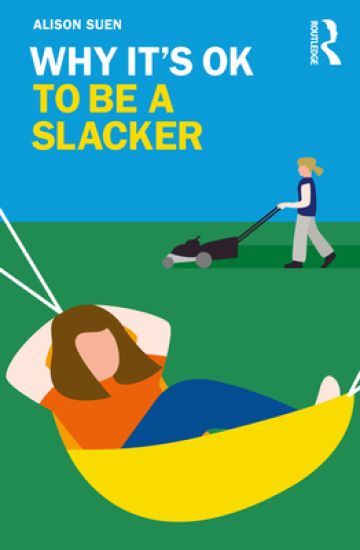
"Stop slacking off!"Your parents may have said this to you when you were deep into a video-gaming marathon. Or maybe your roommate said it to you when you were lounging on the couch scrolling through Instagram. You may have even said it to yourself on days you did nothing. But what is so bad about slacking? Could it be that there’s nothing bad about not making yourself useful?Against our hyper-productivity culture, Alison Suen critically interrogates our disapproval of slackers—individuals who do the bare minimum just to get by. She offers a taxonomy of slackers, analyzes common objections to slacking, and argues that each of these objections either fails or carries problematic assumptions. But while this book defends slacking, it does not promote the slacker lifestyle as the key to something better (such as cultural advancement and self-actualization), as some pro-leisure scholars have argued. In fact, Suen argues that slacking is unique precisely because it serves no noble cause. Slacking is neither a deliberate protest to social ills nor is it a path to autonomy. Slackers just slack. By examining the culture of hyper-productivity, Suen argues that it is in fact OK to be a slacker. Key Features Demonstrates the uniqueness of slacking, via a critical examination of six distinct "pro-leisure" philosophical accounts. Articulates a taxonomy of slackers, as well as in-depth examinations of Hollywood slackers and slackers in academia. Examines common objections to slacking (like the freeloading problem), and offers a rebuttal to each of them. Offers an understanding of our productivity culture from an existential perspective.
Home articulates a ‘critical geography of home’ in which home is understood as an emotive place and spatial imaginary that encompasses lived experiences of everyday, domestic life alongside a wider, and often contested, sense of being and belonging in the world. Engaging with the burgeoning cross-disciplinary interest in home since the first edition was published, this significantly revised and updated second edition contains new research boxes, illustrations, and contemporary examples throughout. It also adds a new chapter on ‘Home and the City’ that extends the scalar understanding of home to the urban. The book develops the conceptual and methodological underpinnings of a critical geography of home, drawing on key feminist, postcolonial, and housing thinkers as well as contemporary methodological currents in non-representational thinking and performance. The book’s chapters consider the making and unmaking of home across the domestic scale – house-as-home; the urban – city-as-home; national – nation-as-home; and homemaking in relation to transnational migration and diaspora. Each chapter includes illustrative examples from diverse geographical contexts and historical time periods. Chapters also address some of the key cross-cutting dimensions of home across these scales, including digital connectivity, art and performance, more-than-human constructions of home, and violence and dispossession. The book ends with a research agenda for home in a world of COVID-19. The book provides an understanding of home that has three intersecting dimensions: that material and imaginative geographies of home are closely intertwined; that home, power, and identity are intimately linked; and that geographies of home are multi-scalar. This framework, the examples used to illustrate it, and the intended audience of academics and students across the humanities and social sciences will together shape the field of home studies into the future.
In their journeys to prison and community re-entry, women leaving prison tend to share overarching challenges connected to lives of poverty, trauma, and abuse. Community Re-Entry: Uncertain Futures for Women Leaving Prison provides a rare opportunity to hear directly from women who have spent time in a Canadian federal penitentiary. Based on more than a decade of engagement with women in prison, the authors gathered rich and personal information on women’s lived experiences during incarceration and what they anticipated and hoped for on release. This book relates their narratives and the authors’ critical analysis of their experiences both within and outside prison. By bridging relational and other critical theories (critical feminist, critical race, critical disability, and post-structural understandings) with lived experience, this volume sheds light on the challenges incarcerated women face as they seek to return to the community as valued and contributing citizens.Community Re-Entry’s unique perspective on women’s post-imprisonment policy will appeal to academics, community-based advocates and activists, and undergraduate and postgraduate students studying criminology and social science courses on gender and crime, correctional policy, and qualitative research methods.
This book shows how to create a mentally healthy school by empowering young people to champion emotional wellbeing and positive mental health. It provides a practical toolkit to recruit and train Wellbeing Champions so that they can help to create an ethos and culture of positive mental health that ensures early access to the support and help needed. It explains how by focusing on emotions, selfcare, resilience, communication and support systems schools can identify what’s working well and address areas for development. The detailed and user-friendly resources support every stage and include lessons and activities, supervision and training sessions, risk assessments, application forms, feedback forms and certificates.Wellbeing Champions is for primary and secondary schools who want to take a whole-school approach to improve the wellbeing of both students and staff at KS2, KS3 and KS4.
The experience of adoption—both adopting and being adopted—can stir up deep emotional pain, often related to loss and early trauma. A for Adoption provides insight and support to those families and individuals facing these complex processes and challenges. Drawing on both a psychoanalytic, theoretical framework and first-hand accounts of adopters, adoptees, and professionals within the adoption process, Alison Roy responds to the need for further and consistent support for adoptive parents and children, to help inform and understand the reality of their everyday lives. This book explores both the current and historical context of adoption, as well as its depiction within literature, before addressing issues such as conflict in relationships, the impact of significant trauma and loss, attachment and the importance of early relationships, and contact with birth families. Uniquely, this book addresses the experiences of, and provides support for, both adoptive professionals and families. It focuses on understanding rather than apportioning blame, and responds to a plea from a parent who requested "a book to help me understand my child better".
This book provides new and experienced Special Educational Needs Coordinators (SENCOs) with a critical approach to understanding the importance of outstanding leadership of Special Educational Needs and Disabilities (SEND) and how to effectively meet the current SEND policy requirements.Closely informed by the statutory guidance for SENCOs, this book covers all aspects of this challenging leadership role within the school. It provides a principled approach to understanding the challenges and complexity of SEND within the current context. Through concise summaries of policy and current research, critical discussions, reflective activities, case studies as well as practical examples, it helps the reader engage more deeply in critical thinking about the effectiveness of current practices in their own school setting and ways to develop them further for the future. Alison Ekins and Lorna Hughes establish that outstanding leadership in special educational needs is not something that can be achieved just by a single individual. The SENCO has a key role in enabling and empowering everyone in their school setting to understand SEND and engage actively in the development of more inclusive systems to meet the needs of diverse pupils.Outstanding Leadership in Special Educational Needs, will, therefore, support everyone involved in education to develop their understanding of SEND. It is key reading for teachers, educational leaders and policymakers.
This book explores the relationship with time in early childhood by arguing for the valuing of slow pedagogies and slow knowledge. Alison Clark points to alternative practices in Early Childhood Education and Care that enable a different pace and rhythm, against the backdrop of the acceleration in early childhood and the proliferation of testing and measurement. Diverse approaches are explored to enable an ‘unhurried child’ and less hurried adults. Slow Knowledge and the Unhurried Child is divided in three parts. Part 1, Reasons to be slow, looks at the pressures in Early Childhood Education and Care to speed up and for children to be ‘readied’ for the next stage. The book then explores different relationships with time for young children and educators. Part 2, Slow pedagogies and practices, explore some of the forms slow practices can take including outdoors, in the studio, in everyday routines, through stories, in pedagogical documentation and in ‘slow’ research. Part 3, Moving forward, shows what a ‘timefull’ approach to ECEC can look like, whilst debating the challenges and possibilities that exist. The book serves as a catalyst for urgent discussion about the need to slow down in early childhood education and teacher education and explores case studies of where slow early childhood education are already happening. It will be a key reading for researchers, practitioners and policy-makers about the relationship with time in early childhood and the importance of taking a longer view.
The historical context of colonisation situates the analysis in Children, Care and Crime of the involvement of children with care experience in the criminal justice system in an Australian jurisdiction (New South Wales), focusing on residential care, policing, the provision of legal services and interactions in the Children’s Court.While the majority of children in care do not have contact with the criminal justice system, this book explores why those with care experience, and Indigenous children, are over-represented in this system. Drawing on findings from an innovative, mixed-method study – court observations, file reviews and qualitative interviews – the book investigates historical and contemporary processes of colonisation and criminalisation. The book outlines the impact of trauma and responses to trauma, including inter-generational trauma caused by policies of colonisation and criminalisation. It then follows a child’s journey through the continuum of care to the criminal justice system, examining data at each stage including the residential care environment, interactions with police, the provision of legal services and experiences at the Children’s Court. Drawing together an analysis of the gendered and racialised treatment of women and girls with care experience in the criminal justice system, the book particularly focuses on legacies of forced removal and apprenticeship which targeted Aboriginal and Torres Strait Islander women and girls. Through analysing what practices from England and Wales might offer the NSW context, our findings are enriched by further reflection on how decriminalisation pathways might be imagined. While there have been many policy initiatives developed to address criminalisation, in all parts of the study little evidence was found of implementation and impact. To conclude, the book examines the way that ‘hope tropes’ are regularly deployed in child protection and criminal justice to dangle the prospect of reform, and even to produce pockets of success, only to be whittled away by well-worn pathways to routine criminalisation. The conclusion also considers what a transformative agenda would look like and how monitoring and accountability mechanisms are key to new ways of operating. Finally, the book explores strengths-based approaches and how they might take shape in the child protection and criminal justice systems.Children, Care and Crime is aimed at researchers, lawyers and criminal justice practitioners, police, Judges and Magistrates, policy-makers and those working in child protection, the criminal justice system or delivering services to children or adults with care experience. The research is multidisciplinary and therefore will be of broad appeal to the criminology, law, psychology, sociology and social work disciplines. The book is most suitable for undergraduate courses focusing on youth justice and policing, and postgraduates researching in this field.