Kirjojen hintavertailu. Mukana 11 234 096 kirjaa ja 12 kauppaa.

Kirjahaku

Etsi kirjoja tekijän nimen, kirjan nimen tai ISBN:n perusteella.

1000 tulosta hakusanalla Austin Soderquist

The Architecture of Sharpe, Paley and Austin

The Architecture of Sharpe, Paley and Austin

Geoff Brandwood

Historic England
2012
sidottu
One of England’s greatest Victorian architectural practices was based, not in London, but in the relatively quiet town of Lancaster. For just over a century the leading practice in the area was that of Sharpe, Paley and Austin. It was founded, just at the start of the Victorian Gothic Revival, by the remarkable, multi-talented Edmund Sharpe – architect, engineer, businessman, politician and winner of the Royal Institute of British Architect’s Royal Gold Medal for his work in architectural history. E G Paley developed the practice and took on in 1867 the man who elevated it to greatness – Hubert Austin, described as an architect of genius by Pevsner. The firm established a national reputation, especially for its many fine churches, ranging from great urban masterpieces to delightful country ones, which are imbued with the spirit of the Arts & Crafts movement. The practice was extraordinarily prolific and took on commissions for almost every imaginable building type – country houses, railways, schools, factories, an asylum and commercial premises in addition to the churches. The book explores with the aid of Austin’s great-grandson, not only the firm’s buildings but also a fascinating web of family and professional interconnections which provide the backdrop to the story. It is richly illustrated, including family photographs never previously published. This treatment will appeal to architectural historians, students of the architecture of the Victorian and Edwardian eras and social historians.
J. L. Austin

J. L. Austin

M. W. Rowe

Oxford University Press
2023
sidottu
The first biography of the philosopher who became a mastermind of Allied intelligence in World War Two. Austere, witty, and formidable, J. L. Austin (1911-1960) was the leader of Oxford Ordinary Language Philosophy and the founder of speech-act theory. This book--the first full-length biography of Austin--enhances our understanding of his dominance in 1950s Oxford, examining the significance of his famous Saturday morning seminars, and his sometimes tense relationships with Gilbert Ryle, Isaiah Berlin, A. J. Ayer, and Elizabeth Anscombe. Throwing new light on Austin's own intellectual development, it probes the strengths and weaknesses of his mature philosophy, and reconstructs his late unpublished work on sound symbolism. Austin's philosophical work remains highly influential, but much less well known is his outstanding contribution to British Intelligence in World War Two. The twelve central chapters thus investigate Austin's part in the North African campaign, the search for the V-weapons, the preparations for D-Day, the Battle of Arnhem, and the Ardennes Offensive, and show that, in the case of D-Day, he played a major role in the ultimate Allied victory. While exploring Austin's dramatic and romantic personal history, Rowe pays close attention to his harsh schooling and pre-war affair with a married Frenchwoman; his wartime marriage, bomb injury, and response to a colleague's murder; and his post-war family life, the growing influence of America, and his tragically premature death. Adding considerably to our knowledge of World War Two, and Austin's diverse and enduring influence, this biography reveals the true complexity of his character, and the full range and significance of his achievements.
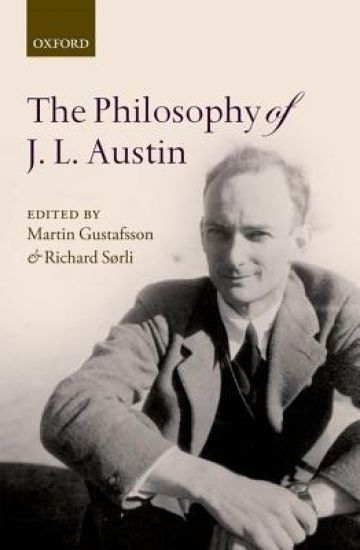
The Philosophy of J. L. Austin

The Philosophy of J. L. Austin

Oxford University Press
2011
sidottu
These new essays on J. L. Austin's philosophy constitute the first major study of his thought in decades. Eight leading philosophers join together to present a fresh evaluation of his distinctive work, showing how it can be brought to bear on issues at the top of today's philosophical agenda, such as scepticism and contextualism, the epistemology of testimony, the generality of the conceptual, and the viability of the semantics/pragmatics distinction. The contributors offer in-depth interpretations of Austin's views and demonstrate why his work deserves a more central place in mainstream philosophical discussion than it currently has. The volume also contains a substantial introduction that situates Austin's thought in its original intellectual milieu and provides an overview of the many different ways in which his ideas have influenced later developments, in philosophy and elsewhere.
Symposium on J. L. Austin (Routledge Revivals)
J. L. Austin (1911-1960) exercised in Post-war Oxford an intellectual authority similar to that of Wittgenstein in Cambridge. Although he completed no books of his own and published only seven papers, Austin became through lectures and talks one of the acknowledged leaders in what is called ‘Oxford philosophy’ or ‘ordinary language philosophy’. Few would dispute that among analytic philosophers Austin stands out as a great and original philosophical genius. Three volumes of his writing, published after his death, have become classics in analytical philosophy: Philosophical Papers; Sense and Sensibilia; and How to Do Things with Words.First published in 1969, this book is a collection of critical essays on Austin’s philosophy written by well-known philosophers, many of whom knew Austin personally. A number of essays included were especially written for this volume, but the majority have appeared previously in various journals or books, not all easy to obtain.
Symposium on J. L. Austin (Routledge Revivals)
JL Austin (1911-1960) exercised in Post-war Oxford an intellectual authority similar to that of Wittgenstein in Cambridge. Although he completed no books of his own and published only seven papers, Austin became through lectures and talks one of the acknowledged leaders in what is called ‘Oxford philosophy’ or ‘ordinary language philosophy’. Few would dispute that among analytic philosophers Austin stands out as a great and original philosophical genius. Three volumes of his writing, published after his death, have become classics in analytical philosophy: Philosophical Papers; Sense and Sensibilia; and How to Do Things with Words.First published in 1979, this book is a collection of critical essays on Austin’s philosophy written by well-known philosophers, many of whom knew Austin personally. A number of essays included were especially written for this volume, but the majority have appeared previously in various journals or books, not all easy to obtain.
Pneumonia by R. Heffron, Introduction by Maxwell Finland. The Biology of Pneumococcus by B. White, New Foreword by Robert Austin
The search for effective immunization against pneumonia was a principal avenue of investigation before the advent of The search for effective immunization against pneumonia was a principal avenue of investigation before the advent of antibiotics made such an effort appear unnecessary. Recently, however, the limitations of antibiotic therapy have become increasingly evident, and interest has been renewed in many of the threads of research which have all but lain dormant since the 1930s. In 1978, a pneumococcal vaccine was licensed by the F.D.A., merely as evidence of a renaissance in pneumococcal research which is now taking place. We are pleased to be reissuing two classic volumes which provide a unique repository of data amassed prior to the time when penicillin precluded further exhaustive observation of the unmodified infection.Heffron’s Pneumonia is a compilation and analysis of all aspects of pneumococcal disease, including the distribution of pneumococcal types, the pathology of pneumonia, its epidemiology, symptoms, signs, complications, diagnosis, prognosis, and immunology. With a complete cross-reference index and an extensive bibliography, Heffron’s book is still the definitive work on pneumococcal infections.White’s Biology of Pneumococcus contains the wealth of information acquired in the first six decades following the discovery of the pneumococcus. With a bibliography drawing together some 1593 papers, White’s volume is of unquestionable significance as a historical record and the basis for further study.
Shaped by Vision, a Biography of T. Austin-Sparks

Shaped by Vision, a Biography of T. Austin-Sparks

Rex G. Beck

Greater Purpose Publishers
2013
nidottu
This biography of Theodore Austin-Sparks covers his life from childhood to the end of his ministry. It includes many excerpts from his bi-monthly journal, "A Witness and a Testimony" and also includes short summaries of 28 books he published throughout his ministry.The ministry of T. Austin-Sparks portrays a profound picture of Christ and of God's eternal purpose to head up all things in Christ. On the side of personal experience, his ministry opens the door to a deep inward work of the cross of Christ, and inward knowing of the Spirit, and an inward working of God's divine life. He portrays this experience in the context of a local assembly and emphasizes that the church, not merely individual believers, is the unique instrument through which God will gain His eternal goal.
"We Cousins" (Virginia to Texas) A Genealogy of Several of the Families Comprising the Alabama Settlement of Austin's Colony, 1830 and 1831, Now Texas
This book is a genealogy of several of the families that settled in Texas as part of Austin's Colony. It includes detailed information on the family history of these families, including their migration from Virginia to Texas.This work has been selected by scholars as being culturally important, and is part of the knowledge base of civilization as we know it.This work is in the "public domain in the United States of America, and possibly other nations. Within the United States, you may freely copy and distribute this work, as no entity (individual or corporate) has a copyright on the body of the work.Scholars believe, and we concur, that this work is important enough to be preserved, reproduced, and made generally available to the public. We appreciate your support of the preservation process, and thank you for being an important part of keeping this knowledge alive and relevant.
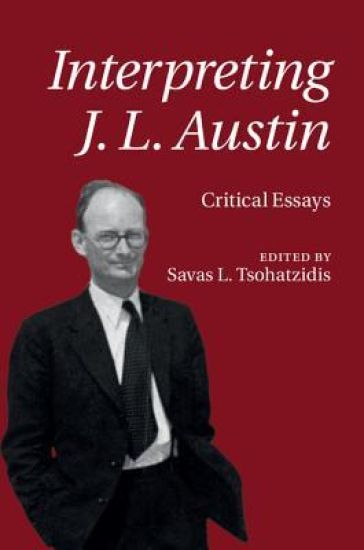
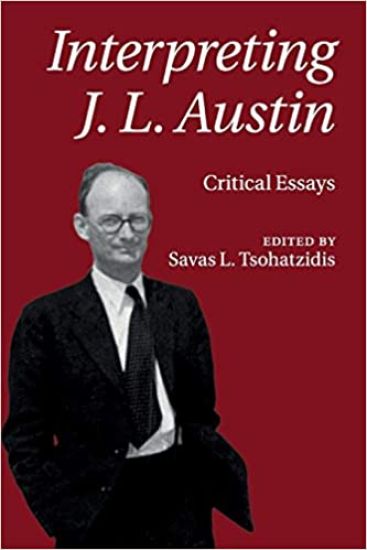
Interpreting J. L. Austin

Interpreting J. L. Austin

Cambridge University Press
2017
sidottu
In this volume, Savas L. Tsohatzidis brings together a team of leading experts to provide up-to-date perspectives on the work of J. L. Austin, a major figure in twentieth-century philosophy and an important contributor to theories of language, truth, perception, and knowledge. Focusing on aspects of Austin's writings in these four areas, the volume's ten original essays critically examine central elements of his philosophy, exploring their interrelationships, their historical context, their reception, and their implications for key issues of contemporary philosophical research. The volume deepens our understanding of Austin's philosophy while illustrating its continuing significance, and will appeal to students and scholars of modern philosophy, particularly those interested in the philosophy of language and epistemology.
Interpreting J. L. Austin

Interpreting J. L. Austin

Cambridge University Press
2019
pokkari
In this volume, Savas L. Tsohatzidis brings together a team of leading experts to provide up-to-date perspectives on the work of J. L. Austin, a major figure in twentieth-century philosophy and an important contributor to theories of language, truth, perception, and knowledge. Focusing on aspects of Austin's writings in these four areas, the volume's ten original essays critically examine central elements of his philosophy, exploring their interrelationships, their historical context, their reception, and their implications for key issues of contemporary philosophical research. The volume deepens our understanding of Austin's philosophy while illustrating its continuing significance, and will appeal to students and scholars of modern philosophy, particularly those interested in the philosophy of language and epistemology.
J. L. Austin on Language

J. L. Austin on Language

Palgrave Macmillan
2014
sidottu
Looking at the work of J.L. Austin, who subjected language to a close and intense analysis, this book deals with his examination of the various things we do with words, and with the philosophical insights he believed could be gained by closely examining the uses of words by non-philosophers.