
Kirjahaku
Etsi kirjoja tekijän nimen, kirjan nimen tai ISBN:n perusteella.
1000 tulosta hakusanalla Benedict Boo




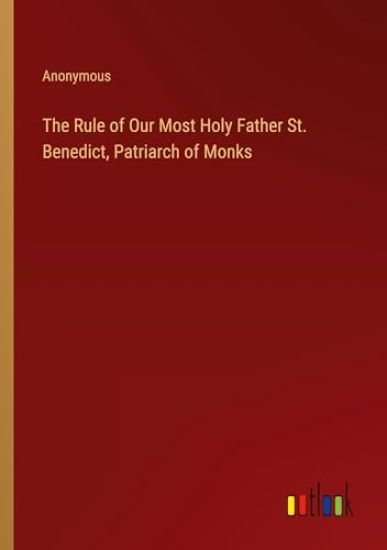
The Rule of Our Most Holy Father St. Benedict, Patriarch of Monks
Outlook Verlag
2024
pokkari
Reprint of the original, first published in 1875.
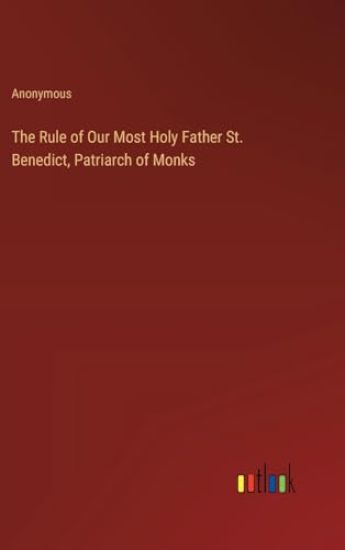
The Rule of Our Most Holy Father St. Benedict, Patriarch of Monks
Outlook Verlag
2024
sidottu
Reprint of the original, first published in 1875.

The Rule of our Most Holy Father St. Benedict, Patriarch of Monks. From the Old English Edition of 1638
Anonymous
Outlook Verlag
2024
nidottu


Maurus-Kinter, P: Studien und Mittheilungen aus dem Benedict
Antigonos Verlag
2024
nidottu

Maurus-Kinter, P: Studien und Mittheilungen aus dem Benedict
Antigonos Verlag
2024
sidottu



The English Black Monks of St. Benedict - Volume the First is an unchanged, high-quality reprint of the original edition of 1897. Hansebooks is editor of the literature on different topic areas such as research and science, travel and expeditions, cooking and nutrition, medicine, and other genres. As a publisher we focus on the preservation of historical literature. Many works of historical writers and scientists are available today as antiques only. Hansebooks newly publishes these books and contributes to the preservation of literature which has become rare and historical knowledge for the future.
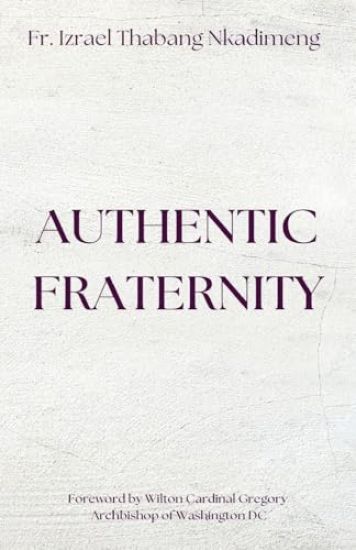
AUTHENTIC FRATERNITY. The Notion of Fraternitas in Pope Benedict XVI's Caritas in Veritate and Africae Munus
Izrael Thabang Nkadimeng
Casa Lago Press
2025
pokkari

The Rule of our Most Holy Father St. Benedict, Patriarch of Monks. From the Old English Edition of 1638
Anonymous
Antigonos Verlag
2025
nidottu



Original Papal Documents in England and Wales from the Accession of Pope Innocent III to the Death of Pope Benedict XI (1198-1304)
Clarendon Press
1999
sidottu
The medieval popes conducted a vigorous correspondence with monarchs, clergy, and lay people all over western Europe. Streams of applicants made their way to the papal court for confirmations of rights, concessions, and on some occasions to get justice. The papal Chancery was the executive office, constantly on the move with the pope and the cardinals who formed the curia. Officials connected with the issue of the letters - scribes, correctors, taxators, bullators, registrars - followed the papal court. Only a small proportion of the original letters sent and received have survived. They are, therefore, very precious, not only for what they tell us about the course of events, but also for the light they throw on how papal government and administration worked. In this volume over a thousand surviving letters have been brought together, analysed, and discussed for the first time. They provide important insights not only into the activities of the papal court but also into the aspirations and desires of the petitioners.
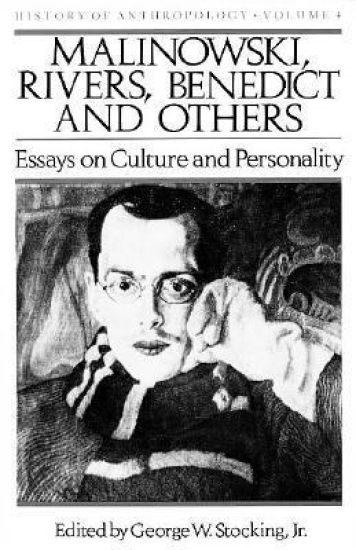
Malinowski, Rivers, Benedict and Others
George W. Stocking
University of Wisconsin Press
1988
nidottu
History of Anthropology is a series of annual volumes, inaugurated in 1983, each of which treats a theme of major importance in both the history and current practice of anthropological inquiry. Drawing its title from a poem of W. H. Auden’s, the present volume, Malinowski, Rivers, Benedict and Others focuses on the emergence of anthropological interest in “culture and personality” during the 1920s and 1930s. It also explores the historical, cultural, literary, and biological background of major figures associated with the movement, including Bronislaw Malinowski, Edward Sapir, Abram Kardiner, Ruth Benedict, Margaret Mead, and Gregory Bateson. Born in the aftermath of World War I, flowering in the years before and after World War II, severely attacked in the 1950s and 1960s, “culture and personality” was subsequently reborn as “psychological anthropology.” Whether this foreshadows the emergence of a major anthropological subdiscipline (equivalent to cultural, social, biological, or linguistic anthropology) from the current welter of “adjectival” anthropologies remain to be seen. In the meantime, the essays collected in the volume may encourage a rethinking of the historical roots of many issues of current concern.