Kirjojen hintavertailu. Mukana 11 717 486 kirjaa ja 12 kauppaa.

Kirjahaku

Etsi kirjoja tekijän nimen, kirjan nimen tai ISBN:n perusteella.

1000 tulosta hakusanalla Bill Carson

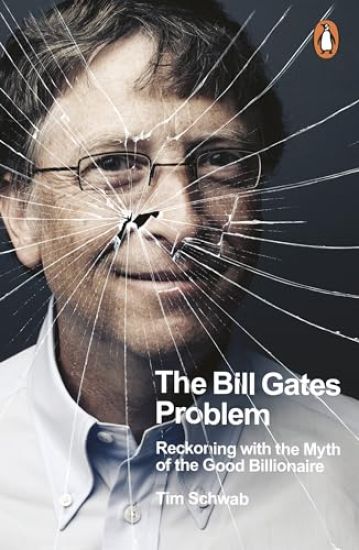
The Bill Gates Problem

The Bill Gates Problem

Tim Schwab

PENGUIN BOOKS LTD
2024
pokkari
A NEW YORK TIMES EDITORS’ CHOICE‘Nobody who comes away from reading The Bill Gates Problem will look at him in the same way’ The TimesYou know him as the founder of Microsoft; the philanthropic, kind-hearted billionaire who has donated endless funds to good causes around the world. But there’s another side to Bill Gates.In this fearless, groundbreaking investigation, Tim Schwab offers readers a counter-narrative, one where Gates has used his monopolistic approach in business to amass a stunning level of control over public policy, scientific research and the news media. Whether he is pushing new educational standards in America, health reforms in India or industrialized agriculture in Africa, Gates’s unbridled social experimentation has shown itself to be not only undemocratic, but also ineffective.All of which begs the question: why should the super rich be able to transform their wealth into political power, and just how far can they go?'An extraordinary and detailed work of investigative journalism' The Telegraph
The Bill Gates Problem

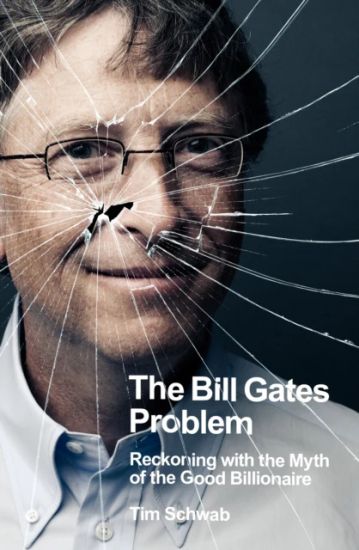
The Bill Gates Problem

Tim Schwab

PENGUIN BOOKS LTD
2023
sidottu
‘Nobody who comes away from reading The Bill Gates Problem will look at him in the same way’ - The TimesYou know him as the founder of Microsoft; the philanthropic, kind-hearted billionaire who has donated endless funds to good causes around the world. But there's another side to Bill Gates.We might like to think of the Gates Foundation as an innocent charity giving away money, collaborating with stakeholders, and listening to the desires of the populations it hopes to help, but is that how it works in practice?Combining rich storytelling and ground-breaking reporting, The Bill Gates Problem offers readers a provocative and timely counter-narrative about one of the world's most widely recognized individuals - a true global celebrity with international reach. But more than that, this book speaks to a vital political question around economic inequality and the erosion of democratic institutions - why should the super-rich be able to transform their wealth into political power, and just how far can they go?
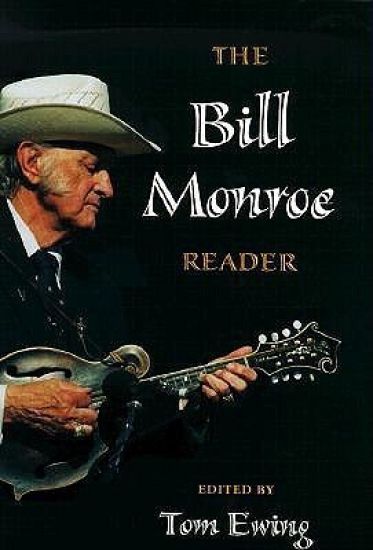
The Bill Monroe Reader

The Bill Monroe Reader

University of Illinois Press
2000
sidottu
"Tell 'em I'm a farmer with a mandolin and a high tenor voice," Bill Monroe said. Known as the Father of Bluegrass Music, Monroe pioneered a whole new category of music and inspired generations of musicians and fans. Yet from his founding of the original bluegrass band through six decades of performing, he remained an enigmatic figure, a compelling mixture of fierce intensity, homespun modesty, and musical integrity. Determined to play the mandolin in a way it had never been played before, Monroe distinguished himself in the mid-1930s with the Monroe Brothers then began forming his own band, the Blue Grass Boys, in 1938. By the mid-1940s other bands were copying his sound, and a new style, bluegrass music, was born. While country music moved toward electrification, Monroe maintained his acoustic ensemble and developed his "high, lonesome sound," performing nearly up to his death in 1996. In this eclectic, richly illustrated reader, former Blue Grass Boy Tom Ewing gathers the most significant and illuminating of the many articles that have been written about Monroe. Through the writings of nearly sixty observers, interviewers, admirers, folklorists, and other scholars, along with Ewing's astute commentary, The Bill Monroe Reader offers a multifaceted view of one of the most influential country musicians of the twentieth century. Lively, heartfelt, and informative, The Bill Monroe Reader is a fitting tribute to the man and the musician who transformed the traditional music of western Kentucky into an international sensation.
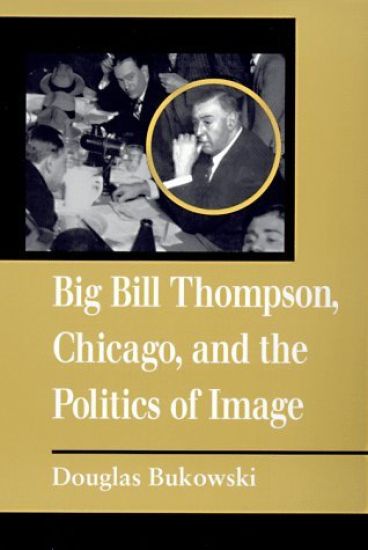
Big Bill Thompson, Chicago, and the Politics of Image

Big Bill Thompson, Chicago, and the Politics of Image

Douglas Bukowski

University of Illinois Press
1997
nidottu
There are politics, politicians, and scandals, but only in Chicago can any combination of these spark the kind of fireworks they do. And no other American city has had a mayor like William Hale "Big Bill" Thompson, not in any of his political incarnations. A brilliant chameleon of a politician, Thompson could move from pro- to anti-prohibition, from opposing the Chicago Teachers Federation to opposing a superintendent hostile to it, from being anti-Catholic to winning, in huge numbers, the Catholic vote. Shape-shifter extraordinaire, Thompson stayed in power by repeatedly altering his political image. In Big Bill Thompson, Chicago, and the Politics of Image, Douglas Bukowski captures the essence of this wily urban politico as no other biographer or historian has. Using materials accessible only thanks to the Freedom of Information Act, Bukowski has fashioned an unforgettable story of a volatile Chicago leader and his era. And he does it with such grace and in such an irresistible style that readers will yearn to visit the local speakeasy and lift a glass to colorful politicians gone by.
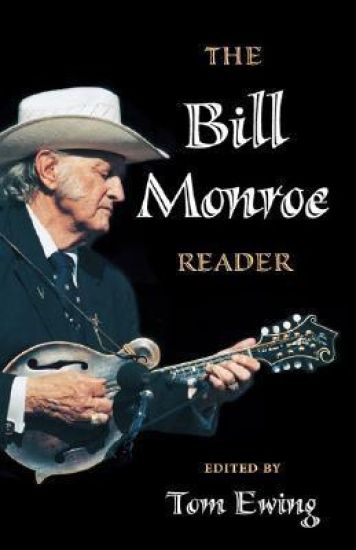
The Bill Monroe Reader

The Bill Monroe Reader

University of Illinois Press
2006
nidottu
"Tell 'em I'm a farmer with a mandolin and a high tenor voice," Bill Monroe said. Known as the Father of Bluegrass Music, Monroe pioneered a whole new category of music and inspired generations of musicians and fans. Yet from his founding of the original bluegrass band through six decades of performing, he remained an enigmatic figure, a compelling mixture of fierce intensity, homespun modesty, and musical integrity. Determined to play the mandolin in a way it had never been played before, Monroe distinguished himself in the mid-1930s with the Monroe Brothers then began forming his own band, the Blue Grass Boys, in 1938. By the mid-1940s other bands were copying his sound, and a new style, bluegrass music, was born. While country music moved toward electrification, Monroe maintained his acoustic ensemble and developed his "high, lonesome sound," performing nearly up to his death in 1996. In this eclectic, richly illustrated reader, former Blue Grass Boy Tom Ewing gathers the most significant and illuminating of the many articles that have been written about Monroe. Through the writings of nearly sixty observers, interviewers, admirers, folklorists, and other scholars, along with Ewing's astute commentary, The Bill Monroe Reader offers a multifaceted view of one of the most influential country musicians of the twentieth century. Lively, heartfelt, and informative, The Bill Monroe Reader is a fitting tribute to the man and the musician who transformed the traditional music of western Kentucky into an international sensation.
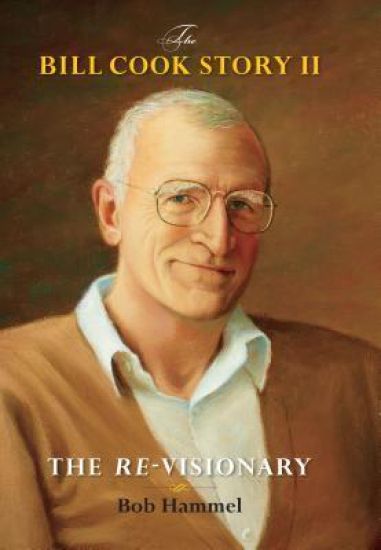
The Bill Cook Story II

The Bill Cook Story II

Bob Hammel

Indiana University Press
2015
sidottu
Working from the spare bedroom of his Bloomington, Indiana, apartment in 1963 with a $1,500 investment, Bill Cook began to construct the wire guides, needles, and catheters that would become the foundation of the global multi-billion-dollar Cook Group. This story has been eloquently told in Bob Hammel's The Bill Cook Story: Ready, Fire, Aim. The sequel to this story explores Cook's final years, when the restoration work he championed, epitomized by the spectacular West Baden Hotel, became a driving force in his life and a source of great satisfaction and pleasure. Hammel takes us behind the scenes on the important restorations of Beck's Mill, a Methodist Church that is now Indiana Landmarks Center, and the remarkable commitment of Cook toward reviving his home town, Canton, Illinois. At the heart of the book are the events of Bill Cook's final days and his death in April, 2011, but this solemn chronicle soon gives way to fond recollections of Cook's extraordinary life and legacy, and to the continuing saga of the company he founded as it looks toward a bright future.
The Bill of Rights in Modern America
As the 2020s began, protestors filled the streets, politicians clashed over how to respond to a global pandemic, and new scrutiny was placed on what rights US citizens should be afforded. Newly revised and expanded to address immigration, gay rights, privacy rights, affirmative action, and more, The Bill of Rights in Modern America provides clear insights into the issues currently shaping the United States. Essays explore the law and history behind contentious debates over such topics as gun rights, limits on the powers of law enforcement, the death penalty, abortion, and states' rights. Accessible and easy to read, the discerning research offered in The Bill of Rights in Modern America will help inform critical discussions for years to come.
The Bill of Rights in Modern America
As the 2020s began, protestors filled the streets, politicians clashed over how to respond to a global pandemic, and new scrutiny was placed on what rights US citizens should be afforded. Newly revised and expanded to address immigration, gay rights, privacy rights, affirmative action, and more, The Bill of Rights in Modern America provides clear insights into the issues currently shaping the United States. Essays explore the law and history behind contentious debates over such topics as gun rights, limits on the powers of law enforcement, the death penalty, abortion, and states' rights. Accessible and easy to read, the discerning research offered in The Bill of Rights in Modern America will help inform critical discussions for years to come.
The Bill Cook Story

The Bill Cook Story

Bob Hammel

Indiana University Press
2008
sidottu
Bill Cook epitomizes the American success story. His business ventures in medical devices, pharmaceuticals, genetics, real estate, retail management, and travel services have made him a billionaire. Yet, Cook continues to lead a modest life, involving himself in a variety of philanthropic activities that have included historic preservation and even a marching band. This riveting story is the first-ever biography of the entrepreneur who, working from the spare bedroom of his Bloomington, Indiana, apartment in 1963 with a $1,500 investment, began to construct the wire guides, needles, and catheters that would become the foundation of the global multi-billion-dollar Cook Group. Biographer Bob Hammel, with extraordinary access to Cook, his files, and his associates, has created a vivid portrait of this modern, multidimensional Horatio Alger—quirky humor, widely varied interests, and all. Informative and inspiring, this book celebrates an exceptional self-made individual.
Buffalo Bill and Sitting Bull

Buffalo Bill and Sitting Bull

Bobby Bridger

University of Texas Press
2002
pokkari
Army scout, buffalo hunter, Indian fighter, and impresario of the world-renowned "Wild West Show," William F. "Buffalo Bill" Cody lived the real American West and also helped create the "West of the imagination." Born in 1846, he took part in the great westward migration, hunted the buffalo, and made friends among the Plains Indians, who gave him the name Pahaska (long hair). But as the frontier closed and his role in "winning the West" passed into legend, Buffalo Bill found himself becoming the symbol of the destruction of the buffalo and the American Indian. Deeply dismayed, he spent the rest of his life working to save the remaining buffalo and to preserve Plains Indian culture through his Wild West shows. This biography of William Cody focuses on his lifelong relationship with Plains Indians, a vital part of his life story that, surprisingly, has been seldom told. Bobby Bridger draws on many historical accounts and Cody's own memoirs to show how deeply intertwined Cody's life was with the Plains Indians. In particular, he demonstrates that the Lakota and Cheyenne were active cocreators of the Wild West shows, which helped them preserve the spiritual essence of their culture in the reservation era while also imparting something of it to white society in America and Europe. This dual story of Buffalo Bill and the Plains Indians clearly reveals how one West was lost, and another born, within the lifetime of one remarkable man.
The Bill of Rights

The Bill of Rights

Akhil Reed Amar

Yale University Press
2000
pokkari
"This is one of the most important books about constitutional interpretation of its generation."—Jeffrey Rosen, American Lawyer Are the deep insights of Hugo Black, William Brennan, and Felix Frankfurter that have defined our cherished Bill of Rights fatally flawed? With meticulous historical scholarship and elegant legal interpretation a leading scholar of Constitutional law boldly answers yes as he explodes conventional wisdom about the first ten amendments to the U.S. Constitution in this incisive new account of our most basic charter of liberty. Akhil Reed Amar brilliantly illuminates in rich detail not simply the text, structure, and history of individual clauses of the 1789 Bill, but their intended relationships to each other and to other constitutional provisions. Amar’s corrective does not end there, however, for as his powerful narrative proves, a later generation of antislavery activists profoundly changed the meaning of the Bill in the Reconstruction era. With the Fourteenth Amendment, Americans underwent a new birth of freedom that transformed the old Bill of Rights. We have as a result a complex historical document originally designed to protect the people against self-interested government and revised by the Fourteenth Amendment to guard minority against majority. In our continuing battles over freedom of religion and expression, arms bearing, privacy, states’ rights, and popular sovereignty, Amar concludes, we must hearken to both the Founding Fathers who created the Bill and their sons and daughters who reconstructed it. Amar’s landmark work invites citizens to a deeper understanding of their Bill of Rights and will set the basic terms of debate about it for modern lawyers, jurists, and historians for years to come.
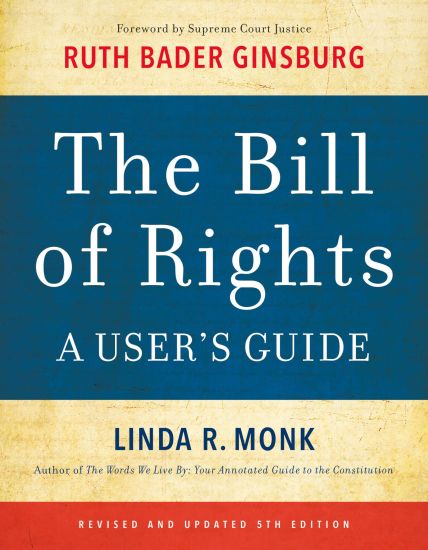
The Bill of Rights: A User's Guide

The Bill of Rights: A User's Guide

Linda R. Monk

Grand Central Publishing
2018
nidottu
With a foreword by Justice Ruth Bader Ginsburg of the U.S. Supreme Court. An Engaging, Accessible Guide to the Bill of Rights for Everyday Citizens. In The Bill of Rights: A User's Guide, award-winning author and constitutional scholar Linda R. Monk explores the remarkable history of the Bill of Rights amendment by amendment, the Supreme Court's interpretation of each right, and the power of citizens to enforce those rights. Stories of the ordinary people who made the Bill of Rights come alive are featured throughout. These include Fannie Lou Hamer, a Mississippi sharecropper who became a national civil rights leader; Clarence Earl Gideon, a prisoner whose handwritten petition to the Supreme Court expanded the right to counsel; Mary Beth Tinker, a 13-year-old whose protest of the Vietnam War established free speech rights for students; Michael Hardwick, a bartender who fought for privacy after police entered his bedroom unlawfully; Suzette Kelo, a nurse who opposed the city's takeover of her working-class neighborhood; and Simon Tam, a millennial whose 10-year trademark battle for his band "The Slants" ended in a unanimous Supreme Court victory. Such people prove that, in the words of Judge Learned Hand, "Liberty lies in the hearts of men and women; when it dies there, no constitution, no law, no court, can save it." Exploring the history, scope, and meaning of the first ten amendments-as well as the Fourteenth Amendment, which nationalized them and extended new rights of equality to all-The Bill of Rights: A User's Guide is a powerful examination of the values that define American life and the tools that every citizen needs.
Electronic Bill Presentment and Payment
Electronic bill presentment and payment (EBPP) is revolutionizing the billing process by offering online and real time presentment of bill content and payment choices. EBPP is the easy way of viewing billing status, remittance items, and presenting balances using a universal browser from any location. In contrast to paper-based bills, electronic billing enables service providers to combine billing with advanced customer care and improved customer relationship management. Electronic Bill Presentment and Payment presents the essentials about this new way of viewing and paying bills. The author defines basic business models, such as biller direct and various consolidator model options, allocates the right tools to each of the models, and differentiates between the needs of principal industries. The text describes how to build and implement value added capabilities such as personalization, up-selling, online dispute management, and better control of the accounts payable and receivable process can significantly improve customer care and customer relationship management on behalf of service providers. About the Author: Kornel Terplan is a telecommunication expert with more than 30 years of highly successful multi-national consulting experience. He has provided consulting, training, and product development services to over 75 national and international corporations on four continents. He has served on the editorial board for over 140 articles, 22 books, and 115 papers. Dr. Terplan has designed five network management related courses and conducted over 80 seminar presentations in 15 countries.
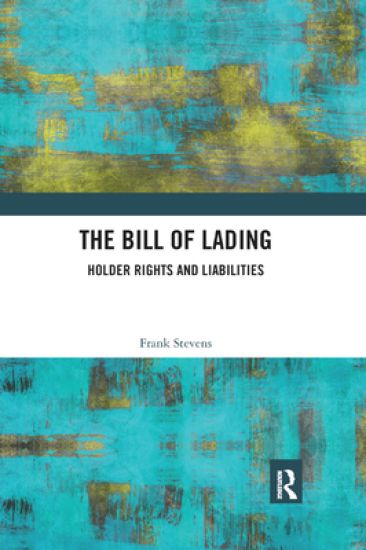
The Bill of Lading

The Bill of Lading

Frank Stevens

Routledge
2019
nidottu
The carriage of goods by sea starts off with a contract of carriage, an essentially simple and straightforward contract between two parties, the shipper and the carrier. Very often, however, a bill of lading is issued and a third party appears on the scene: the holder of the bill of lading. The holder was not involved in the making of the contract of carriage, but does have rights, and possibly obligations, against the carrier at destination. The question then is how the third-party holder of the bill acquires those rights and obligations. Analysing the different theories that have been proposed to explain the position of the third party holder, this book makes a distinction between contractual theories and non-contractual theories to explain the holder's position. Contractual theories build on the initial contract of carriage and apply contract law mechanisms while non-contractual theories construe the position of the third-party holder independently. Following the analysis and appraisal of the different theories, this book makes the case that the position of the third-party holder of the bill of lading is not obvious or self-evident; and submits that a statutory approach to the position of the holder of the bill of lading has advantages and would be preferable.
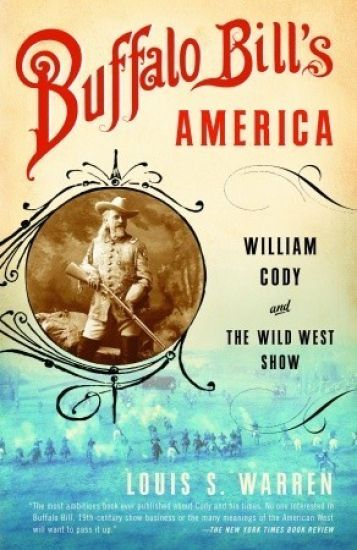
Buffalo Bill's America

Buffalo Bill's America

Louis S. Warren

Vintage Books
2006
pokkari
An illuminating study of the life and times of William "Buffalo Bill" Cody examines the accomplishments and self-inventions of the colorful Pony Express rider, trapper, Civil War soldier, professional buffalo hunter, Indian fighter, cavalry scout, actor, and dime-novel hero within the social and cultural context of his era. Reprint. 10,000 first printing.
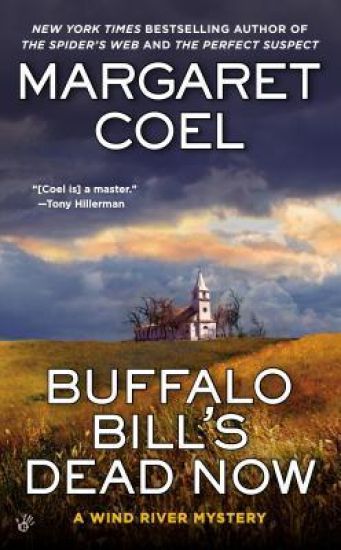
Buffalo Bill's Dead Now

Buffalo Bill's Dead Now

Margaret Coel

Berkley / Nal
2013
pokkari
In the latest Wind River novel from New York Times bestselling author Margaret Coel, Arapaho attorney Vicky Holden and Father John O'Malley are witnesses to history--and murder... After more than 120 years, the regalia worn by Arapaho Chief Black Heart in Buffalo Bill's Wild West show were supposed to be returned to his people. But the cartons containing the relics were empty when they arrived at the Arapaho Museum. Collector Trevor Pratt had them shipped from Germany and believes thieves must have stolen them en route. Vicki and Father John suspect Trevor knows more about the theft than he's telling--a suspicion that's confirmed when they find him murdered in his home. To find the killer, they must first uncover the truth about a blood feud between two Arapaho families--and the original theft of Black Heart's possessions dating back more than a century...
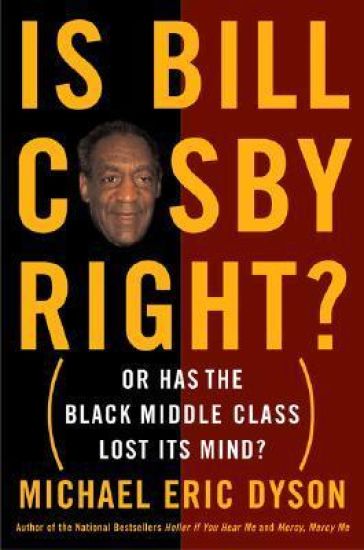
Is Bill Cosby Right?

Is Bill Cosby Right?

Michael Dyson

Basic Books
2006
pokkari
Michael Eric Dyson took America by storm with this provocative expose of the class and generational divide that is tearing black America apart. Nothing exposed the class and generational divide in black America more starkly than Bill Cosby's now-infamous assault on the black poor when he received an NAACP award in the spring of 2004. The comedian-cum-social critic lamented the lack of parenting, poor academic performance, sexual promiscuity, and criminal behaviour among what he called the knuckleheads" of the African-American community. Even more surprising than his comments, however, was the fact that his audience laughed and applauded. best-selling writer, preacher, and scholar Michael Eric Dyson uses the Cosby brouhaha as a window on a growing cultural divide within the African-American community. According to Dyson, the Afristocracy",lawyers, physicians, intellectuals, bankers, civil rights leaders, entertainers, and other professionals,looks with disdain upon the black poor who make up the Ghettocracy",single mothers on welfare, the married, single, and working poor, the incarcerated, and a battalion of impoverished children. Dyson explains why the black middle class has joined mainstream America to blame the poor for their troubles, rather than tackling the systemic injustices that shape their lives. He exposes the flawed logic of Cosby's diatribe and offers a principled defence of the wrongly maligned black citizens at the bottom of the social totem pole. Displaying the critical prowess that has made him the nation's preeminent spokesman for the hip-hop generation, Dyson challenges us all,black and white,to confront the social problems that the civil rights movement failed to solve.