Kirjojen hintavertailu. Mukana 11 342 296 kirjaa ja 12 kauppaa.

Kirjahaku

Etsi kirjoja tekijän nimen, kirjan nimen tai ISBN:n perusteella.

1000 tulosta hakusanalla Boris Levin

Wall Street Research

Wall Street Research

Boris Groysberg; Paul M. Healy

Stanford University Press
2013
sidottu
Wall Street Research: Past, Present, and Future provides a timely account of the dramatic evolution of Wall Street research, examining its rise, fall, and reemergence. Despite regulatory, technological, and global forces that have transformed equity research in the last ten years, the industry has proven to be remarkably resilient and consistent. Boris Groysberg and Paul M. Healy get to the heart of Wall Street research—the analysts engaged in the process—and demonstrate how the analysts' roles have evolved, what drives their performance today, and how they stack up against their buy-side counterparts. The book unpacks key trends and describes how different firms have coped with shifting pressures. It concludes with an assessment of where equity research is headed in emerging markets, drawing conclusions about this often overlooked corner of Wall Street and the industry's future challenges.
My Sister, Life

My Sister, Life

Boris Pasternak

Northwestern University Press
2001
nidottu
In Russian poetry, Boris Pasternak's ""My Sister-Life"" is the equivalent of ""The Waste Land"", ""Spring"", and ""Harmonium"". Written in 1917, the cycle of poems in ""My Sister-Life"" concentrates on personal journeys and loves, but is permeated by the tension and promise of the impending October revolution. Pasternak is an uncompromisingly complex poetic stylist, and his meticulous attention to structure, etymology, and phonetic qualities of words makes his poetry a formidable challenge for the translator.
My Sister Life and The Zhivago Poems

My Sister Life and The Zhivago Poems

Boris Pasternak

Northwestern University Press
2012
nidottu
Boris Pasternak is best known in the West for his epic novel Doctor Zhivago, whereas in Russia he is most celebrated as a poet. The two poetry collections offered here in translation are chronological and thematic bookends, and they capture Pasternak’s abiding and powerful vision of life: his sense of its beauty and terror, its precariousness for the individual, and its persistence in time—that vitality of being with which he is on familiar and familial terms.In the early work My Sister Life, which commemorates the year 1917, Pasternak, then in his late twenties, found his poetic voice. The book would go on to become one of the most influential collections of Russian poetry of the twentieth century. “The Poems of Yury Zhivago” are a part of the poet’s famous novel, Dr. Zhivago, whose title might be rendered in English as “Doctor Life.” These later lyrics are a kind of summing up that reflect, from the perspective of age and approaching death, upon the accumulated experience of a contemplative life amid turbulent and terrifying times.Falen’s fresh new translations of these poems capture their expression of the beauty and the joy, the terror and the pain, of what it is to be alive . . . and to die.
Travesty Actors

Travesty Actors

Boris Wolfson

NORTHWESTERN UNIVERSITY PRESS
2025
nidottu
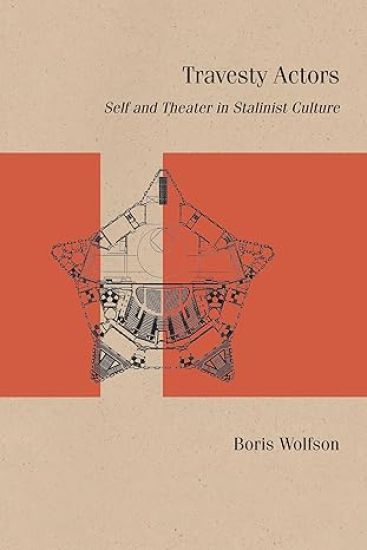
Examining theatrical performance under Stalinist cultural mandates Talk of Joseph Stalin's 'show trials,' the public prosecutions in Moscow's Hall of Columns in the late 1930s, is so familiar as to obscure the relationship between actual shows - in the Soviet Union's major theaters - and politics. Travesty Actors: Self and Theater in Stalinist Culture examines theatrical performance within the context of the Soviet cultural establishment's fashioning of a 'genuine Soviet person.' Boris Wolfson focuses on prominent and controversial plays by artists including Aleksandr Afinogenov, Mikhail Bulgakov, Yuri Olesha, and Natalia Sats and the efforts of theater companies, like the Moscow Arts Theater, the Meyerhold Theater, and the Central Children's Theater, to adhere to this cultural mandate while grappling with repression, censorship, and conflicting interpretations of its aims. Drawing on archival materials, diaries and memoirs and eyewitness accounts, Wolfson greatly illuminates the achievements of Soviet theater during this harsh period and the cultural significance of artistic theories and practices for articulating and enacting ideological programs.
Travesty Actors

Travesty Actors

Boris Wolfson

NORTHWESTERN UNIVERSITY PRESS
2025
sidottu
Examining theatrical performance under Stalinist cultural mandatesTalk of Joseph Stalin's 'show trials,' the public prosecutions in Moscow's Hall of Columns in the late 1930s, is so familiar as to obscure the relationship between actual shows - in the Soviet Union's major theaters - and politics. Travesty Actors: Self and Theater in Stalinist Culture examines theatrical performance within the context of the Soviet cultural establishment's fashioning of a 'genuine Soviet person.' Boris Wolfson focuses on prominent and controversial plays by artists including Aleksandr Afinogenov, Mikhail Bulgakov, Yuri Olesha, and Natalia Sats and the efforts of theater companies, like the Moscow Arts Theater, the Meyerhold Theater, and the Central Children's Theater, to adhere to this cultural mandate while grappling with repression, censorship, and conflicting interpretations of its aims. Drawing on archival materials, diaries and memoirs and eyewitness accounts, Wolfson greatly illuminates the achievements of Soviet theater during this harsh period and the cultural significance of artistic theories and practices for articulating and enacting ideological programs.
The Russian Diaspora: 1917-1941

The Russian Diaspora: 1917-1941

Boris Raymond; David R. Jones

Scarecrow Press
2000
sidottu
The Russian Diaspora:1917-1941 is a complete reference work to be used as an overview of the mass exodus from the Russian Empire after the revolutions and civil war (1917-1921). This book provides Russian Studies scholars, as well as students of world culture, with an accessible guide and overview of the emigres own lives, as well as of their contributions to the literature, music, arts, science and technology of their host countries. As such, the book is an essential addition to the history of world culture and technology. The layout of the book is extremely helpful. Each topic is introduced using a brief outline of the topic within its historical perspective. The outline is followed by an alphabetical listing of the outstanding contributors within the Russian Diaspora. The final section of the book provides a bibliography of the available Western-language and major Russian references.
Bringing Soprano Arias to Life

Bringing Soprano Arias to Life

Boris Goldovsky; Arthur Schoep

Scarecrow Press
1990
nidottu
New in Paperback! This book supplies a soprano with nearly everything she may need to perform the operatic arias discussed. The 28 arias included are chosen from among those that are more popular and most widely studied and performed. There are descriptions of stage settings, with costume sketches by famed theatrical designer Leo Van Witsen. The heart of each discussion is a detailed descriptions of the sections of the area. While the scenic design may change from one production to another, the suggestions given for dramatic motivations, character building, and stage movement can be readily adapted for use in any theatrical environment. Although it is not intended that these arias be acted out on the concert stage, much of the information—the dramatic analysis, discussions of vocal and musical aspects, matters of style and tradition, and translations of the texts—should be profitable for students of singing and stage direction, as well as professional opera singers, no matter how or where the arias are performed. Paperback edition available June 2001. Cloth edition previously published in 1990.
Safe Conduct: An Autobiography and Other Writings

Safe Conduct: An Autobiography and Other Writings

Boris Pasternak

NEW DIRECTIONS PUBLISHING CORPORATION
2009
nidottu
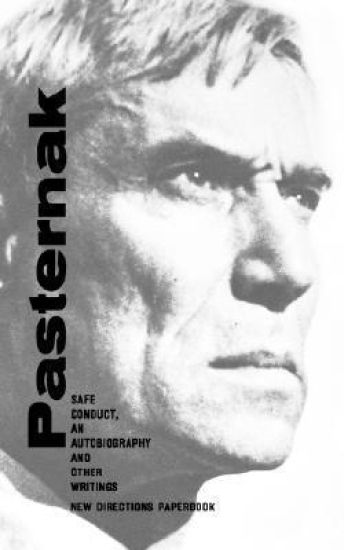
The awarding of the 1958 Nobel Prize for Literature to Boris Pasternak and the subsequent calumny of his fellow citizens in Soviet Russia focused unusual attention on Pasternak's great novel, Dr. Zhivago, and the small body of his other work. At the time, the latter was only available (in any language, as far as is known) in New Directions' Selected Writings of Pasternak, first published in 1949. The 1958 edition was issued with a new introduction by Babette Deutsch under the title of the book's main component, Pasternak's autobiography. Written when he was forty, Safe Conduct puzzled many readers in Russia and when it appeared in English, because its isolated sharp impressions and juxtapositions seem to deny chronology, but at least one critic recognized it as "the most original of autobiographies, employing a new technique of great important." Also included is a group of remarkable short stories, translated by Robert Payne, dealing with the mysteries of life and art, and a selection of the poems that have made Pasternak known, to the few at last, as the "outstanding Russian poet of the century." these are translated by the British Critic and poet C. M. Bowra, and by Miss Deutsch.
Democracy in Crisis

Democracy in Crisis

Boris Vormann; Christian Lammert

University of Pennsylvania Press
2019
sidottu
Liberal democracies on both sides of the Atlantic find themselves approaching a state of emergency, beset by potent populist challenges of the right and left. But what exactly lies at the core of widespread dissatisfaction with the status quo? And how can the challenge be overcome? In Democracy in Crisis, Christian Lammert and Boris Vormann argue that the rise of populism in North Atlantic states is not the cause of a crisis of governance but its result. This crisis has been many decades in the making and is intricately linked to the rise of a certain type of political philosophy and practice in which economic rationality has hollowed out political values and led to an impoverishment of the political sphere more broadly. The process began in the 1980s, when the United States and Great Britain decided to unleash markets in the name of economic growth and democracy. After the fall of the Berlin Wall, several countries in Europe followed suit and marketized their educational, social, and healthcare systems, which in turn increased inequality and fragmentation. The result has been a collapse of social cohesion and trust that the populists promise to address but only make worse. Looking to the future, Lammert and Vormann conclude their analysis with concrete suggestions for ways politics can once again be placed in the foreground, with markets serving social relations rather than the reverse.
Sister Pelagia and the White Bulldog: A Mystery by the Internationally Bestselling Author of the Winter Queen
When he hears that one of his aunt's rare white bulldogs has been poisoned, Monsignore Mitrofanij, the orthodox bishop of a remote Russian province on the Volga, enlists the assistance of the resourceful Sister Pelagia to take on a complex morass of spurned lovers, canine conspiracy, political intrigue, greed, and knitting to uncover the culprit. Original. 40,000 first printing.
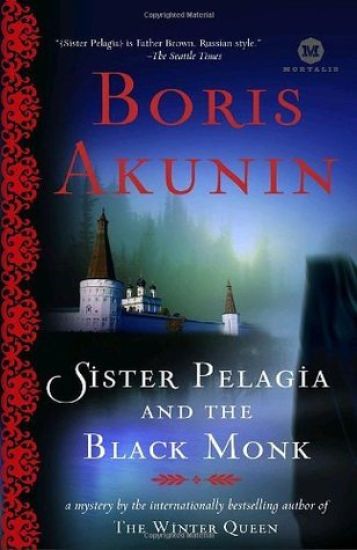
Sister Pelagia and the Black Monk

Sister Pelagia and the Black Monk

Boris Akunin

Random House Trade
2008
nidottu
Fans of Sister Pelagia and the White Bulldog, the first book in Akunin's Pelagia trilogy, will be instantly mesmerized-and frightened-by this latest foray into Zavolzhsk' s spiritual underworld. In the middle of the night, a disheveled and badly frightened monk arrives at the doorstep of Bishop Mitrofanii of Zavolzhsk, crying: "Something's wrong at the Hermitage " The Hermitage is the centuries-old island monastery of New Ararat, known for its tradition of severely penitent monks, isolated environs, and a mental institution founded by a millionaire in self-imposed exile. Hearing the monk's eerie message, Mitrofanii's befuddled but sharp-witted ward Sister Pelagia begs to visit New Ararat and uncover the mystery. Traditions prevail-no women are allowed-and the bishop sends other wards to test their fates against the Black Monk that haunts the once serene locale. But as the Black Monk claims more victims-including Mitrofanii's envoys-Pelagia goes undercover to see exactly what person, or what spirit, is at the bottom of it all. Praise for Sister Pelagia and the Black Monk "For all his status as a globe-circling bestseller, Akunin keeps faith in his sleekly engineered and allusive whodunnits with the classical virtues of Russian prose. . . . That polish lends his books a peculiar charm."-The Independent (London) "Readers can hear echoes of Leo Tolstoy, Fyodor Dostoevsky and Anton Chekov in whodunits that, because of their literary overtones, can be guiltlessly consumed as entertainment."--Los Angeles Times
Red Shoes for Rachel

Red Shoes for Rachel

Boris Sandler

Syracuse University Press
2017
nidottu
Red Shoes for Rachel, Sandler’s award-winning collection of three novellas, features tightly wound tales that seamlessly incorporate diverse genres, including magic realism, satire, and autobiography, and profound psychological profiles to create touching portrayals of the human experience. Zumoff’s translation of Sandler’s original Yiddish collection makes the J. I. Segal Award–winning volume available to English readers for the first time.In the collection’s eponymous novella, Rachel, a daughter of Holocaust survivors raised in Brighton Beach, encounters a Moldovan Jewish immigrant divorcee as she is tending to her disabled, elderly mother along the Coney Island boardwalk. As the two begin a relationship, the story reveals their past and the commonalities between two children of Holocaust survivors raised in very different societies. In the novella Karolina Bugaz, an exhausted Moldovan Jewish immigrant architect leaves his wife and newly religious son behind to go on a cruise to a mysterious island, which may just be a direct voyage through space and time into his past. In the volume’s most acclaimed story, Halfway Down the Road Back to You, an elderly Moldovan Holocaust survivor in Israel separated from her children by emigration must confront her past as her failing mind begins to blur the boundaries between her daily life and the horrors of war sixty years before. The novella was adapted by the author into an acclaimed play, which has been staged in the United States, Belgium, and France.
Bazhanov and the Damnation of Stalin

Bazhanov and the Damnation of Stalin

Boris Bazhanov

Ohio University Press
1990
sidottu
On January 1, 1928, Bazhanov escaped from the Soviet Union and became for many years the most important member of a new breed—the Soviet defector. At the age of 28, he had become an invaluable aid to Stalin and the Politburo, and had he stayed in Stalin's service, Bazhanov might well have enjoyed the same meteoric careers as the man who replaced him when he left, Georgy Malenkov. However, Bazhanov came to despise the unethical and brutal regime he served. One he decided to become anti–communist, he sought to bring down the regime. Planning his departure carefully, he brought with him documentation which revealed some of the innermost secrets of the Kremlin. Despite being pursued by the OGPU (an earlier incarnation of the KGB), he arrived eventually in Paris, and Bazhanov set to work writing his message to the West. While Bazhanov did successfully escape to the West, Stalin had Bazhanov watched and several attempts were made to assassinate him. Bazhanov may have been fearful for his life much of the time, but he was a man of courage and conviction, and he damned Stalin as often and as publicly as he could. In this riveting and illuminating book, Bazhanov provides an eyewitness account of the inner workings and personalities of the Soviet Central Committee and the Politburo in the 1920s. Bazhanov clearly details how Stalin invaded the communications of his opponents, rigged votes, built up his own constituency, and maneuvered to achieve his coup d'etat despite formidable odds. he also provides a better understanding of the curiously vapid way in which he other revolutionary leaders, most notably Trotsky, failed to appreciate the threat and let Stalin override them. He reveals how those Soviets with a sense of fairness, justice, and ethics were extinguished by Stalin and his minions, and how the self–centered, protective bureaucratic machine was first built. Bazhanov's view, at the right hand of Stalin, is unique and chilling. Bazhanov's post–defection prediction of Stalin's continuing and fatal danger to Trotsky shows how well Bazhanov understood the dictator. His formation, in 1940, of an armed force recruited from Soviet Army prisoners to help Mannerheim defend Finland from Stalin's forces and his 1941 decision to decline the position of Hitler's Gauleiter of German–occupied Russia are fascinating. But perhaps the most interesting facet to Bazhanov's tale is the fact that almost no Soviets—even today—know the real story of the Communist party's criminal acquiescence in Stalin's rise to, and abuse of, power.
Kp or Mkp

Kp or Mkp

Boris A. Kupershmidt

Amer Mathematical Society
2000
sidottu
This book develops a theory that can be viewed as a noncommutative counterpart of the following topics: dynamical systems in general and integrable systems in particular; Hamiltonian formalism; variational calculus, both in continuous space and discrete. The text is self-contained and includes a large number of exercises. Many different specific models are analyzed extensively and motivations for the new notions are provided in this book.
Russia's Factory Children

Russia's Factory Children

Boris B. Gorshkov

University of Pittsburgh Press
2009
nidottu
At the height of the Russian industrial revolution, legions of children toiled in factories, accounting for fifteen percent of the workforce. Yet, by the end of the nineteenth century, their numbers had been greatly reduced, thanks to legislation that sought to protect the welfare of children for the first time.Russia's Factory Children presents the first English-language account of the changing role of children in the Russian workforce, from the onset of industrialization until the Communist Revolution of 1917, and profiles the laws that would establish children's labor rights.In this compelling study, Boris B. Gorshkov examines the daily lives, working conditions, hours, wages, physical risks, and health dangers to children who labored in Russian factories. He also chronicles the evolving cultural mores that initially welcomed child labor practices but later shunned them.Through extensive archival research, Gorshkov views the evolution of Russian child labor law as a reaction to the rise of industrialism and the increasing dangers of the workplace. Perhaps most remarkable is his revelation that activism, from the bourgeoisie, intellectuals, and children themselves, led to the conciliation of legislators and marked a progressive shift that would impact Russian society in the early twentieth century and beyond.
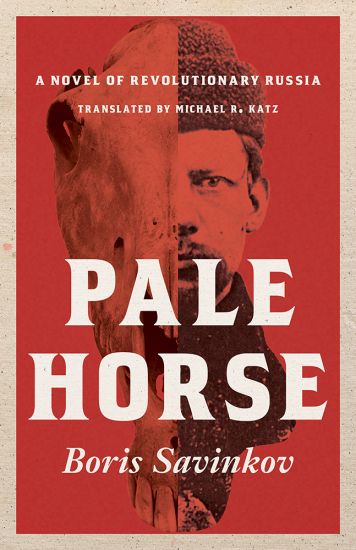
Pale Horse

Pale Horse

Boris Savinkov; Michael R. Katz

University of Pittsburgh Press
2019
sidottu
Translation of a Russian novel, providing a fictionalized account of the assassination of grand duke Sergei Alexandrovich, written by the leader of the terrorist cell who actually organized the real murder.