
Kirjahaku
Etsi kirjoja tekijän nimen, kirjan nimen tai ISBN:n perusteella.
1000 tulosta hakusanalla Briel

Transitional Justice Beyond Criminal Trials
Biel Boutros Biel
Lap Lambert Academic Publishing
2025
nidottu
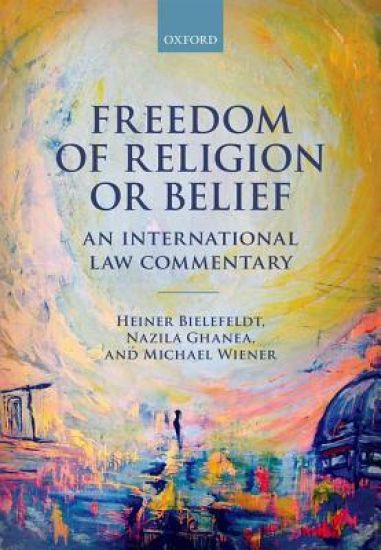
Freedom of Religion or Belief
Heiner Bielefeldt; Nazila Ghanea; Michael Wiener
Oxford University Press
2016
sidottu
Violations of religious freedom and violence committed in the name of religion grab our attention on a daily basis. Freedom of religion or belief is a key human right: the International Covenant on Civil and Political Rights, numerous conventions, declarations and soft law standards include specific provisions on freedom of religion or belief. The 1981 Declaration on the Elimination of All Forms of Intolerance and of Discrimination Based on Religion or Belief has been interpreted since 1986 by the mandate of the UN Special Rapporteur on freedom of religion or belief. Special Rapporteurs (for example those on racism, freedom of expression, minority issues and cultural rights) and Treaty Bodies (for example the Human Rights Committee, the Committee on the Elimination of Racial Discrimination and the Committee on the Rights of the Child) have also elaborated on freedom of religion or belief in the context of their respective mandates. Freedom of Religion or Belief: An International Law Commentary is the first commentary to look comprehensively at the international provisions for the protection of freedom of religion or belief, considering how they are interpreted by various United Nations Special Procedures and Treaty Bodies. Structured around the thematic categories of the United Nations Special Rapporteur's framework for communications, the commentary analyses, for example, the limitations on the wearing of religious symbols and vulnerable situations, including those of women, detainees, refugees, children, minorities and migrants, through a combination of scholarly expertise and practical experience.
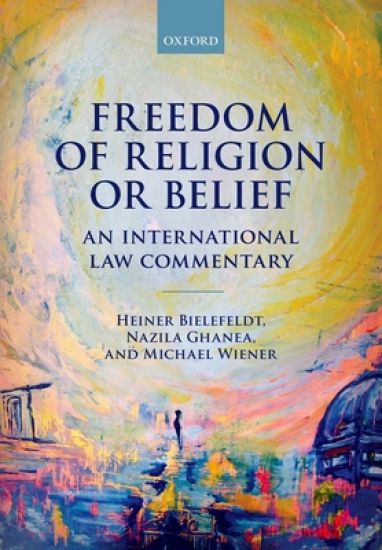
Freedom of Religion or Belief
Heiner Bielefeldt; Nazila Ghanea; Michael Wiener
Oxford University Press
2017
nidottu
Violations of religious freedom and violence committed in the name of religion grab our attention on a daily basis. Freedom of religion or belief is a key human right: the International Covenant on Civil and Political Rights, numerous conventions, declarations and soft law standards include specific provisions on freedom of religion or belief. The 1981 Declaration on the Elimination of All Forms of Intolerance and of Discrimination Based on Religion or Belief has been interpreted since 1986 by the mandate of the UN Special Rapporteur on freedom of religion or belief. Special Rapporteurs (for example those on racism, freedom of expression, minority issues and cultural rights) and Treaty Bodies (for example the Human Rights Committee, the Committee on the Elimination of Racial Discrimination and the Committee on the Rights of the Child) have also elaborated on freedom of religion or belief in the context of their respective mandates. Freedom of Religion or Belief: An International Law Commentary is the first commentary to look comprehensively at the international provisions for the protection of freedom of religion or belief, considering how they are interpreted by various United Nations Special Procedures and Treaty Bodies. Structured around the thematic categories of the United Nations Special Rapporteur's framework for communications, the commentary analyses, for example, the limitations on the wearing of religious symbols and vulnerable situations, including those of women, detainees, refugees, children, minorities and migrants, through a combination of scholarly expertise and practical experience.
This book is inspired by true events.Chosen from among the mob of her boyfriend's girlfriends, married in the most secure, respectful, and honourable way known to the people, Nyayang Jock, a girl born without a brother, won the race, defeating her top co-girlfriend, Sarah, by being the youngest over Sarah born with brothers. At the least, unlike ninety-nine percent of the girls of her generation and how they were married, it is safe for Nyayang to say she was married for love to Chuol Malual, a businessman who was born into a big, rich family.Nonetheless, unlike the expectation of her in-laws, the unattended attitude of the nature secretly stabbed Nyayang in the back, leaving her to fail and creating the family Chuol and his family fundamentally paid the forty cows for. After waiting for what seemed like a decade for her to get pregnant, she gave birth to a girl, a thing that only fueled the resultant ager. Taking a long time to get pregnant and only giving birth to a girl when she should have birthed a boy called for a quick search for another wife. For Chuol's parents, this was a search for a working womb, but for Chuol it was just a search for wife number two, which he found hard now that he realized most girls showed many of the characteristics Nyayang had shown; however, eventually all displayed some problem.But that all changed when he accidentally stumbled upon Sarah again, who instantly restored his manhood. Sarah not only filled Chuol's life with the boys he had been looking for, but she had her chance one more time to not only show Nyayang that it is the woman born with brothers who wins, but that the woman who has the ability to birth boys is the ultimate winner. But values-setting, worth-determining, and love are all weaknesses in society. There is only one true winner, and that is the neighbor, the seasonal enemy, the chaff buyer, the Murlen man.
This book is inspired by true events.Chosen from among the mob of her boyfriend's girlfriends, married in the most secure, respectful, and honourable way known to the people, Nyayang Jock, a girl born without a brother, won the race, defeating her top co-girlfriend, Sarah, by being the youngest over Sarah born with brothers. At the least, unlike ninety-nine percent of the girls of her generation and how they were married, it is safe for Nyayang to say she was married for love to Chuol Malual, a businessman who was born into a big, rich family.Nonetheless, unlike the expectation of her in-laws, the unattended attitude of the nature secretly stabbed Nyayang in the back, leaving her to fail and creating the family Chuol and his family fundamentally paid the forty cows for. After waiting for what seemed like a decade for her to get pregnant, she gave birth to a girl, a thing that only fueled the resultant ager. Taking a long time to get pregnant and only giving birth to a girl when she should have birthed a boy called for a quick search for another wife. For Chuol's parents, this was a search for a working womb, but for Chuol it was just a search for wife number two, which he found hard now that he realized most girls showed many of the characteristics Nyayang had shown; however, eventually all displayed some problem.But that all changed when he accidentally stumbled upon Sarah again, who instantly restored his manhood. Sarah not only filled Chuol's life with the boys he had been looking for, but she had her chance one more time to not only show Nyayang that it is the woman born with brothers who wins, but that the woman who has the ability to birth boys is the ultimate winner. But values-setting, worth-determining, and love are all weaknesses in society. There is only one true winner, and that is the neighbor, the seasonal enemy, the chaff buyer, the Murlen man.
An accessible and empowering introduction to periods. This is a kids book about periods. It’s normal to talk about them. This book is designed to inspire positive conversations between children and adults.Written to start important conversations about our bodies and empower the next generation, this book provides positive information about how periods work. It helps to show children aged 7-9 that periods are normal and that getting your period is actually pretty cool - it’s one of the things we share as human beings!A Kids Book About Periods features: - A large and bold, yet minimalist font design that allows kids freedom to imagine themselves in the words on the pages.- A friendly, approachable, yet empowering, kid-appropriate tone throughout.- An incredible and diverse group of authors in the series who are experts or have first-hand experience of the topic.Tackling important discourse together! The A Kids Book About series are best used when read together. Helping to kickstart challenging, empowering, and important conversations for kids and their grownups through beautiful and thought-provoking pages. The series supports an incredible and diverse group of authors, who are either experts in their field, or have first-hand experience on the topic.A Kids Co. is a new kind of media company enabling kids to explore big topics in a new and engaging way. With a growing series of books, podcasts and blogs, made to empower. Learn more about us online by searching for A Kids Co.

Here is a comprehensive discussion of the events in Poland between the rise of Solidarity in August 1960 and the martial law period.
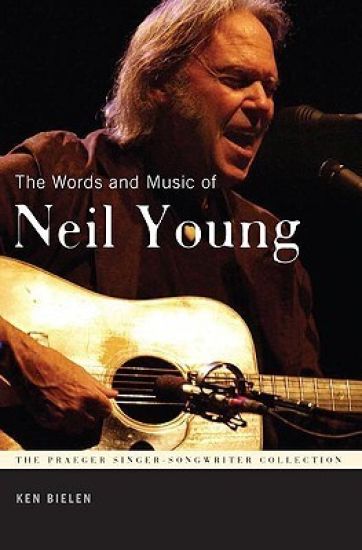
Neil Young is an icon, plain and simple. The Words and Music of Neil Young follows the evolution of Young's musical work from the late 1960s to the present, with special focus on the enduring elements that have made his music successful. Neil Young cannot be simply labeled. He has recorded as a solo artist, as a member of a hard rock trio, and with numerous other musician configurations. He can move from the soft sounds of early 1970s acoustic folk to the distorted, fuzz guitar sound of Crazy Horse, while his compositions have responded to musical trends from punk rock to grunge, and to social issues like racism, the Vietnam War, and war in Iraq as well. Individual chapters cover Young's musical output album by album, and song by song--from his debut work with Buffalo Springfield, to his time with Crosby, Stills, Nash & Young, to his solo work within various genres and for various causes (some political, but all artistic). In his conclusion, author Ken Bielen sums up Neil Young's accomplishments and places his work in the context of contemporary culture. A discography and bibliography round out the work.
When geologist Chuck Fipke discovered diamonds on the Barren Grounds near Yellowknife in Canada's Arctic, international mining companies almost immediately began to stake claims to the minerals: pure "ice" diamonds untainted by bloodshed and war.These diamond lands are home to the Dene, Native peoples who have hunted, fished, and lived on these grounds since time immemorial. To mine these lands required the agreement of the First Nations, the Inuit, the mining company, and two levels of government. Ellen Bielawski was part of the negotiation team that painstakingly put together a deal to satisfy all involved, and Rogue Diamonds is her provocative and insightful telling of this intense time. From closed-door meetings in town to sacred ceremonies on the land, Bielawski weaves a thought-provoking story.
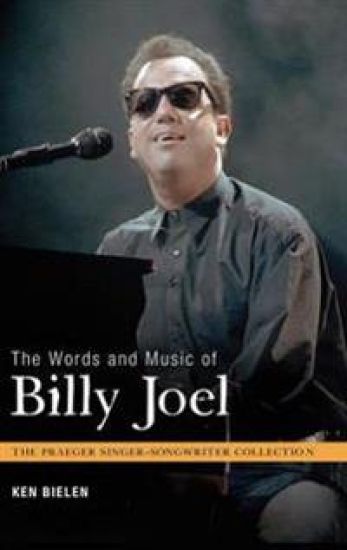
This detailed exploration looks at the musical works of recording artist Billy Joel and his impact on popular culture.Billy Joel skyrocketed to popularity in 1977 with his fifth album, The Stranger, and he has been a major American artist ever since. His songs are timeless and appreciated by generations of fans. The Words and Music of Billy Joel examines this influential musician's songs in detail, exploring the meaning of the lyrics and placing Joel's artistry in a regional and cultural context.Covering work that ranges from Joel's recordings with the Lost Souls to his classical compositions, the book focuses on the dozen studio albums of popular music released between 1971 and 1993. A bibliographic essay is included, as are both a discography and a filmography. There is also a special focus on the interpretation of Joel's songs by other recording artists.
The Science of Well-Being: Integration into Clinical Child Psychiatry, An Issue of Child and Adolescent Psychiatric Clinics of North America
Matthew Biel; Jeff Bostic; David C. Rettew
Elsevier - Health Sciences Division
2019
sidottu
This issue of Child and Adolescent Psychiatric Clinics will take a deep dive into the Science of Well-Being and its integration into clinical child psychiatry. Guest edited by Drs. Matthew Biel, Jeffrey Bostic, and Dr. David Rettew, this issue will discuss a number of related topics that are important to practicing child psychiatrists. This issue is one of four selected each year by our series Consulting Editor, Dr. Todd Peters. The issue is broken down into 3 sections, Well-Being Components, Integration into Clinical Practice, and Emerging Topics in Well-Being, and will include the following articles: The Evolution of Positive Psychiatry and Well-Being, The Importance of Well-Being in Contemporary Medicine, The Neuroscience of Happiness and Well-Being, Applying Well-being into the Clinical Evaluation, Applying Physical Activity into Child Psychiatry Care, Applying Art and Music into Child Psychiatry Treatment, Applying Mindfulness into Child Psychiatry Evaluation and Treatment, Applying Sleep and Nutrition Science into Child Psychiatry Care, Incorporating Behavioral Well-Being into Primary Care, Adapting Well-Being to Child Psychiatry Outpatient Settings, Well-Being Goes to College, and Teaching Mental Health Professions about Emotional-Behavioral Health, among others.
The main argument of this book is that the revival of European integration in the mid-1980s and the emergence of a "New Europe" have to be analyzed against the background of globalization and the transnational restructuing of social forces since the early 1970s.
This book addresses the ‘perennial’ question of the meaning of life from the point of view of a novel interpretation of Aristotle’s teleology. Beginning with the premise that at the core of modernity and modern moral imagination are the entropy of meaning and the sense of meaninglessness, the author critically engages with the work of the post-war existentialists, chiefly that of Albert Camus and Martin Heidegger, to argue that their analyses are unconvincing and that the question of the meaning of being should therefore be approached using different assumptions, based on the notion of flourishing life. From this Aristotelian outlook, Existence, Meaning, Excellence employs Alasdair MacIntyre’s critique of modernity, together with his conceptions of practice and the narrative unity of life and tradition to provide a novel philosophical account of existence, meaning and excellence - an account which is used to contribute to debates (between Kantian and Nietzschean perspectives) on the nature of art and genius, with Mozart’s genius being used by way of illustration.A fascinating and powerfully argued engagement with existentialist thought that draws on the ‘virtue’ tradition to explore questions of meaning, as well as wider questions within philosophy, this book will appeal to philosophers and social theorists with interests in existentialism, moral philosophy and accounts of ‘the good’ based on the notions of human flourishing.
"I suggest, henceforth, when a woman talks women's rights, she be answered with the word Titanic, nothing more—just Titanic," wrote a St. Louis man to the St. Louis Post-Dispatch. He was not alone in mining the ship for a metaphor. Everyone found ammunition in the Titanic—suffragists and their opponents; radicals, reformers, and capitalists; critics of technology and modern life; racists and xenophobes and champions of racial and ethnic equality; editorial writers and folk singers, preachers and poets. Protestant sermons used the Titanic to condemn the budding consumer society ("We know the end of . . . the undisturbed sensualists. As they sail the sea of life we know absolutely that their ship will meet disaster."). African American toasts and working-class ballads made the ship emblematic of the foolishness of white people and the greed of the rich. A 1950s revival framed the disaster as an "older kind of disaster in which people had time to die." An ever-increasing number of Titanic buffs find heroism and order in the tale. Still in the headlines ("Titanic Baby Found Alive!" the Weekly World News declares) and a figure of everyday speech ("rearranging deck chairs . . ."), the Titanic disaster echoes within a richly diverse, paradoxical, and fascinating America.
Everyone from suffragists to their opponents; radicals, reformers, and capitalists; critics of technology and modern life; racists and xenophobes and champions of racial and ethnic equality; editorial writers and folk singers, preachers and poets found moral and cultural lessons in the sinking of the Titanic. In a new edition that both commemorates the one hundredth anniversary of the disaster and elaborates, in a revised afterword, on the ship's continued impact on the public imagination (evidenced by the Titanic mania evoked by James Cameron's 1997 film), Steven Biel explores the Titanic in all its complexity and contradictions.
Many children, teens, and even adults experience sensory processing challenges including out-of-proportion reactions to certain sensory experiences that most of us find commonplace. These challenges can range from mild to severe—from difficulty tolerating fluorescent lights and discomfort with certain clothing textures, to fight-or-flight reactions to unexpected or loud noises such as sirens or automatic hand dryers, or such strong oral sensitivities that the individual can tolerate eating just a few foods. They may struggle with one or more “sensory channels," or, more often, be quickly overwhelmed by the demand to process multisensory input (especially in busy environments with competing sights, sounds, and smells), leading to poor self-regulation, acting out, and tuning out. Sensory challenges, sometimes referred to as Sensory Processing Disorder when they interfere with daily function, are frequently seen in tandem with autism, anxiety, attention disorders, oppositional defiant disorder, and other diagnoses. This book equips clinicians with all the information they need to know to recognize and understand sensory sensitivities; connect the dots between behavior and underlying sensory processing problems; when to refer and collaborate with sensory processing professionals; and essential “sensory smart” strategies that can help clients feel and function at their best at home, in school, and in the community.
On January 1 1995, Austria and Sweden joined the European Union (EU). This book examines why these two countries joined at such a moment and studies their accession against the structural background of globalization. In this cutting-edge analysis, Andreas Bieler argues that conventional neo-functionalist and intergovernmentalist theories fail to explain such structural change as they take existing power structures as given. Therefore, he develops a neo-Gramscian perspective as an alternative approach to European integration.