Kirjojen hintavertailu. Mukana 12 396 390 kirjaa ja 12 kauppaa.

Kirjahaku

Etsi kirjoja tekijän nimen, kirjan nimen tai ISBN:n perusteella.

1000 tulosta hakusanalla Bryan D. Lowe

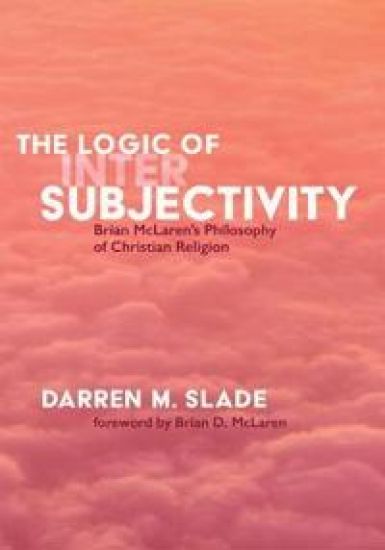
The Logic of Intersubjectivity

The Logic of Intersubjectivity

Darren M Slade; Brian D McLaren

Wipf Stock Publishers
2020
pokkari
To survey harsh criticisms against Brian Douglas McLaren (1956‒), readers gain the inaccurate impression that he is a heretical relativist who denies objective truth and logic. While McLaren's inflammatory and provocative writing style is partly to blame, this study also suspects that his critics base much of their analyses on only small portions of his overall corpus. The result becomes a caricature of McLaren's actual philosophy of religion. What is argued in this book is that McLaren's philosophy of religion suggests a faith-based intersubjective relationship with the divine ought to result in an existential appropriation of Christ's religio-ethical teachings. When subjectively internalized, this appropriation will lead to the assimilation of Jesus' kingdom priorities, thereby transforming the believer's identity into one that actualizes Jesus' kingdom ideals. The hope of this book is that by tracing McLaren's philosophy of Christian religion, future researchers will not only be able to comprehend (and perhaps empathize with) McLaren's line of reasoning, but they will also possess a more nuanced discernment of where they agree and disagree with his overall rationale.

Model Reduction for Control System Design

Model Reduction for Control System Design

Goro Obinata; Brian D.O. Anderson

Springer London Ltd
2000
sidottu
Modern methods of filter design and controller design often yield systems of very high order, posing a problem for their implementation. Over the past two decades or so, sophisticated methods have been developed to achieve simplification of filters and controllers. Such methods often come with easy-to-use error bounds, and in the case of controller simplification methods, such error bounds will usually be related to closed-loop properties.This book is the first comprehensive treatment of approximation methods for filters and controllers. It is fully up to date, and it is authored by two leading researchers who have personally contributed to the development of some of the methods. Balanced truncation, Hankel norm reduction, multiplicative reduction, weighted methods and coprime factorization methods are all discussed.The book is amply illustrated with examples, and will equip practising control engineers and graduates for intelligent use of commercial software modules for model and controller reduction.
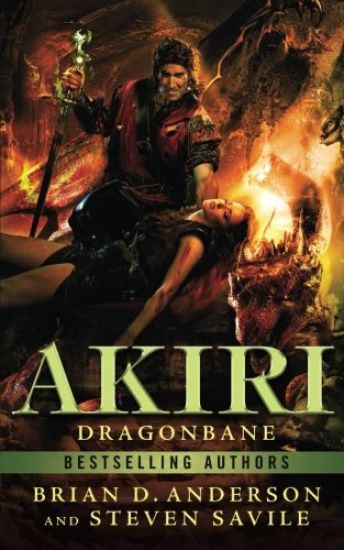
Akiri: Dragonbane

Akiri: Dragonbane

Steven Savile; Brian D. Anderson

Createspace Independent Publishing Platform
2017
nidottu
Through death comes power... Forbidden law promises that the soul can be harnessed, the magic of life captured in those final seconds, and used to give strength, power, and life everlasting. For the one who commands the soul of the dead, commands death itself. - Yarrow the Great - The bonds of the Dul'Buhar are eternal... The land is in the grip of a brutal winter when a desperate cry for help from one of his former sword brothers draws Akiri and Kyra up into the mountains beyond Erdogan Pass. But they are too late. Met on the way by his friend's son, they arrive to find the village ablaze and his sword brother, Cammeric, his wife and daughter slain, leaving the boy an orphan. The fell beast that murdered his family is no mere man--it is the rotten husk of a warrior brought back from the grave and will stop at nothing to fulfill its master's bidding. Sworn to protect the boy and avenge his friend, Akiri finds himself hunted across the mountains by the dead. But for each he slays another rises. Now, he must turn his back on this world and all he holds dear and venture into the kingdom of the dead if he is to put an end to the menace posed by a legendary evil. It's dark magic hungers for one thing: The Soul of the First Dragon. And should he find it, the rise of the Necromancer will herald an eternal reign of death and darkness.
Language History, Language Change, and Language Relationship

Language History, Language Change, and Language Relationship

Hans Henrich Hock; Brian D. Joseph

De Gruyter Mouton
2009
isokokoinen pokkari
Why does language change? Why can we speak to and understand our parents but have trouble reading Shakespeare? Why is Chaucer's English of the fourteenth century so different from Modern English of the late twentieth century that the two are essentially different languages? Why are Americans and English 'one people divided by a common language'? And how can the language of Chaucer and Modern English - or Modern British and American English - still be called the same language? The present book provides answers to questions like these in a straightforward way, aimed at the non-specialist, with ample illustrations from both familiar and more exotic languages. Most chapters in this new edition have been reworked, with some difficult passages removed, other passages thoroughly rewritten, and several new sections added, e.g. on language and race and on Indian writing systems. Further, the chapter notes and bibliography have all been updated. The content is engaging, focusing on topics and issues that spark student interest. Its goals are broadly pedagogical and the level and presentation are appropriate for interested beginners with little or no background in linguistics. The language coverage for examples goes well beyond what is usual for books of this kind, with a considerable amount of data from various languages of India.
Language History, Language Change, and Language Relationship

Language History, Language Change, and Language Relationship

Hans Henrich Hock; Brian D. Joseph

De Gruyter Mouton
2009
sidottu
Why does language change? Why can we speak to and understand our parents but have trouble reading Shakespeare? Why is Chaucer's English of the fourteenth century so different from Modern English of the late twentieth century that the two are essentially different languages? Why are Americans and English 'one people divided by a common language'? And how can the language of Chaucer and Modern English - or Modern British and American English - still be called the same language? The present book provides answers to questions like these in a straightforward way, aimed at the non-specialist, with ample illustrations from both familiar and more exotic languages. Most chapters in this new edition have been reworked, with some difficult passages removed, other passages thoroughly rewritten, and several new sections added, e.g. on language and race and on Indian writing systems. Further, the chapter notes and bibliography have all been updated. The content is engaging, focusing on topics and issues that spark student interest. Its goals are broadly pedagogical and the level and presentation are appropriate for interested beginners with little or no background in linguistics. The language coverage for examples goes well beyond what is usual for books of this kind, with a considerable amount of data from various languages of India.
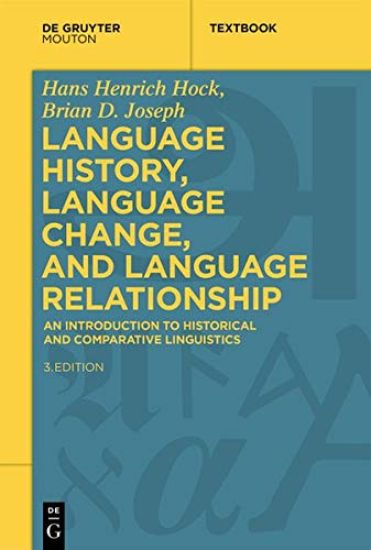
Language History, Language Change, and Language Relationship

Language History, Language Change, and Language Relationship

Hans Henrich Hock; Brian D. Joseph

De Gruyter Mouton
2019
isokokoinen pokkari
Why does language change? Why can we speak to and understand our parents but have trouble reading Shakespeare? Why is Chaucer's English of the fourteenth century so different from Modern English of the late twentieth century that the two are essentially different languages? Why are Americans and English 'one people divided by a common language'? And how can the language of Chaucer and Modern English - or Modern British and American English - still be called the same language? The present book provides answers to questions like these in a straightforward way, aimed at the non-specialist, with ample illustrations from both familiar and more exotic languages. Most chapters in this new edition have been reworked, with some difficult passages removed, other passages thoroughly rewritten, and several new sections added, e.g. on the regularity of sound change and its importance for general historical-comparative linguistics. Further, the chapter notes and bibliography have all been updated. The content is engaging, focusing on topics and issues that spark student interest. Its goals are broadly pedagogical and the level and presentation are appropriate for interested beginners with little or no background in linguistics. The language coverage for examples goes well beyond what is usual for books of this kind, with a considerable amount of data from various languages of India.
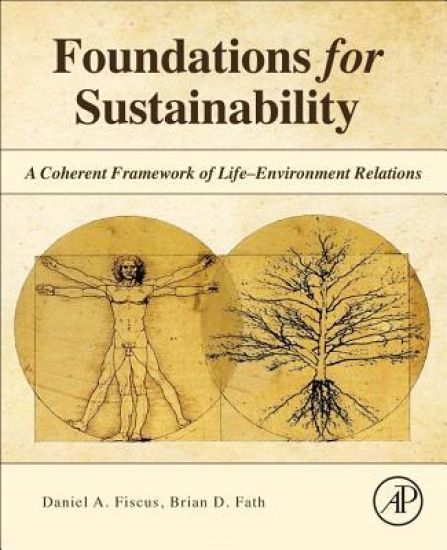
Foundations for Sustainability

Foundations for Sustainability

Daniel A. Fiscus; Brian D. Fath

Academic Press Inc
2018
nidottu
Foundations for Sustainability: A Coherent Framework of Life-Environment Relations challenges existing assumptions on environmental issues and lays the groundwork for a new paradigm, bringing a greater understanding of what is needed to help create an environmentally and economically sustainable future, which to date has been an uphill battle and not an obvious choice. The book presents the case for a paradigm based on a multi-model of life as organism, life as ecosystem, and life as biosphere, as opposed to the singular assumption that life can be viewed solely as an organism. All backed with well-cited research from top investigators from around the world, this book is a must-have resource for anyone working in ecology, environmental science or sustainability.
Cyberculture: The Key Concepts

Cyberculture: The Key Concepts

David J. Bell; Brian D Loader; Nicholas Pleace; Douglas Schuler

Routledge
2004
sidottu
The only A-Z guide available on this subject, this book provides a wide-ranging and up-to-date overview of the fast-changing and increasingly important world of cyberculture. Its clear and accessible entries cover aspects ranging from the technical to the theoretical, and from movies to the everyday, including:artificial intelligencecyberfeminismcyberpunkelectronic governmentgamesHTMLJavanetiquettepiracy.Fully cross-referenced and with suggestions for further reading, this comprehensive guide is an essential resource for anyone interested in this fascinating area.
Cyberculture: The Key Concepts

Cyberculture: The Key Concepts

David J. Bell; Brian D Loader; Nicholas Pleace; Douglas Schuler

Routledge
2004
nidottu
The only A-Z guide available on this subject, this book provides a wide-ranging and up-to-date overview of the fast-changing and increasingly important world of cyberculture. Its clear and accessible entries cover aspects ranging from the technical to the theoretical, and from movies to the everyday, including:artificial intelligencecyberfeminismcyberpunkelectronic governmentgamesHTMLJavanetiquettepiracy.Fully cross-referenced and with suggestions for further reading, this comprehensive guide is an essential resource for anyone interested in this fascinating area.
Storage and Commodity Markets

Storage and Commodity Markets

Jeffrey C. Williams; Brian D. Wright

Cambridge University Press
2005
pokkari
Storage and Commodity Markets is primarily a work of economic theory, concerned with how the capability to store a surplus affects the prices and production of commodities. Its focus on the behaviour, over time, of aggregate stockpiles provides insights into such questions as how much a country should store out of its current supply of food considering the uncertainty in future harvests. Related topics covered include whether storage or international trade is a more effective buffer and whether stockpiles are more useful in raw or processed form. Several chapters are devoted to analysing such government programmes as price bands, buffer stocks, and strategic reserves. This material is in the domain of applied welfare analysis with public finance. Because the theory presented is sufficiently general, it should be of interest to macroeconomists studying aggregate inventories or savings and to those in operations research studying inventory and pricing policies of large firms.
Storage and Commodity Markets

Storage and Commodity Markets

Jeffrey C. Williams; Brian D. Wright

Cambridge University Press
1991
sidottu
Storage and Commodity Markets is primarily a work of economic theory, concerned with how the capability to store a surplus affects the prices and production of commodities. Its focus on the behaviour, over time, of aggregate stockpiles provides insights into such questions as how much a country should store out of its current supply of food considering the uncertainty in future harvests. Related topics covered include whether storage or international trade is a more effective buffer and whether stockpiles are more useful in raw or processed form. Several chapters are devoted to analysing such government programmes as price bands, buffer stocks, and strategic reserves. This material is in the domain of applied welfare analysis with public finance. Other chapters deal with the statistical properties imparted by storage, these should be of interest to those building empirical models of commodity markets, including futures markets. Because the theory presented is sufficiently general, it should be of interest to macroeconomists studying aggregate inventories or savings and to those in operations research studying inventory and pricing policies of large firms.
The Balkan Languages

The Balkan Languages

Victor A. Friedman; Brian D. Joseph

Cambridge University Press
2025
sidottu
Southeast Europe's Balkan peninsula is home to numerous languages that have come to converge structurally and lexically, due to complex social factors involving contact among speakers of these languages, constituting a 'sprachbund'. This volume provides the first comprehensive, book-length survey of the Balkan languages in English. It covers the full range of languages involved in the Balkan convergence zone, including Albanian, Aromanian, Bulgarian, Gagauz, Greek, Judezmo, Macedonian, Meglenoromanian, Romani, Romanian, Torlak, and West Rumelian Turkish. Balkan convergences - 'Balkanisms' - are presented, considering the grammatical domains of phonetics, phonology, morphology, morphosyntax, syntax, semantics, pragmatics, and lexicon. It gives attention to relevant notions of contact linguistics and to the history of the field, while also introducing key conceptual innovations. Providing fresh data and perspectives on the most studied intense contact situation, this work is essential reading for anyone interested in Balkan languages. This title is also available as open access on Cambridge Core.
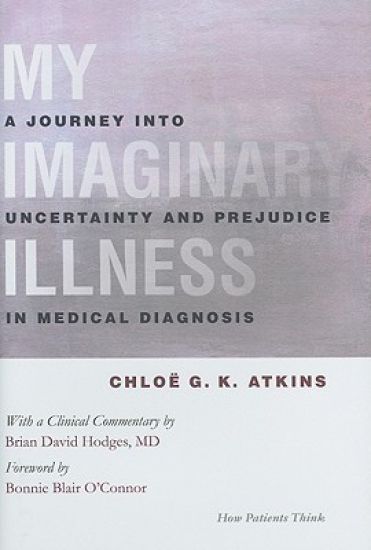
My Imaginary Illness

My Imaginary Illness

Chloe Atkins; Bonnie Blair O'toole; Brian D. Hodges

ILR Press
2010
sidottu
How Patients Think At age twenty-one, Chloë Atkins began suffering from a mysterious illness, the symptoms of which rapidly worsened. Paralyzed for months at a time, she frequently required intubation and life support. She eventually became quadriplegic, dependent both on a wheelchair and on health professionals who refused to believe there was anything physically wrong with her. When test after test returned inconclusive results, Atkins's doctors pronounced her symptoms psychosomatic. Atkins was told not only that she was going to die but also that this was her own fault; they concluded she was so emotionally deranged that she was willing her own death. My Imaginary Illness is the compelling story of Atkins's decades-long battle with a disease deemed imaginary, her frustration with a succession of doctors and diagnoses, her immersion in the world of psychotherapy, and her excruciating physical and emotional journey back to wellness. As both a political theorist and patient, Atkins provides a narrative critique of contemporary medicine and its problematic handling of uncertainty and of symptoms that are not easily diagnosed or known. She convincingly illustrates that medicine's belief in evidence-based practice does not mean that individual doctors are capable of objectivity, nor that the presence of biomedical ethics invokes ethical practices in hospitals and clinics. A foreword by Bonnie Blair O'Connor, who teaches medical students how to listen to patients, and a clinical commentary by Dr. Brian David Hodges, a professor of psychiatry, enrich the book's narrative with practical guidance for medical practitioners and patients alike.
Creating the Health Care Team of the Future

Creating the Health Care Team of the Future

Sioban Nelson; Maria Tassone; Brian D. Hodges

ILR Press
2014
sidottu
One way to significantly improve the delivery of health care is to teach the health professionals who provide care to work together, to communicate with each other across professional boundaries, and to start to think and act like a team that has the patient at its center. The team-based care movement is at the heart of major changes in medical education and will become an element in the new accreditation standards. Through its Centre for Interprofessional Education, the pioneering approach in this area taken by the University of Toronto has attracted international attention. The role of the Centre for IPE, a formal partnership between the University of Toronto and the Toronto Academic Health Sciences Network, is to create a hub for the university and the many teaching hospitals where all core parties can be actively engaged in redesigning this new model of health care. In Creating the Health Care Team of the Future, Sioban Nelson, Maria Tassone, and Brian D. Hodges give a brief background of the Toronto Model and provide a step-by-step guide to developing an IPE program.