Kirjahaku
Etsi kirjoja tekijän nimen, kirjan nimen tai ISBN:n perusteella.
1000 tulosta hakusanalla C G Addison
The entire book of Hebrews is covered in thirteen extensive and concise spiritual messages with topical and devotional emphases. It is the work, not only of an accomplished scholar, but of a skilled teacher. Some of the best characteristics of his writings are evident here, providing a deeper appreciation of Christ and the new resurrection power available now through the risen Lord. Handley C. G. Moule (1841-1920) was an evangelical Anglican bishop, an academic, and one of the foremost New Testament scholars in the Church of England in the late nineteenth and early twentieth centuries. The author of more than sixty books and pamphlets, Moule followed in the English scholar-bishop tradition of Lightfoot and Westcott.
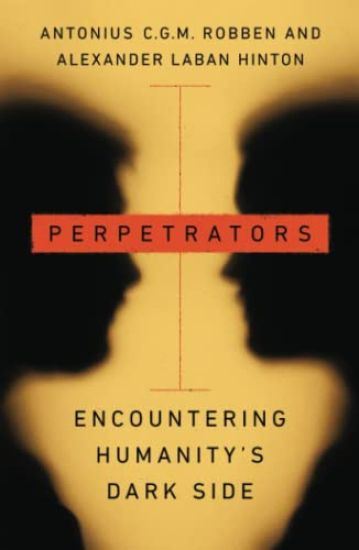
Perpetrators of mass violence are commonly regarded as evil. Their violent nature is believed to make them commit heinous crimes as members of state agencies, insurgencies, terrorist organizations, or racist and supremacist groups. Upon close examination, however, perpetrators are contradictory human beings who often lead unsettlingly ordinary and uneventful lives. Drawing on decades of on-the-ground research with perpetrators of genocide, mass violence, and enforced disappearances in Cambodia and Argentina, Antonius Robben and Alex Hinton explore how researchers go about not just interviewing and writing about perpetrators, but also processing their own emotions and considering how the personal and interpersonal impact of this sort of research informs the texts that emerge from them. Through interlinked ethnographic essays, methodological and theoretical reflections, and dialogues between the two authors, this thought-provoking book conveys practical wisdom for the benefit of other researchers who face ruthless perpetrators and experience turbulent emotions when listening to perpetrators and their victims. Perpetrators rarely regard themselves as such, and fieldwork with perpetrators makes for situations freighted with emotion. Research with perpetrators is a difficult but important part of understanding the causes of and creating solutions to mass violence, and Robben and Hinton use their expertise to provide insightful lessons on the epistemological, ethical, and emotional challenges of ethnographic fieldwork in the wake of atrocity.
Perpetrators of mass violence are commonly regarded as evil. Their violent nature is believed to make them commit heinous crimes as members of state agencies, insurgencies, terrorist organizations, or racist and supremacist groups. Upon close examination, however, perpetrators are contradictory human beings who often lead unsettlingly ordinary and uneventful lives. Drawing on decades of on-the-ground research with perpetrators of genocide, mass violence, and enforced disappearances in Cambodia and Argentina, Antonius Robben and Alex Hinton explore how researchers go about not just interviewing and writing about perpetrators, but also processing their own emotions and considering how the personal and interpersonal impact of this sort of research informs the texts that emerge from them. Through interlinked ethnographic essays, methodological and theoretical reflections, and dialogues between the two authors, this thought-provoking book conveys practical wisdom for the benefit of other researchers who face ruthless perpetrators and experience turbulent emotions when listening to perpetrators and their victims. Perpetrators rarely regard themselves as such, and fieldwork with perpetrators makes for situations freighted with emotion. Research with perpetrators is a difficult but important part of understanding the causes of and creating solutions to mass violence, and Robben and Hinton use their expertise to provide insightful lessons on the epistemological, ethical, and emotional challenges of ethnographic fieldwork in the wake of atrocity.

Plusieurs ann es ont pass et la peine est toujours bien pr sente dans son coeur. Entre regrets et incompr hensions il est parfois n cessaire de prendre une d cision. Dans ce roman d'autofiction le narrateur partage avec nous son envie de changer de vie et de se d tacher de l'emprise de son ex.Et pour cela il a choisi une solution plut t radicale...Une histoire brute et brutale qui a permis son auteur de sortir de sa d pression. Parfois maladroite, la narration nous plonge au coeur d'une r alit laquelle beaucoup peuvent s'identifier. Rythm par des voyages et de nombreuses sc nes rotico-graphiques ce livre saura vous tenir en haleine jusqu' la derni re ligne."Je vois bien le d gout et la haine dans votre regard, vous me voyez juste comme un meurtrier parmi tant d'autres. Une me souill e par le crime, les mains ensanglant es, l'esprit d rang . Ce que l'on dit sur moi, les qualificatifs que l'on emploie, vous vous demandez pourquoi cela ne m'atteint pas ? Ce corps mutil que vous avez retrouv , n'est que le reflet d'une triste r alit . La roue m me pleine d'asp rit s peut continuer de tourner. Si parfois il est n cessaire de se faire justice, ne voyez pas ici la pr sence de vice ou de malice. On m'a fait go ter une chose dont je n'ai plus pu me passer, et pour r cup rer ce que l'on m'avait arrach , il a fallu que je mue. Vous devriez retenir que r aliser le crime parfait ne veut pas dire qu' la fin on s'en tire. Vous savez que vous tenez le crime parfait quand le meurtrier devient le justicier. La version que l'on vous a donn e, est le r cit de la v rit . Cependant, il vous manque quelques d tails, dont un primordial. Laissez-moi rembobiner, je vous laisse vous installer, et m me, si vous le souhaitez, prendre une tasse de th . Je vais tout vous raconter."
Handley C.G. Moule (1841-1920), evangelical Anglican bishop and academic was one of the foremost New Testament scholars in the Church of England in the late nineteenth and early twentieth centuries. The author of more than sixty books and pamphlets, Moule followed in the English scholar-bishop tradition of Lightfoot and Westcott.
This exposition will be valued not only for its devout and scholarly treatment of the Epistle with which it deals, but also for the opportunity it affords of contact with the mind and spirit of Bishop Moule, gratefully remembered for his other writings and his public ministry of God's Word in Durham, at Keswick Convention, and in many other places. The chapters on the "Doctrine of Christ" and the "Doctrine of the Spirit" will be found to be of special interest and illuminating power. Though unpretentious in size, the book is veritably a pocket handbook on one of the most vital themes of our most holy faith.