Kirjojen hintavertailu. Mukana 11 342 296 kirjaa ja 12 kauppaa.

Kirjahaku

Etsi kirjoja tekijän nimen, kirjan nimen tai ISBN:n perusteella.

1000 tulosta hakusanalla C. Stuart Chapman

Collected Works of C. G. Jung, Volume 20: General Index

Collected Works of C. G. Jung, Volume 20: General Index

C. G. Jung

PRINCETON UNIVERSITY PRESS
1979
sidottu
The detailed general index to the authoritative English-language edition of Jung's works This general index to the Collected Works of C. G. Jung is exceptionally comprehensive, indexing down to paragraph numbers. Some particularly important subjects are treated in subindexes, including alchemy, animals, the Bible, colors, Freud, Jung, and numbers. This is an essential reference tool for serious students of Jung.
Collected Works of C. G. Jung, Volume 18: The Symbolic Life: Miscellaneous Writings
The authoritative edition of Jung's miscellaneous collected writings The Symbolic Life gathers some 160 of Jung's writings that span sixty years and reflect his inquiring mind, numerous interests, and wide circle of professional and personal acquaintance. These writings include three longer works, "The Symbolic Life," "Symbols and the Interpretation of Dreams," and "The Tavistock Lectures"; a number of previously overlooked reviews, reports, and articles from the early years of Jung's career; several finished or virtually finished manuscripts that weren't published in his lifetime, including a 1901 report on Freud's On Dreams; and works Jung wrote after retiring from active medical practice. The other pieces collected here include forewords to books by colleagues and pupils, replies to journalists' questions, encyclopedia articles, and letters on technical subjects.
Collected Works of C. G. Jung, Volume 19: General Bibliography - Revised Edition
An authoritative bibliography of Jung's works in German and English A record of all of Jung's publications in German and in English, this volume replaces the general bibliography published in 1979 as Volume 19 of the Collected Works of C. G. Jung. In the form of a checklist, this revised general bibliography records through 1990 the initial publication of each original work by Jung, each translation into English, and all significant new editions, including paperbacks and publications in periodicals. The contents of the volumes of the Collected Works of C. G. Jung and the Gesammelte Werke (published in Switzerland) are listed in parallel to show the relation between the two editions. Jung's seminars are dealt with in detail and, where possible, information is provided about the origin of works that were first conceived as lectures. There are indexes of all publications, personal names, organizations and societies, and periodicals.
C.G. Jung Letters, Volume 1

C.G. Jung Letters, Volume 1

C. G. Jung

PRINCETON UNIVERSITY PRESS
1992
sidottu
Beginning with Jung's earliest correspondence to associates of the psychoanalytic period and ending shortly before his death, the 935 letters selected for these two volumes offer a running commentary on his creativity. The recipients of the letters include Mircea Eliade, Sigmund Freud, Esther Harding, James Joyce, Karl Kernyi, Erich Neumann, Maud Oakes, Herbert Read, Upton Sinclair, and Father Victor White.
C. P. Cavafy

C. P. Cavafy

C. P. Cavafy; George (EDT) Savidis; Edmund (TRN) Keeley

Princeton University Press
2009
pokkari
C. P. Cavafy (1863-1933) lived in relative obscurity in Alexandria, and a collected edition of his poems was not published until after his death. Now, however, he is regarded as the most important figure in twentieth-century Greek poetry, and his poems are considered among the most powerful in modern European literature. This revised bilingual edition of Collected Poems offers the reader the original Greek texts facing what are now recognized as the standard English translations of Cavafy's poetry. It is this translation that best captures the poet's mixture of formal and idiomatic language and that preserves the immediacy of his increasingly frank treatment of homosexual eroticism, his brilliant re-creation of history, and his astute political ironies. This new bilingual edition also features the notes of editor George Savidis and a new foreword by Robert Pinsky.
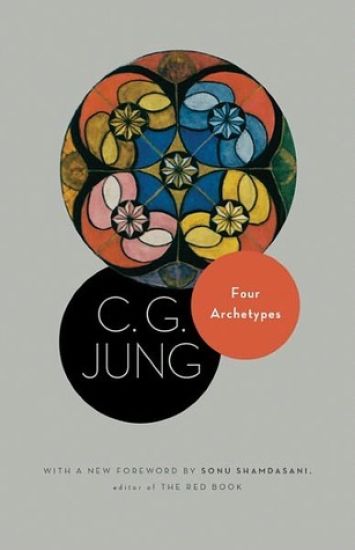
Four Archetypes: (From Vol. 9, Part 1 of the Collected Works of C. G. Jung)
One of Jung's most influential ideas has been his view, presented here, that primordial images, or archetypes, dwell deep within the unconscious of every human being. The essays in this volume gather together Jung's most important statements on the archetypes, beginning with the introduction of the concept in "Archetypes and the Collective Unconscious." In separate essays, he elaborates and explores the archetypes of the Mother and the Trickster, considers the psychological meaning of the myths of Rebirth, and contrasts the idea of Spirits seen in dreams to those recounted in fairy tales. This paperback edition of Jung's classic work includes a new foreword by Sonu Shamdasani, Philemon Professor of Jung History at University College London.
C.g. Jung Set - Answer to Job/Dreams/four Archetypes/Synchronicity/the Undiscovered Self

C.g. Jung Set - Answer to Job/Dreams/four Archetypes/Synchronicity/the Undiscovered Self

C. G. Jung; R. F. C. (TRN) Hull; Sonu (FRW) Shamdasani

Princeton University Press
2010
pokkari
The best of C. G. Jung in one set! These five volumes -- the all-time bestselling editions of Jung's work -- contain popular selections from The Collected Works of C. G. Jung. Each classic volume is newly introduced by Sonu Shamdasani editor of the bestselling The Red Book: Liber Novus and Philemon Professor of Jung History at University College London.
C. S. Lewis's Mere Christianity

C. S. Lewis's Mere Christianity

George M. Marsden

PRINCETON UNIVERSITY PRESS
2016
sidottu
Mere Christianity, C. S. Lewis's eloquent and winsome defense of the Christian faith, originated as a series of BBC radio talks broadcast during the dark days of World War Two. Here is the story of the extraordinary life and afterlife of this influential and much-beloved book. George Marsden describes how Lewis gradually went from being an atheist to a committed Anglican--famously converting to Christianity in 1931 after conversing into the night with his friends J. R. R. Tolkien and Hugh Dyson--and how Lewis delivered his wartime talks to a traumatized British nation in the midst of an all-out war for survival. Marsden recounts how versions of those talks were collected together in 1952 under the title Mere Christianity, and how the book went on to become one of the most widely read presentations of essential Christianity ever published, particularly among American evangelicals. He examines its role in the conversion experiences of such figures as Charles Colson, who read the book while facing arrest for his role in the Watergate scandal. Marsden explores its relationship with Lewis's Narnia books and other writings, and explains why Lewis's plainspoken case for Christianity continues to have its critics and ardent admirers to this day. With uncommon clarity and grace, Marsden provides invaluable new insights into this modern spiritual classic.
C. S. Lewis's Mere Christianity

C. S. Lewis's Mere Christianity

George M. Marsden

Princeton University Press
2020
pokkari
The life and times of C. S. Lewis's modern spiritual classicMere Christianity, C. S. Lewis's eloquent defense of the Christian faith, originated as a series of BBC radio talks broadcast during the dark days of World War Two. Here is the story of the extraordinary life and afterlife of this influential and inspiring book. George Marsden describes how Lewis gradually went from being an atheist to a committed Anglican—famously converting to Christianity in 1931 after conversing into the night with his friends J. R. R. Tolkien and Hugh Dyson—and how his plainspoken case for Christianity went on to become one of the most beloved spiritual books of all time.
Collected Works of C. G. Jung, Volume 1: Psychiatric Studies
The authoritative edition of early psychiatric studies by Jung, which foreshadow much of his later work Psychiatric Studies gathers writings on descriptive and experimental psychiatry that Jung published between 1902 and 1905, early in his career as a psychiatrist. The book opens with a study that foreshadows much of his later work and is indispensable to all serious students of his psychiatric career. This is his medical-degree dissertation, "On the Psychology and Pathology of So-called Occult Phenomena," a detailed analysis of the case of an adolescent girl who professed to be a medium. This volume also includes papers on cryptomnesia, hysterical parapraxes in reading, manic mood disorder, simulated insanity, and other subjects.
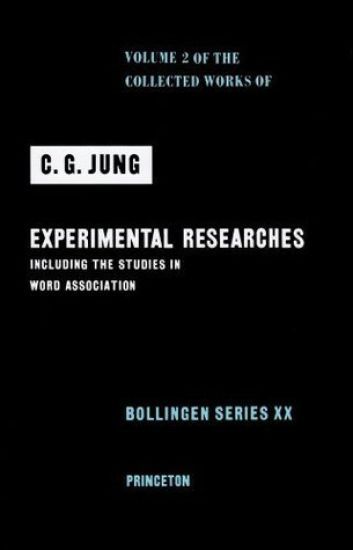
Collected Works of C. G. Jung, Volume 2: Experimental Researches
The authoritative edition of Jung's important early writings on his word-association experiments After joining the staff of the Burgh lzli Mental Hospital in 1900, Jung developed and applied word-association tests for studying normal and abnormal psychology. Between 1904 and 1907, he published nine studies on these experiments. Experimental Researches features these studies, as well as two lectures on the association method that Jung gave in 1909 when he and Freud were invited to Clark University in Worcester, Massachusetts, and three articles on psychophysical researches. Jung's word-association studies are a significant phase in the development of his thought and an important contribution to diagnostic psychology and psychiatry.
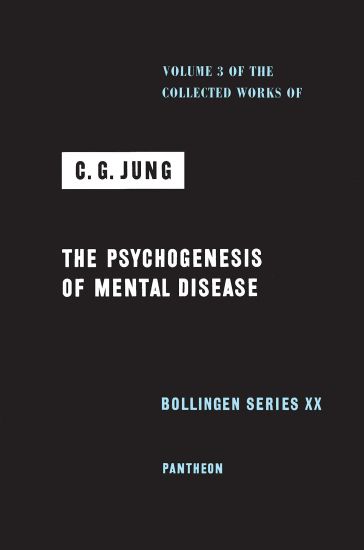
Collected Works of C. G. Jung, Volume 3: The Psychogenesis of Mental Disease
The authoritative edition of some of Jung's most important writings on psychiatry The Psychogenesis of Mental Disease presents some of Jung's most important writings on psychiatry, including "On the Psychology of Dementia Praecox," his landmark early study of what is today called schizophrenia. Also featured here are nine other key papers in psychiatry, the earliest being "The Content of the Psychoses," written in 1908, when Jung was a leading member of the early psychoanalytic movement. The latest are two papers written in 1956 and 1958, which embody Jung's conclusions after many years of experience in the psychotherapy of schizophrenia. These writings reflect the original techniques with which Jung is especially associated.
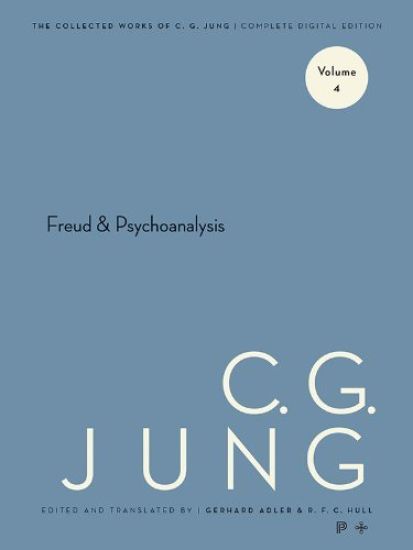
Collected Works of C. G. Jung, Volume 4: Freud and Psychoanalysis
The authoritative edition of Jung's essential writings for understanding his early enthusiasm for--and later split with--Freud and psychoanalysis Freud and Psychoanalysis gathers Jung's writings on Freud and psychoanalysis published between 1906 and 1916, along with two later, related papers. The book covers the period of the enthusiastic collaboration between the two pioneers of psychology through the years when Jung's growing appreciation of religious experience, his criticism of Freud's emphasis on pathology, and other differences led to Jung's formal break with his mentor. Part I features brief studies of Freud's theory of hysteria, dream analysis, the psychology of rumor, and other subjects. Parts II and III contain the essentials of the criticism that led to Jung's rupture with Freud, the most important of which is "The Theory of Psychoanalysis." Part IV presents "The Significance of the Father in the Destiny of the Individual." The book's final two pieces, "Freud and Jung: Contrasts" and the introduction to a book by W. M. Kranefeldt, further illuminate Jung's reassessment of psychoanalysis.
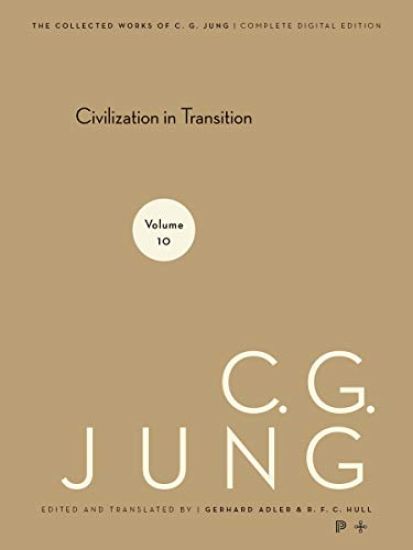
Collected Works of C. G. Jung, Volume 10: Civilization in Transition
In paperback for the first time, an authoritative collection of Jung's writings on contemporary events, including The Undiscovered Self and Flying Saucers Civilization in Transition features Jung's writings on contemporary events, especially the relation between the individual and society. In the earliest essay, "The Role of the Unconscious" (1918), Jung advanced the theory that World War I was a psychological crisis originating in the collective unconscious of individuals. In other essays included here, he pursued this theory in the 1920s and 1930s, focusing on the upheaval in Germany, and he gave it a much wider application in two major works of his last years, also featured here--The Undiscovered Self, which is concerned with the relation between the individual and a mass society, and Flying Saucers, on the birth of a myth that Jung regarded as a reaction to the scientific trends of a technological era.
Collected Works of C. G. Jung, Volume 11: Psychology and Religion: West and East
In paperback for the first time, an authoritative edition of Jung's shorter works on the psychology of religious phenomena This volume collects Jung's shorter writings on religion and psychology, including several that are of major importance. The pieces on Western religion are Psychology and Religion - A Psychological Approach to the Dogma of the Trinity - Transformation Symbolism in the Mass - Forewords to White's God and the Unconscious and Werblowsky's Lucifer and Prometheus - Brother Klaus - Psychotherapists or the Clergy - Psychoanalysis and the Cure of Souls - Answer to Job The pieces on Eastern religion are Psychological Commentaries on The Tibetan Book of the Great Liberation and The Tibetan Book of the Dead - Yoga and the West - Foreword to Suzuki's Introduction to Zen Buddhism - The Psychology of Eastern Meditation - The Holy Men of India - Foreword to the I Ching
Collected Works of C. G. Jung, Volume 18: The Symbolic Life: Miscellaneous Writings
For the first time in paperback, the authoritative edition of Jung's miscellaneous collected writings The Symbolic Life gathers some 160 of Jung's writings that span sixty years and reflect his inquiring mind, numerous interests, and wide circle of professional and personal acquaintance. These writings include three longer works, "The Symbolic Life," "Symbols and the Interpretation of Dreams," and "The Tavistock Lectures"; a number of previously overlooked reviews, reports, and articles from the early years of Jung's career; several finished or virtually finished manuscripts that weren't published in his lifetime, including a 1901 report on Freud's On Dreams; and works Jung wrote after retiring from active medical practice. The other pieces collected here include forewords to books by colleagues and pupils, replies to journalists' questions, encyclopedia articles, and letters on technical subjects.
Collected Works of C. G. Jung, Volume 19: General Bibliography - Revised Edition
In paperback for the first time, an authoritative bibliography of Jung's works in German and English A record of all of Jung's publications in German and in English, this volume replaces the general bibliography published in 1979 as Volume 19 of the Collected Works of C. G. Jung. In the form of a checklist, this revised general bibliography records through 1990 the initial publication of each original work by Jung, each translation into English, and all significant new editions, including paperbacks and publications in periodicals. The contents of the volumes of the Collected Works of C. G. Jung and the Gesammelte Werke (published in Switzerland) are listed in parallel to show the relation between the two editions. Jung's seminars are dealt with in detail and, where possible, information is provided about the origin of works that were first conceived as lectures. There are indexes of all publications, personal names, organizations and societies, and periodicals.
Collected Works of C. G. Jung, Volume 20: General Index

Collected Works of C. G. Jung, Volume 20: General Index

C. G. Jung

PRINCETON UNIVERSITY PRESS
2024
nidottu
In paperback for the first time, the detailed general index to the authoritative English-language edition of Jung's works This general index to the Collected Works of C. G. Jung is exceptionally comprehensive, indexing down to paragraph numbers. Some particularly important subjects are treated in subindexes, including alchemy, animals, the Bible, colors, Freud, Jung, and numbers. This is an essential reference tool for serious students of Jung.
Collected Works of C. G. Jung, Volume 8: The Structure and Dynamics of the Psyche
In paperback for the first time, an authoritative collection of Jung's writings on analytical psychology, including Synchronicity The Structure and Dynamics of the Psyche features a selection of Jung's writings, ranging over four decades of his career, that illustrate the development of the conceptual foundations of analytical psychology. These pieces span the period from Jung's break with Freud and the psychoanalytical school, when Jung began formulating his own theories, to the 1950s, when he published an account of his controversial theory of synchronicity. The contents are: On Psychic Energy - The Transcendent Function - A Review of the Complex Theory - The Significance of Constitution and Heredity in Psychology - Psychological Factors Determining Human Behavior - Instinct and the Unconscious - The Structure of the Psyche - On the Nature of the Psyche - General Aspects of Dream Psychology - On the Nature of Dreams - The Psychological Foundation of Belief in Spirits - Spirit and Life - Basic Postulates of Analytical Psychology - Analytical Psychology and Weltanschauung - The Real and the Surreal - The Stages of Life - The Soul and Death - Synchronicity: An Acausal Connecting Principle - On Synchronicity