Kirjojen hintavertailu. Mukana 12 185 810 kirjaa ja 12 kauppaa.

Kirjahaku

Etsi kirjoja tekijän nimen, kirjan nimen tai ISBN:n perusteella.

1000 tulosta hakusanalla Cesar Weiss

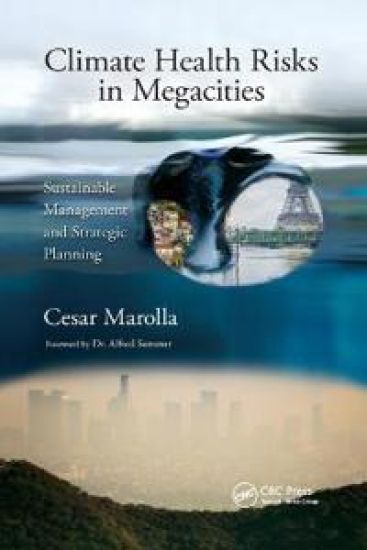
Climate Health Risks in Megacities

Climate Health Risks in Megacities

Cesar Marolla

CRC Press
2019
nidottu
Climate Health Risks in Megacities: Sustainable Management and Strategic Planning courageously confronts the immense challenges of alleviating climate change and takes the initiative to layout an agenda that calls for action in the rapidly changing landscape of our global climate. This guide provides a constructive methodology for developing and implementing risk management and operational continuity management systems to climate change effects on urban populations. It addresses key issues such as physical location, proper sanitation, food security and vector-borne diseases against the backdrop of climate change, and then model its effect on the urban dwellers. The author also reveals the benefits of implementing a unique risk management approach to combat global threats and focuses on building urban resilience in the face of disasters. Prepared with a comprehensive and forward-thinking style, this book draws on indispensable case studies in key megacities like New York, Los Angeles, Beijing, Rio de Janeiro, London, Mumbai, and Lagos, and links researchers, scientists, city’s mayors, environmentalists, policy-makers and world leaders from central areas to review, reflect, and expound on future directions.

Global Trafficking Networks on Film and Television
This book draws on a multi-method study of film and television narratives of global criminal networks to explore the links between audiovisual media, criminal networks and global audiences in the age of digital content distribution.Mapping out media representations of the ongoing war on drugs in Mexico and the United States, the author delves into the social, cultural and geopolitical impacts of distribution and consumption of these media. With a particular emphasis on the globalized Mexican cartels, this book investigates three areas – gender and racial representation in film and television, the digital distribution of content through the internet and streaming services such as Hulu and Netflix, and depictions of extreme violence in film, television and online spaces – to identify whether there are fundamental similarities and differences in how Hollywood productions reproduce stereotypes about race, gender and extreme violence. Some of the movies and television series analysed are Breaking Bad, Ozark, Weeds, Rambo: Last Blood, No Country for Old Men, Sicario and the Netflix series Narcos, Narcos: Mexico and El Chapo.Taking a unique interdisciplinary approach to the study of cartels in the media, this book will be of interest to students and scholars of media studies, film, television, security studies, Latin American and cultural studies.
Introducing Comparative Literature

Introducing Comparative Literature

César Domínguez; Haun Saussy; Darío Villanueva

Routledge
2014
sidottu
Introducing Comparative Literature is a comprehensive guide to the field offering clear, concise information alongside useful analysis and examples. It frames the introduction within recent theoretical debates and shifts in the discipline whilst also addressing the history of the field and its practical application. Looking at Comparative Literature within the context of globalization, cosmopolitanism and post or transnationalism, the book also offers engagement and comparison with other visual media such as cinema and e-literature. The first four chapters address the broad theoretical issues within the field such as ‘interliterary theory’, decoloniality, and world literature, while the next four are more applied, looking at themes, translation, literary history and comparison with other arts. This engaging guide also contains a glossary of terms and concepts as well as a detailed guide to further reading.
Introducing Comparative Literature

Introducing Comparative Literature

César Domínguez; Haun Saussy; Darío Villanueva

Routledge
2014
nidottu
Introducing Comparative Literature is a comprehensive guide to the field offering clear, concise information alongside useful analysis and examples. It frames the introduction within recent theoretical debates and shifts in the discipline whilst also addressing the history of the field and its practical application. Looking at Comparative Literature within the context of globalization, cosmopolitanism and post or transnationalism, the book also offers engagement and comparison with other visual media such as cinema and e-literature. The first four chapters address the broad theoretical issues within the field such as ‘interliterary theory’, decoloniality, and world literature, while the next four are more applied, looking at themes, translation, literary history and comparison with other arts. This engaging guide also contains a glossary of terms and concepts as well as a detailed guide to further reading.
Why Information Grows

Why Information Grows

Cesar Hidalgo

Basic Books
2015
sidottu
What is economic growth? And why, historically, has it occurred in only a few places? Previous efforts to answer these questions have focused on institutions, geography, finances, and psychology. But according to MIT's antidisciplinarian César Hidalgo, understanding the nature of economic growth demands transcending the social sciences and including the natural sciences of information, networks, and complexity. To understand the growth of economies, Hidalgo argues, we first need to understand the growth of order.At first glance, the universe seems hostile to order. Thermodynamics dictates that over time, order,or information,disappears. Whispers vanish in the wind just like the beauty of swirling cigarette smoke collapses into disorderly clouds. But thermodynamics also has loopholes that promote the growth of information in pockets. Although cities are all pockets where information grows, they are not all the same. For every Silicon Valley, Tokyo, and Paris, there are dozens of places with economies that accomplish little more than pulling rocks out of the ground. So, why does the US economy outstrip Brazil's, and Brazil's that of Chad? Why did the technology corridor along Boston's Route 128 languish while Silicon Valley blossomed? In each case, the key is how people, firms, and the networks they form make use of information.Seen from Hidalgo's vantage, economies become distributed computers, made of networks of people, and the problem of economic development becomes the problem of making these computers more powerful. By uncovering the mechanisms that enable the growth of information in nature and society, Why Information Grows lays bare the origins of physical order and economic growth. Situated at the nexus of information theory, physics, sociology, and economics, this book propounds a new theory of how economies can do not just more things, but more interesting things.
Why Information Grows

Why Information Grows

Cesar Hidalgo

Basic Books
2017
pokkari
"Hidalgo has made a bold attempt to synthesize a large body of cutting-edge work into a readable, slender volume. This is the future of growth theory." --Financial Times What is economic growth? And why, historically, has it occurred in only a few places? Previous efforts to answer these questions have focused on institutions, geography, finances, and psychology. But according to MIT's antidisciplinarian Cesar Hidalgo, understanding the nature of economic growth demands transcending the social sciences and including the natural sciences of information, networks, and complexity. To understand the growth of economies, Hidalgo argues, we first need to understand the growth of order. At first glance, the universe seems hostile to order. Thermodynamics dictates that over time, order-or information-disappears. Whispers vanish in the wind just like the beauty of swirling cigarette smoke collapses into disorderly clouds. But thermodynamics also has loopholes that promote the growth of information in pockets. Although cities are all pockets where information grows, they are not all the same.For every Silicon Valley, Tokyo, and Paris, there are dozens of places with economies that accomplish little more than pulling rocks out of the ground. So, why does the US economy outstrip Brazil's, and Brazil's that of Chad? Why did the technology corridor along Boston's Route 128 languish while Silicon Valley blossomed? In each case, the key is how people, firms, and the networks they form make use of information. Seen from Hidalgo's vantage, economies become distributed computers, made of networks of people, and the problem of economic development becomes the problem of making these computers more powerful. By uncovering the mechanisms that enable the growth of information in nature and society, Why Information Grows lays bear the origins of physical order and economic growth. Situated at the nexus of information theory, physics, sociology, and economics, this book propounds a new theory of how economies can do not just more things, but more interesting things.
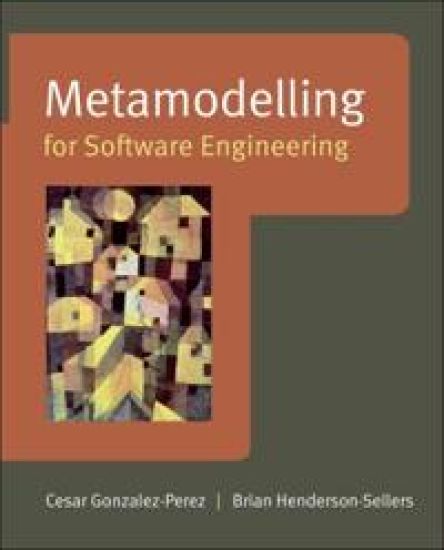
Metamodelling for Software Engineering

Metamodelling for Software Engineering

Cesar Gonzalez-Perez; Brian Henderson-Sellers

John Wiley Sons Inc
2008
sidottu
This book focuses on metamodelling as a discipline, exploring its foundations, techniques and results. It presents a comprehensive metamodel that covers process, product and quality issues under a common framework. Issues covered include: An explanation of what metamodelling is and why it is necessary in the context of software engineering.Basic concepts and principles of traditional metamodelling, and some existing results of this approach.Problems associated with traditional approaches to Metamodelling are discussed, alongside an exploration of possible solutions and alternative approaches.Advanced topics such as the extension of the object-oriented paradigm for metamodelling purposes or the foundations of powertype-based tool development will be studied.Finally, a comprehensive case study is introduced and developed, showing how to use many of the concepts explained in the previous chapters. This book provides a comprehensive conceptual framework for metamodelling and includes case studies and exercises which will demonstrate practical uses of metamodelling. For lecturers and educators, the book provides a layered repository of contents, starting from the basics of metamodelling in the first chapters, through specific issues such as trans-layer control or non-strict approaches, up to advanced topics such as universal powertyping or extensions to the object-oriented paradigm. The book also serves as an in-depth reference guide to features and technologies to consider when developing in-house software development methods or customising and adopting off-the-shelf ones. Software tool developers and vendors can benefit from the book by finding in it a comprehensive guide to the implementation of frameworks and toolsets for computer-aided software modelling and development.
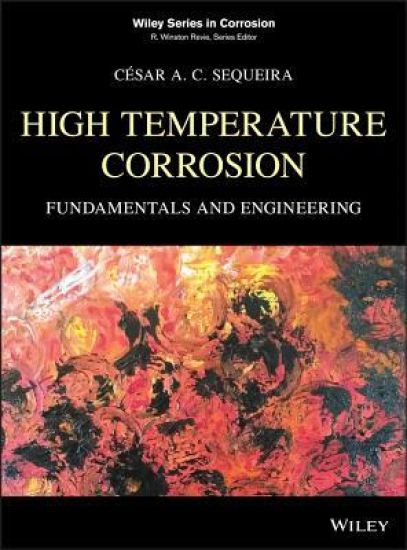
High Temperature Corrosion

High Temperature Corrosion

César A. C. Sequeira

John Wiley Sons Inc
2019
sidottu
Reviews the science and engineering of high-temperature corrosion and provides guidelines for selecting the best materials for an array of system processes High-temperature corrosion (HTC) is a widespread problem in an array of industries, including power generation, aerospace, automotive, and mineral and chemical processing, to name a few. This book provides engineers, physicists, and chemists with a balanced presentation of all relevant basic science and engineering aspects of high-temperature corrosion. It covers most HTC types, including oxidation, sulfidation, nitridation, molten salts, fuel-ash corrosion, H2S/H2 corrosion, molten fluoride/HF corrosion, and carburization. It also provides corrosion data essential for making the appropriate choices of candidate materials for high-temperature service in process conditions. A form of corrosion that does not require the presence of liquids, high-temperature corrosion occurs due to the interaction at high temperatures of gases, liquids, or solids with materials. HTC is a subject is of increasing importance in many areas of science and engineering, and students, researchers, and engineers need to be aware of the nature of the processes that occur in high-temperature materials and equipment in common use today, especially in the chemical, gas, petroleum, electric power, metal manufacturing, automotive, and nuclear industries. Provides engineers and scientists with the essential data needed to make the most informed decisions on materials selectionIncludes up-to-date information accompanied by more than 1,000 references, 80% of which from within the past fifteen yearsIncludes details on systems of critical engineering importance, especially the corrosion induced by low-energy radionuclidesIncludes practical guidelines for testing and research in HTC, along with both the European and International Standards for high-temperature corrosion engineering Offering balanced, in-depth coverage of the fundamental science behind and engineering of HTC, High Temperature Corrosion: Fundamentals and Engineering is a valuable resource for academic researchers, students, and professionals in the material sciences, solid state physics, solid state chemistry, electrochemistry, metallurgy, and mechanical, chemical, and structural engineers.
Experimental Mechanics of Solids

Experimental Mechanics of Solids

Cesar A. Sciammarella; Federico M. Sciammarella

John Wiley Sons Inc
2012
sidottu
Experimental solid mechanics is the study of materials to determine their physical properties. This study might include performing a stress analysis or measuring the extent of displacement, shape, strain and stress which a material suffers under controlled conditions. In the last few years there have been remarkable developments in experimental techniques that measure shape, displacement and strains and these sorts of experiments are increasingly conducted using computational techniques. Experimental Mechanics of Solids is a comprehensive introduction to the topics, technologies and methods of experimental mechanics of solids. It begins by establishing the fundamentals of continuum mechanics, explaining key areas such as the equations used, stresses and strains, and two and three dimensional problems. Having laid down the foundations of the topic, the book then moves on to look at specific techniques and technologies with emphasis on the most recent developments such as optics and image processing. Most of the current computational methods, as well as practical ones, are included to ensure that the book provides information essential to the reader in practical or research applications. Key features: Presents widely used and accepted methodologies that are based on research and development work of the lead authorSystematically works through the topics and theories of experimental mechanics including detailed treatments of the Moire, Speckle and holographic optical methodsIncludes illustrations and diagrams to illuminate the topic clearly for the readerProvides a comprehensive introduction to the topic, and also acts as a quick reference guide This comprehensive book forms an invaluable resource for graduate students and is also a point of reference for researchers and practitioners in structural and materials engineering.
The Complete Posthumous Poetry

The Complete Posthumous Poetry

Cesar Vallejo

University of California Press
1980
pokkari
The Translation judges for the National Book Awards--Richard Miller, Alastair Reid, Eliot Weinberger--cited Clayton Eshleman and Jose Rubia Barcia's translation of Cesar Vallejo's The Complete Posthumous Poetry as follows: "This, the first National Book Award to be given to a translation of modern poetry, is a recognition of Clayton Eshleman's seventeen-year apprenticeship to perhaps the most difficult poetry in the Spanish language. Eshleman and his present collaborator, Jose Rubia Barcia, have not only rendered these complex poems into brilliant and living English, but have also established a definitive Spanish test based on Vallejo's densely rewritten manuscripts. In recreating this modern master in English, they have also made a considerable addition to poetry in our language."
The Complete Poetry

The Complete Poetry

César Vallejo; Mario Vargas Llosa

University of California Press
2009
pokkari
This first translation of the complete poetry of Peruvian Cesar Vallejo (1892-1938) makes available to English speakers one of the greatest achievements of twentieth-century world poetry. Handsomely presented in facing-page Spanish and English, this volume, translated by National Book Award winner Clayton Eshleman, includes the groundbreaking collections "The Black Heralds" (1918), "Trilce" (1922), "Human Poems" (1939), and "Spain, Take This Cup from Me" (1939). Vallejo's poetry takes the Spanish language to an unprecedented level of emotional rawness and stretches its grammatical possibilities. Striking against theology with the very rhetoric of the Christian faith, Vallejo's is a tragic vision - perhaps the only one in the canon of Spanish-language literature - in which salvation and sin are one and the same. This edition includes notes on the translation and a fascinating translation memoir that traces Eshleman's long relationship with Vallejo's poetry. An introduction and chronology provide further insights into Vallejo's life and work.