Kirjahaku
Etsi kirjoja tekijän nimen, kirjan nimen tai ISBN:n perusteella.
1000 tulosta hakusanalla Claud Field



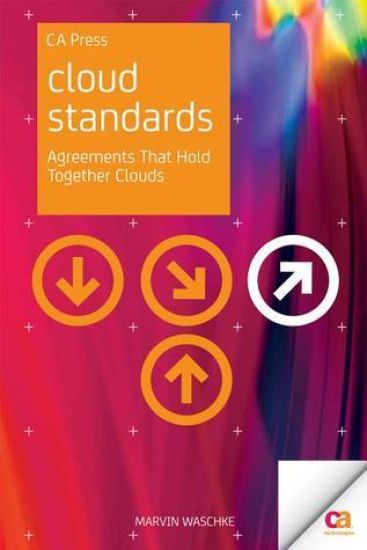
Cloud computing is often described as providing computing resources the way electric utilities provide energy. In theory, anyone with an adequate connection to the Internet should be able to tap into a cloud provider and get exactly the computing resources they want when they want it, just like plugging into the electricity grid and getting exactly the energy you want when you want it. But to get that electricity, there are many standards: voltage, frequency, phase, motors constructed in standard ways—there is a long list; there is an equally long list for cloud computing. Many of the standards are already in place. Others are being developed; some in contention. Cloud Standards is a broad discussion of important existing and future standards. For existing standards, the discussion focuses on how they are used, providing practical advice to engineers constructing clouds and services to be deployed on clouds. For future standards, the discussion is on why a standard is needed, what the benefits will be, and what is being done now to fill the gap. No current book provides this information in the depth and detail necessary for an engineer in his work, an architect in designing cloud systems, a product manager collecting and evaluating products, or an executive evaluating the feasibility of a project. A second benefit from this book is that it provides insight into cloud implementations. Cloud implementations can be seen as the culmination of many trends in software and hardware engineering. Much of the foundation for these developments have been crystallized in the form of standards like TCP/IP (Transmission Control Protocol/Internet Protocol) and HTTP (Hypertext Transmission Protocol). The book leads readers to understand how these contribute to and affect cloud implementations. Unfortunately, emerging standards are often messy. Cloud implementers may need to choose between competing proposed standards. Sometimes it is better toreject the standard entirely and "roll your own." This book provides background for intelligent decisions. Keeping a cloud, or an application implemented on a cloud, running well requires careful tuning of the implementation. Tuning often involves adjusting controls that are in the standard or applying the standard in less well-known ways. This book is an aid in tuning cloud systems for maximum benefits.
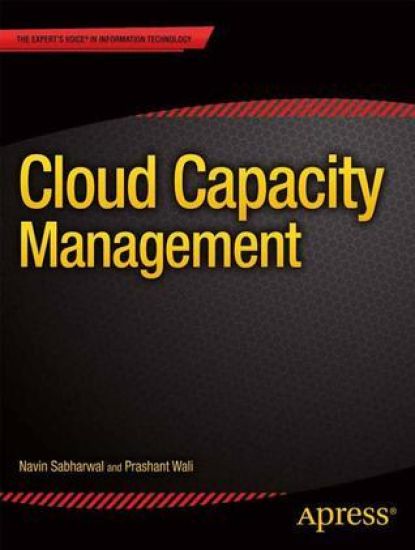
Cloud Capacity Management helps readers in understanding what the cloud, IaaS, PaaS, SaaS are, how they relate to capacity planning and management and which stakeholders are involved in delivering value in the cloud value chain. It explains the role of capacity management for a creator, aggregator, and consumer of cloud services and how to provision for it in a 'pay as you use model'. This involves a high level of abstraction and virtualization to facilitate rapid and on demand provisioning of services. The conventional IT service models take a traditional approach when planning for service capacity to provide optimum services levels which has huge cost implications for service providers. This book addresses the gap areas between traditional capacity management practices and cloud service models. It also showcases capacity management process design and implementation in a cloud computing domain using ITSM best practices. This book is a blend of ITSM best practices and infrastructure capacity planning and optimization implementation in various cloud scenarios. Cloud Capacity Management addresses the basics of cloud computing, its various models, and their impact on capacity planning. This book also highlights the infrastructure capacity management implementation process in a cloud environment showcasing inherent capabilities of tool sets available and the various techniques for capacity planning and performance management. Techniques like dynamic resource scheduling, scaling, load balancing, and clustering etc are explained for implementing capacity management.



Claude McKay's Liberating Narrative
Tatiana A. Tagirova-Daley
Peter Lang Publishing Inc
2012
sidottu
Claude McKay’s Liberating Narrative: Russian and Anglophone Caribbean Literary Connections examines McKay’s search for an original form of literary expression that started in Jamaica and continued in his subsequent travels abroad. Newly found research pertaining to his presence in several Russian periodicals, magazines, and literary diaries brings new light to the writer’s contribution to the Soviet understanding of African American and Caribbean issues and his possible influence on Yevgeny Zamyatin, the writer he met during his 1922 - 1923 visit to Russia. The primary focus of this book is Claude McKay and his positive reception of Alexander Pushkin, Feodor Dostoyevsky, and Leo Tolstoy, the nineteenth-century Russian writers who influenced his literary career and enabled him to find a solution to his dilemma of a dual Caribbean identity. The secondary focus of this book is the analysis of McKay’s affinity with his Russian literary predecessors and with C.L.R. James and Ralph de Boissière, his Trinidadian contemporaries, who also acknowledged the importance of Russian writers in their artistic development. The book discusses McKay as a precursor of Russian and Anglophone Caribbean links and presents a comparative analysis of cross-racial, cross-national, and cross-cultural alliances between these two distinct yet similar types of literature. Claude McKay’s Liberating Narrative is highly recommended for undergraduate and graduate courses in Caribbean and comparative literature at North American, European, Caribbean, and African universities.
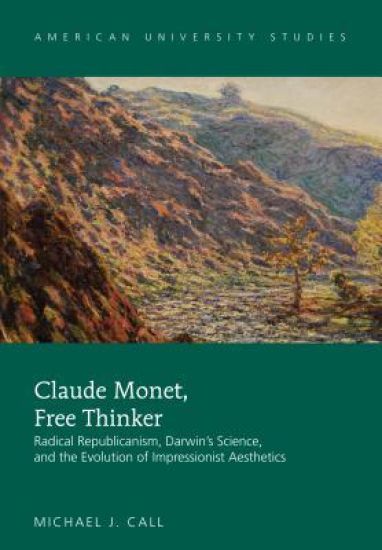
This revolutionary interdisciplinary study argues that Monet’s artistic practices and choices were the direct result of his political stance as a nineteenth-century libre penseur, a position characterized by radical republicanism, a progressive social agenda, and fierce anticlericalism. His efforts to create a style reflecting his personal political code led him to produce paintings proclaimed by like-minded free thinkers as «a science being constantly perfected» (Gustave Geffroy), that is, emphasizing only observable phenomena in the immediate present through scrupulous, insistent on-site observation, capturing the raw data of sensations and sensory experience, and purporting to record a world free of embedded meaning. Darwin’s world similarly comes with no prepackaged reassurance of humankind’s privileged place in it; it is instead a space in which all varieties of organisms and species compete for limited resources in a struggle for survival. The Darwinian model of nature appears to have influenced Monet’s artistic production increasingly as his style evolved over several decades. In opposition to post-Renaissance art that privileged the human presence in both representation and the viewing act, Monet’s later paintings create a sense of virtual and visual equality among all observable phenomena. The human – and the viewer, by extension – is thus represented as neither separate from nature as a disengaged observer nor superior to it but rather co-equal with all other organic life forms surrounding it. This approach, while echoing Darwin’s admiration of nature and its laws, also reminds humankind of its own fragility and the hard choices it must make to avoid extinction.
Cloud of Witnesses
Crossway Books
2024
sidottu
A Comprehensive Anthology of Prayers and Petitions throughout Church History Throughout history, Christians have sought guidance to bolster their spiritual walk with Christ and life of prayer. Even Christ’s disciples would ask, “Lord, teach us to pray” (Luke 11:1). But in our current individualistic culture, it’s almost too easy to neglect the wisdom of those who came before us. To restore a love of historic Christian tradition, theology, and practice, this comprehensive anthology combines prayers and petitions of the greatest figures throughout the formation of the church, continuing through the medieval, Reformation, and modern eras. Editors Jonathan W. Arnold and Zachariah M. Carter provide context for each prayer through expert introductions, commentary, and biographical explorations. Ultimately readers will be encouraged in their faith as they learn the importance of prayer and witness the hearts and struggles of the saints. Helpful Historical Resource: A chronological anthology of prayers and petitions throughout church history Features Church History’s Greatest Figures: Clement of Rome, Gregory of Nyssa, Thomas Aquinas, Martin Luther, John Calvin, Charles Spurgeon, and more Useful as a Devotional Aid: Helps readers strengthen their knowledge of prayer and develop their walk with Christ Ideal for Church Leaders and Laypeople Alike: Pastors, historians, theologians, Bible teachers, and individual believers