Kirjojen hintavertailu. Mukana 11 627 067 kirjaa ja 12 kauppaa.

Kirjahaku

Etsi kirjoja tekijän nimen, kirjan nimen tai ISBN:n perusteella.

802 tulosta hakusanalla Cohn A

Cultures of Plague

Cultures of Plague

Jr. Cohn

Oxford University Press
2009
sidottu
Cultures of Plague opens a new chapter in the history of medicine. Neither the plague nor the ideas it stimulated were static, fixed in a timeless Galenic vacuum over five centuries, as historians and scientists commonly assume. As plague evolved in its pathology, modes of transmission, and the social characteristics of its victims, so too did medical thinking about plague develop. This study of plague imprints from academic medical treatises to plague poetry highlights the most feared and devastating epidemic of the sixteenth-century, one that threatened Italy top to toe from 1575 to 1578 and unleashed an avalanche of plague writing. From erudite definitions, remote causes, cures and recipes, physicians now directed their plague writings to the prince and discovered their most 'valiant remedies' in public health: strict segregation of the healthy and ill, cleaning streets and latrines, addressing the long-term causes of plague-poverty. Those outside the medical profession joined the chorus. In the heartland of Counter-Reformation Italy, physicians along with those outside the profession questioned the foundations of Galenic and Renaissance medicine, even the role of God. Assaults on medieval and Renaissance medicine did not need to await the Protestant-Paracelsian alliance of seventeenth-century in northern Europe. Instead, creative forces planted by the pandemic of 1575-8 sowed seeds of doubt and unveiled new concerns and ideas within that supposedly most conservative form of medical writing, the plague tract. Relying on health board statistics and dramatized with eyewitness descriptions of bizarre happenings, human misery, and suffering, these writers created the structure for plague classics of the eighteenth century, and by tracking the contagion's complex and crooked paths, they anticipated trends of nineteenth-century epidemiology.
Cultures of Plague

Cultures of Plague

Jr. Cohn

Oxford University Press
2011
nidottu
Cultures of Plague opens a new chapter in the history of medicine. Neither the plague nor the ideas it stimulated were static, fixed in a timeless Galenic vacuum over five centuries, as historians and scientists commonly assume. As plague evolved in its pathology, modes of transmission, and the social characteristics of its victims, so too did medical thinking about plague develop. This study of plague imprints, from academic medical treatises to plague poetry, highlights the most feared and devastating epidemic of the sixteenth-century, one that threatened Italy top to toe from 1575 to 1578 and unleashed an avalanche of plague writing. From erudite definitions, remote causes, cures and recipes, physicians now directed their plague writings to the prince and discovered their most 'valiant remedies' in public health: strict segregation of the healthy and ill, cleaning streets and latrines, addressing the long-term causes of plague-poverty. Those outside the medical profession joined the chorus. In the heartland of Counter-Reformation Italy, physicians, along with those outside the profession, questioned the foundations of Galenic and Renaissance medicine, even the role of God. Assaults on medieval and Renaissance medicine did not need to await the Protestant-Paracelsian alliance of seventeenth-century in northern Europe. Instead, creative forces planted by the pandemic of 1575-8 sowed seeds of doubt and unveiled new concerns and ideas within that supposedly most conservative form of medical writing, the plague tract. Relying on health board statistics and dramatized with eyewitness descriptions of bizarre happenings, human misery, and suffering, these writers created the structure for plague classics of the eighteenth century, and by tracking the contagion's complex and crooked paths, they anticipated trends of nineteenth-century epidemiology.
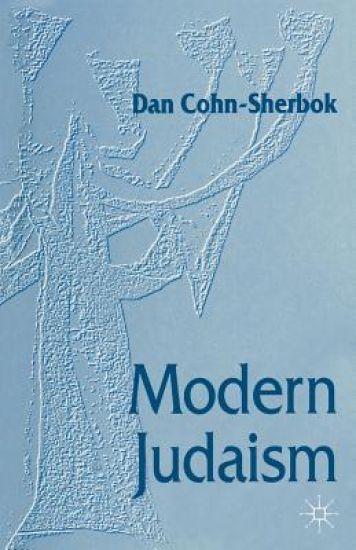
Modern Judaism

Modern Judaism

D. Cohn-Sherbok

Palgrave Macmillan
1996
sidottu
Since the post-Enlightenment, Jews have fragmented into a variety of sub-groups, each with their own religious ideology. This book provides a description as well as a critique of these various Jewish religious groups and offers an alternative model of Judaism based on an assessment of the nature of contemporary Jewish life. As will be seen, modern Jews are deeply divided on a wide variety of issues. Given this situation, no uniform pattern of Jewish existence can be imposed from above, nor is it likely to emerge from within the body of Israel. What is required instead is a philosophy of Jewish autonomy which legitimizes Jewish subjectivity and personal decision-making. This philosophy of Judaism - which is referred to in this study as 'Open Judaism' - provides a new foundation for Jewish life as Jews stand on the threshold of the third millennium.
Modern Judaism

Modern Judaism

D. Cohn-Sherbok

Palgrave Macmillan
1996
nidottu
Since the post-Enlightenment, Jews have fragmented into a variety of sub-groups, each with their own religious ideology. This book provides a description as well as a critique of these various Jewish religious groups and offers an alternative model of Judaism based on an assessment of the nature of contemporary Jewish life. As will be seen, modern Jews are deeply divided on a wide variety of issues. Given this situation, no uniform pattern of Jewish existence can be imposed from above, nor is it likely to emerge from within the body of Israel. What is required instead is a philosophy of Jewish autonomy which legitimizes Jewish subjectivity and personal decision-making. This philosophy of Judaism - which is referred to in this study as 'Open Judaism' - provides a new foundation for Jewish life as Jews stand on the threshold of the third millennium.
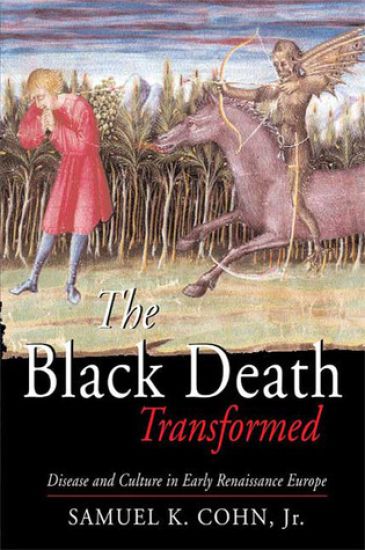
The Black Death Transformed

The Black Death Transformed

Jr. Cohn

Hodder Arnold
2003
nidottu
The Black Death in Europe, from its arrival in 1347-52 through successive waves into the early modern period, has been seriously misunderstood. It is clear from the compelling evidence presented in this revolutionary account that the Black Death was almost any disease other than the rat-based bubonic plague whose bacillus was discovered in 1894. Since the late nineteenth century, the rat and flea have stood wrongly accused as the agents of transmission and historians and scientists have uncritically imposed the epidemiology of modern plague on the past. Unshackled from this misconception, The Black Death Transformed turns to its subject afresh, using sources spread across a huge geographical tract, from Lisbon to Uzbekistan, Sicily to Scotland: more than 40,000 death documents (from last wills and testaments to the earliest surviving burial records), over 400 chronicles, 250 plague tracts, 50 saints' lives, merchant letters, and much more. These sources confirm the terror of the medieval plague, the rapidity of its spread (unlike modern plague), and the utter despondency left in the wake of its first strike. But they also point to significant differences between medieval and modern plague, none more significant than the ability of humans to acquire natural immunity to the former but not the latter.
Else Lasker-Schüler

Else Lasker-Schüler

Hans W. Cohn

Cambridge University Press
2011
pokkari
Else Lasker-Schüler (1869–1945) was a German-Jewish poet who died in exile in Jerusalem. This 1974 book was the first full-length treatment of her poetry in English. The aim of the author, a practising psychologist at the time of this book's original publication, in this study of the poet's life, was to see poetry as an expression of the deeper urges of the psyche. The book takes as a point of departure Peter Hille's remark that Lasker-Schüler was a 'Sappho whose world had broken apart'. Her world of experience was a constant swing between extremes: an intense longing for communication which, thwarted, led back to isolation and despair. The wish for contact and withdrawal from reality often coexist in irreconcilable conflict, only resolved by the poet's own acceptance of things as they are. She came closest to such acceptance in her search for God, which led to her religious poetry.
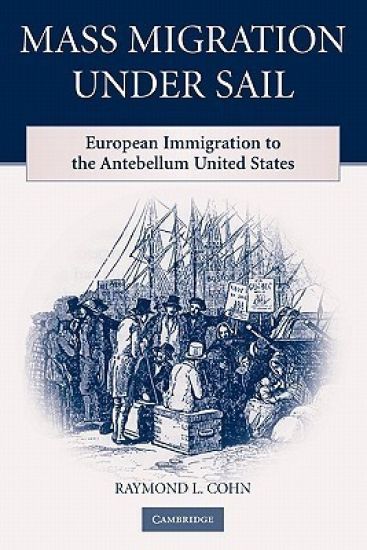
Mass Migration under Sail

Mass Migration under Sail

Raymond L. Cohn

Cambridge University Press
2011
pokkari
Dr Cohn provides an in-depth and comprehensive analysis of the economic history of European immigration to the antebellum United States, using and evaluating the available data as well as presenting fresh data. This analysis centers on immigration from the three most important source countries - Ireland, Germany, and Great Britain - and examines the volume of immigration, how many individuals came from each country during the antebellum period, and why those numbers increased. The book also analyzes where they came from within each country; who chose to immigrate; the immigrants' trip to the United States, including estimates of mortality on the Atlantic crossing; the jobs obtained in the United States by the immigrants, along with their geographic location; and the economic effects of immigration on both the immigrants and the antebellum United States. No other book examines so many different economic aspects of antebellum immigration.
Mass Migration under Sail

Mass Migration under Sail

Raymond L. Cohn

Cambridge University Press
2008
sidottu
Dr Cohn provides an in-depth and comprehensive analysis of the economic history of European immigration to the antebellum United States, using and evaluating the available data as well as presenting fresh data. This analysis centers on immigration from the three most important source countries - Ireland, Germany, and Great Britain - and examines the volume of immigration, how many individuals came from each country during the antebellum period, and why those numbers increased. The book also analyzes where they came from within each country; who chose to immigrate; the immigrants' trip to the United States, including estimates of mortality on the Atlantic crossing; the jobs obtained in the United States by the immigrants, along with their geographic location; and the economic effects of immigration on both the immigrants and the antebellum United States. No other book examines so many different economic aspects of antebellum immigration.
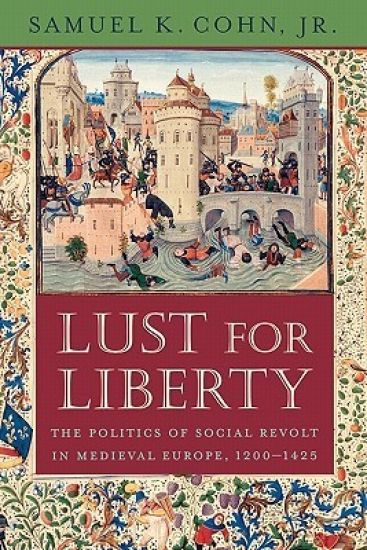
Lust for Liberty

Lust for Liberty

Samuel K. Cohn Jr.

Harvard University Press
2008
nidottu
Lust for Liberty challenges long-standing views of popular medieval revolts. Comparing rebellions in northern and southern Europe over two centuries, Samuel Cohn analyzes their causes and forms, their leadership, the role of women, and the suppression or success of these revolts. Popular revolts were remarkably common--not the last resort of desperate people. Leaders were largely workers, artisans, and peasants. Over 90 percent of the uprisings pitted ordinary people against the state and were fought over political rights--regarding citizenship, governmental offices, the barriers of ancient hierarchies--rather than rents, food prices, or working conditions. After the Black Death, the connection of the word "liberty" with revolts increased fivefold, and its meaning became more closely tied with notions of equality instead of privilege.The book offers a new interpretation of the Black Death and the increase of and change in popular revolt from the mid-1350s to the early fifteenth century. Instead of structural explanations based on economic, demographic, and political models, this book turns to the actors themselves--peasants, artisans, and bourgeois--finding that the plagues wrought a new urgency for social and political change and a new self- and class-confidence in the efficacy of collective action.
Studies in the Comic Spirit in Modern Japanese Fiction

Studies in the Comic Spirit in Modern Japanese Fiction

Joel R. Cohn

Harvard University Press
1998
sidottu
Unlike traditional Japanese literature, which has a rich tradition of comedy, modern Japanese literature is commonly associated with a high seriousness of purpose. In this path-breaking study, Joel R. Cohn analyzes works by three writers—Ibuse Masuji (1898-1993), Dazai Osamu (1909-1948), and Inoue Hisashi (1934- )—whose works constitute a relentless assault on the notion that comedy cannot be part of serious literature. Cohn focuses on thematic, structural, and stylistic elements in the works of these writers to show that modern Japanese comedic literature is a product of a particular set of historical, social, and cultural experiences. Cohn finds that cultural and social forces in modern Japan have led to the creation of comic literature that tends to deflect attention away from a human other and turn in on itself in different forms.
Governing Global Trade

Governing Global Trade

Theodore H. Cohn

Ashgate Publishing Limited
2002
sidottu
Cohn's topic of global trade is of enormous and proliferating interest. He provides a good background from 1945 to the present and on core contemporary themes such as civil society participation and the domesticisation of the trade agenda. Whilst there is a wealth of literature on policy-oriented aspects such as negotiating rounds, there are few that provide the careful, comprehensive historical overview that this work offers and none that do so with reference to international institutions such as the G7, Quad, OECD, and UNCTAD as well as the WTO in global trade governance. This seminal work has been awarded the British Columbia Political Science Association Weller Prize for 2003. Cohn's political science background will appeal directly to a university audience and a broader public policy market. It is also suitable for those interested in trade in the cognates of economics and law. This work's theoretical framework embraces and synthesises the major approaches in the field of international relations and will be appropriate for the dominant schools of realists and liberal institutionalists alike. It could therefore be apt for courses on international relations theory or international political economy taught in a theoretical mode. This book reinforces and broadens the focus of all previous works in The G8 and Global Governance series.
Women in the Streets

Women in the Streets

Samuel K. Cohn

Johns Hopkins University Press
1997
pokkari
"These seven essays on women, sex, violence, and piety in Renaissance Italy," writes historian Samuel Cohn Jr., "bespeak the darker side of the Renaissance and, in particular, the decline in Italian women's status from the late fourteenth century until the Counter Reformation visitations of the 1570s. In this sense, these essays run directly counter to Jacob Burckhardt's claim for Renaissance Italy, 'that women stood on a footing of perfect equality with men." Challenging conventional views of the history of women in the Italian Renaissance, Cohn examines the lives primarily of non-elite women and looks at their experiences in various city-states and regions, thus offering a different perspective from the history of aristocratic and well-to-do women in the large city-states. Drawing on a wide range of archival documentation, Cohn also relies on large sets of quantitative material to reveal a multifaceted view of women's social worlds not seen from the letters of patrician ladies or the prescriptive judgments of Renaissance moralists. Within the larger historical contexts of the Black Death, the growth of territorial states, and the Counter Reformation, Women in the Streets charts changes in law, the structure and accessibility of the criminal courts, and the customs and mentalities that shaped women's lot, from infanticide to the control of sexual mores. Ultimately, Cohn argues, women are the protagonists of this book, whether the issue is their support of other women or the resolution of conflict in the streets of Florence, the control of their own dowries or the salvation of their own souls.
Disjecta

Disjecta

Samuel Beckett; Ruby Cohn

Avalon Travel Publishing
1995
nidottu
A collection of essays on literature, esthetics, and painting is accompanied by a short unfinished play and excerpts from letters
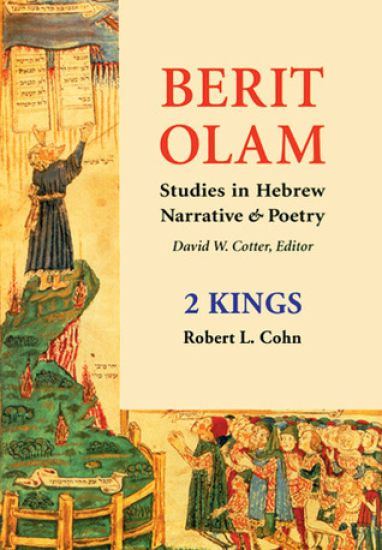
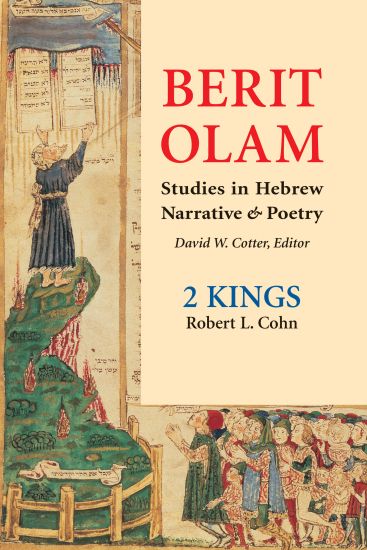
Berit Olam

Berit Olam

Robert L. Cohn

Liturgical Press
2000
sidottu
Opening with the prophet Elijah's ascent into heaven and closing with the people of Judah's descent to Babylonia, 2 Kings charts the story of the two Israelite kingdoms until their destruction. This commentary unfolds the literary dimensions of 2 Kings, analyzes the strategies through which its words create a world of meaning, and examines the book's tales of prophets, political intrigue, royal apostasy, and religious reform as components of larger patterns.2 Kings pays attention to the writers' methods of representing human character and of twisting chronological time for literary purposes. It also shows how the contests between kings and prophets are mirrored in the competing structures of regnal synchronization and prophecy-fulfillment. Much more than a common chronicle of royal achievements and disasters, 2 Kings emerges as a powerful history that creates memories and forges identities for its Jewish readers.2 Kings is divided into four parts including Part One The Story of Elisha: 2 Kings 1:1-8:6"; Part Two "Revolutions in Aram, Israel, and Judah: 2 Kings 8:7-13:25"; Part Three "Turmoil and Tragedy for Israel: 2 Kings 14-17"; and Part Four "Renewal and Catastrophe for Judah: 2 Kings 18-25."Robert L. Cohn is professor of religion and holds the Philip and Muriel Berman Chair in Jewish studies at Lafayette College. Under the auspices of the American Jewish Committee, he lectured on Jewish interpretations of the Bible as the first American Jewish-scholar-in-residence at four Roman Catholic seminaries in Poland.
Berit Olam

Berit Olam

Robert L. Cohn

Liturgical Press
2018
pokkari
Opening with the prophet Elijah's ascent into heaven and closing with the people of Judah's descent to Babylonia, 2 Kings charts the story of the two Israelite kingdoms until their destruction. This commentary unfolds the literary dimensions of 2 Kings, analyzes the strategies through which its words create a world of meaning, and examines the book's tales of prophets, political intrigue, royal apostasy, and religious reform as components of larger patterns.2 Kings pays attention to the writers' methods of representing human character and of twisting chronological time for literary purposes. It also shows how the contests between kings and prophets are mirrored in the competing structures of regnal synchronization and prophecy-fulfillment. Much more than a common chronicle of royal achievements and disasters, 2 Kings emerges as a powerful history that creates memories and forges identities for its Jewish readers.2 Kings is divided into four parts including Part One The Story of Elisha: 2 Kings 1:1-8:6"; Part Two "Revolutions in Aram, Israel, and Judah: 2 Kings 8:7-13:25"; Part Three "Turmoil and Tragedy for Israel: 2 Kings 14-17"; and Part Four "Renewal and Catastrophe for Judah: 2 Kings 18-25."Robert L. Cohn is professor of religion and holds the Philip and Muriel Berman Chair in Jewish studies at Lafayette College. Under the auspices of the American Jewish Committee, he lectured on Jewish interpretations of the Bible as the first American Jewish-scholar-in-residence at four Roman Catholic seminaries in Poland.
Como entender y superar la bulimia

Como entender y superar la bulimia

Lindsey Hall; Leigh Cohn

Gurze Books
2001
pokkari
This book has inspired thousands of people in their recoveries. Both comprehensive and practical, it includes answers to common questions, Lindsey Hall’s moving story of self-cure, advice for loved ones, and insights from recovered bulimics.
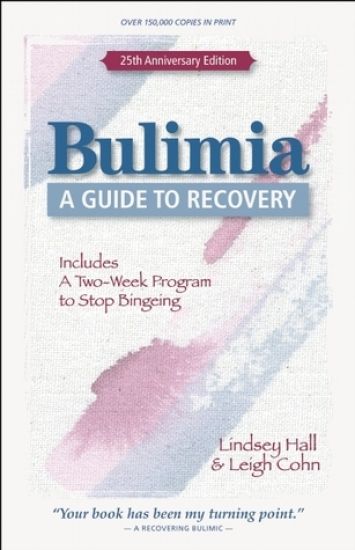
Bulimia

Bulimia

Lindsey Hall; Leigh Cohn

Gurze Books
2010
pokkari
This intimate self-help guidebook offers a complete understanding of bulimia and a plan for recovery. It includes a two-week program to stop bingeing, ideas for things to do instead of bingeing, a guide for support groups, specific advice for loved ones, and "Eat Without Fear," Lindsey Hall's story of her self-cure, which has inspired thousands of other bulimics. This 25th anniversary edition updates all information from previous editions, with additional material on assessment, new diagnostic categories, men and bulimia, evidence-based treatment, family-assisted recovery, the influence of media (including the Internet), the essentials of "long-term recovery," and much more. Drawing on its established track record of success, Bulimia: A Guide to Recovery includes input from 400 recovered bulimics and is packed with valuable tips for therapists, educators, bulimics, and their loved ones.
When Governments Listen: Moving Toward Publicly Engaged Governing

When Governments Listen: Moving Toward Publicly Engaged Governing

Barbara J. Cohn Berman

Fund for the City of New York
2012
nidottu
What happens when governments really listen to their constituents? Barbara Cohn Berman raises this provocative question in her new book, "When Governments Listen". In it she provides some answers, recounting her eight years of work with 70 governments in the U.S. and Canada. "When Governments Listen" follows up on her groundbreaking 2005 book, "Listening to the Public" in which she revealed what her Center on Government Performance learned about the public's perceptions of and needs from their local government, and that, without effective two-way communication, disconnects occur. In this new book she introduces us to the 70 governments and their project directors. She dubs them "Trailblazers", who use new ways to learn from the public, and then respond to and serve it better. They are the innovators and doers in a growing movement toward publicly engaged governing. Ms. Cohn Berman shares their successes and challenges - and provides insights and lessons of value to anyone who cares about how government works.
Paradoxes of Inequality in Renaissance Italy

Paradoxes of Inequality in Renaissance Italy

Jr. Cohn

Cambridge University Press
2021
pokkari
This Element explores the longest spell that can be computed from quantifiable fiscal records when the gap between rich and poor narrowed. It was the post-Black-Death century, c. 1375 to c. 1475. Paradoxically, with economic equality and prosperity on the rise, peasants, artisans and shopkeepers suffered losses in political representation and status within cultural spheres. Threatened by growing economic equality after the Black Death, elites preserved and then enhanced their political, social, and cultural distinction predominantly through noneconomic means and within political and cultural spheres. By investigating the interactions between three 'elements'-economics, politics, and culture-this Element presents new facets in the emergence of early Renaissance society in Italy.