Kirjojen hintavertailu. Mukana 12 016 292 kirjaa ja 12 kauppaa.

Kirjahaku

Etsi kirjoja tekijän nimen, kirjan nimen tai ISBN:n perusteella.

1000 tulosta hakusanalla Colin Tudge

The Treasury and Whitehall

The Treasury and Whitehall

Colin Thain; Maurice Wright

Clarendon Press
1995
sidottu
The Treasury is at the heart of British Government, responsible for deciding how much to spend and on what. Both the institution and the public expenditure process are the focus of `The Treasury and Whitehall', a tour de force of contemporary policy analysis. Based on research undertaken with the cooperation of the Treasury and Whitehall departments, it shows how the key decisions of planning, allocating and controlling public expenditure are made. With unique access to treasury Expenditure Controllers and senior financial officials in the main spending departments, the book provides a detailed and authoritative account of the roles, relationships and inter-actions of the key players in Whitehall Expenditure Community as they confront each other in annual rituals of the Expenditure 'Survey'. Thain and Wright explain how the rules of the expenditure game were re-drawn in the 1980s in the relentless search for cuts, greater economy and efficiency in the design and delivery of public services, and the creation of a more enterprising administrative culture. The authors explain how and why the Treasury was rarely able to impose its constitutional authority to stem the tide of rising public expenditure through the turbulent years of the Thatcher and Major Governments. They show that the Treasury is locked into a system of mutually constrained power-relationships with the Whitehall departments, and obliged to negotiate discretionary authority to control their spending.

Industrial Relations and European State Traditions
In some western European countries trade unions and employers' organizations share responsibility with government for maintaining order and efficiency in the labour market as a matter of course. in others such a role is seen as an unacceptable interference with either the free market or the prerogatives of the state, or both. How can we explain these differences? How enduring are they? Do they matter? In the 1970s there seemed to be a growing popularity for the first approach, leading to the explosion of interest in neo-corporatism; did all that evaporate during the ostensibly neo-liberal 1980s? Colin Crouch tries to answer these questions with reference to fifteen western European nations. Using a combination of rational choice theory and historical analysis he traces the development of industrial relations systems in these countries from the 1870s to the present. He ends by seeking explanations for differences further back in time, showing that longer-term historical explanations of contemporary institutions are more necessary than most exercises in policy analysis prefer to accept. 'an outstanding example of the fusion of theoretical economic analysis with historical perspective. Recommended at all levels' Choice 'It is difficult to do justice to this oustanding book in a short review or at a single reading. Colin Crouch's ambitious comparative survey of states and industrial relations provides both an abstract framework for comparative study . . . and a framework for comparing the level and form of corporatism in industrial relations.' Political Studies
Liberalism, Justice, and Markets

Liberalism, Justice, and Markets

Colin M. MacLeod

Clarendon Press
1998
sidottu
This important new study presents a systematic and definitive critique of Ronald Dworkin's highly influential theory of liberal equality. Focusing on the connection Dworkin attempts to establish between economic markets and liberal egalitarian political morality, the study examines his contention that markets have an indispensable role to play in the articulation of liberal ideals of distributive justice, individual liberty, and state neutrality. Subjecting the central tenents of this theory to sustained critical analysis, the author argues that Dworkin's attempt to establish deep affinities between the market and equality is unsuccessful and his proposed solutions to some central controversies in political theory are seriously flawed. This powerful examination of the work of America's leading public philosopher reveals some timely lessons about the hazards and limitations of the market as a device for the articulation and realization of egalitarian justice.
Are Skills the Answer?

Are Skills the Answer?

Colin Crouch; David Finegold; Mari Sako

Oxford University Press
1999
sidottu
This study of the problems confronting institutions for the creation of occupational skills in seven advanced industrialized countries contributes to two different areas of debate. The first is the study of the diversity of institutional forms taken by modern capitalism, and the difficulties currently surrounding the survival of that diversity. Most discussions of this theme analyse economic institutions and governance in general. The authors of this book are more specific, focusing on the key area of skill creation. The second theme is that of vocational education and training in its own right. While sharing the consensus that the advanced countries must secure competitive advantage in a global economy by developing highly skilled work-forces, the authors draw attention to certain awkward aspects of this approach that are often glossed over in general debate: The employment-generating power of improvements in skill levels is limited: employment policy cannot depend fully on education policies While the acquisition of skills has become a major public need, there is increasing dependence for their provision on individual firms, which can have no responsibility for general needs, with government action being restricted to residual care for the unemployed rather than contributing at the leading edge of advanced skills policy. The authors argue that public agencies must find new ways of working with the business sector, acquiring expertise and authority through such means as supporting skills standards and taking the lead in the certification of employers as trainers. There must also be reconsideration of the former role of public-service employment as a provider of secure if poorly paid employment for low-productivity workers. The countries covered are France, Germany, Italy, Japan, Sweden, the UK and the USA.
Oxford Literature Companions: Un sac de billes: study guide for AS/A Level French set text
Get to grips with set texts and be fully prepared for the AS/A Level exam with the Modern Languages Oxford Literature Companions. The Companions are written by experienced lecturers, teachers and examiners and provide comprehensive coverage of characters, themes, plot, language and context with activities in French to consolidate your knowledge of the text. There are also extensive sections on exam preparation and response planning, with a bank of annotated sample answers and practice questions. This guide covers Un sac de billes by Joseph Joffo. Modern Languages Oxford Literature Companions are also available for selected Spanish and German set texts.
The Biology of Rocky Shores

The Biology of Rocky Shores

Colin Little; Gray A. Williams; Cynthia D. Trowbridge

Oxford University Press
2009
sidottu
This new edition offers a concise but comprehensive introduction to rocky shore ecology and has been completely revised and updated throughout. It describes the diverse biota (invertebrates, vertebrates, seaweeds, seagrasses and microalgae) that inhabit rocky shores, and the factors that determine their distributions, abundances and interactions. The book discusses the latest research on processes that control community structure, utilizing a global range of examples from a wide range of shore types - both temperate and tropical. The Biology of Rocky Shores begins by describing the shore environment, including the conditions caused by tidal rise and fall as well as an introduction to the effects of waves. It goes on to describe the biodiversity of the rocky shore environment, from seaweeds and cyanobacteria to starfish and oystercatchers, and some of the adaptations these organisms exhibit on the shore. The book discusses in turn the biology of primary producers, grazers, suspension feeders and predators, and the ways in which these trophic groups interact in various communities. The vertical and horizontal distributions of species in relation to the tidal cycle and wave exposure are also considered. The contributions that species make in determining how rocky-shore communities function, and how they interact with off-shore systems, are explored in detail. Human influences, notably pollution, over-fishing and the introduction of alien species, are discussed in the context of rocky shore conservation and future management strategies. A final chapter offers guidance on methods of study, techniques, and experimental approaches.
The Biology of Rocky Shores

The Biology of Rocky Shores

Colin Little; Gray A. Williams; Cynthia D. Trowbridge

Oxford University Press
2009
nidottu
This new edition offers a concise but comprehensive introduction to rocky shore ecology and has been completely revised and updated throughout. It describes the diverse biota (invertebrates, vertebrates, seaweeds, seagrasses and microalgae) that inhabit rocky shores, and the factors that determine their distributions, abundances and interactions. The book discusses the latest research on processes that control community structure, utilizing a global range of examples from a wide range of shore types - both temperate and tropical. The Biology of Rocky Shores begins by describing the shore environment, including the conditions caused by tidal rise and fall as well as an introduction to the effects of waves. It goes on to describe the biodiversity of the rocky shore environment, from seaweeds and cyanobacteria to starfish and oystercatchers, and some of the adaptations these organisms exhibit on the shore. The book discusses in turn the biology of primary producers, grazers, suspension feeders and predators, and the ways in which these trophic groups interact in various communities. The vertical and horizontal distributions of species in relation to the tidal cycle and wave exposure are also considered. The contributions that species make in determining how rocky-shore communities function, and how they interact with off-shore systems, are explored in detail. Human influences, notably pollution, over-fishing and the introduction of alien species, are discussed in the context of rocky shore conservation and future management strategies. A final chapter offers guidance on methods of study, techniques, and experimental approaches.
Oxford Italian Grammar and Verbs

Oxford Italian Grammar and Verbs

Colin McIntosh

Oxford University Press
2002
nidottu
This handy grammar provides clear and simple explanations of today's written and spoken Italian. Comprehensive and easy to use, with coverage of all the key points of Italian grammar, it is the ideal reference tool for beginner and intermediate students, whether at school, college, or learning on their own. Thousands of examples in an instantly accessible layout show how the language works. The verb tables are clear and easy-to-use and all grammatical terms are explained in a glossary.
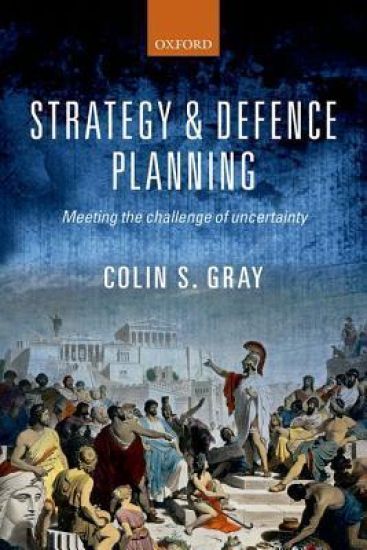
Strategy and Defence Planning

Strategy and Defence Planning

Colin S. Gray

Oxford University Press
2014
sidottu
Strategy and Defence Planning: Meeting the Challenge of Uncertainty explores and examines why and how security communities prepare purposefully for their future defence. The author explains that defence planning is the product of interplay among political process, historical experience, and the logic of strategy. The theory of strategy best reveals both the nature and the working of defence planning. Political 'ends', strategic 'ways', and military 'means' all fed by reigning, if not always recognized, assumptions, organize the subject well with a template that can serve any time, place, and circumstance. The book is designed to help understanding of what can appear to be a forbiddingly complex as well as technical subject. A good part of the problem for officials charged with defence planning duties is expressed in the second part of the book's title. The real difficulty, which rarely is admitted by those tasked with defence planning duty, is that defence planning can only be guesswork. But, because defence preparation is always expensive, not untypically is politically unpopular, yet obviously can be supremely important, claims to knowledge about the truly unknowable persist. In truth, we cannot do defence planning competently, because our ignorance of the future precludes understanding of what our society will be shown by future events to need. The challenge faced by the author was to identify ways in which our problems with the inability to know the future in any detail in advance-the laws of nature, in other words-may best be met and mitigated. Professor Gray argues that our understanding of human nature, of politics, and of strategic history, does allow us to make prudent choices in defence planning that hopefully will prove 'good enough'.
Global Television and Film

Global Television and Film

Colin Hoskins; Stuart McFadyen; Adam Finn

Clarendon Press
1998
nidottu
Global Television and Film is the first non-specialist introduction to the economics of the contemporary film and television business. The industry is highly significant, economically and culturally and the political economy of its trade is an extremely sensitive issue. Are cultural goods merely entertainment goods? Why does the US dominate? This book provides a systematic and structured economic explanation of how the global markets for television and films operate, and the implications for public policy and business strategy. By explaining the economic and cultural characteristics relevant to trade, the reader is provided with the tools necessary to evaluate international communication issues. The book stresses the uniqueness of cultural products and develops the argument that the economic and cultural development approaches to cultural issues can be largely reconciled. The authors point out that the mainstream economics approach has been under-represented in communications and explains to a very great extent the underlying reasons for the prevalence of American based media across the world.
Firm Commitment

Firm Commitment

Colin Mayer

Oxford University Press
2014
nidottu
The corporation is one of the most important and remarkable institutions in the world. It affects all our lives continuously. It feeds, entertains, houses and, employs us. It generates vast amounts of revenue for those who own it and it invests a substantial proportion of the wealth that we possess. But the corporation is also the cause of immense problems and suffering, a source of poverty and pollution, and its failures are increasing. How is the corporation failing us? Why is it happening? What should we do to restore trust in it? While governments are subject to repeated questioning and scrutiny, the corporation receives relatively little attention. Firm Commitment provides a lucid and insightful account of the role of the corporation in modern society and explains why its problems are growing. It gives a fresh perspective on the crises in financial markets, developing countries, and the environment. Based on decades of analysis and research, it describes a new approach to thinking about the firm which not only stops it destroying us but turns it into the means of protecting our environment, addressing social problems, and creating new sources of entrepreneurship and innovation. It sets out an agenda for converting the corporation into a twenty-first century organization that we will value and trust. It takes you on a journey that starts in the Galapagos, ends in Ancient Egypt, and in the process brings you to a new level of appreciation of the economic world we inhabit.
The Smile Revolution

The Smile Revolution

Colin Jones CBE

Oxford University Press
2014
sidottu
You could be forgiven for thinking that the smile has no history; it has always been the same. However, just as different cultures in our own day have different rules about smiling, so did different societies in the past. In fact, amazing as it might seem, it was only in late eighteenth century France that western civilization discovered the art of the smile. In the 'Old Regime of Teeth' which prevailed in western Europe until then, smiling was quite literally frowned upon. Individuals were fatalistic about tooth loss, and their open mouths would often have been visually repulsive. Rules of conduct dating back to Antiquity disapproved of the opening of the mouth to express feelings in most social situations. Open and unrestrained smiling was associated with the impolite lower orders. In late eighteenth-century Paris, however, these age-old conventions changed, reflecting broader transformations in the way people expressed their feelings. This allowed the emergence of the modern smile par excellence: the open-mouthed smile which, while highlighting physical beauty and expressing individual identity, revealed white teeth. It was a transformation linked to changing patterns of politeness, new ideals of sensibility, shifts in styles of self-presentation - and, not least, the emergence of scientific dentistry. These changes seemed to usher in a revolution, a revolution in smiling. Yet if the French revolutionaries initially went about their business with a smile on their faces, the Reign of Terror soon wiped it off. Only in the twentieth century would the white-tooth smile re-emerge as an accepted model of self-presentation. In this entertaining, absorbing, and highly original work of cultural history, Colin Jones ranges from the history of art, literature, and culture to the history of science, medicine, and dentistry, to tell a unique and untold story about a facial expression at the heart of western civilization.
The Smile Revolution

The Smile Revolution

Colin Jones CBE

Oxford University Press
2017
nidottu
You could be forgiven for thinking that the smile has no history; it has always been the same. However, just as different cultures in our own day have different rules about smiling, so did different societies in the past. In fact, amazing as it might seem, it was only in late eighteenth century France that western civilization discovered the art of the smile. In the 'Old Regime of Teeth' which prevailed in western Europe until then, smiling was quite literally frowned upon. Individuals were fatalistic about tooth loss, and their open mouths would often have been visually repulsive. Rules of conduct dating back to Antiquity disapproved of the opening of the mouth to express feelings in most social situations. Open and unrestrained smiling was associated with the impolite lower orders. In late eighteenth-century Paris, however, these age-old conventions changed, reflecting broader transformations in the way people expressed their feelings. This allowed the emergence of the modern smile par excellence: the open-mouthed smile which, while highlighting physical beauty and expressing individual identity, revealed white teeth. It was a transformation linked to changing patterns of politeness, new ideals of sensibility, shifts in styles of self-presentation - and, not least, the emergence of scientific dentistry. These changes seemed to usher in a revolution, a revolution in smiling. Yet if the French revolutionaries initially went about their business with a smile on their faces, the Reign of Terror soon wiped it off. Only in the twentieth century would the white-tooth smile re-emerge as an accepted model of self-presentation. In this entertaining, absorbing, and highly original work of cultural history, Colin Jones ranges from the history of art, literature, and culture to the history of science, medicine, and dentistry, to tell a unique and untold story about a facial expression at the heart of western civilization.
The Fall of Robespierre

The Fall of Robespierre

Colin Jones

Oxford University Press
2021
sidottu
The day of 9 Thermidor (27 July 1794) is universally acknowledged as a major turning-point in the history of the French Revolution. At 12.00 midnight, Maximilien Robespierre, the most prominent member of the Committee of Public Safety which had for more than a year directed the Reign of Terror, was planning to destroy one of the most dangerous plots that the Revolution had faced. By 12.00 midnight at the close of the day, following a day of uncertainty, surprises, upsets and reverses, his world had been turned upside down. He was an outlaw, on the run, and himself wanted for conspiracy against the Republic. He felt that his whole life and his Revolutionary career were drawing to an end. As indeed they were. He shot himself shortly afterwards. Half-dead, the guillotine finished him off in grisly fashion the next day. The Fall of Robespierre provides an hour-by-hour analysis of these 24 hours.
The Fall of Robespierre

The Fall of Robespierre

Colin Jones

Oxford University Press
2023
nidottu
The day of 9 Thermidor (27 July 1794) is universally acknowledged as a major turning-point in the history of the French Revolution. At 12.00 midnight, Maximilien Robespierre, the most prominent member of the Committee of Public Safety which had for more than a year directed the Reign of Terror, was planning to destroy one of the most dangerous plots that the Revolution had faced. By 12.00 midnight at the close of the day, following a day of uncertainty, surprises, upsets and reverses, his world had been turned upside down. He was an outlaw, on the run, and himself wanted for conspiracy against the Republic. He felt that his whole life and his Revolutionary career were drawing to an end. As indeed they were. He shot himself shortly afterwards. Half-dead, the guillotine finished him off in grisly fashion the next day. The Fall of Robespierre provides an hour-by-hour analysis of these 24 hours.
The Character of Mind

The Character of Mind

Colin McGinn

Oxford University Press
1997
nidottu
Of what nature is the mind? So Colin McGinn starts his first chapter, and this is his guiding question. He pursues the answer with a boldness and provocativeness rarely encountered in philosophical writing. As he explains, my aim has been to give the reader something definite and stimulating to think about, rather than to present a cautious and disinterested survey of the state of the subject. The Character of Mind provides a general introduction to the philosophy of mind, covering all the main topics: the mind-body problem, the nature of acquaintance, the relation between thought and language, agency, the self. In particular, Colin McGinn addresses the issue of consciousness, and the difficulty of combining the two very different perspectives on the mind that arise from introspection and from the observation of other people. His aim throughout is to identify the recalcitrant problems clearly, and to suggest fruitful approaches to their solutions, always avoiding facile answers. The second edition of this classic book adds three completely new chapters on consciousness, mental content, and cognitive science, bringing it abreast of current developments. A distinctive viewpoint is adopted, stressing consciousness, but the intention is still to come to grips with the underlying philosophical problems, accessibly articulating the deep difficulties we face in theorizing about the mind. From the reviews of the first edition: `a very good introduction to the philosophy of mind. . . . written with confidence and authority . . . a fine text for an undergraduate course.' Jonathan Lear, The Times Literary Supplement `a lucid and impressive discussion . . . to be recommended to students and professionals alike . . . brilliant book.' Brian O'Shaughnessy, London Review of Books `clear, stimulating and thought-provoking.' Bernard Harrison, Philosophy `an impressive piece of worktough, elegant, ingenious, argumentative and controversial.' Nicholas Everitt, Times Higher Educational Supplement
Strategy and Defence Planning

Strategy and Defence Planning

Colin S. Gray

Oxford University Press
2016
nidottu
Strategy and Defence Planning: Meeting the Challenge of Uncertainty explores and examines why and how security communities prepare purposefully for their future defence. The author explains that defence planning is the product of interplay among political process, historical experience, and the logic of strategy. The theory of strategy best reveals both the nature and the working of defence planning. Political 'ends', strategic 'ways', and military 'means' all fed by reigning, if not always recognized, assumptions, organize the subject well with a template that can serve any time, place, and circumstance. The book is designed to help understanding of what can appear to be a forbiddingly complex as well as technical subject. A good part of the problem for officials charged with defence planning duties is expressed in the second part of the book's title. The real difficulty, which rarely is admitted by those tasked with defence planning duty, is that defence planning can only be guesswork. But, because defence preparation is always expensive, not untypically is politically unpopular, yet obviously can be supremely important, claims to knowledge about the truly unknowable persist. In truth, we cannot do defence planning competently, because our ignorance of the future precludes understanding of what our society will be shown by future events to need. The challenge faced by the author was to identify ways in which our problems with the inability to know the future in any detail in advance-the laws of nature, in other words-may best be met and mitigated. Professor Gray argues that our understanding of human nature, of politics, and of strategic history, does allow us to make prudent choices in defence planning that hopefully will prove 'good enough'.
Perspectives on Strategy

Perspectives on Strategy

Colin S. Gray

Oxford University Press
2016
nidottu
Perspectives on Strategy examines in depth five aspects of strategy. Strategic thought and behaviour are explored and explained from the perspectives of intellect, morality, culture, geography, and technology. Each perspective has attracted persisting controversy. Perspectives on Strategy is strongly complementary to the author's previous book, The Strategy Bridge: Theory for Practice (OUP, 2010). This new work takes a notably holistic view of strategic phenomena, which serves as a master framework within which detailed examination of strategic history and issues can usefully be pursued in the light of particular perspectives. Foundational for the argument in Perspectives on Strategy is the proposition that distinctive aspects of strategy (e.g. ethics, culture, inter alia) can only be appreciated properly when they are regarded in context. The author shares this view with T. E. Lawrence (of Arabia), who wrote of the 'whole house of war'. Perspectives on Strategy gratefully adapts Lawrence and writes about the 'whole house of strategy'. The book insists that the nature of strategy is best represented by a Venn diagram that shows overlapping perspectives. Thus, the subject of each chapter is shown as having meaning for, and in turn is influenced by, the subjects of the other chapters. For example, the book explores the importance of strategic ideas relative to the significance of the material weapons of war. The author poses the hardest of questions pertinent to each chosen perspective (e.g. do ideas matter more than muscle?--in practice how robust is the ethical code with which warfare is waged?--is geography destiny, as some theorists have claimed?--and do technically superior weapons win wars?)Perspectives on Strategy demonstrates that it is possible to look closely at strategic matters from limited but arguably powerful perspectives, without being captured by them. This book asks and answers the most challenging and rewarding questions that can be posed in order to reveal the persisting universal nature, but ever changing character, of strategy.
The Strategy Bridge

The Strategy Bridge

Colin S. Gray

Oxford University Press
2016
nidottu
The Strategy Bridge: Theory for Practice is an original contribution to the general theory of strategy. While heavily indebted to Carl von Clausewitz, Sun-tzu, and the very few other classic authors, this book presents the theory, rather than merely comments on the theory as developed by others. The author explains that the purpose of strategy is to connect purposefully politics and policy with the instruments they must use. The primary focus of attention is on military strategy, but this focus is well nested in discussion of grand strategy, for which military strategy is only one strand. The book presents the general theory of strategy comprehensively and explains the utility of this general theory for the particular strategies that strategists need to develop in order to meet their historically unique challenges. The book argues that strategy's general theory provides essential education for practicing strategists at all times and in all circumstances. As general theory, The Strategy Bridge is as relevant to understanding strategic behaviour in the Peloponnesian War as it is for the conflicts of the twenty-first century. The book proceeds from exposition of general strategic theory, to address three basic issue areas that are not at all well explained, let alone understood with a view to advancing better practice, in the extant literature. Specifically, the book tackles the problems that harass and imperil strategic performance; it probes deeply into the hugely underexamined subject of just what it is that the strategist produces-strategic effect; and it 'joins up the dots' from theory through practice to consequences by means of a close examination of command performance. The author takes a holistic view of strategy, and it is rigorously attentive to the significance of the contexts within which and for which strategies are developed and applied. The book regards the strategist as a hero, charged with the feasible, but awesomely difficult, task of converting the threat and use of force (for military strategy) into desired political consequences. He seeks some control over the rival or enemy via strategic effect, the instrumental produce of his instrumental labours. In order to maximise his prospects for success, the practicing strategist requires all the educational assistance that strategic theory can provide.
Social Change in Western Europe

Social Change in Western Europe

Colin Crouch

Oxford University Press
1999
nidottu
What do European societies look like, at the end of a turbulent millennium which saw western Europe slowly rise to global domination, and then rapidly decline to its present position, prosperous but clearly behind the USA in world influence? This is the only book by a single sociologist to make a systematic and up to date comparison of virtually all west European countries across a wide range of social institutions. These include: work and occupations, the structure of the economy, the family, education, religion, nationality and ethnicity, and the mechanism of citizenship in the welfare state. Particular emphasis is placed on the place of gender and social class. By including basic details on Japan and the United States throughout, the author is able to draw attention to any shared west European specificities. The book also develops a theory of change in contemporary societies. Starting from a model of a mid-century social compromise based on certain balances between industrialism, capitalism, traditional community institutions, and community it traces its subsequent destabilization and places particular importance on the resurgence of capitalism in shaping a new social order. This important new study of the social structure of western Europe will be essential reading for all students of comparative sociology and European sociology.