Kirjojen hintavertailu. Mukana 11 699 587 kirjaa ja 12 kauppaa.

Kirjahaku

Etsi kirjoja tekijän nimen, kirjan nimen tai ISBN:n perusteella.

1000 tulosta hakusanalla Craig Sayers

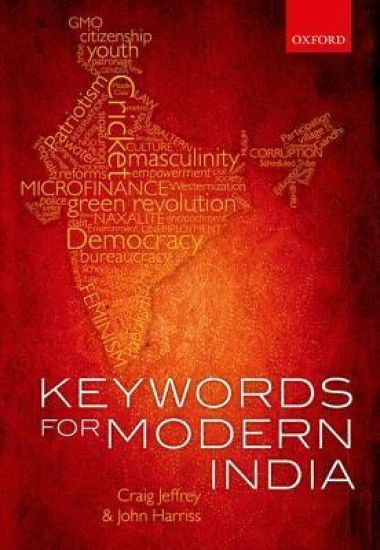
Keywords for Modern India

Keywords for Modern India

Craig Jeffrey; John Harriss

Oxford University Press
2014
sidottu
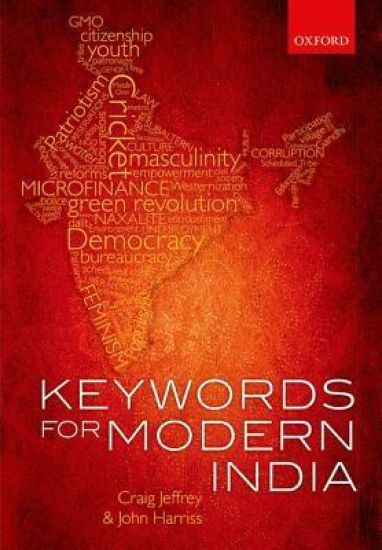
What have English terms such as 'civil society', 'democracy', 'development' or 'nationalism' come to mean in an Indian context and how have their meanings and uses changed over time? Why are they the subjects of so much debate - in their everyday uses as well as amongst scholars? How did a concept such as 'Hinduism' come to be framed, and what does it mean now? What is 'caste'? Does it have quite the same meaning now as in the past? Why is the idea of 'faction' so significant in modern India? Why has the idea of 'empowerment' come to be used so extensively? These are the sorts of questions that are addressed in this book. Keywords for Modern India is modelled after the classic exploration of English culture and society through the study of keywords - words that are 'strong, important and persuasive' - by Raymond Williams. The book, like Williams' Keywords, is not a dictionary or an encyclopaedia. Williams said that his was 'an inquiry into a vocabulary', and Keywords for Modern India presents just such an inquiry into the vocabulary deployed in writing in and about India in the English language - which has long been and is becoming ever more a critically important language in India's culture and society. Exploring the changing uses and contested meanings of common but significant words is a powerful and illuminating way of understanding contemporary India, for scholars and for students, and for general readers.
Keywords for Modern India

Keywords for Modern India

Craig Jeffrey; John Harriss

Oxford University Press
2014
nidottu
What have English terms such as 'civil society', 'democracy', 'development' or 'nationalism' come to mean in an Indian context and how have their meanings and uses changed over time? Why are they the subjects of so much debate - in their everyday uses as well as amongst scholars? How did a concept such as 'Hinduism' come to be framed, and what does it mean now? What is 'caste'? Does it have quite the same meaning now as in the past? Why is the idea of 'faction' so significant in modern India? Why has the idea of 'empowerment' come to be used so extensively? These are the sorts of questions that are addressed in this book. Keywords for Modern India is modelled after the classic exploration of English culture and society through the study of keywords - words that are 'strong, important and persuasive' - by Raymond Williams. The book, like Williams' Keywords, is not a dictionary or an encyclopaedia. Williams said that his was 'an inquiry into a vocabulary', and Keywords for Modern India presents just such an inquiry into the vocabulary deployed in writing in and about India in the English language - which has long been and is becoming ever more a critically important language in India's culture and society. Exploring the changing uses and contested meanings of common but significant words is a powerful and illuminating way of understanding contemporary India, for scholars and for students, and for general readers.

Time in Fiction

Time in Fiction

Craig Bourne; Emily Caddick Bourne

Oxford University Press
2016
sidottu
What can we learn about the world from engaging with fictional time-series? What should we make of stories involving time travellers who change the past, recurrence of a single day, foreknowledge of the future, the freezing or rewinding of time, or time-series which split into alternative courses of events? Do they show us radical alternative possibilities concerning the nature of time, or do they show that even the impossible can be represented in fiction? Neither, so this book argues. Defending the view that a fiction represents a single possible world, the authors show how apparent representations of radically different time-series can be explained in terms of how worlds are represented without there being any fictional world which has such a time-series. In this way, the book uses the complexities of fictional time to get to the core of the relation between truth in fiction and possibility. It provides a logic and metaphysics to deal with the fact that fictions can leave certain features of their fictional worlds indefinite, and draws comparisons and connections between fictional and scientific representations and hypotheses. Utilising the notion of a counterpart, the authors show how to understand claims concerning persistence of characters and their identity across fictions, and what it means for a fiction to be 'set' at an actual time. Consideration is given to motion in fiction, asking whether it is sometimes continuous and sometimes discrete, how to understand different rates of change, and whether fictional time itself can be said to flow.
The Passport in America

The Passport in America

Craig Robertson

Oxford University Press Inc
2010
sidottu
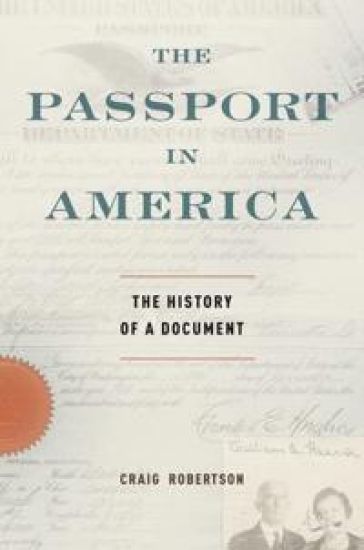
In today's world of constant identification checks, it's difficult to recall that there was ever a time when "proof of identity" was not a part of everyday life. And as anyone knows who has ever lost a passport, or let one expire on the eve of international travel, the passport has become an indispensable document. But how and why did this form of identification take on such a crucial role? In the first history of the passport in the United States, Craig Robertson offers an illuminating account of how this document, above all others, came to be considered a reliable answer to the question: who are you? Historically, the passport originated as an official letter of introduction addressed to foreign governments on behalf of American travelers, but as Robertson shows, it became entangled in contemporary negotiations over citizenship and other forms of identity documentation. Prior to World War I, passports were not required to cross American borders, and while some people struggled to understand how a passport could accurately identify a person, others took advantage of this new document to advance claims for citizenship. From the strategic use of passport applications by freed slaves and a campaign to allow married women to get passports in their maiden names, to the "passport nuisance" of the 1920s and the contested addition of photographs and other identification technologies on the passport, Robertson sheds new light on issues of individual and national identity in modern U.S. history. In this age of heightened security, especially at international borders, Robertson's The Passport in America provides anyone interested in questions of identification and surveillance with a richly detailed, and often surprising, history of this uniquely important document.
Obstetric Anesthesia

Obstetric Anesthesia

Craig M. Palmer; Robert D'Angelo; Michael J. Paech

Oxford University Press Inc
2011
nidottu
In the United States, over half of pregnant women receive some form of anesthesia for their deliveries; this translates into well over 2 million anesthetics per year. With this new handbook, anesthesiologists have easy access to step-by-step, to-the-point information on how to manage patients in specific situations. Every aspect of obstetric anesthesia practice is covered, including patient evaluation, anesthesia for labor and delivery, anesthesia for cesarean delivery, management of patients with concurrent medical problems, management of obstetric emergencies, fetal assessment, and neonatal resuscitation. Distilled, synthesized text is complemented by a generous number of tables, charts, figures and flow diagrams, all presented in accessible handbook format. Obstetric Anesthesia is an ideal introduction to the specialty as well as an essential daily guide for obstetric patient care and management.
Lincoln and His Admirals

Lincoln and His Admirals

Craig Symonds

Oxford University Press Inc
2011
nidottu
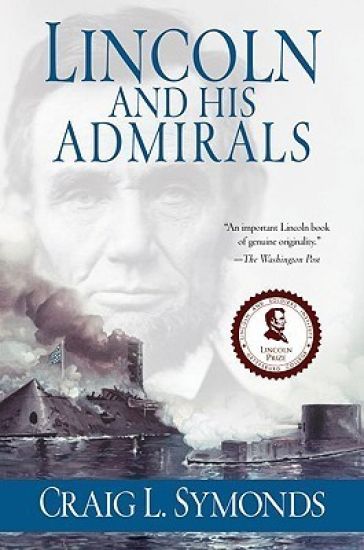
Abraham Lincoln began his presidency admitting that he knew "but little of ships," but he quickly came to preside over the largest national armada to that time, not eclipsed until World War I. Written by naval historian Craig L. Symonds, Lincoln and His Admirals unveils an aspect of Lincoln's presidency unexamined by historians until now, revealing how he managed the men who ran the naval side of the Civil War, and how the activities of the Union Navy ultimately affected the course of history. Beginning with a gripping account of the attempt to re-supply Fort Sumter--a comedy of errors that shows all too clearly the fledgling president's inexperience--Symonds traces Lincoln's steady growth as a wartime commander-in-chief. Absent a Secretary of Defense, he would eventually become de facto commander of joint operations along the coast and on the rivers. That involved dealing with the men who ran the Navy: the loyal but often cranky Navy Secretary Gideon Welles, the quiet and reliable David G. Farragut, the flamboyant and unpredictable Charles Wilkes, the ambitious ordnance expert John Dahlgren, the well-connected Samuel Phillips Lee, and the self-promoting and gregarious David Dixon Porter. Lincoln was remarkably patient; he often postponed critical decisions until the momentum of events made the consequences of those decisions evident. But Symonds also shows that Lincoln could act decisively. Disappointed by the lethargy of his senior naval officers on the scene, he stepped in and personally directed an amphibious assault on the Virginia coast, a successful operation that led to the capture of Norfolk. The man who knew "but little of ships" had transformed himself into one of the greatest naval strategists of his age. Co-winner of the 2009 Lincoln Prize Winner of the 2009 Barondess/Lincoln Prize by the Civil War Round Table of New York John Lyman Award of the North American Society for Oceanic History Daniel and Marilyn Laney Prize by the Austin Civil War Round Table Nevins-Freeman Prize of the Civil War Round Table of Chicago
T. S. Eliot

T. S. Eliot

Craig Raine

Oxford University Press Inc
2011
nidottu
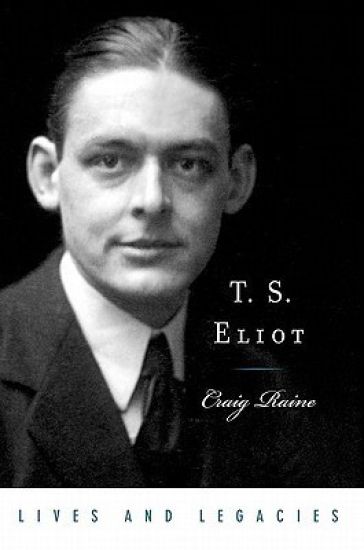
The twentieth century's most famous poet and its most influential literary arbiter, T.S. Eliot has long been thought to be an obscure and difficult writer-forbiddingly learned, maddeningly enigmatic. In this compelling exploration, prize-winning poet Craig Raine finds a way to read and make sense of Eliot's full corpus. He illuminates a paradoxical Eliot--an exacting anti-romantic realist, skeptical of the emotions, yet incessantly troubled by the fear of emotional failure--through close readings of his poetry, with extended analyses of Eliot's two master works--The Waste Land and Four Quartets. Raine also examines Eliot's criticism--including his coinage of such key literary terms as the objective correlative, dissociation of sensibility, the auditory imagination, and his biography, crafting a book that provides a concise introduction for beginners and a provocative set of arguments for Eliot admirers.
Accountability and Democracy

Accountability and Democracy

Craig T. Borowiak

Oxford University Press Inc
2011
sidottu
Few political concepts are as emblematic of our era as democratic accountability. In a time of political and economic turmoil, in which global forces have destabilized conventional relations of political authority, democratic accountability has come to symbolize both what is absent and what is desired in our polity. Situated at the intersection of democratic theory and international studies, Accountability and Democracy provides an in-depth critical analysis of accountability. Through an engagement with several key democratic traditions, both ancient and modern, the book paints a rich picture of democratic accountability as a multi-dimensional concept harboring competing imperatives and diverse instantiations. Contrary to dominant views that emphasize discipline and control, Craig Borowiak offers an original and refreshing view of democratic accountability as a source of mutuality, participation, and political transformation. He both creatively engages conventional electoral models of accountability and moves beyond them by situating democratic accountability within more deliberative, participatory and agonistic contexts. Provocatively, the book also challenges deep-seated understandings of democratic accountability as an expression of popular sovereignty. Borowiak instead argues that accountable governance is incompatible with all claims to ultimate authority, regardless of whether they refer to the demos, the state, or cosmopolitan public law. Rather than conceiving of democratic accountability as a way to legitimize a secure and sovereign political order, the book contends that destabilization and democratic insurgence are indispensable and often neglected facets of democratic accountability practices. For contemporary scholars, practitioners and activists grappling with the challenge of building democratic legitimacy into world politics, the book urges greater reflexivity and nuance in how democratic accountability is evoked and implemented. It offers insights into the myriad ways democratic accountability has been thwarted in the past, while also cultivating a sense of expanded possibility for how it might be conceived for the present.
The Passport in America

The Passport in America

Craig Robertson

Oxford University Press Inc
2012
nidottu
In today's world of constant identification checks, it's difficult to recall that there was ever a time when "proof of identity" was not a part of everyday life. And as anyone knows who has ever lost a passport, or let one expire on the eve of international travel, the passport has become an indispensable document. But how and why did this form of identification take on such a crucial role? In the first history of the passport in the United States, Craig Robertson offers an illuminating account of how this document, above all others, came to be considered a reliable answer to the question: who are you? Historically, the passport originated as an official letter of introduction addressed to foreign governments on behalf of American travelers, but as Robertson shows, it became entangled in contemporary negotiations over citizenship and other forms of identity documentation. Prior to World War I, passports were not required to cross American borders, and while some people struggled to understand how a passport could accurately identify a person, others took advantage of this new document to advance claims for citizenship. From the strategic use of passport applications by freed slaves and a campaign to allow married women to get passports in their maiden names, to the "passport nuisance" of the 1920s and the contested addition of photographs and other identification technologies on the passport, Robertson sheds new light on issues of individual and national identity in modern U.S. history. In this age of heightened security, especially at international borders, Robertson's The Passport in America provides anyone interested in questions of identification and surveillance with a richly detailed, and often surprising, history of this uniquely important document.
The Civil War at Sea

The Civil War at Sea

Craig L. Symonds

Oxford University Press Inc
2012
nidottu
Continuing in the vein of his Lincoln Prize-winning book Lincoln and His Admirals, acclaimed naval historian Craig L. Symonds presents a masterful history of the Civil War navies--both Union and Confederate--and places them within the broader context of the emerging industrial age. Symonds begins with an account of the dramatic pre-war revolution in naval technology--the advent of steam propulsion, the screw propeller, and larger and more powerful rifled guns that could fire explosive shells as well as solid shot. These extraordinary changes were epitomized in the famous "Battle of the Ironclads"--one of the great stories of the Civil War--pitting USS Monitor against the larger and more heavily armed CSS Virginia (also known as Merrimack). Symonds also offers an overview of Lincoln's blockade of the South, a vast campaign involving as many as 500 ships and 100,000 men; discusses the fierce naval war for control of the rivers in the West; and looks at the important siege of Charleston, which would last three years and involve 40,000 men and sixty warships. Symonds concludes with three key episodes from the end of the war--the dramatic Battle of Mobile Bay, where Farragut delivered his famous cry: "Damn the torpedoes! Full speed ahead!"; the battle of Wilmington, where combined naval and army forces successfully overran Fort Fisher, a giant earthwork fort called by one historian "the mightiest fortress in America"; and the remarkable cruise of the CSS Shenandoah, a round-the-world voyage of 58,000 miles, during which she captured thirty-eight prizes--mostly after Lee had surrendered, alas. The Civil War at Sea illuminates a little-discussed and greatly undervalued aspect of America's national conflict. Concise yet comprehensive, this volume is a lively addition to the field of naval history.
Significant Cases in Corrections

Significant Cases in Corrections

Craig Hemmens; Barbara Belbot; Katherine Bennett

Oxford University Press
2013
nidottu
Easily accessible to undergraduates, Significant Cases in Corrections, Second Edition, offers a clear, comprehensive introduction to corrections. Rather than providing complete opinions, which may overwhelm students, the authors present case briefs, along with analyses, explanations, and short excerpts. In addition to the case summaries, the book includes lists of all of the cases it covers, both in alphabetical order and grouped by topic; a short introduction to each topic; and an index. CRIMINAL JUSTICE CASE BRIEFS SERIES Significant Cases in Criminal Procedure, Second EditionCraig Hemmens, Alan Thompson, and Lisa S. Nored (978-0-19-995791-0) Significant Cases in Corrections, Second EditionCraig Hemmens, Barbara Belbot, and Katherine Bennett (978-0-19-994858-1) Significant Cases in Juvenile Justice, Second EditionCraig Hemmens, Benjamin Steiner, and David Mueller (978-0-19-995841-2)
Neptune

Neptune

Craig L. Symonds

Oxford University Press Inc
2014
sidottu
D-Day--June 6, 1944--is seared into popular consciousness: 160,000 Allied troops landed along 50 miles of French coastline to battle German forces on the beaches of Normandy, suffering devastating losses in an invasion that would eventually lead to the liberation of Western Europe. Though it has been studied, discussed, and debated extensively, histories of D-Day have typically overlooked the incredible naval operation necessary for the invasion to succeed: Operation Neptune. Involving over five thousand ships and nearly half a million personnel, Neptune was the largest seaborne assault in human history, without which the battles at Normandy never could have taken place. In Neptune, renowned historian Craig L. Symonds brilliantly traces the central thread of this Olympian event from the first tentative conversations by British and American officers in Washington in the winter of 1941 to the storming of the beaches in the summer of 1944. With characteristically vivid narration, he uncovers the various components of the operation, including the strategic unity, industrial productivity, sea control, and organizational execution on which the Allied armies in Normandy depended. Symonds follows key personalities, both British and American, from the well-known--Franklin Roosevelt, Winston Churchill, George Marshall, and "Ike " Eisenhower--to the less-prominent--Admiral Sir Bertram Ramsay and his American counterpart Admiral Ernest J. King--to offer an intimate look at the men involved in this exceptional campaign. Operation Neptune was never a sure-thing, as Symonds shows, and Neptune explores the disputes of the Anglo-American allies, the demands of Russia, the dangers of German U-boats, and the hundreds of logistical bottlenecks that could have undone the operation at any time. From the suppressing of the U-boat menace in the Battle of the Atlantic to the gearing up of the industrial machine to produce the ships, tanks, landing craft, and other tools of war that would make an invasion possible, Symonds' riveting narrative uncovers the means by which Neptune was brought to fruition, and presents for the first time a comprehensive history of the greatest naval operation of the 20th century.
Excel Modeling in Investments

Excel Modeling in Investments

Craig Holden

Pearson
2014
nidottu
For courses in corporate finance or financial management at the undergraduate and graduate level. Excel Modeling in Investments, Fifth Edition approaches building and estimating models with Microsoft® Excel®. Students are shown the steps involved in building models, rather than already-completed spreadsheets.
The Roots of Radicalism

The Roots of Radicalism

Craig Calhoun

University of Chicago Press
2012
sidottu
The story of the rise of radicalism in the early nineteenth century has often been simplified into a fable about progressive social change. The diverse social movements of the era - religious, political, regional, national, antislavery, and protemperance - are presented as mere strands in a unified tapestry of labor and democratic mobilization. Taking aim at this flawed view of radicalism as simply the extreme end of a single dimension of progress, Craig Calhoun emphasizes the coexistence of different kinds of radicalism, their tensions, and their implications. "The Roots of Radicalism" reveals the importance of radicalism's links to pre-industrial culture and attachments to place and local communities, as well as the ways in which journalists who had been pushed out of "respectable" politics connected to artisans and other workers. Calhoun shows how much public recognition mattered to radical movements and how religious, cultural, and directly political - as well as economic - concerns motivated people to join up. Reflecting two decades of research into social movement theory and the history of protest, "The Roots of Radicalism" offers compelling insights into the past that can tell us much about the present, from American right-wing populism to democratic upheavals in North Africa.
The Roots of Radicalism

The Roots of Radicalism

Craig Calhoun

University of Chicago Press
2012
nidottu
The story of the rise of radicalism in the early nineteenth century has often been simplified into a fable about progressive social change. The diverse social movements of the era - religious, political, regional, national, antislavery, and protemperance - are presented as mere strands in a unified tapestry of labor and democratic mobilization. Taking aim at this flawed view of radicalism as simply the extreme end of a single dimension of progress, Craig Calhoun emphasizes the coexistence of different kinds of radicalism, their tensions, and their implications. "The Roots of Radicalism" reveals the importance of radicalism's links to pre-industrial culture and attachments to place and local communities, as well as the ways in which journalists who had been pushed out of "respectable" politics connected to artisans and other workers. Calhoun shows how much public recognition mattered to radical movements and how religious, cultural, and directly political - as well as economic - concerns motivated people to join up. Reflecting two decades of research into social movement theory and the history of protest, "The Roots of Radicalism" offers compelling insights into the past that can tell us much about the present, from American right-wing populism to democratic upheavals in North Africa.
Dream Reaper: The Story of an Old-Fashioned Inventor in the High-Tech, High-Stakes World of Modern Agriculture
Dream Reaper follows Mark Underwood, farmer and inventor, and his salesman cousin as they strive to perfect and market Mark's breakthrough invention, the Bi-Rotor combine. "This intriguing tale weaves together the creativity and ingenuity of an inventor and the hurdles he and his partner face in selling and producing what appears to be an amazingly efficient Bi-Rotor combine."--Science News "Canine writes with style and flourish. . . Dream Reaper is a riveting journey into America's heartland, where necessity is the mother of invention--and hard work, conviction, and sacrifice are its lifeblood."--People Magazine "Canine deftly interweaves the story of the two men's struggles with a history of the mechanization of agriculture. This lively account of men working under pressure, improvising repairs and demonstrating the new machine, is also a story of courage that illustrates the barriers facing an independent inventor."--Publishers Weekly "Craig Canine's Dream Reaper is a delight. It's an important book, rich with history and stories. It brings our most essential industry--farming--into new perspective. Reading it made me want to get out a crop."--Bobbie Ann Mason A volume in the Sloan Technology Series. The series presents to a general audience highly readable accounts of the development of 20th century technologies and the ways these have shaped and are shaped by society.
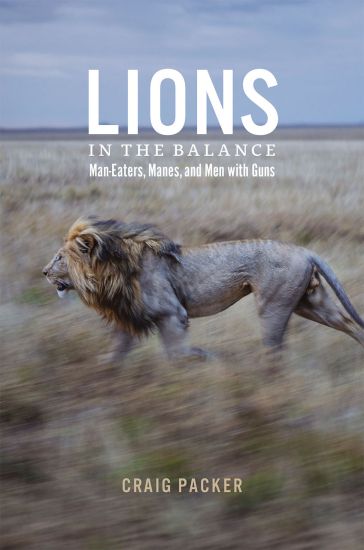
Lions in the Balance

Lions in the Balance

Craig Packer

University of Chicago Press
2015
sidottu
From flat-topped acacia trees to great migrations of wildebeest across an edgeless expanse of grass, the Serengeti is one of the world's most renowned ecosystems. And at the apex of this incredible landscape prowls its seemingly indomitable ruler: the Serengeti lion. These majestic mammals are skillful hunters, iconic, and integral to Serengeti health. But they also commit infanticide, eat local people and destroy local livelihoods, are a source of profit for those who make money shooting or conserving them (and sometimes both), and are in constant danger from the encroachments of another species: humans. With Lions in the Balance, celebrated lion researcher and conservationist Craig Packer takes us back into the complex, tooth-and-claw worlds of lion conservation and behavior. A sequel to Packer's Into Africa-which gave many readers their first experience of field work in Africa, of Tanzanian roads, of long hours spent identifying lions by their ear marks and scars, and of the joys of bootlegged Grateful Dead tapes beneath savannah moons-this diary-based chronicle of adventure, real-life danger, and corruption will both alarm and entertain. Packer's story offers a look into the future of the lion, one in which the politics of conservation will require survival strategies far more creative and powerful than any now possessed by the citizens of the savannah-humans included. Packer is sure to infuriate poachers, politicians, and conservationists alike as he minces no words about the problems he sees. But with a narrative stretching from Arusha to Washington, DC, and marked by Packer's signature humor and incredible candor, Lions in the Balance is a tale of courage against impossible odds, a masterly blend of science and storytelling, and an urgent call to action that will captivate a pride of readers.
The English Virtuoso

The English Virtuoso

Craig Ashley Hanson

University of Chicago Press
2009
sidottu
Contrary to twentieth-century criticism that cast them as misguided dabblers, English virtuosi in the seventeenth and early eighteenth centuries were erudite individuals with solid grounding in the classics, deep appreciation for the arts, and sincere curiosity about the natural world. Reestablishing their broad historical significance, "The English Virtuoso" situates this polymathic group at the rich intersection of the period's art, medicine, and antiquarianism.At the heart of this profoundly interdisciplinary study lies the Royal Society of London for the Improvement of Natural Knowledge, which from its founding in 1660 served as the major professional organization for London's leading physicians, many of them prominent virtuosi. Craig Ashley Hanson reveals that a vital art audience emerged from the Royal Society - whose members assembled many of the period's most important nonaristocratic collections - a century before most accounts date the establishment of an institutional base for the arts in England. Unearthing the fascinating stories of an impressive cast of characters, Hanson establishes a new foundation for understanding both the relationship between British art and science and the artistic accomplishments of the late eighteenth and nineteenth centuries.
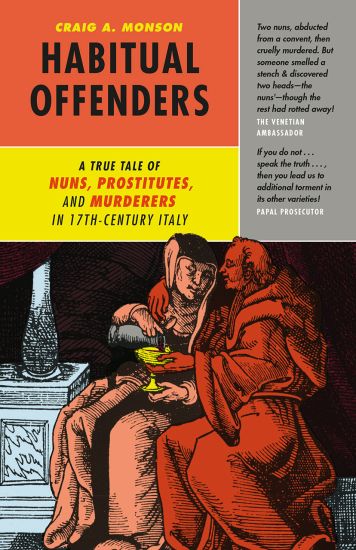
Habitual Offenders

Habitual Offenders

Craig A. Monson

University of Chicago Press
2016
sidottu
In April 1644, two nuns fled Bologna’s convent for reformed prostitutes. A perfunctory archiepiscopal investigation went nowhere, and the nuns were quickly forgotten. By June of the next year, however, an overwhelming stench drew a woman to the wine cellar of her Bolognese townhouse, reopened after a two-year absence—where to her horror she discovered the eerily intact, garroted corpses of the two missing women. Drawing on over four thousand pages of primary sources, the intrepid Craig A. Monson reconstructs this fascinating history of crime and punishment in seventeenth-century Italy. Along the way, he explores Italy’s back streets and back stairs, giving us access to voices we rarely encounter in conventional histories: prostitutes and maidservants, mercenaries and bandits, along with other “dubious” figures negotiating the boundaries of polite society. Painstakingly researched and breathlessly told, Habitual Offenders will delight historians and true-crime fans alike.
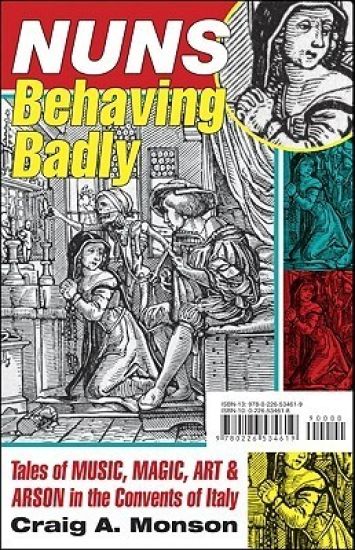
Nuns Behaving Badly

Nuns Behaving Badly

Craig A. Monson

University of Chicago Press
2010
sidottu
Witchcraft. Arson. Going AWOL. Some nuns in sixteenth- and seventeenth-century Italy strayed far from the paradigms of monastic life. Cloistered in convents, subjected to stifling hierarchy, repressed, and occasionally persecuted by their male superiors, these women circumvented authority in sometimes extraordinary ways. But tales of their transgressions have long been buried in the Vatican Secret Archive. That is, until now. In "Nuns Behaving Badly", Craig A. Monson resurrects forgotten tales and restores to life the long-silent voices of these cloistered heroines. Here we meet nuns who dared to speak out about physical assault and sexual impropriety (some real, some imagined). Others were guilty only of misjudgment or of defacing valuable artwork that offended their sensibilities. But what unites the women and their stories is the challenge they faced: these were women trying to find their way within the Catholicism of their day and through the strict limits it imposed on them. In resurrecting these long-forgotten tales and trials, Monson also draws attention to the predicament of modern religious women, whose "misbehavior" - seeking ordination as priests or refusing to give up their endowments to pay for priestly wrongdoing in their own archdioceses - continues even today. The nuns of early modern Italy, Monson shows, set the standard for religious transgression in their own age - and beyond.