Kirjojen hintavertailu. Mukana 12 083 983 kirjaa ja 12 kauppaa.

Kirjahaku

Etsi kirjoja tekijän nimen, kirjan nimen tai ISBN:n perusteella.

1000 tulosta hakusanalla Cynthia L. Rogers

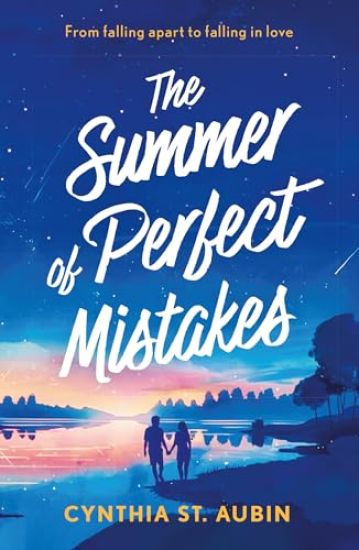
The Summer Of Perfect Mistakes

The Summer Of Perfect Mistakes

Cynthia St. Aubin

HARPERCOLLINS PUBLISHERS
2024
nidottu
With an intoxicating mix of slow burn and spice comes a small town romance from the author of Nevermore Bookstore, which fans can't get enough of: 'This read sucked me in from the beginning. I loved every second of it.'????? From falling apart to falling in love No-one in Spring Valley recognises Lark Woodley anymore. They only remember who she used to be. But Lark knows that her once-perfect life wasn’t really perfect, and in one evening…she lost it. Now Lark’s trying to pick up the pieces. The only bright spot in her life is an art class taught by Nick Hoffman – the esoteric and unreasonably hot guy from high school. Suddenly Lark’s world is brightening up, from late-night apple pie with chocolate ice cream to an increasingly spicy situationship with Nick. But what she’s found comes with a ‘best before summer’s end’ expiration date. And Lark doesn’t know if she can ever truly let go of aiming for perfect. Perfect for fans of: ?? Small town romance ??? Spicy ?? Second chance ?? Slow burn Readers love Cynthia St. Aubin: 'It was captivating from the first page and couldn’t put it down and I loved it! An absolute must read.' ????? 'There's angst, spice, and some wonderful turns of phrase dropped in so casually that their humour sneaks up on you and leaves you chuckling.'????? 'This read sucked me in from the beginning. I loved every second if it.'????? 'Phenomenal.'????? 'Just how I like it – good story and hot spice!'????? 'I literally finished it in one sitting. I couldn't get enough and thoroughly enjoyed every single second of it. 10/10 recommend.'?????
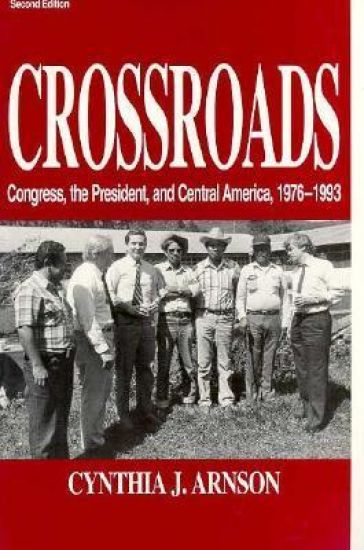
Crossroads

Crossroads

Cynthia Arnson

Pennsylvania State University Press
1993
pokkari
Cynthia Arnson incorporates substantial amounts of new primary source and recently declassified material coming out of the Iran-Contra trials and other Freedom of Information Act requests in this new edition of Crossroads. She also includes an entirely new chapter that carries the story of the Nicaragua and El Salvador policy debates to the end of the Bush Administration.
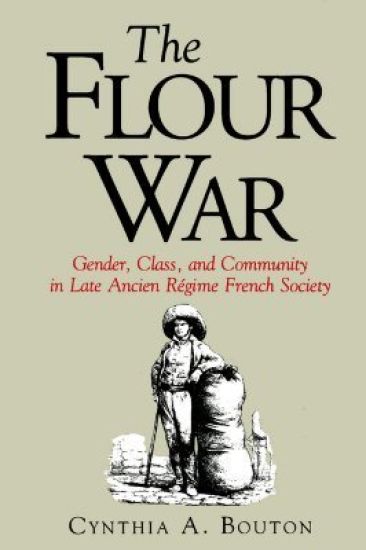
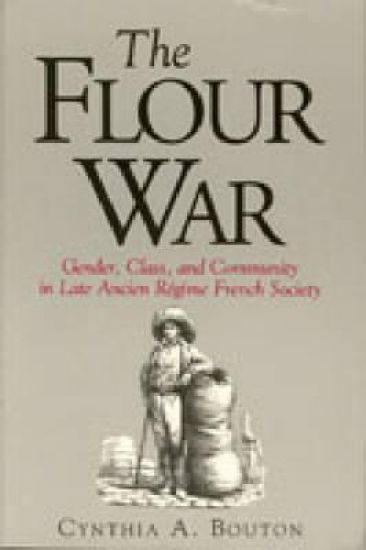
The Flour War

The Flour War

Cynthia Bouton

Pennsylvania State University Press
1994
pokkari
In the spring of 1775, a series of food riots shook the villages and countryside around Paris. For decades France had been free of famine, but the fall grain harvest had been meager, and the government of the newly crowned King Louis XVI had issued an untimely edict allowing the free commerce of grain within the kingdom. Prices skyrocketed, causing riots to break out in April, first in the market town of Beaumont-sur-Oise, then sweeping through the Paris Basin for the next three weeks. Known as the Flour War, or the guerre des farines, these riots are the subject of Cynthia Bouton's fascinating study. Building upon French historian George Rudé's pioneering work, Bouton identifies communities of participants and victims in the Flour War, analyzing them according to class, occupation, gender, and location. As typically happened, crowds of common people (menu peuple) confronted those who controlled the grain-bakers, merchants, millers, cultivators, and local authorities. Bouton asks why women of the menu peuple were heavily represented in the riots, often assuming crucial roles as instigators and leaders. In most instances, the people did not steal the provisions but forced those they cornered to sell at a price the rioters deemed "just." Bouton examines this phenomenon, known as taxation populaire, and considers the growing "sophistication of purpose" of rioters by placing the Flour War within the larger context of food riots in early modern Europe.
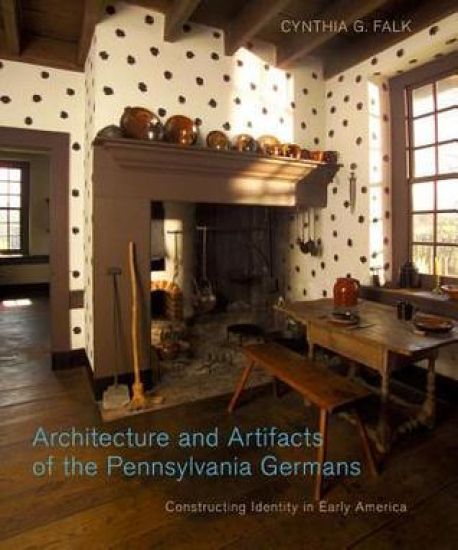
Architecture and Artifacts of the Pennsylvania Germans

Architecture and Artifacts of the Pennsylvania Germans

Cynthia G. Falk

Pennsylvania State University Press
2008
sidottu
How did a mid-eighteenth-century group, the so-called Pennsylvania Germans, build their cultural identity in the face of ethnic stereotyping, nostalgic ideals, and the views imposed by outside contemporaries? Numerous forces create a group’s identity, including the views of outsiders, insiders, and the shaping pressure of religious beliefs, but to understand the process better, we must look to clues from material culture. Cynthia Falk explores the relationship between ethnicity and the buildings, personal belongings, and other cultural artifacts of early Pennsylvania German immigrants and their descendants. Such material culture has been the basis of stereotyping Pennsylvania Germans almost since their arrival. Falk warns us against the typical scholarly overemphasis on Pennsylvania Germans’ assimilation into an English way of life. Rather, she demonstrates that more than anything, socioeconomic status and religious affiliation influenced the character of the material culture of Pennsylvania Germans. Her work also shows how early Pennsylvania Germans defined their own identities.
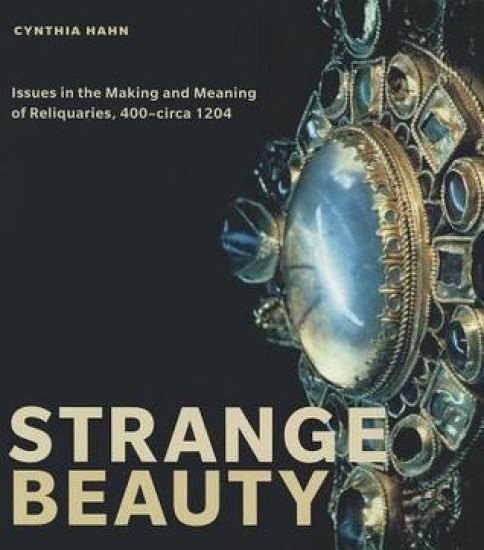
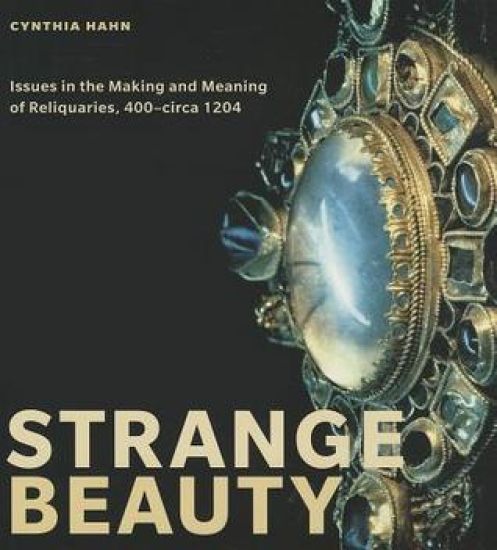
Strange Beauty

Strange Beauty

Cynthia Hahn

Pennsylvania State University Press
2012
sidottu
Reliquaries, one of the central art forms of the Middle Ages, have recently been the object of much interest among historians and artists. Until now, however, they have had no treatment in English that considers their history, origins, and place within religious practice, or, above all, their beauty and aesthetic value. In Strange Beauty, Cynthia Hahn treats issues that cut across the class of medieval reliquaries as a whole. She is particularly concerned with portable reliquaries that often contained tiny relic fragments, which purportedly allowed saints to actively exercise power in the world. Above all, Hahn argues, reliquaries are a form of representation. They rarely simply depict what they contain; rather, they prepare the viewer for the appropriate reception of their precious contents and establish the "story" of the relics. They are based on forms originating in the Bible, especially the cross and the Ark of the Covenant, but find ways to renew the vision of such forms. They engage the viewer in many ways that are perhaps best described as persuasive or "rhetorical," and Hahn uses literary terminology-sign, metaphor, and simile-to discuss their operation. At the same time, they make use of unexpected shapes-the purse, the arm or foot, or disembodied heads-to create striking effects and emphatically suggest the presence of the saint.
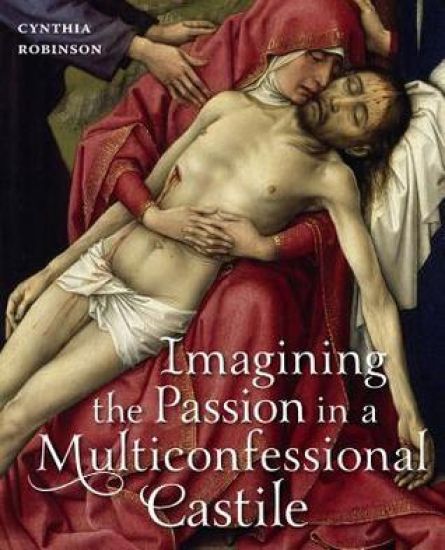
Imagining the Passion in a Multiconfessional Castile

Imagining the Passion in a Multiconfessional Castile

Cynthia Robinson

Pennsylvania State University Press
2013
sidottu
Recent research into the texts, practices, and visual culture of late medieval devotional life in western Europe has clearly demonstrated the centrality of devotions to Christ’s Passion. The situation in Castile, however, could not have been more different. Prior to the final decades of the fifteenth century, individual relationships to Christ established through the use of “personalized” Passion imagery simply do not appear to have been a component of Castilian devotional culture.In Imagining the Passion in a Multiconfessional Castile, Cynthia Robinson argues that it is necessary to reorient discussions of late medieval religious art produced and used in Castile, placing Iberian devotional art in the context of Iberian devotional practice. Instead of focusing on the segregation of the religious lives of members of late medieval Iberia’s much-discussed “Three Confessions” (Judaism, Christianity, and Islam), Robinson offers concrete evidence of the profound impact of each sect on the other two.Imagining the Passion in a Multiconfessional Castile ranges across traditional disciplinary and cultural divides. Robinson considers altarpieces that differ radically from their European contemporaries; architectural ornament; a rare series of narratives of Christ’s life; indulgenced prayers; Muslim and Jewish mystical texts; lives, hours, devotions, and Psalters of and to the Virgin which appear to be uniquely Iberian and find resonances in both Hebrew and Arabic mystical literature; sacred gardens and trees in both textual and visual culture from Muslim, Christian, and Jewish contexts; and preaching manuals written by converted Jews. Together, these texts and images offer striking evidence of the plurality of late medieval Iberian religious life, both within the supposed boundaries of a specific religion and in terms of each culture’s relationship with the other.
Strange Beauty

Strange Beauty

Cynthia Hahn

Pennsylvania State University Press
2013
pokkari
Reliquaries, one of the central art forms of the Middle Ages, have recently been the object of much interest among historians and artists. Until now, however, they have had no treatment in English that considers their history, origins, and place within religious practice, or, above all, their beauty and aesthetic value. In Strange Beauty, Cynthia Hahn treats issues that cut across the class of medieval reliquaries as a whole. She is particularly concerned with portable reliquaries that often contained tiny relic fragments, which purportedly allowed saints to actively exercise power in the world. Above all, Hahn argues, reliquaries are a form of representation. They rarely simply depict what they contain; rather, they prepare the viewer for the appropriate reception of their precious contents and establish the “story” of the relics. They are based on forms originating in the Bible, especially the cross and the Ark of the Covenant, but find ways to renew the vision of such forms. They engage the viewer in many ways that are perhaps best described as persuasive or “rhetorical,” and Hahn uses literary terminology—sign, metaphor, and simile—to discuss their operation. At the same time, they make use of unexpected shapes—the purse, the arm or foot, or disembodied heads—to create striking effects and emphatically suggest the presence of the saint.
Mutual Gains

Mutual Gains

Cynthia E. Burton Shackelford; Edward Cohen Rosenthal

Praeger Publishers Inc
1986
sidottu
Points the way to widened worker participation, greater employment security, and improved competitiveness for workers and employers alike. William Batt, U.S. Department of Labor
Language, Meaning, and Culture

Language, Meaning, and Culture

Cynthia Osgood; Oliver C. S. Tzeng

Praeger Publishers Inc
1990
sidottu
One of the most frequently cited scholars in the social and behavioral sciences, Charles E. Osgood, has assembled his most important writings in this volume for the Centennial Psychology series. Osgood's prolific contributions cover four decades of research and center on the human cognitive processes and their functional characteristics at three levels of human ecology: in individual humans, across human cultures, and for survival of the human species. Oliver Tzeng's introduction, presenting Osgood's life as well as the evolution of his three major themes, is followed by eleven selections. A comprehensive bibliography of Osgood's writings completes this volume. Social and Behavioral Psychologists will find Language, Meaning, and Culture an extremely rich encounter. The three major themes of Osgood's entire professional life were set in motion during his undergraduate years. This volume divides Osgood's most important papers among these themes: Psycholinguistic Research and Theory; Cross Cultural Universals of Affective Meaning; Psycho-Social Dynamics and the Prospects for Mankind.
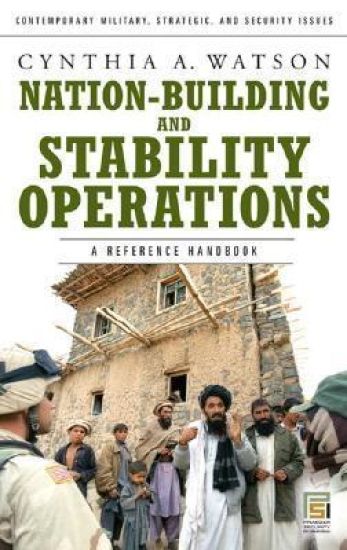
Nation-Building and Stability Operations

Nation-Building and Stability Operations

Cynthia A. Watson

Praeger Publishers Inc
2007
sidottu
Addressing the range of nation-building experiences and concerns in the United States and its allies, Watson opens with a discussion of Somalia, Haiti, and Southeastern European experiences during the 1990s. She then shifts to a discussion of the more recent lessons from Iraq and Afghanistan since the beginning of the Global War on Terrorism. An examination of the growing emphasis within the U.S. government focused on the education officers at the flag rank in combined, joint, and multinational aspects of military activities that form the basis of nation-building underscores the pace of changes taking place today. As nation-building and stability operations have expanded, so too should the discussion of such activities. With increasing pressure on the United States to engage in actions abroad in the long War on Terrorism, a greater understanding among the American public of what is involved in this area is absolutely crucial. The U.S. has been involved in numerous nation-building activities. Watson breaks down the operational and doctrinal shifts that have occurred in military and political circles during the last twenty years in this introductory overview of the topic. She supplements her narrative with brief biographical essays focused on individuals such as Marine General (Ret.) and U.S. commander in Somalia (1992-1994), Anthony Zinni and others who influenced the course of nation-building and stabilization processes now in place. Their impact is underscored in the documents Watson includes, which are taken from various studies, laws, and debates on the subject at hand, making this a useful work for both students and specialists.
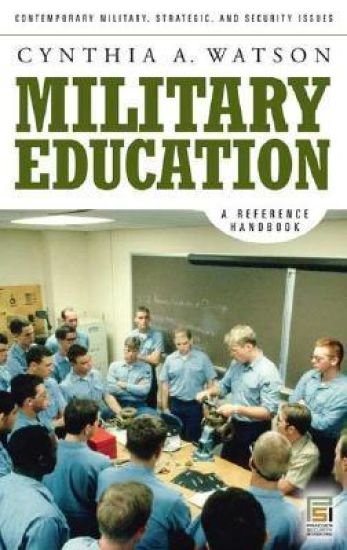
Military Education

Military Education

Cynthia A. Watson

Praeger Publishers Inc
2007
sidottu
Professional Military Education (PME) is broader and more rigorous than is widely understood in the United States. Improving educational programs within the military service branches is at the very center of ongoing force transformation efforts and advanced educational opportunities occur at various, set levels of military experience. Military education increasingly conforms to standards imposed by outside civilian accrediting bodies and is mandated and monitored, to an extent, by Congress. Military Educationexplores this often-overlooked area of education within the context of the modern military force structure. In this unique work, Watson chronicles the evolution of professional military education during the last sixty years. Careful to draw distinctions between training and education, she briefly traces the history of PME and examines some of the major personalities involved in shaping it, as well as the evolution of the curriculum stressed in PME programs. Her narrative, combined with key documents, a glossary, and a timeline of important events, dispels popular notions of an uneducated military force.
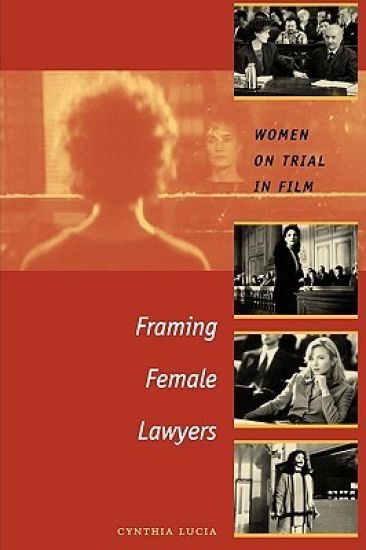
Framing Female Lawyers

Framing Female Lawyers

Cynthia Lucia

University of Texas Press
2005
pokkari
As real women increasingly entered the professions from the 1970s onward, their cinematic counterparts followed suit. Women lawyers, in particular, were the protagonists of many Hollywood films of the Reagan-Bush era, serving as a kind of shorthand reference any time a script needed a powerful career woman. Yet a close viewing of these films reveals contradictions and anxieties that belie the films' apparent acceptance of women's professional roles. In film after film, the woman lawyer herself effectively ends up "on trial" for violating norms of femininity and patriarchal authority. In this book, Cynthia Lucia offers a sustained analysis of women lawyer films as a genre and as a site where other genres including film noir, maternal melodrama, thrillers, action romance, and romantic comedy intersect. She traces Hollywood representations of female lawyers through close readings of films from the 1949 Adam's Rib through films of the 1980s and 1990s, including Jagged Edge, The Accused, and The Client, among others. She also examines several key male lawyer films and two independent films, Lizzie Borden's Love Crimes and Susan Streitfeld's Female Perversions. Lucia convincingly demonstrates that making movies about women lawyers and the law provides unusually fertile ground for exploring patriarchy in crisis. This, she argues, is the cultural stimulus that prompts filmmakers to create stories about powerful women that simultaneously question and undermine women's right to wield authority.
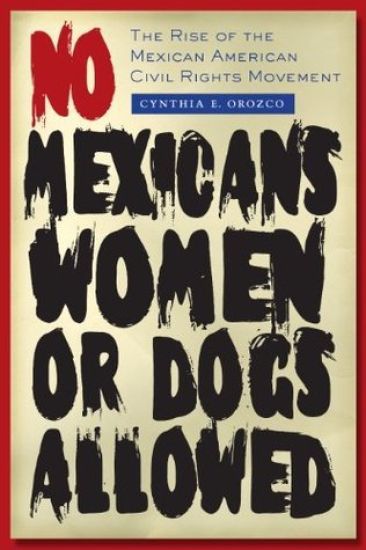
No Mexicans, Women, or Dogs Allowed

No Mexicans, Women, or Dogs Allowed

Cynthia E. Orozco

University of Texas Press
2009
pokkari
Founded by Mexican American men in 1929, the League of United Latin-American Citizens (LULAC) has usually been judged according to Chicano nationalist standards of the late 1960s and 1970s. Drawing on extensive archival research, including the personal papers of Alonso S. Perales and Adela Sloss-Vento, No Mexicans, Women, or Dogs Allowed presents the history of LULAC in a new light, restoring its early twentieth-century context.Cynthia Orozco also provides evidence that perceptions of LULAC as a petite bourgeoisie, assimilationist, conservative, anti-Mexican, anti-working class organization belie the realities of the group's early activism. Supplemented by oral history, this sweeping study probes LULAC's predecessors, such as the Order Sons of America, blending historiography and cultural studies. Against a backdrop of the Mexican Revolution, World War I, gender discrimination, and racial segregation, No Mexicans, Women, or Dogs Allowed recasts LULAC at the forefront of civil rights movements in America.
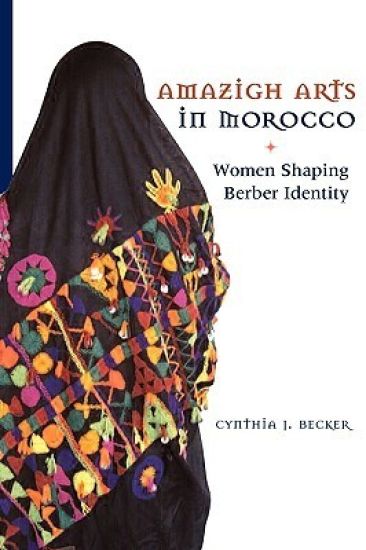
Amazigh Arts in Morocco

Amazigh Arts in Morocco

Cynthia Becker

University of Texas Press
2006
pokkari
In southeastern Morocco, around the oasis of Tafilalet, the Ait Khabbash people weave brightly colored carpets, embroider indigo head coverings, paint their faces with saffron, and wear ornate jewelry. Their extraordinarily detailed arts are rich in cultural symbolism; they are always breathtakingly beautiful-and they are typically made by women. Like other Amazigh (Berber) groups (but in contrast to the Arab societies of North Africa), the Ait Khabbash have entrusted their artistic responsibilities to women. Cynthia Becker spent years in Morocco living among these women and, through family connections and female fellowship, achieved unprecedented access to the artistic rituals of the Ait Khabbash. The result is more than a stunning examination of the arts themselves, it is also an illumination of women's roles in Islamic North Africa and the many ways in which women negotiate complex social and religious issues.One of the reasons Amazigh women are artists is that the arts are expressions of ethnic identity, and it follows that the guardians of Amazigh identity ought to be those who literally ensure its continuation from generation to generation, the Amazigh women. Not surprisingly, the arts are visual expressions of womanhood, and fertility symbols are prevalent. Controlling the visual symbols of Amazigh identity has given these women power and prestige. Their clothing, tattoos, and jewelry are public identity statements; such public artistic expressions contrast with the stereotype that women in the Islamic world are secluded and veiled. But their role as public identity symbols can also be restrictive, and history (French colonialism, the subsequent rise of an Arab-dominated government in Morocco, and the recent emergence of a transnational Berber movement) has forced Ait Khabbash women to adapt their arts as their people adapt to the contemporary world. By framing Amazigh arts with historical and cultural context, Cynthia Becker allows the reader to see the full measure of these fascinating artworks.
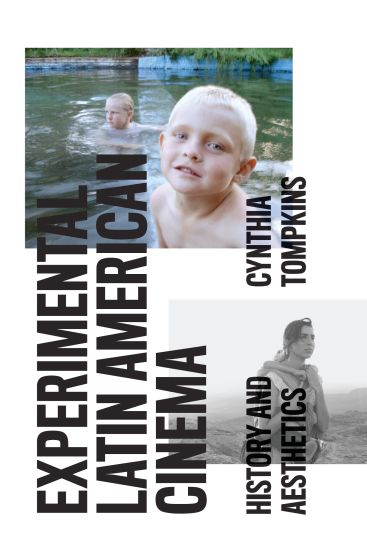
Experimental Latin American Cinema

Experimental Latin American Cinema

Cynthia Tompkins

University of Texas Press
2013
nidottu
While there are numerous film studies that focus on one particular grouping of films-by nationality, by era, or by technique-here is the first single volume that incorporates all of the above, offering a broad overview of experimental Latin American film produced over the last twenty years.Analyzing seventeen recent films by eleven different filmmakers from Argentina, Brazil, Cuba, Mexico, Paraguay, and Peru, Cynthia Tompkins uses a comparative approach that finds commonalities among the disparate works in terms of their influences, aesthetics, and techniques. Tompkins introduces each film first in its sociohistorical context before summarizing it and then subverting its canonical interpretation. Pivotal to her close readings of the films and their convergences as a collective cinema is Tompkins’s application of Deleuzian film theory and the concept of the time-image as it pertains to the treatment of time and repetition. Tompkins also explores such topics as the theme of decolonization, the consistent use of montage, paratactically structured narratives, and the fusion of documentary conventions and neorealism with drama. An invaluable contribution to any dialogue on the avant-garde in general and to filmmaking both in and out of Latin America, Experimental Latin American Cinema is also a welcome and insightful addition to Latin American studies as a whole.
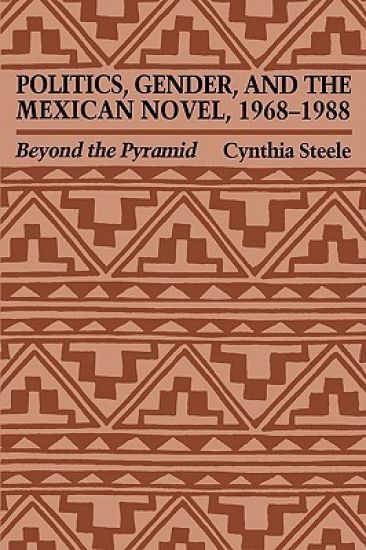
Politics, Gender, and the Mexican Novel, 1968-1988

Politics, Gender, and the Mexican Novel, 1968-1988

Cynthia Steele

University of Texas Press
1992
pokkari
The student massacre at Tlatelolco in Mexico City on October 2, 1968, marked the beginning of an era of rapid social change in Mexico. In this illuminating study, Cynthia Steele explores how the writers of the next two decades responded to the massacre and to the social crisis it signaled in terms of political change and gender identity.
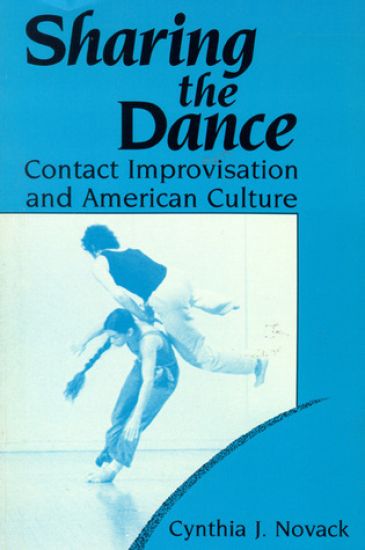
Sharing the Dance

Sharing the Dance

Cynthia Novack

University of Wisconsin Press
1990
nidottu
Growing out of the 1960s avant-garde and counterculture, contact improvization is an underground, experimental movement in modern dance that captures artistic and social forces in transition. Cynthia Novack considers the development of this dance form within its historical, social and cultural contexts. While focusing on the changing practice of contact improvization, Novack's work incorporates the history of rock dancing and disco, modern dance and experimental dance movements and a variety of other physical activities, such as martial arts, aerobics and wrestling. Providing a cultural history of a number of American dance/movement styles from the 1950s to the present, she also compares contact improvization to other dance forms, both American and non-American. Novack concludes her study with a discussion of contact improvization both as an icon of the end of the 1960s and as a dance practice which continues to demonstrate the subtle ways in which movement represents and creates culture.
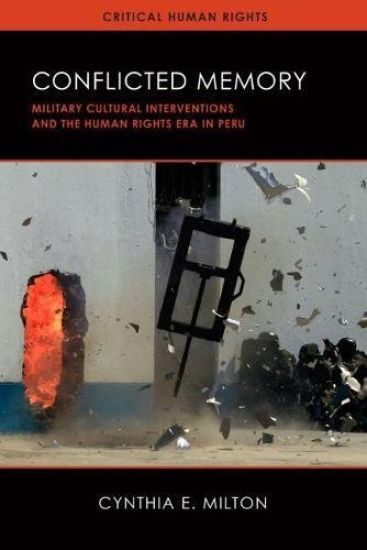
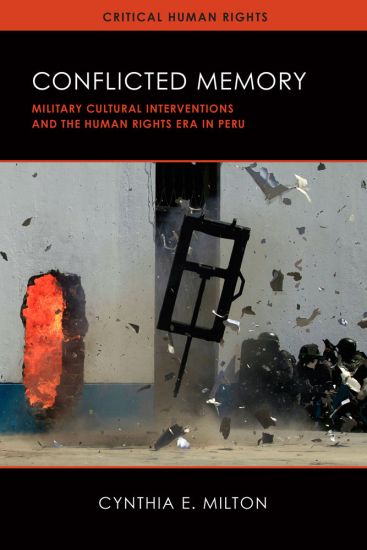
Conflicted Memory

Conflicted Memory

Cynthia E. Milton

University of Wisconsin Press
2017
sidottu
What happens when concepts of ""truth,"" ""memory,"" and ""human rights"" are taken up and adapted by former perpetrators of violence? Peru has moved from the 1980s?90s conflict between its armed forces and Shining Path militants into an era of open democracy, transitional justice, and truth and reconciliation commissions. Cynthia Milton reveals how Peru's military has engaged in a tactical cultural campaign?via books, films, museums?to shift public opinion, debate, and memories about the nation's violent recent past and its part in it.Milton calls attention to fabrications of our post-truth era but goes further to deeply explore the ways members of the Peruvian military see their past, how they actively commemorate and curate it in the present, and why they do so. Her nuanced approach upends frameworks of memory studies that reduce military and ex-military to a predictable role of outright denial.
Conflicted Memory

Conflicted Memory

Cynthia E. Milton

University of Wisconsin Press
2020
nidottu
What happens when concepts of "truth," "memory," and "human rights" are taken up and adapted by former perpetrators of violence? Peru has moved from the 1980s-90s conflict between its armed forces and Shining Path militants into an era of open democracy, transitional justice, and truth and reconciliation commissions. Cynthia Milton reveals how Peru's military has engaged in a tactical cultural campaign-via books, films, museums-to shift public opinion, debate, and memories about the nation's violent recent past and its part in it.Milton calls attention to fabrications of our post-truth era but goes further to deeply explore the ways members of the Peruvian military see their past, how they actively commemorate and curate it in the present, and why they do so. Her nuanced approach upends frameworks of memory studies that reduce military and ex-military to a predictable role of outright denial.