Kirjojen hintavertailu. Mukana 11 717 486 kirjaa ja 12 kauppaa.

Kirjahaku

Etsi kirjoja tekijän nimen, kirjan nimen tai ISBN:n perusteella.

1000 tulosta hakusanalla Dale Neef

World Flutelore

World Flutelore

Dale A. Olsen

University of Illinois Press
2013
sidottu
In many places around the world, flutes and the sounds of flutes are powerful magical forces for seduction and love, protection, vegetal and human fertility, birth and death, and other aspects of human and nonhuman behavior. This book explores the cultural significance of flutes, flute playing, and flute players from around the world as interpreted from folktales, myths, and other stories--in a word, ""flutelore."" A scholarly yet readable study, World Flutelore: Folktales, Myths, and Other Stories of Magical Flute Power draws upon a range of sources in folklore, anthropology, ethnomusicology, and literary analysis. Describing and interpreting many examples of flutes as they are found in mythology, poetry, lyrics, and other narrative and literary sources from around the world, veteran ethnomusicologist Dale Olsen seeks to determine what is singularly distinct or unique about flutes, flute playing, and flute players in a global context. He shows how and why flutes are important for personal, communal, religious, spiritual, and secular expression and even, perhaps, existence. This is a book for students, scholars, and any reader interested in the cultural power of flutes.

World Flutelore

World Flutelore

Dale A. Olsen

University of Illinois Press
2013
nidottu
In many places around the world, flutes and the sounds of flutes are powerful magical forces for seduction and love, protection, vegetal and human fertility, birth and death, and other aspects of human and nonhuman behavior. This book explores the cultural significance of flutes, flute playing, and flute players from around the world as interpreted from folktales, myths, and other stories--in a word, ""flutelore."" A scholarly yet readable study, World Flutelore: Folktales, Myths, and Other Stories of Magical Flute Power draws upon a range of sources in folklore, anthropology, ethnomusicology, and literary analysis. Describing and interpreting many examples of flutes as they are found in mythology, poetry, lyrics, and other narrative and literary sources from around the world, veteran ethnomusicologist Dale Olsen seeks to determine what is singularly distinct or unique about flutes, flute playing, and flute players in a global context. He shows how and why flutes are important for personal, communal, religious, spiritual, and secular expression and even, perhaps, existence. This is a book for students, scholars, and any reader interested in the cultural power of flutes.
Russian Civil-Military Relations

Russian Civil-Military Relations

Dale R. Herspring

Indiana University Press
1996
sidottu
". . . a volume that provides both solid historical background for the novice reader and provocative and thoughtful material for the more advanced scholar. It should find wide classroom use at all levels and will be an important addition to the bookshelf of any analyst of post-Soviet security affairs." —Slavic Review "The history is both fascinating and timely . . ." —European Security "When military reform returns to its deservedly prominent place in the Russian political agenda, Herspring's book will offer invaluable guidance." —Mark von Hagen Dale Herspring analyzes three key periods of change in civil-military relations in the Soviet Union and postcommunist Russia: the Bolshevik construction of the communist Red Army in the 1920s; the era of perestroika, when Mikhail Gorbachev attempted to implement a more benign military doctrine and force posture; and the Yeltsin era, when a new civilian and military leadership set out to restructure civil-military relations. The book concludes with a timely discussion of the relationship of the military to the current political struggle in Russia.
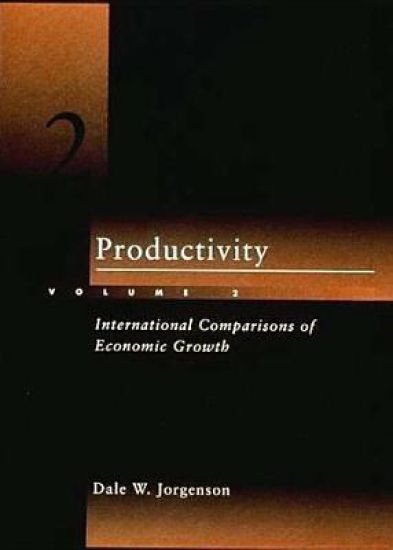
Productivity

Productivity

Dale W. Jorgenson

MIT Press
1995
pokkari
These two volumes present empirical studies that have permanently altered professional debates over investment and productivity as sources of postwar economic growth in industrialized countries. The distinctive feature of investment is that returns can be internalized by the investor. The most straightforward application of this idea is to investments that create property rights, but these volumes broaden the meaning of capital formation to include investments in education and training.International Comparisons of Economic Growth focuses on comparisons among industrialized countries. Although Germany and Japan are often portrayed as economic adversaries of the U.S., postwar experiences in all three countries support policies that give high priority to stimulating and rewarding capital formation. In the Asian model of growth exemplified by Japan investments in tangible assets and human capital are especially critical during periods of rapid growth.
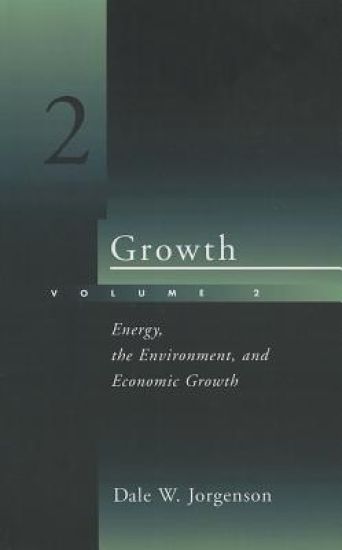
Growth

Growth

Dale W. Jorgenson

MIT Press
1998
pokkari
Volume 1: Econometric General Equilibrium Modeling presents an econometric approach to general equilibrium modeling of the impact of economic policies. Earlier approaches were based on the "calibration" of general equilibrium models to a single data point. The obvious disadvantage of calibration is that it requires highly restrictive assumptions about technology and preferences, such as fixed input-output coefficients. These assumptions are contradicted by the massive evidence of energy conservation in response to higher world energy prices, beginning in 1973. The econometric approach to general equilibrium modeling successfully freed economic policy analysis from the straitjacket imposed by calibration.As a consequence of changes in energy prices and new environmental policies, a wealth of historical experience has accumulated over the past two decades. Interpreted within the framework of the neoclassical theory of economic growth, this experience provides essential guidelines for future policy formation. Volume 2: Energy, the Environment, and Economic Growth presents a new econometric general equilibrium model of the United States that captures the dynamic mechanisms underlying growth trends and responses to energy and environmental policies. Jorgenson uses the model to analyze the impacts of environmental regulations on US economic growth and tax policies for controlling US emissions of carbon dioxide.
Investment

Investment

Dale W. Jorgenson; Kun-Young Yun

MIT Press
2001
pokkari
This book presents a comprehensive treatment of the cost-of-capital approach for analyzing the economic impact of tax policy. This approach has provided an intellectual impetus for reforms of capital income taxation in the United States and around the world. The cost of capital and the marginal effective tax rate are combined with estimates of substitution possibilities by businesses and households in analyzing tax and spending programs. This makes it possible to evaluate tax reforms and changes in government spending. Studies of the economic impact of tax policies have taken two forms. First, the cost of capital has been incorporated into investment functions in macroeconomic models, which are used to model the short-run responses to tax policy changes. Second, the cost-of-capital approach has been integrated into applied general-equilibrium models used in evaluating the long-run economic effects of tax reforms.The cost-of-capital approach suggests two avenues for tax reform. One would retain the income tax base of the existing U.S. tax system, but would equalize tax burdens on all forms of assets as well as average and marginal tax rates on labor income. The other would substitute consumption for income as a tax base, while equating average and marginal tax rates on labor income.
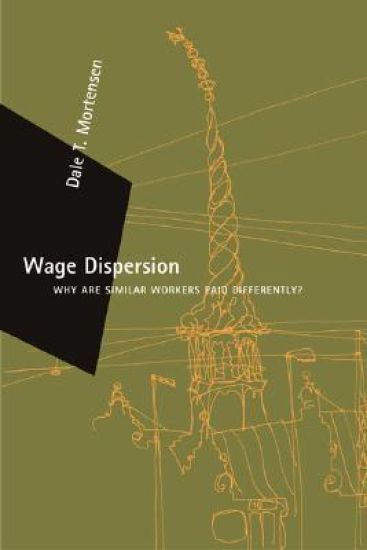
Wage Dispersion

Wage Dispersion

Dale T. Mortensen

MIT Press
2005
pokkari
Why are workers with identical skills found in both "good" jobs and "bad" jobs? Why are workers who do similar jobs paid differently, contrary to standard competitive theory? Observable differences in workers doing the same job account for only 30 percent of wage variation. In Wage Dispersion, Dale Mortensen examines the reasons for pay differentials in the other 70 percent. He finds that these differentials, or wage dispersion, are largely the result of job search friction (which arises when workers do not know the wages offered by all employers) and cross-firm differences in wage policy and productivity.Mortensen examines previous theoretical explanations for wage dispersion, testing them against data from a Danish matched employer-employee database. He begins by offering a simple one-period model of the problem, then expands this basic model intertemporally to include the role of on-the-job worker search behavior. Following this, he discusses theoretical modifications that offer an explanation for the nature of observed wage dispersion, particularly the shape of cross-firm wage distribution. He then examines the hypothesis that wage policies are determined by profit-maximizing behavior and finds that the Danish data do not support it; he argues that bilateral wage bargaining is the more likely determinant. Finally, he reviews recent work that extends the basic theoretical framework to explain wage dispersion within firms.
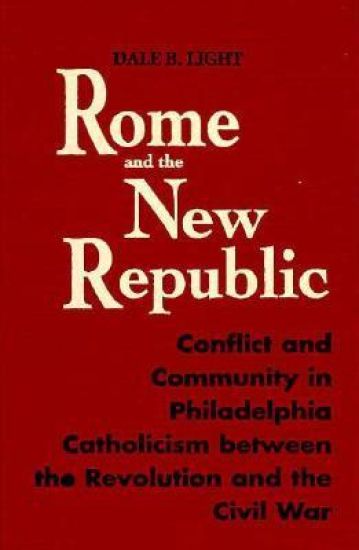
Rome and the New Republic

Rome and the New Republic

Dale B. Light

University of Notre Dame Press
1996
sidottu
The core of this study is a series of confrontations between Catholic bishops and dissenters, both lay and clerical, that troubled Philadelphia Catholicism for more than three-quarters of a century. Rome and the New Republic boasts an innovative exploration of the complexity and dynamism of early American Catholicism will be a welcome addition to the fields of religious history, Catholic and immigrant studies, and Early American and antebellum history as well. Rome and the New Republic traces the major ideological, institutional, and social imperatives that shaped Philadelphia's Catholic community in the years between the American Revolution and the Civil War. Dale B. Light presents a narrative account of the transformation of Philadelphia Catholicism that offers several fresh perspectives on Catholic development in the early decades of the Republic. Author Dale B. Light sets the narrative against a broad background by relating the development of Philadelphia's Catholic community to events and transformations taking place in Pennsylvania, in the United States as a whole, and throughout Western culture. The core of this study is a series of confrontations between Catholic bishops and dissenters, both lay and clerical, that troubled Philadelphia Catholicism for more than three-quarters of a century. In the first part of the book Light traces the breakdown of the confessional community in the early decades of the Republic as institutional pluralism, ethnic animosities, social differentiation, and ideological disputes factionalized Philadelphia's growing Catholic population. He then goes on to reconsider a period of intense conflict in the 1820s-the years of the famous "Hogan Schism"-as a confrontation between modernist and traditionalist groups within Philadelphia Catholicism. In the final section Light describes how reforming ultramontane bishops and members of the middle classes gradually reconstructed the Catholic community in the decades before the Civil War.
Can Workers Have A Voice?

Can Workers Have A Voice?

Dale A. Hathaway

Pennsylvania State University Press
1993
sidottu
Early in the 1970s, the U.S. began to lose its position as unquestioned leader of the world economy. The industrial sector felt the strain of international competition, and by the 1980s massive plant shutdowns were common. Pittsburgh experienced these years as a time of both triumph and cataclysmic collapse. While the city transformed itself from a blue-collar steel town into a postmodern, high-tech corporate center, it saw nearly 100,000 industrial jobs disappear. Despite the unprecedented loss of jobs, few Pittsburgh workers were willing to take on the awesome power of U.S. Steel, Westinghouse, or Mellon Bank. Those who did attempt to resist the tide of change failed. Why was this so? Dale Hathaway seeks an answer by looking at three groups of steelworkers and worker allies that mounted highly visible challenges to corporate management—the Network/DMS, the Tri-State Conference on Steel, and the Mon Valley Unemployed Committee. None succeeded in besting Goliath, but Hathaway contends their efforts can show us why industrial workers are reluctant to "fight City Hall." The decisions that led to Pittsburgh's economic transformation, he argues, were not inevitable and others could have been made given a different political climate. But the balance of power favored a few corporate leaders whose decisions were made free from public scrutiny and independent from their employees and the surrounding community. This balance of power, according to Hathaway, best explains why so few workers chose to resist the economic onslaught they confronted in the 1980s.It is too late for the steelworkers of Pittsburgh to save their communities. However, as the U.S. adjusts to the global economy, similar decisions will be made affecting communities all across the nation. Who will make these decisions? Will they be made by a few or by many? Convinced of the need for thoroughgoing political change, Hathaway concludes that such decisions must be made democratically—that workers must have a voice in their own future.
Can Workers Have A Voice?

Can Workers Have A Voice?

Dale A. Hathaway

Pennsylvania State University Press
1993
pokkari
Early in the 1970s, the U.S. began to lose its position as unquestioned leader of the world economy. The industrial sector felt the strain of international competition, and by the 1980s massive plant shutdowns were common. Pittsburgh experienced these years as a time of both triumph and cataclysmic collapse. While the city transformed itself from a blue-collar steel town into a postmodern, high-tech corporate center, it saw nearly 100,000 industrial jobs disappear. Despite the unprecedented loss of jobs, few Pittsburgh workers were willing to take on the awesome power of U.S. Steel, Westinghouse, or Mellon Bank. Those who did attempt to resist the tide of change failed. Why was this so? Dale Hathaway seeks an answer by looking at three groups of steelworkers and worker allies that mounted highly visible challenges to corporate management—the Network/DMS, the Tri-State Conference on Steel, and the Mon Valley Unemployed Committee. None succeeded in besting Goliath, but Hathaway contends their efforts can show us why industrial workers are reluctant to "fight City Hall." The decisions that led to Pittsburgh's economic transformation, he argues, were not inevitable and others could have been made given a different political climate. But the balance of power favored a few corporate leaders whose decisions were made free from public scrutiny and independent from their employees and the surrounding community. This balance of power, according to Hathaway, best explains why so few workers chose to resist the economic onslaught they confronted in the 1980s.It is too late for the steelworkers of Pittsburgh to save their communities. However, as the U.S. adjusts to the global economy, similar decisions will be made affecting communities all across the nation. Who will make these decisions? Will they be made by a few or by many? Convinced of the need for thoroughgoing political change, Hathaway concludes that such decisions must be made democratically—that workers must have a voice in their own future.
The Mexican Ruling Party

The Mexican Ruling Party

Dale Story

Praeger Publishers Inc
1986
sidottu
This new book tells the story of Mexico's dominant political party, the Partido Revoluconario Institucional (PRI), detailing its impact on the country's political system. Mexico's Ruling Party examines the party's role in maintaining political stability and stimulating economic growth and reviews the major problems which it now faces. It also reconstructs the historical evolution of the PRI and the so-called pendulum effect, elaborating on the internal structure of the party and its relationship with the political elite.
Making A Place For Kids With Disabilities

Making A Place For Kids With Disabilities

Dale B. Fink

Praeger Publishers Inc
2000
sidottu
Dale Borman Fink, the author of the only book on inclusion of youth with special needs in before and after school child care, now presents the first book to examine the experiences of children with disabilities participating in youth programs alongside their typical peers. This book is the product of Fink's quest to learn as much as possible about one community's experience with the inclusion of children with special needs in youth programs. Using a case study technique, he probes into the issues and dynamics that influence the increasing participation of kids with disabilities in such activities as Girl Scouts, Boy Scouts, and park and recreation programs.Fink enters a Midwestern community of 14,000, which he calls Wabash, interviewing the parents, the professionals, the peers, the community leaders, and the volunteers about the participation of children with disabilities. How does a girl who relies on an augmentative communication device take part in a Brownie troop? What do other tee-ball players think about a teammate with cerebral palsy? Why does one family refuse to use the local drop-in recreation center? Readers will learn what practices are evolving and what opportunities are being overlooked. Fink makes his own biases and interpretations plain, and he shares part of his own biography along the way. But it is the voices and experiences of the people of Wabash, rather than those of the author, that invest this book with such power and such importance to all who are concerned with youth with special needs.
Constructing Jesus

Constructing Jesus

Dale C. Allison

SPCK Publishing
2010
nidottu
Dale Allison has written another brilliant book. He manages to dissect technical, complicated subjects and then present them to his readers with remarkable clarity and simplicity. Constructing Jesus will be read with great benefit by scholars, pastors, students, and laity. Readers will find everywhere in this book mastery of the topic, judicious assessment of the options, and invariably sensible and compelling conclusions.
Moroccan Islam

Moroccan Islam

Dale F. Eickelman

University of Texas Press
1976
nidottu
This book is one of the first comprehensive studies of Islam as locally understood in the Middle East. Specifically, it is concerned with the prevalent North African belief that certain men, called marabouts, have a special relation to God that enables them to serve as intermediaries and to influence the well-being of their clients and kin. Dale F. Eickelman examines the Moroccan pilgrimage center of Boujad and unpublished Moroccan and French archival materials related to it to show how popular Islam has been modified by its adherents to accommodate new social and economic realities. In the course of his analysis he demonstrates the necessary interrelationship between social history and the anthropological study of symbolism. Eickelman begins with an outline of the early development of Islam in Morocco, emphasizing the "maraboutic crisis" of the fourteenth through sixteenth centuries. He also examines the history and social characteristics of the Sherqawi religious lodge, on which the study focuses, in preprotectorate Morocco. In the central portion of the book, he analyzes the economic activities and social institutions of Boujad and its rural hinterland, as well as some basic assumptions the townspeople and tribesmen make about the social order. Finally, there is an intensive discussion of maraboutism as a phenomenon and the changing local character of Islam in Morocco. In focusing on the "folk" level of Islam, rather than on "high culture" tradition, the author has made possible a more general interpretation of Moroccan society that is in contrast with earlier accounts that postulated a marked discontinuity between tribe and town, past and present.
Industry, the State, and Public Policy in Mexico

Industry, the State, and Public Policy in Mexico

Dale Story

University of Texas Press
1986
nidottu
The industrialization process in Mexico began before that of any other nation in Latin America except Argentina, with the most rapid expansion of new industrial firms occurring in the 1930s and 1940s, and import substitution in capital goods evident as early as the late 1930s. Though Mexico’s trade relations have always been dependent on the United States, successive Mexican presidents in the postwar period attempted to control the penetration of foreign capital into Mexican markets. In Industry, the State, and Public Policy in Mexico, Dale Story, recognizing the significance of the Mexican industrial sector, analyzes the political and economic role of industrial entrepreneurs in postwar Mexico. He uses two original data sets-industrial production data for 1929–1983 and a survey of the political attitudes of leaders of the two most important industrial organizations in Mexico-to address two major theoretical arguments relating to Latin American development: the meaning of late and dependent development and the nature of the authoritarian state. Story accepts the general relevance of these themes to Mexico but asserts that the country is an important variant of both. With regard to the authoritarian thesis, the Mexican authoritarian state has demonstrated some crucial distinctions, especially between popular and elite sectors. The incorporation of the popular sector groups has closely fit the characteristics of authoritarianism, but the elite sectors have operated fairly independently of state controls, and the government has employed incentives or inducements to try to win their cooperation. In short, industrialists have performed important functions, not only in accumulating capital and organizing economic enterprises but also by bringing together the forces of social change. Industrial entrepreneurs have emerged as a major force influencing the politics of growth, and the public policy arena has become a primary focus of attention for industrialists since the end of World War II.
Language and Social Relationship in Brazilian Portuguese

Language and Social Relationship in Brazilian Portuguese

Dale April Koike

University of Texas Press
2014
nidottu
"Give me the salt" and "Please pass the salt" make the same request, but in a polite situation the first utterance may give offense, while the second may not. How and why such differences in wording and intonation, in a particular context, produce different effects is the concern of pragmatics, the area of linguistics that deals with how speech is used in interaction. In this innovative study of pragmatics in Brazilian Portuguese, Dale Koike analyzes the politeness phenomenon, specifically in the context of speech acts known as "directives."As acts intended to get someone to do something, directives bring into play a variety of sociocultural factors, depending on the relationship between the participants. Using empirical data obtained through natural language observation and from questionnaires of over one hundred adult native speakers, Koike identifies factors-such as age, education, and gender-that influence the strategies of politeness a given speaker is likely to use in making a directive. This research clarifies the unwritten language rules and assumptions that native speakers intuitively follow in phrasing their directive utterances.Koike also includes important material on the acquisition of strategies for politeness by children and adult second-language learners, as well as on gender differences in politeness forms. Her research proposes important additions to the theory of speech acts as conceived by Austin and Searle, particularly in the application of deictic organization to account for a hierarchy of pragmatic forms.Language and Social Relationship in Brazilian Portuguese will be of interest to a wide audience in diverse fields, including linguistics, anthropology, interaction analysis, communications, semantics, sociology, psychology, and education.
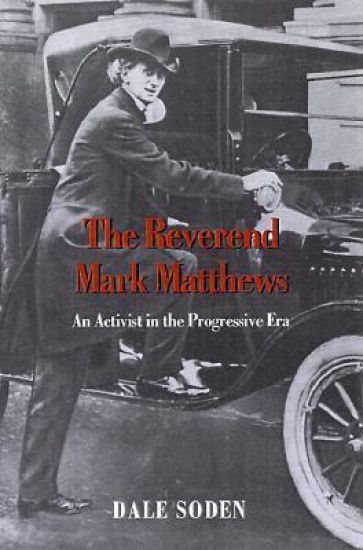
The Reverend Mark Matthews

The Reverend Mark Matthews

Dale E. Soden

University of Washington Press
2000
sidottu
When the Reverend Mark Allison Matthews died in February 1940, thousands of mourners gathered at a Seattle church to pay their final respects. The Southern-born Presbyterian came to Seattle in 1902. He quickly established himself as a city leader and began building a congregation that was eventually among the nation's largest, with nearly 10,000 members. Throughout his career, he advocated Social Christianity, a blend of progressive reform and Christian values, as a blueprint for building a morally righteous community.In telling Matthews's story, Dale Soden presents Matthews's multiple facets: a Southern-born, fundamentalist proponent of the Social Gospel; a national leader during the tumultuous years of schism within the American Presbyterian church; a social reformer who established day-care centers, kindergartens, night classes, and soup kitchens; a colorful figure who engaged in highly public and heated disputes with elected officials. Much of the controversy that surrounded Matthews centered on the proper relationship between church and state — an issue that is still hotly debated.
With Honor

With Honor

Dale Van Atta; Gerald R. Ford

University of Wisconsin Press
2008
sidottu
In 1968, at the peak of the Vietnam War, centrist Congressman Melvin Laird (R-WI) agreed to serve as Richard Nixon's secretary of defense. It was not, Laird knew, a move likely to endear him to the American public - but as he later said, ""Nixon couldn't find anybody else who wanted the damn job."" For the next four years, Laird deftly navigated the morass of the war he had inherited. Lampooned as a ""missile head,"" but decisive in crafting an exit strategy, he doggedly pursued his program of Vietnamization, initiating the withdrawal of U.S. military personnel and gradually ceding combat responsibilities to South Vietnam. In fighting to bring the troops home faster, pressing for more humane treatment of POWs, and helping to end the draft, Laird employed a powerful blend of disarming midwestern candor and Washington savvy, as he sought a high moral road bent on Nixon's oft-stated (and politically instrumental) goal of peace with honor.The first book ever to focus on Laird's legacy, this authorized biography reveals his central and often unrecognized role in managing the crisis of national identity sparked by the Vietnam War - and the challenges, ethical and political, that confronted him along the way. Drawing on exclusive interviews with Laird, Henry Kissinger, Gerald Ford, and numerous others, author Dale Van Atta offers a sympathetic portrait of a man striving for open government in an atmosphere fraught with secrecy. Van Atta illuminates the inner workings of high politics: Laird's behind-the-scenes sparring with Kissinger over policy, his decisions to ignore Nixon's wilder directives, his formative impact on arms control and health care, his key role in the selection of Ford for vice president, his frustration with the country's abandonment of Vietnamization, and, in later years, his unheeded warning to Donald Rumsfeld that ""it's a helluva lot easier to get into a war than to get out of one.
The Religious Origins of the French Revolution

The Religious Origins of the French Revolution

Dale K. Van Kley

Yale University Press
2000
pokkari
Although the French Revolution is associated with efforts to dechristianize the French state and citizens, it actually had long-term religious—even Christian—origins, claims Dale Van Kley in this controversial new book. Looking back at the two and a half centuries that preceded the revolution, Van Kley explores the diverse, often warring religious strands that influenced political events up to the revolution.Van Kley draws on a wealth of primary sources to show that French royal absolutism was first a product and then a casualty of religious conflict. On the one hand, the religious civil wars of the sixteenth century between the Calvinist and Catholic internationals gave rise to Bourbon divine-right absolutism in the seventeenth century. On the other hand, Jansenist-related religious conflicts in the eighteenth century helped to "desacralize" the monarchy and along with it the French Catholic clergy, which was closely identified with Bourbon absolutism. The religious conflicts of the eighteenth century also made a more direct contribution to the revolution, for they left a legacy of protopolitical and ideological parties (such as the Patriot party, a successor to the Jansenist party), whose rhetoric affected the content of revolutionary as well as counterrevolutionary political culture. Even in its dechristianizing phase, says Van Kley, revolutionary political culture was considerably more indebted to varieties of French Catholicism than it realized.
The Corinthian Body

The Corinthian Body

Dale B. Martin

Yale University Press
1999
pokkari
In this intriguing discussion of Paul's first letter to the Corinthians, Dale Martin contends that Paul's various disagreements with the Corinthians were the result of a fundamental conflict over the ideological construction of the human body.According to Martin, most Corinthian Christians and Paul himself saw the body as an entity that could be permeated by different pollutions. Other members of the Corinthian church, however, viewed the body as hierarchical—as a microcosm of the universe—and were not particularly concerned about body boundaries or pollution. These differing views of the human body (and also of the church as the body of Christ) led to differing opinions on a variety of subjects—including the role of rhetoric and philosophy in a hierarchical society, the eating of meat sacrificed to idols, prostitution, sexual desire and marriage, and the resurrection of the body. Martin explores these conflicts by drawing on ancient medical writings, modern anthropological approaches, and feminist and ideological methods of critical analysis. He shows how Paul's understanding of the body prevailed among the less well-educated inhabitants of the Roman Empire, who occupied relatively low socioeconomic levels. The minority who espoused the ideas of hierarchy, on the other hand, were usually of higher social status and were better educated. And it was along these same class lines, Martin argues, that the Corinthian church itself was divided.