Kirjojen hintavertailu. Mukana 12 016 292 kirjaa ja 12 kauppaa.

Kirjahaku

Etsi kirjoja tekijän nimen, kirjan nimen tai ISBN:n perusteella.

1000 tulosta hakusanalla Dan Bosserman

Pembuatan dan Uji Kelayakan Media Pembelajaran Berbasis Komputer
Penelitian ini bertujuan untuk membuat media pembelajaran materi Unsur, Senyawa dan Campuran dalam bentuk CD untuk siswa SMP kelas VII. Uji coba media dilakukan di MTs Negeri 3 Medan dengan jumlah sampel 33 siswa . Alat pengumpul data yang digunakan berupa angket evaluasi media pembelajaran yang diberikan kepada siswa, guru dan dosen. Angket evaluasi media untuk siswa berisi 20 butir pernyataan sedangkan angket evaluasi media untuk dosen dan guru berisi 13 butir pernyataan. Tingkat kelayakan media dapat diketahui dengan rumus kelayakan media. Media pembelajaran dalam bentuk CD dapat dibuat dengan menggunakan software utama Macromedia Flash 8 Professional. Software pendukung antara lain Sothink SWF Decompiler .Tahapan rancangan media yang dilakukan yaitu (1) analisis materi Unsur, Senyawa dan Campuran dari silabus KTSP, (2) penyusunan perekayasaan pedagogis, (3) pembuatan media pembelajaran dalam bentuk CD, (4) uji kelayakan rancangan media, (5) perbaikan rancangan media, (6) analisis data, (7) kesimpulan.
???? The Dan Avenue Culture in Journey to the West

???? The Dan Avenue Culture in Journey to the West

China National Publications Import Export C
2023
pokkari
"《西游记》不仅是古代四大名著之一,唐僧师徒西天取经跌宕起伏的惊险故事广为人知,背后所反映的社会面貌令人唏嘘不已。其实,丹道才是他的灵魂! 内容简介中华道文化的精髓是丹道文化,虽然自古有无数道书丹经,但都隐喻难知。《西游记》是以文学艺术的形式阐述丹道养生文化,又是另一种隐喻。两者皆难知之。而现代人的认知方式、结构、内容、表达都与古人不同,因此解读《西游记》的丹道含义就要求解读者不仅要对中华传统丹道养生文化有深厚的积淀,同时还要对《西游记》文本所隐含的丹道意象做出准确的解读,并与传统丹道文化做出关联性解读。《西游丹旨》是以现代人的文化视角,运用现当代人能够理解的理论架构,语言表达方式来阐释《西游记》所蕴含的传统丹道养生文化。便于当代读者理解和认同。是依据传统丹道养生文化,运用现代文化的理念和语言对《西游记》的解构与重构。《西游丹旨》重点阐述《西游记》与丹道文化的内在逻辑关系,即《西游记》的演义过程与丹道修持程序之间的对应关系。同时也将《西游记》的情节、场景、人物、语言与丹道修持的原理、原则、策略、方法、手段、重点、难点以及解决方案,进行一一对应的注解,使读者能够清晰,准确、轻松、有趣的理解《西游记》所蕴含的丹道养生文化。认识到《西游记》所承载的丹道养生文化价值。彰显《西游记》作者一片慈悯之心,读者也必将受益。作者简介徐晖,号丹明,男,生于1968年,北京人,毕业于北京师范大学心理学专业。师从陈先生等著名丹学大师研习道学文化,尤其是丹道一脉见长。从事中华丹道养生文化研究三十年,故有今日之《西游丹旨》,距上一本类似的文献《西游原旨》,已过去200多年。作者致力于以现代文化视角探索、研究、写作、传播中华道文化,在传统文化方面有成就的学者。
Sigøjner Dan

Sigøjner Dan

Bjarne Kim Pedersen

Forlaget Ravnerock
2011
nidottu
Som lærer/pædagog har jeg selv hørt de unge med en anden etnisk baggrund fortælle om problemerne. Mærke hvor ondt det gør på den enkelte, når de bliver udsat for racismen i Danmark. Vi må her i landet erkende, at vi ikke kan få plukket vores jordbær, uden der følger mennesker med. Mennesker som ligner os og som er forskellige. Lige som du og jeg er det. Historien om pinden og lorten har jeg selv brugt, som en sjov bemærkning blandt en gruppe drenge. Og når jeg tager den med i historien er det sikkert også som en slags pædagogisk selvransagelse. Vi bør nok som voksne, der arbejder med andre hver dag kigge i spejlet og se, hvad det er vi selv gør! Samtidig er det også et ansigt i den dæmoniserende debat, hvor DF kandidater laver valgvideoer med polsktalende hjemmerøvere. Hvor vi taler om grænsebomme for at holde kriminelle østbander ude af landet. Hvor Danmark isolerer sig som en 'sig selv nok nation' i en globaliseret verden. I bogen følger vi den unge rumæner Dan. Han forsøger at få en tilværelse i Danmark. Hans drøm er at få et arbejde og klare sig. Men det er svært når han ofte møder afvisning, racisme og ligegyldighed. Men der findes også varme her i landet. Bogen er skrevet som nem-bog, så den også kan læses af folk, der læser dansk langsommere og sikkert ikke er de store bogslugere.
Meer dan duizend dagen

Meer dan duizend dagen

L. Kooiman

Bohn Stafleu van Loghum
2008
nidottu
In Meer dan duizend dagen, belevenissen van een huisarts in opleiding zijn columns uit de opleidingstijd van de jonge arts Liesbeth Kooiman gebundeld. Het gaat om alledaagse verhalen uit de praktijk van een beginnend arts, die zich via diverse werkplekken het vak van huisarts eigen maakt. Daarbij geholpen door inspirerende collega's en welwillende patiënten. Herkenbaar voor artsen en tegelijkertijd toegankelijk voor de belangstellende leek; een bundel voor iedereen die zich wel eens in de spreekkamer van een huisarts bevindt.De columns verschenen eerder in MedNet Magazine.
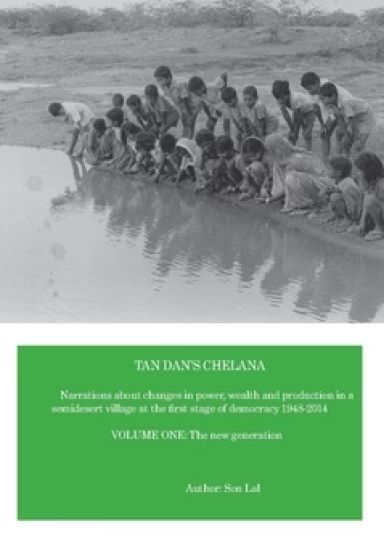
Tan Dan's chelana 1948-2014 : narrations about changes in power, wealth and production in a semidesert village at the first stage of democracy. Volume one, The new generation
Tan Dan was a farmer in Rajasthan who lived from 1943 to 2021. He was a friend of the author. Persons, places and events have been described from Tan Dan’s angle in this book. His photos and narrations may have different interpretations by villagers with other attitudes and experience. Many names are fictive, as the book is an attempt to understand events and behaviour in a historical context without accusing individuals. Chelana (fictive name) was the village of Tan Dan and his brothers in Rajasthan, northwestern India. Their clan had been cattlebreeders with a nomadic origin. They managed to improve their living conditions due to a number of lucky coincidences. During those eventful years around 1950 India got independence, the feudal rule in Rajasthan was abolished, and the young brothers found water in the limestone cavities far below their feet. Their land had all of a sudden become a source of wealth and hope. They became the spearheads in the new democratic era, which offered new opportunities to dynamic villagers. To a new generation in the hot semidesert, which for generations had offered nothing but droughts and famines. Tan Dan’s region had got the name Marvar, which means the region of death. A dangerous place to pass for the transport caravans both due to water shortage and the risk of robbery. Dacoit gangs in the wilderness stopped being a harassment at about the same time as Marvari villagers got their first general election and the farmers at Chelana found out how to operate deep mechanized wells.
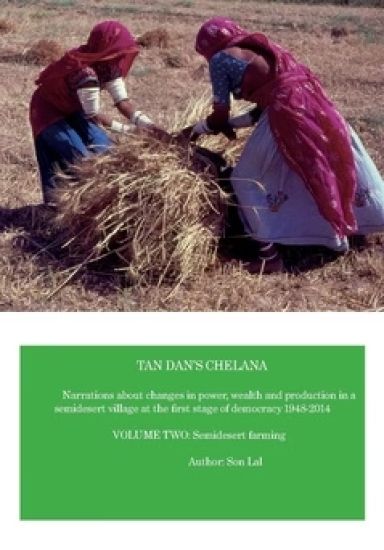
Tan Dan's chelana 1948-2014 : narrations about changes in power, wealth and production in a semidesert village at the first stage of democracy. Volume two, Semidesert farming
Chelana is Tan Dan’s village in Rajasthan, northwestern India. Tan Dan took a keen interest in the traditional farm life of his neighbours, and this volume starts with his narrations about their work routines. His own experience was more versatile than that of most other Rajasthani villagers, as shown in the stories about his participitation in agricultural development. He learnt pig rearing, poultry work, establishing grape vineyards and pomegranate orchards. From scientists at agricultural universities he learnt hybrid pearl millet cultivation for seed farms, and he were among the first farmers in his part of Rajasthan who started dwarf wheat cultivation. It was a part of the Green Revolution, which made it possible for India to become self-sufficient in foodgrain production, and ended the era of famines and mass starvation. The agronomic events which helped to make that change possible in the Chelana area are told about in the latter parts of the book.
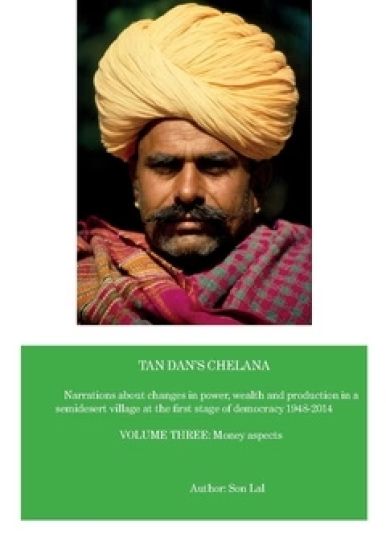
Tan Dan's chelana 1948-2014 : narrations about changes in power, wealth and production in a semidesert village at the first stage of democracy. Volume three, Money aspects
Chelana was Tan Dan’s native village in Rajasthan, northwestern India and money is the theme of the third volume of the book Tan Dan's Chelana. A book which describes how the farmer Tan Dan experienced changes in his social environment during the period 1948 to 2014. Volume Three focus on the financial changes in the Chelana area after the introduction of mechanical irrigation in deep wells. The start of cooperative societies and rural banks resulted in overspending and debts for the inexperienced waterlord farmers. The book shows how they tried to cope with these for them unexpected problems. The support of cooperative societies for social upliftment was as important to Tan Dan as it was to his friend Binj Nath, the landlord farmer shown on the front cover. In this volume there are anecdotes about Binj Nath’s dramatic life experience and the ups and downs of Tan Dan’s relatives, when they tried to finance the expanding activities of their big waterlord farm. Their relation to new rural banks and old moneylenders would have been better, if they had been less optimistic in their loan repayment plans. Tan Dan argued that the professional moneylenders got a too large share of the wealth produced on the Chelana waterlord farms. Some village Baniyas also earned money by taking care of savings of shepherds migrating to other regions a part of the year. Although poor villagers had been badly exploited by moneylenders for generations, the attitude of poor villagers to the business class was more positive than might be expected. That was Tan Dan’s feelings after getting scoldings from many villagers for supporting the tax department in a raid for finding hidden wealth at some merchant homes.