

Kirjahaku
Etsi kirjoja tekijän nimen, kirjan nimen tai ISBN:n perusteella.
1000 tulosta hakusanalla David L. Goetsch

Enterprise Risk Management in Finance is a guide to measuring and managing Enterprise-wide risks in financial institutions. Financial institutions operate in a unique manner when compared to other businesses. They are, by the nature of their business, highly exposed to risk at every level, and indeed employ their own risk management functions to manage many of these risks. However, financial firms are also highly exposed at enterprise level. Traditional approaches and frameworks for ERM are flawed when applied to banks, asset managers or insurance houses, and a different approach is needed. This new book provides a comprehensive, technical guide to ERM for financial institutions. Split into three parts, it first sets the scene, putting ERM in the context of finance houses. It will examine the financial risks already inherent in banking, and then insurance operations, and how these need to be accounted for at a floor and enterprise level. The book then provides the necessary tools to implement ERM in these environments, including performance analysis, credit analysis and forecasting applications. Finally, the book provides real life cases of successful and not so successful ERM in financial institutions. Technical and rigorous, this book will be a welcome addition to the literature in this area, and will appeal to risk managers, actuaries, regulators and senior managers in banks and financial institutions.

Offers a practical introduction to the various basic methods of assessing the properties of soil. Each method is explained in a concise and accessible manner, providing useful guidance on how each method might be used in a practical situation.
'Bottom-Line Call Center Management breaks new ground by addressing key skills and techniques in assessing and implementing effective management practices to maximize the human and capital resources at the call center manager's disposal. Drawing on the author's unique data sets and years of research experience in the industry, 'Bottom-Line Call Center Management' helps call center managers evaluate their current status, implement cost-effective changes, and measure results of their changes to ensure a culture of accountability within the call center at all levels increasing the bottom line. The processes include an evaluation of current customer service representatives, defining, delimiting and assessing the labor shed of the center, and exploring the customer service representative's unique skills and leveraging those skills into a unique and dynamic work environment. Likewise, the process also determines the learning skills and competencies necessary to meet and exceed the basic requirements for all call centers. Furthermore, each step has a pre, in-process, and post evaluation to ensure projects are progressing according to plan. Lastly, all evaluations are measured against the bottom line through a return on investment (ROI) model. The framework for this book uses the culture of call centers, defined and lived through the customer service representatives, as the lens to view all processes, measurements, accountability and return on investment. This framework is critical since there has been much emphasis on technology-as-a-solution which treats the employees as a hindrance instead of the enablers of positive change. Likewise, customer service representatives eventually act as strong determinants of success with the call center and thus the bottom line.

Digital Literary Studies
David L. Hoover; Jonathan Culpeper; Kieran O'Halloran
Routledge
2016
nidottu
Digital Literary Studies presents a broad and varied picture of the promise and potential of methods and approaches that are crucially dependent upon the digital nature of the literary texts it studies and the texts and collections of texts with which they are compared. It focuses on style, diction, characterization, and interpretation of single works and across larger groups of texts, using both huge natural language corpora and smaller, more specialized collections of texts created for specific tasks, and applies statistical techniques used in the narrower confines of authorship attribution to broader stylistic questions. It addresses important issues in each of the three major literary genres, and intentionally applies different techniques and concepts to poetry, prose, and drama. It aims to present a provocative and suggestive sample intended to encourage the application of these and other methods to literary studies. Hoover, Culpeper, and O’Halloran push the methods, techniques, and concepts in new directions, apply them to new groups of texts or to new questions, modify their nature or method of application, and combine them in innovative ways.
Often described as a public policy “bible,” Weimer and Vining remains the essential primer it ever was. Now in its sixth edition, Policy Analysis provides a strong conceptual foundation of the rationales for and the limitations to public policy. It offers practical advice about how to do policy analysis, but goes a bit deeper to demonstrate the application of advanced analytical techniques through the use of case studies. Updates to this edition include:A chapter dedicated to distinguishing between policy analysis, policy research, stakeholder analysis, and research about the policy processAn extensively updated chapter on policy problems as market and governmental failure that explores the popularity of Uber and its consequencesThe presentation of a property rights perspective in the chapter on government supply to help show the goal tensions that arise from mixed ownershipAn entirely new chapter on performing analysis from the perspective of a public agency and a particular program within the agency’s portfolio: public agency strategic analysis (PASA)A substantially rewritten chapter on cost–benefit analysis, to better prepare students to become producers and consumers of the types of cost–benefit analyses they will encounter in regulatory analysis and social policy careersA new introductory case with a debriefing that provides advice to help students immediately begin work on their own projectsPolicy Analysis: Concepts and Practices remains a comprehensive, serious, and rich introduction to policy analysis for students in public policy, public administration, and business programs.
Often described as a public policy “bible,” Weimer and Vining remains the essential primer it ever was. Now in its sixth edition, Policy Analysis provides a strong conceptual foundation of the rationales for and the limitations to public policy. It offers practical advice about how to do policy analysis, but goes a bit deeper to demonstrate the application of advanced analytical techniques through the use of case studies. Updates to this edition include:A chapter dedicated to distinguishing between policy analysis, policy research, stakeholder analysis, and research about the policy processAn extensively updated chapter on policy problems as market and governmental failure that explores the popularity of Uber and its consequencesThe presentation of a property rights perspective in the chapter on government supply to help show the goal tensions that arise from mixed ownershipAn entirely new chapter on performing analysis from the perspective of a public agency and a particular program within the agency’s portfolio: public agency strategic analysis (PASA)A substantially rewritten chapter on cost–benefit analysis, to better prepare students to become producers and consumers of the types of cost–benefit analyses they will encounter in regulatory analysis and social policy careersA new introductory case with a debriefing that provides advice to help students immediately begin work on their own projectsPolicy Analysis: Concepts and Practices remains a comprehensive, serious, and rich introduction to policy analysis for students in public policy, public administration, and business programs.

Although not much is known about the three Stuart plays in this edition, which was first published in 1987, we can ascribe them to one of the English universities, and each is indicative of a distinctly different influence on the Renaissance academic drama. Heteroclitanomalonomia is part of a minor subgenre referred to as the academic play. It demonstrates the predominance of language or rhetoric studies in the period and its very subject is of purely academic interest. Gigantomachia displays the continuing interest of the Renaissance in classical mythology. And A Christmas Messe follows a more homely tradition, a farcical personification of the mundane. This title will be of interest to students of English Literature, Drama and Performance.
Although not much is known about the three Stuart plays in this edition, which was first published in 1987, we can ascribe them to one of the English universities, and each is indicative of a distinctly different influence on the Renaissance academic drama. Heteroclitanomalonomia is part of a minor subgenre referred to as the academic play. It demonstrates the predominance of language or rhetoric studies in the period and its very subject is of purely academic interest. Gigantomachia displays the continuing interest of the Renaissance in classical mythology. And A Christmas Messe follows a more homely tradition, a farcical personification of the mundane. This title will be of interest to students of English Literature, Drama and Performance.

Quakers exist neither for themselves nor by themselves alone. Therefore, they ought not to construct Quaker theologies but rather quaker (verb) theology-to add their fingerprints to the larger conversation. David Johns contributes to a Quaker way of thinking theologically but also invites others to think through their denominational identities into a more expansive and ecumenical space. Placing contemporary Quaker thought in conversation with the wider theological tradition, Johns shows that Quakers have something important to contribute to the wider Christian family and he demonstrates how other groups may enter this conversation as well. Some themes explored may not spring immediately to mind as ’Quaker themes’-the saints, C.S. Lewis, sacraments, ritual, and Shakespeare-but Johns argues these are precisely the kind of issues that require Quaker fingerprints-that require quakering.
First published in 1979, this book traces comedy of manners from the 1660s to the then present — a scope beyond the traditional focus on the Restoration and early twentieth century. It uncovers an underestimated subversive potential and socially critical force in this particularly English dramatic form, emphasising the distinctive subjects and style that distinguish it from more general forms of witty social satire. The author discusses the major comic dramatists of the post-Restoration period; reassesses the significance of Sheridan, Wilde and Coward; and examines the continuation of the tradition in modern writers. This book will be of interest to students of English literature and drama.
First published in 1979, this book traces comedy of manners from the 1660s to the then present — a scope beyond the traditional focus on the Restoration and early twentieth century. It uncovers an underestimated subversive potential and socially critical force in this particularly English dramatic form, emphasising the distinctive subjects and style that distinguish it from more general forms of witty social satire. The author discusses the major comic dramatists of the post-Restoration period; reassesses the significance of Sheridan, Wilde and Coward; and examines the continuation of the tradition in modern writers. This book will be of interest to students of English literature and drama.
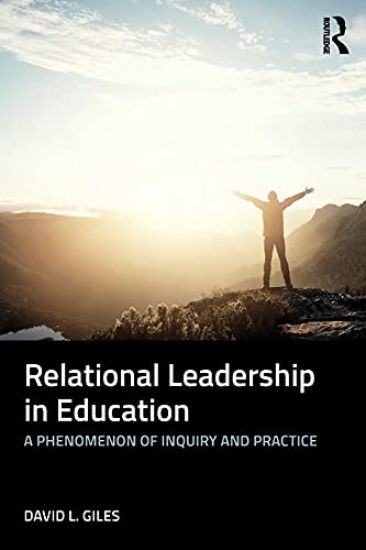
When is leadership not relational? When is education not relational? When is life not relational? Relationships always matter to our living, educating and leading. Relational Leadership in Education considers this ‘Relational Leadership’ within the context of education, critiquing the current ideological ‘context’ and contemporary understandings of its influence. Employing a phenomenological approach, this book explores the relational nature of education, Relational Leadership, and the organizational culture to provide a more sophisticated exploration of practice-based wisdom. It offers an extensive range of activities for further thinking on the experiential nature of Relational Leadership, grouped around a number of themes: Relational Leadership and sensibilities; organizational culture; professional development; curriculum, pedagogy and assessment; and the reconstruction of a postgraduate Educational Leadership and Management programme for experienced, emergent and aspiring leaders.‘Relational Leadership’ is not about describing yet another style of leadership but rather about a relational way of being in leadership that utilizes refined relational sensibilities. ‘Relational Leadership’ is also a reminder of what is critical in a leader’s practice — leadership is always relational, and relationships are the essence of leadership.
When is leadership not relational? When is education not relational? When is life not relational? Relationships always matter to our living, educating and leading. Relational Leadership in Education considers this ‘Relational Leadership’ within the context of education, critiquing the current ideological ‘context’ and contemporary understandings of its influence. Employing a phenomenological approach, this book explores the relational nature of education, Relational Leadership, and the organizational culture to provide a more sophisticated exploration of practice-based wisdom. It offers an extensive range of activities for further thinking on the experiential nature of Relational Leadership, grouped around a number of themes: Relational Leadership and sensibilities; organizational culture; professional development; curriculum, pedagogy and assessment; and the reconstruction of a postgraduate Educational Leadership and Management programme for experienced, emergent and aspiring leaders.‘Relational Leadership’ is not about describing yet another style of leadership but rather about a relational way of being in leadership that utilizes refined relational sensibilities. ‘Relational Leadership’ is also a reminder of what is critical in a leader’s practice — leadership is always relational, and relationships are the essence of leadership.

This fourteenth edition of Law Made Simple marks the fiftieth year of the publication for one of the best-selling UK Law books. It is the perfect introduction to the English Legal System, and combines an overview of both the legislation and case law relating to all the foundation subjects, including Contract, Torts, Land, Trusts, Criminal, Public and EU. Fully updated, this book acts as a clear and concise guide for students studying law at any level, and takes into account developments across the curriculum. It is suitable for students studying law at A-Level, or as an excellent background for students thinking of embarking on the study of law or related course at degree level.

This fourteenth edition of Law Made Simple marks the fiftieth year of the publication for one of the best-selling UK Law books. It is the perfect introduction to the English Legal System, and combines an overview of both the legislation and case law relating to all the foundation subjects, including Contract, Torts, Land, Trusts, Criminal, Public and EU. Fully updated, this book acts as a clear and concise guide for students studying law at any level, and takes into account developments across the curriculum. It is suitable for students studying law at A-Level, or as an excellent background for students thinking of embarking on the study of law or related course at degree level.

From Bullets to Ballots considers non-state Muslim organizations at different stages of abandoning violence and pursuing their goals through a political process. Some have successfully made the transition. Others are in mid-stream. Some have tried but backtracked, splintered, or simply abandoned such efforts, reverting to pathological violence. Many groups could be case studies, but Phillips has selected the Muslim Brotherhood of Egypt, Hamas, Hezbollah, the Kurdistan Workers Party, the Jammu and Kashmir Liberation Front, and the Free Aceh Movement, because they cover the spectrum.This book deals with political strategies for moderating violent Muslim movements by engaging them in the political process. In strong criticism of the Bush administration, Phillips notes that the push for democracy may have increased conflict by giving violent groups "the ballot" which they use to gain power. Focusing on non-state Muslim organizations, From Bullets to Ballots considers the relationship between ideology and policy. Phillips discusses their origin, ideology, structure, and leadership and examines financing, activities, and communications. He assesses the groups' commitment to elections and its acceptance of the responsibility that comes with governance.From Bullets to Ballots draws on twenty years of Phillips' experience working democratization and conflict prevention in the Middle East, the Balkans, the Caucasus, and South Asia. His recommendations are primarily directed to the United States because he believes the United States should be a leader in promoting democracy around the world. At the same time, he is convinced that the United States must tread softly, or run the risk of fomenting further violence, undermining future democratic development, and setting back its own national interests. This is a provocative, informed, and balanced analysis of the theories behind current policies.
Altheide's new book advances the argument set in motion some years ago with 'Media Logic' and continued in 'Media Worlds in the Postjournalism Era:' that in our age, information technology and the communication environments it posits have affected the private and the social spheres of all our power relationships, redefining the ground rules for social life and concepts such as freedom and justice. Articulated through an interactionist and non-deterministic focus, 'An Ecology of Communication' offers a distinctive perspective for understanding the impact of information technology, communication formats, and social activities in the new electronic environment. As more routines, rituals, and activities incorporate such technologies within their organizational cultures, new sorts of activities are added and previous ones are changed according to an underlying logic explored in these pages. Various chapters illustrate some of these altered and redefined organizational cultures: bureaucracy, the mass media, computer formats, war, surveillance, and testing, among others.
The creative use of fear by news media and social control organizations has produced a "discurse of fear" - the awareness and expection that danger and risk are lurking everywhere. Case studies illustrates how certain organizations and social institutions benefit from the explotation of such fear construction. One social impact is a manipulated public empathy: We now have more "victims" than at any time in our prior history. Another, more troubling resutl is the role we have ceded to law enforcement and punishment: we turn ever more readily to the state and formal control to protect us from what we fear. This book attempts through the marshalling of significant data to interrupt that vicious cycle of fear discourse.

With a few notable exceptions, sociological studies of poor, native-born, non-ethnic whites in rural areas are rare. This book corrects this oversight with an ethnographic study of a small, poor, white, heartland community that the author calls "Potter Addition." The community consists of some 100 families and is located on the rural-urban fringe of a medium-sized Midwestern city.Poverty, Family, and Kinship in a Heartland Community is the story of three generations of rural families who, one after another, have been driven from the land during the last seventy-five years. Harvey argues against the grain of a number of recent studies that "Potter Addition's" poverty, like much modern poverty, has its origins in the productive contradictions of late capitalism. It is not the result of some moral or motivational defect of the poor themselves. At the same time he shows, even as they struggle to survive their uncertain niche and learn how to adapt, these families play an active role in reproducing the everyday material and cultural details of their poverty from the substance of their daily experiences.Working from this premise, Harvey provides a detailed ethnographic description of "Potter Addition" and its people. The volume focuses especially on the family and kinship structures that have developed in "Potter Addition" and shows how they fit into the overall response of the poor to their uncertain and unpredictable class situation. This is a unique effort by a knowledgeable researcher who, in this work, boldly steps outside conventional realms of discourse in sociology and geography.