Kirjojen hintavertailu. Mukana 11 627 362 kirjaa ja 12 kauppaa.

Kirjahaku

Etsi kirjoja tekijän nimen, kirjan nimen tai ISBN:n perusteella.

1000 tulosta hakusanalla David L. Minter

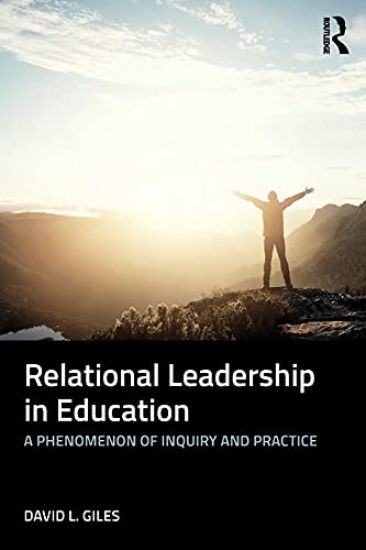
Relational Leadership in Education

Relational Leadership in Education

David L. Giles

Routledge
2018
nidottu
When is leadership not relational? When is education not relational? When is life not relational? Relationships always matter to our living, educating and leading. Relational Leadership in Education considers this ‘Relational Leadership’ within the context of education, critiquing the current ideological ‘context’ and contemporary understandings of its influence. Employing a phenomenological approach, this book explores the relational nature of education, Relational Leadership, and the organizational culture to provide a more sophisticated exploration of practice-based wisdom. It offers an extensive range of activities for further thinking on the experiential nature of Relational Leadership, grouped around a number of themes: Relational Leadership and sensibilities; organizational culture; professional development; curriculum, pedagogy and assessment; and the reconstruction of a postgraduate Educational Leadership and Management programme for experienced, emergent and aspiring leaders.‘Relational Leadership’ is not about describing yet another style of leadership but rather about a relational way of being in leadership that utilizes refined relational sensibilities. ‘Relational Leadership’ is also a reminder of what is critical in a leader’s practice — leadership is always relational, and relationships are the essence of leadership.

Law Made Simple

Law Made Simple

David L. A. Barker

Routledge
2020
nidottu
This fourteenth edition of Law Made Simple marks the fiftieth year of the publication for one of the best-selling UK Law books. It is the perfect introduction to the English Legal System, and combines an overview of both the legislation and case law relating to all the foundation subjects, including Contract, Torts, Land, Trusts, Criminal, Public and EU. Fully updated, this book acts as a clear and concise guide for students studying law at any level, and takes into account developments across the curriculum. It is suitable for students studying law at A-Level, or as an excellent background for students thinking of embarking on the study of law or related course at degree level.
Law Made Simple

Law Made Simple

David L. A. Barker

Routledge
2020
sidottu
This fourteenth edition of Law Made Simple marks the fiftieth year of the publication for one of the best-selling UK Law books. It is the perfect introduction to the English Legal System, and combines an overview of both the legislation and case law relating to all the foundation subjects, including Contract, Torts, Land, Trusts, Criminal, Public and EU. Fully updated, this book acts as a clear and concise guide for students studying law at any level, and takes into account developments across the curriculum. It is suitable for students studying law at A-Level, or as an excellent background for students thinking of embarking on the study of law or related course at degree level.
From Bullets to Ballots

From Bullets to Ballots

David L. Phillips

Routledge
2017
nidottu
From Bullets to Ballots considers non-state Muslim organizations at different stages of abandoning violence and pursuing their goals through a political process. Some have successfully made the transition. Others are in mid-stream. Some have tried but backtracked, splintered, or simply abandoned such efforts, reverting to pathological violence. Many groups could be case studies, but Phillips has selected the Muslim Brotherhood of Egypt, Hamas, Hezbollah, the Kurdistan Workers Party, the Jammu and Kashmir Liberation Front, and the Free Aceh Movement, because they cover the spectrum.This book deals with political strategies for moderating violent Muslim movements by engaging them in the political process. In strong criticism of the Bush administration, Phillips notes that the push for democracy may have increased conflict by giving violent groups "the ballot" which they use to gain power. Focusing on non-state Muslim organizations, From Bullets to Ballots considers the relationship between ideology and policy. Phillips discusses their origin, ideology, structure, and leadership and examines financing, activities, and communications. He assesses the groups' commitment to elections and its acceptance of the responsibility that comes with governance.From Bullets to Ballots draws on twenty years of Phillips' experience working democratization and conflict prevention in the Middle East, the Balkans, the Caucasus, and South Asia. His recommendations are primarily directed to the United States because he believes the United States should be a leader in promoting democracy around the world. At the same time, he is convinced that the United States must tread softly, or run the risk of fomenting further violence, undermining future democratic development, and setting back its own national interests. This is a provocative, informed, and balanced analysis of the theories behind current policies.
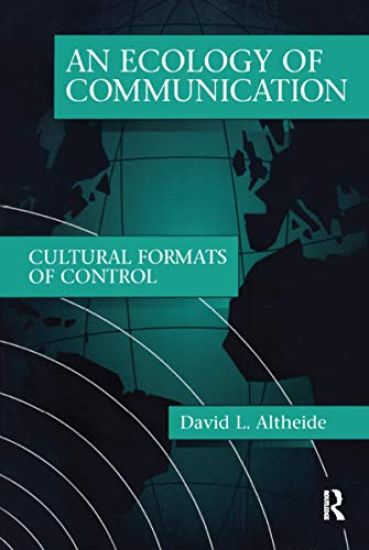
Ecology of Communication

Ecology of Communication

David L. Altheide

Routledge
2020
sidottu
Altheide's new book advances the argument set in motion some years ago with 'Media Logic' and continued in 'Media Worlds in the Postjournalism Era:' that in our age, information technology and the communication environments it posits have affected the private and the social spheres of all our power relationships, redefining the ground rules for social life and concepts such as freedom and justice. Articulated through an interactionist and non-deterministic focus, 'An Ecology of Communication' offers a distinctive perspective for understanding the impact of information technology, communication formats, and social activities in the new electronic environment. As more routines, rituals, and activities incorporate such technologies within their organizational cultures, new sorts of activities are added and previous ones are changed according to an underlying logic explored in these pages. Various chapters illustrate some of these altered and redefined organizational cultures: bureaucracy, the mass media, computer formats, war, surveillance, and testing, among others.
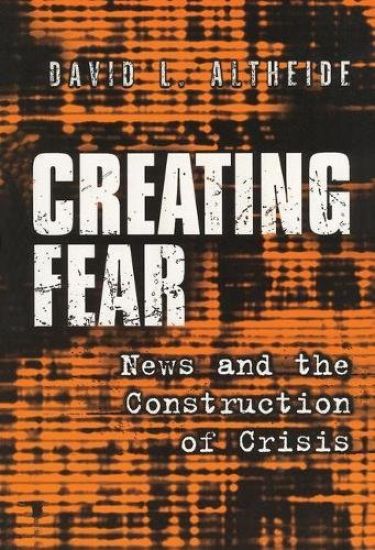
Creating Fear

Creating Fear

David L. Altheide

Routledge
2017
sidottu
The creative use of fear by news media and social control organizations has produced a "discurse of fear" - the awareness and expection that danger and risk are lurking everywhere. Case studies illustrates how certain organizations and social institutions benefit from the explotation of such fear construction. One social impact is a manipulated public empathy: We now have more "victims" than at any time in our prior history. Another, more troubling resutl is the role we have ceded to law enforcement and punishment: we turn ever more readily to the state and formal control to protect us from what we fear. This book attempts through the marshalling of significant data to interrupt that vicious cycle of fear discourse.
Poverty, Family, and Kinship in a Heartland Community
With a few notable exceptions, sociological studies of poor, native-born, non-ethnic whites in rural areas are rare. This book corrects this oversight with an ethnographic study of a small, poor, white, heartland community that the author calls "Potter Addition." The community consists of some 100 families and is located on the rural-urban fringe of a medium-sized Midwestern city.Poverty, Family, and Kinship in a Heartland Community is the story of three generations of rural families who, one after another, have been driven from the land during the last seventy-five years. Harvey argues against the grain of a number of recent studies that "Potter Addition's" poverty, like much modern poverty, has its origins in the productive contradictions of late capitalism. It is not the result of some moral or motivational defect of the poor themselves. At the same time he shows, even as they struggle to survive their uncertain niche and learn how to adapt, these families play an active role in reproducing the everyday material and cultural details of their poverty from the substance of their daily experiences.Working from this premise, Harvey provides a detailed ethnographic description of "Potter Addition" and its people. The volume focuses especially on the family and kinship structures that have developed in "Potter Addition" and shows how they fit into the overall response of the poor to their uncertain and unpredictable class situation. This is a unique effort by a knowledgeable researcher who, in this work, boldly steps outside conventional realms of discourse in sociology and geography.
Rockefeller Philanthropy and Modern Social Science
Making use of untapped resources, Seim looks at the impact of the Rockefellers, viewed through the lens of their philanthropic support of social science from 1890-1940. Focusing specifically on the Rockefeller Foundation and the Laura Spelman Rockefeller Memorial, Seim connects the family's business success with its philanthropic enterprises.
Analytical Archaeology

Analytical Archaeology

David L. Clarke

Routledge
2014
sidottu
This study was well-established as a pioneer work on archaeological methodology, the theoretical basis of all archaeological analysis whatever the period or era. The first edition of the book presented and evaluated the radical changes in methodology which derived from developments in other disciplines, such as cybernetics, computer science and geography, during the 1950s and ‘60s. It argued that archaeology was a coherent discipline with its own methods and procedures and attempted to define the entities (attributes, artefacts, types, assemblages, cultures and culture groups) rigorously and consistently so that they could be applied to archaeological data. The later edition continued the same general theory, which is unparalleled in its scope and depth, adding notes to help understanding of the advances in method and theory to support the student and professional archaeologist.Review of the original publication:"One might venture that this is the most important archaeological work for twenty or thirty years, and it will undoubtedly influence several future generations of archaeologists." The Times Literary Supplement
Analytical Archaeology

Analytical Archaeology

David L. Clarke

Routledge
2016
nidottu
This study was well-established as a pioneer work on archaeological methodology, the theoretical basis of all archaeological analysis whatever the period or era. The first edition of the book presented and evaluated the radical changes in methodology which derived from developments in other disciplines, such as cybernetics, computer science and geography, during the 1950s and ‘60s. It argued that archaeology was a coherent discipline with its own methods and procedures and attempted to define the entities (attributes, artefacts, types, assemblages, cultures and culture groups) rigorously and consistently so that they could be applied to archaeological data. The later edition continued the same general theory, which is unparalleled in its scope and depth, adding notes to help understanding of the advances in method and theory to support the student and professional archaeologist.Review of the original publication:"One might venture that this is the most important archaeological work for twenty or thirty years, and it will undoubtedly influence several future generations of archaeologists." The Times Literary Supplement
Managing Sustainable Tourism

Managing Sustainable Tourism

David L. Edgell Sr

Routledge
2016
nidottu
Managing Sustainable Tourism tackles the tough issues of tourism such as negative environmental impact and cultural degradation, and provides answers that don’t sacrifice positive economic growth. It offers practical plans for fostering harmonious relationships among local communities, the private sector, not-for-profit organizations, academic institutions, and governments at all levels as well as develops management practices and philosophies that protect natural, built, and cultural environments while reinforcing positive and orderly economic growth.Since the first edition, there have been many important developments in the field, and this second edition has been revised and updated in the following ways: Updated content to reflect issues and trends, including: impact of the internet, slow tourism, responsible tourism, pro – poor tourism and motivations of the individual touristNew and updated international case studies of successes and failures to reflect current challenges and practicesNew lecturer and student online resources including PowerPoint slides and practical scenarios. This volume provides a wealth of information and guidance on managing sustainable tourism now and in the future and will be invaluable to educators, students, developers, entrepreneurs, investors, tourism strategists, planners and policymakers.