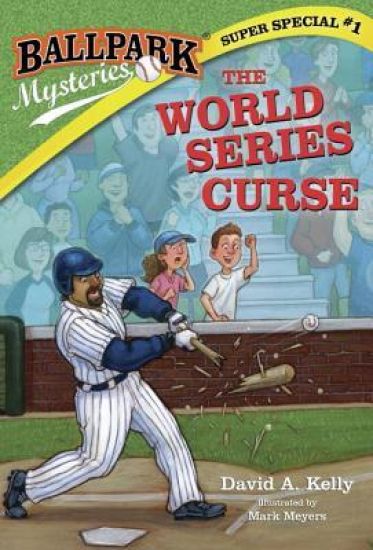
It's the BIGGEST baseball mystery yet--at the WORLD SERIES Red Sox versus Cubs. Game five. It looks like Mike and Kate are about to watch the Cubs win it all. But then someone starts messing with the team--ruining equipment, getting Cubs players in trouble, and even stirring up an old baseball curse. Now the Red Sox are coming back Who will win the ultimate baseball trophy? And can Mike and Kate make sure it's won fair and square? Ballpark Mysteries are the all-star matchup of fun sleuthing and baseball action, perfect for readers of Ron Roy's A to Z Mysteries and Matt Christopher's sports books, and younger siblings of Mike Lupica fans. Each Ballpark Mystery also features Dugout Notes, with amazing baseball facts.
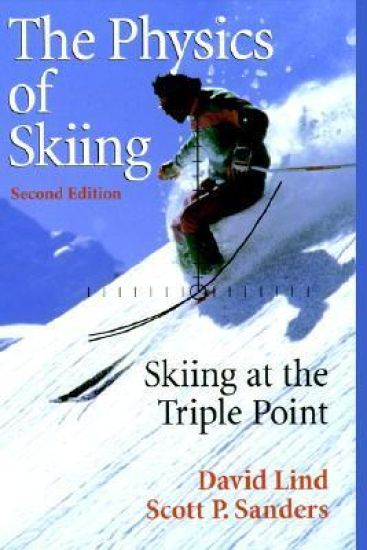
Just over ten years ago when the first drafts of this book were being written, and even more so a few years after that as it was making its way through the publication process, alpine skiing was experiencing what eventually became a complete revolution in equipment and tech nique: "shaped" or "parabolic" skis completely took over the market, and even relatively beginning skiers expected to carve graceful turns as they schussed down the slopes. Re-reading our work with an eye to revision, we have been surprised to see how our focus on the physics of skiing in the first edition al lowed us to recognize the fundamental importance of what were then quite novel changes in equipment and technique. The essence of the enhancement offered by shaped skis is their greater sidecut radius. Our original discussion (then and now in Chapters 3 and 4) of the crucial role that a ski's sidecut plays in carving a turn caused us to write, for the most part, as if the shaped ski had always been in existence. Sim ilarly, our interest in the geometry ofthe sidecut allowed us to discuss snowboards in some detail as well, for the key to their ability to "shred" down the mountain is their deep sidecut.
Naked-eye comets are far from uncommon. As a rough average, one appears every 18 months or thereabouts, and it is not very unusual to see more than two in a single year. The record so far seems to have been 2004, with a total of five comets visible without optical aid. But 2006, 1970, and 1911 were not far behind with a total of four apiece. Yet, the majority of these pass unnoticed by the general public. Most simply look like fuzzy stars with tails that are either faint or below the naked-eye threshold. The ‘classical’ comet – a bright star-like object with a long flowing tail – is a sight that graces our skies about once per decade, on average. These ‘great comets’ are surely among the most beautiful objects that we can see in the heavens, and it is no wonder that they created such fear in earlier times. Just what makes a comet ‘‘great’’ is not easy to define. It is neither just about brightness nor only a matter of size. Some comets can sport prodigiously long tails and yet not be regarded as great. Others can become very bright, but hardly anyone other than a handful of enthusiastic astronomers will ever see them. Much depends on their separation from the Sun, the intensity of the tail, and so forth.
In recent years, the discovery of new algorithms for dealing with polynomial equations, coupled with their implementation on fast inexpensive computers, has sparked a minor revolution in the study and practice of algebraic geometry. These algorithmic methods have also given rise to some exciting new applications of algebraic geometry. This book illustrates the many uses of algebraic geometry, highlighting some of the more recent applications of Gröbner bases and resultants. In order to do this, the authors provide an introduction to some algebraic objects and techniques which are more advanced than one typically encounters in a first course, but nonetheless of great utility. The book is written for nonspecialists and for readers with a diverse range of backgrounds. It assumes knowledge of the material covered in a standard undergraduate course in abstract algebra, and it would help to have some previous exposure to Gröbner bases. The book does not assume the reader is familiar with more advanced concepts such as modules. For this new edition the authors added two new sections and a new chapter, updated the references and made numerous minor improvements throughout the text.
In recent years, the discovery of new algorithms for dealing with polynomial equations, coupled with their implementation on fast inexpensive computers, has sparked a minor revolution in the study and practice of algebraic geometry. These algorithmic methods have also given rise to some exciting new applications of algebraic geometry. This book illustrates the many uses of algebraic geometry, highlighting some of the more recent applications of Gröbner bases and resultants. In order to do this, the authors provide an introduction to some algebraic objects and techniques which are more advanced than one typically encounters in a first course, but nonetheless of great utility. The book is written for nonspecialists and for readers with a diverse range of backgrounds. It assumes knowledge of the material covered in a standard undergraduate course in abstract algebra, and it would help to have some previous exposure to Gröbner bases. The book does not assume the reader is familiar with more advanced concepts such as modules. For this new edition the authors added two new sections and a new chapter, updated the references and made numerous minor improvements throughout the text.
Precision Manufacturing provides an introduction to precision engineering for manufacturing. With an emphasis on design and performance of precision machinery for manufacturing machine tool elements and structure, sources of error, precision machining processes and process models sensors for process monitoring and control, metrology, actuators, precision process planning and machine design. This book will be of interest to design engineers, quality engineers and manufacturing engineers, academics and those who may or may not have previous experience with precision manufacturing, but want to learn more.
This reference contains over 300 exercises and solutions that cover a wide variety of topics in matrix algebra. They can be used for independent study or in creating a challenging and stimulating environment that encourages active engagement in the learning process.
GEOMETRY: Plane and Fancy offers students a fascinating tour through parts of geometry they are unlikely to see in the rest of their studies while, at the same time, anchoring their excursions to the well known parallel postulate of Euclid. The author shows how alternatives to Euclid's fifth postulate lead to interesting and different patterns and symmetries. In the process of examining geometric objects, the author incorporates the algebra of complex (and hypercomplex) numbers, some graph theory, and some topology. Nevertheless, the book has only mild prerequisites. Readers are assumed to have had a course in Euclidean geometry (including some analytic geometry and some algebra) at the high school level. While many concepts introduced are advanced, the mathematical techniques are not. Singer's lively exposition and off-beat approach will greatly appeal both to students and mathematicians. Interesting problems are nicely scattered throughout the text. The contents of the book can be covered in a one-semester course, perhaps as a sequel to a Euclidean geometry course.
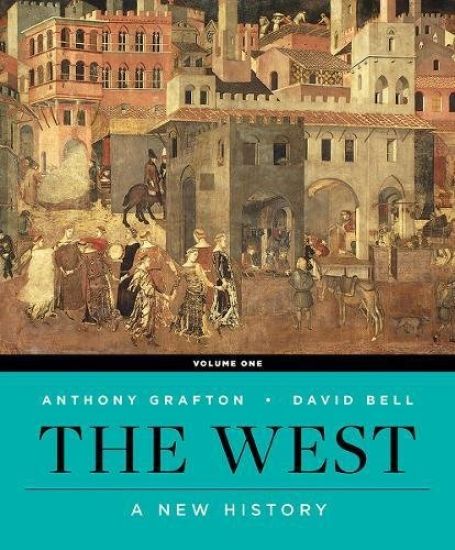
This beautifully written history recentres the West and rekindles the past in a vivid narrative crafted for beginning students. Grafton and Bell tell the epic story of a West engaged in a continuing search for order across politics, society and culture, driven by internal tensions and global influences. They deliver the past not as a path to the present but as it was lived at the time, grounded in a balanced, comprehensive, chronological narrative. Combined with rich digital resources to instill practical history skills, The West establishes a dynamic NEW foundation for teaching the Western Civilizations course.
This beautifully written history recentres the West and rekindles the past in a vivid narrative crafted for beginning students. Grafton and Bell tell the epic story of a West engaged in a continuing search for order across politics, society and culture, driven by internal tensions and global influences. They deliver the past not as a path to the present but as it was lived at the time, grounded in a balanced, comprehensive, chronological narrative. Combined with rich digital resources to instill practical history skills, The West establishes a dynamic NEW foundation for teaching the Western Civilizations course.
This beautifully written history recentres the West and rekindles the past in a vivid narrative crafted for beginning students. Grafton and Bell tell the epic story of a West engaged in a continuing search for order across politics, society and culture, driven by internal tensions and global influences. They deliver the past not as a path to the present but as it was lived at the time, grounded in a balanced, comprehensive, chronological narrative. Combined with rich digital resources to instill practical history skills, The West establishes a dynamic NEW foundation for teaching the Western Civilizations course.
This introductory guide will enable all clinicians—psychiatrists, psychologists, clinical social workers, and other health-care professionals—to teach self-hypnosis to those patients who will benefit from it. Its aim is to take the beginner from an interest in hypnosis to the point where he or she has used it successfully with several patients.
From elementary schools to psychotherapy offices, mindfulness meditation is an increasingly mainstream practice. At the same time, trauma remains a fact of life: the majority of us will experience a traumatic event in our lifetime and up to 20% of us will develop posttraumatic stress. This means that anywhere mindfulness is being practised, someone in the room is likely to be struggling with trauma. At first glance, this appears to be a good thing: trauma creates stress and mindfulness is a proven tool for reducing it. But the reality is not so simple. Drawing on a decade of research and clinical experience, psychotherapist and educator David Treleaven shows that mindfulness meditation—practised without an awareness of trauma—can exacerbate symptoms of traumatic stress. Instructed to pay close, sustained attention to their inner world, survivors can experience flashbacks, dissociation and even retraumatisation. This raises a crucial question for mindfulness teachers, trauma professionals and survivors everywhere: How can we minimise the potential dangers of mindfulness for survivors while leveraging its powerful benefits? Trauma-Sensitive Mindfulness offers answers to this question. Part I provides an insightful and concise review of the histories of mindfulness and trauma, including the way modern neuroscience is shaping our understanding of both. Through grounded scholarship and wide-ranging case examples, Treleaven illustrates the ways mindfulness can help—or hinder—trauma recovery. Part II distills these insights into five key principles for trauma-sensitive mindfulness. Covering the role of attention, arousal, relationship, dissociation and social context within trauma-informed practice, Treleaven offers 36 specific modifications designed to support survivors’ safety and stability. The result is a groundbreaking and practical approach that empowers those looking to practise mindfulness in a safe, transformative way.
Batter up Baseball action and exciting whodunits star in this series Next up is Washington D.C. and the Nationals team Mike and Kate are about to face their biggest, most important mystery yet Why? It involves the president of the United States The president's brother is a catcher on the Nationals baseball team, and someone is stealing his equipment Can these super-sleuths help the commander in chief catch a criminal? Ballpark Mysteries are the all-star matchup of fun sleuthing and baseball action, perfect for readers of Ron Roy's A to Z Mysteries and Matt Christopher's sports books, and younger siblings of Mike Lupica fans. Each Ballpark Mystery also features Dugout Notes, with more amazing baseball facts.
In this festive chapter book, Mike and Kate get the BEST Christmas present ever--a mystery at the Baseball Hall of Fame After volunteering to wrap presents for charity, Mike and Kate get a special thank-you: a sleepover at the Baseball Hall of Fame But when they're sneaking around the museum late at night, their flashlight reveals that one of the famous baseball cards on display is a fake Can they find the real card, catch the crook, and get the presents to the charity's Christmas party on time? It's up to Mike and Kate to turn this Christmas mess into a Christmas miracle Ballpark Mysteries are the all-star matchup of fun sleuthing and baseball action, perfect for readers of Ron Roy's A to Z Mysteries and Matt Christopher's sports books, and younger siblings of Mike Lupica fans. Each Ballpark Mystery also features Dugout Notes, with amazing baseball facts.
Restructuring the Soviet Economy examines the Soviet leadership's most urgent question - how to revitalize the soviet economy. David Dyker argues that the current impasse can can only be understood in the context of the failure of 60 years of central planning. He analyses both the problems besetting the centrally planned system and those that have paralysed perestroika and assesses whether the most ambitious attempt ever to reform the Soviet economy will succeed.
The Handbook of Psychology for Forensic Practioners discusses some of the ways in which psychological research and methods can be applied by a wide variety of professional groups working with offenders. The book concentrates on the assessment of risk in forensic settings and the interventions designed to reduce risk in violent and sexual offenders. In three sections it looks at:what we know about offenders; the assessment of risk; and the applicationn of psychological assessment and intervention approaches.By illustrating theoretical practice with case examples and also practical guidance The Handbook of Psychology for Forensic Practitioners develops a very practical focus throughout the text. Each chapter of the book is also designed so that it can be read in isolation and still provide useful guidance. It can be used as an aid to day to day professional practice for those working in forensic settings including probation officers, social workers, nurses, psychologists and psychiatrists.
The Handbook of Psychology for Forensic Practioners discusses some of the ways in which psychological research and methods can be applied by a wide variety of professional groups working with offenders. The book concentrates on the assessment of risk in forensic settings and the interventions designed to reduce risk in violent and sexual offenders. In three sections it looks at:what we know about offenders; the assessment of risk; and the applicationn of psychological assessment and intervention approaches. By illustrating theoretical practice with case examples and also practical guidance The Handbook of Psychology for Forensic Practitioners develops a very practical focus throughout the text. Each chapter of the book is also designed so that it can be read in isolation and still provide useful guidance. It can be used as an aid to day to day professional practice for those working in forensic settings including probation officers, social workers, nurses, psychologists and psychiatrists.
Enterpreneurship is central to the market process, and yet most theories of it fail to tackle the problem of how economic agents learn from their experience. This book redresses this by systematically applying the ideas of Karl Popper. It treats the entrepeneur as a theorist who develops conjectures which are then tested by exposure to the market, in an effort to eliminate errors. This is a critical aspect of the development of new ventures, as most entrepeneurial ideas turn out to be mistakes, at least in their original form.
This well-written book is the first to deal with entrepreneurship in all its aspects. It considers the economic, psychological, political, legal and cultural dimensions of entrepreneurship from a market-process perspective. David A Harper has produced a volume that analyses why some people are quicker than others in discovering profit opportunities. Importantly, the book also covers the issue of how cultural value systems orient entrepreneurial vision and, in contrast to conventional wisdom, the book argues that individualist cultural values are not categorically superior to group oriented values in terms of their consequences for entrepreneurial discovery.