Kirjojen hintavertailu. Mukana 12 398 450 kirjaa ja 12 kauppaa.

Kirjahaku

Etsi kirjoja tekijän nimen, kirjan nimen tai ISBN:n perusteella.

1000 tulosta hakusanalla Divya Vaid

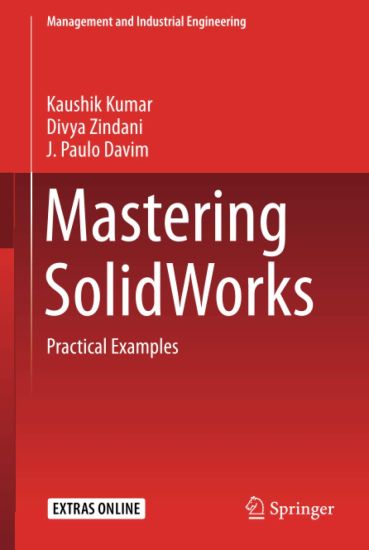
Mastering SolidWorks

Mastering SolidWorks

Kaushik Kumar; Divya Zindani; J. Paulo Davim

Springer Nature Switzerland AG
2020
sidottu
This book provides the reader with a comprehensive knowledge of all the tools provided in the software SOLIDWORKS for a variety of engineering areas. It presents a broad choice of examples to be imitated in one’s own work. In developing these examples, the authors’ intent has been to exercise many program features and re?nements. By displaying these, the authors hope to give readers the con?dence to employ these program enhancements in their own modeling applications.
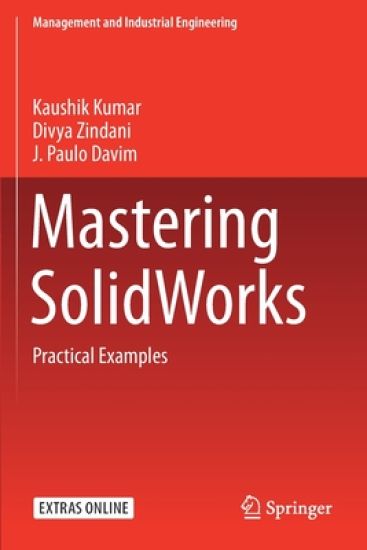
Mastering SolidWorks

Mastering SolidWorks

Kaushik Kumar; Divya Zindani; J. Paulo Davim

Springer Nature Switzerland AG
2021
nidottu
This book provides the reader with a comprehensive knowledge of all the tools provided in the software SOLIDWORKS for a variety of engineering areas. It presents a broad choice of examples to be imitated in one’s own work. In developing these examples, the authors’ intent has been to exercise many program features and re?nements. By displaying these, the authors hope to give readers the con?dence to employ these program enhancements in their own modeling applications.
Rapid Prototyping, Rapid Tooling and Reverse Engineering

Rapid Prototyping, Rapid Tooling and Reverse Engineering

Kaushik Kumar; Divya Zindani; J. Paulo Davim

De Gruyter
2020
sidottu
This book introduces the role of Rapid Prototyping Techniques within the product development phase. It deals with the concept, origin, and working cycle of Rapid Prototyping Processes with emphasis on the applications. Apart from elaboration of engineering and non-engineering applications, it highlights recent applications like Bio-Medical Models for Surgical Planning, Molecular Models, Architectural Models, Sculptured Models, Psycho-Analysis Models. Special emphasis has been provided to the technique of generating human organs from live cells/tissues of the same human named 3D BIO PRINTERS. As the Rapid Prototyping Techniques are for tailor made products and not for mass manufacturing hence the book also elaborates on the mass manufacturing of rapid prototyped products. This includes casting and rapid tooling. The book concludes with Reverse Engineering and the role played by Rapid Prototyping Techniques towards the same. With globalization of market and advances in science and technology, the life span of products has shortened considerably. For early realization of products and short development period, engineers and researchers are constantly working together for more and more efficient and effective solutions. The most effective solution identified has been usage of computers in both designing and manufacturing. This gave birth to the nomenclatures CAD (Computer Aided Designing) and CAM (Computer aided Manufacturing). This was the initiation that ensured short product development and realization period. Researchers coined the concept as Rapid Prototyping. In contrast to Prototyping, Rapid prototyping is a group of techniques used to quickly fabricate a scale model of a physical part or assembly using three-dimensional computer aided design (CAD) data. Construction of the part or assembly is usually done using 3D printing or "additive or subtractive layer manufacturing" technology. The first methods for rapid prototyping became available in the late 1980s and were used to produce models and prototype parts. Today, they are used for a wide range of applications and are used to manufacture production-quality parts in relatively small numbers if desired without the typical unfavorable short-run economics. This economy has encouraged online service bureaus for early product realization or physical products for actual testing. This book is expected to contain Seven Chapters. Chapter 1 would explain product life cycle and the product development phase in the same, introducing role of Rapid Prototyping Techniques in Product development phase. Chapter 2 would deals with the concept, origin and working cycle of Rapid Prototyping Processes. Chapter 3 would concentrates on the applications of Rapid Prototyping Technology. Apart from elaboration of engineering and non-engineering applications, it also elaborates on recent applications like Bio-Medical Models for Surgical Planning, Molecular Models, Architectural Models, Sculptured Models, Psycho-Analysis Models etc. Chapter 4 would introduce the various Rapid Prototyping systems available worldwide. The chapter also introduces the technique of generating human organs from live cells/tissues of the same human named 3D BIO PRINTERS hence ensuring low rejection rate by human body. As the Rapid Prototyping Techniques are for tailor made products and not for mass manufacturing hence Chapter 5 would elaborates on the mass manufacturing of rapid prototyped products. This includes Casting and Rapid Tooling. Chapter 6 would deal with Reverse Engineering and the role played by Rapid Prototyping Techniques towards the same. As the product realization is primarily dependent on various softwares which are required to be understood for better accuracy so the concluding chapter of the book i.e. Chapter 7 would explain some software associated with the various techniques.
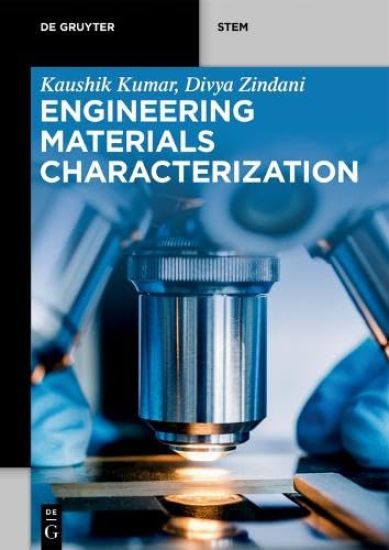
Engineering Materials Characterization

Engineering Materials Characterization

Kaushik Kumar; Divya Zindani

De Gruyter
2023
isokokoinen pokkari
Materials Science today is the base for all technological and industrial developments. The book provides the understanding of the advanced spectroscopic and microscopic instruments used for material characterization. The main issues addressed are 1) a detailed understanding of the instrument, including working and handling, 2) sample preparation, and 3) data analysis and interpretation. The book is divided in two parts i.e., Part A discusses microscopic instruments, consisting of Optical Microscope, Scanning Electron Microscopy, Atomic Force Microscopy, Field Emission Scanning Electron Microscope and X-Ray Diffraction. Part B is on spectroscopic instruments and covers FTIR Spectrometer, Raman Spectrometer, X-ray Photoelectron Spectroscopy, Ultraviolet Photoelectron Spectroscopy, Fluorescence Spectroscopy, and Nuclear Magnetic Resonance Spectroscopy.
Advanced Machining and Manufacturing Processes

Advanced Machining and Manufacturing Processes

Kaushik Kumar; Divya Zindani; J. Paulo Davim

Springer International Publishing AG
2018
sidottu
This book covers the various advanced manufacturing processes employed by manufacturing industries to improve their productivity in terms of socio-economic development. The authors present automated conventional and non-conventional machining techniques as well as virtual machining principles and techniques. Material removal by mechanical, chemical, thermal and electrochemical processes are described in detail. A glossary of key concepts is attached at end of the book.
Mandibular Fracture in Pediatric Patients

Mandibular Fracture in Pediatric Patients

Zeba Ambreen; Divya Sanjay Sharma

Lap Lambert Academic Publishing
2024
pokkari
Mandible fractures represent a large portion of the facial fractures among the pediatric population. The evaluation, diagnosis, and treatment of mandible fractures in the pediatric trauma patient differs from that of an adult.Treatment of such fractures requires a complete knowledge of the growth and development of the dentition, and the mandible and its subunits. Therefore, the surgeon should also comprehend the location of the underlying tooth buds and the IAN during each phase of development that are often encountered in the mixed dentition stage. In cases of mandibular fractures of a young child, disruption of periosteal envelope may have unpredictable effects on growth. Thus, if intervention is required, closed reduction is favored.
De-Addiction of the Erroneous

De-Addiction of the Erroneous

R C Sudish; Divya Sudish; Sanjeev Bansal

SCHOLARS' PRESS
2024
pokkari
Substance addiction is a global public health issue with far-reaching consequences. It encompasses the misuse and dependence on various substances, including alcohol, drugs, and prescription medications, as well as behavioral addictions. The problem of addiction adversely impacts physical and mental health, disrupts relationships, damages families, and burdens healthcare systems. The economic costs, in terms of healthcare expenses, lost productivity, and criminal justice involvement, are substantial.Understanding the underlying causes, risk factors, and mechanisms of addiction is crucial to developing effective prevention and treatment strategies. However, addiction research faces challenges, such as stigma, ethical concerns, and the ever-evolving nature of substances and behaviors. Despite these obstacles, this study on de-addiction is instrumental in alleviating individual suffering, reducing societal burdens, and promoting evidence-based solutions for this complex public health challenge.
Plant Products of Rhinacantus nasutus

Plant Products of Rhinacantus nasutus

B Suman; B J Divya; K Thyagaraju

Scholars' Press
2020
pokkari
Obesity is a severe metabolic disorder characterized by increased energy intake and decreased energy output with respect to body weight and metabolism of glucose. About 600 million people worldwide are clinically obese due to lifestyle changes and this is a growing problem in modern society. Over-consumption of a high-fat diet promotes lipid metabolism, especially mitochondrial fatty acid β-oxidation, which also excites intracellular pathways, produces reactive oxygen species, and promotes oxidative stress. Many anti-obesity medications and synthetic antioxidants side effects have led scientists to search for safe and effective bioactive compounds that can tackle both anomalies. In fact, the dietary intake of single medicinal plants can provide a greater degree of safety and effectiveness than mixed medicinal plant preparations. In view of the above, the research conducted on the evaluation of Rhinacantus nasutus plant's antioxidant and antiobese activity, which is listed as having a high therapeutic value in indigenous ayurvedic medicine and is even now being used to treat various diseases, is presented here in this book.