Kirjojen hintavertailu. Mukana 12 016 292 kirjaa ja 12 kauppaa.

Kirjahaku

Etsi kirjoja tekijän nimen, kirjan nimen tai ISBN:n perusteella.

1000 tulosta hakusanalla Duncan Heaster

Foundations on Rock

Foundations on Rock

Duncan C. Wyllie

Spon Press
1999
sidottu
This second edition of the successful Foundations on Rock presents an up-to-date practical reference book describing current engineering practice in the investigation, design and construction of foundations on rock. An extra chapter on Tension Foundations has been included. The methods set out are readily applicable to high rise buildings, bridges, dams and structures subject to uplift and turning loads.Foundations on Rock differs from the many texts and handbooks on soil foundations in that it focuses on the effect of geology on the stability and settlement of rock foundations. While the intact rock may be strong, defects in the rock such as faults, joints and cavities, and the deterioration of the rock with time, will have a significant effect on foundation performance. Methods of detecting such defects are described, and their implications for foundation design and treatment are elaborated.
Experimental Man

Experimental Man

Duncan David Ewing

JOHN WILEY AND SONS LTD
2009
sidottu
Bestselling author David Ewing Duncan takes the ultimate high-tech medical exam, investigating the future impact of what's hidden deep inside all of us David Ewing Duncan takes "guinea pig" journalism to the cutting edge of science, building on award-winning articles he wrote for Wired and National Geographic, in which he was tested for hundreds of chemicals and genes associated with disease, emotions, and other traits. Expanding on these tests, he examines his genes, environment, brain, and body, exploring what they reveal about his and his family's future health, traits, and ancestry, as well as the profound impact of this new self-knowledge on what it means to be human. David Ewing Duncan (San Francisco, CA) is the Chief Correspondent of public radio's Biotech Nation and a frequent commentator on NPR's Morning Edition. He is a contributing editor to Portfolio, Discover, and Wired and a columnist for Portfolio. His books include the international bestseller Calendar: Humanity's Epic Struggle to Determine a True and Accurate Year (978-0-380-79324-2). He is a former special producer and correspondent for ABC's Nightline, and appears regularly on CNN and programs such as Today and Good Morning America.
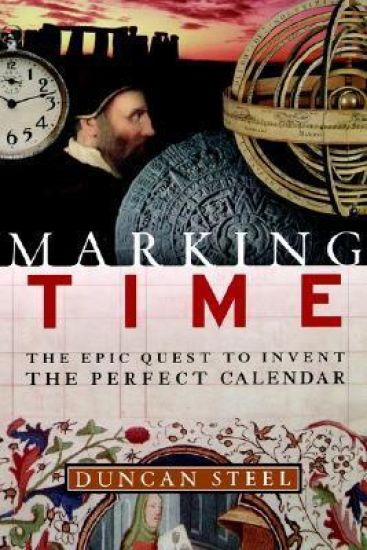
Marking Time

Marking Time

Duncan Steel

John Wiley Sons Inc
1999
sidottu
If you lie awake worrying about the overnight transition from December 31, 1 b.c., to January 1, a.d. 1 (there is no year zero), then you will enjoy Duncan Steel's Marking Time.--American Scientist ""No book could serve as a better guide to the cumulative invention that defines the imaginary threshold to the new millennium.""--Booklist A Fascinating March through History and the Evolution of the Modern-Day Calendar . . . In this vivid, fast-moving narrative, you'll discover the surprising story of how our modern calendar came about and how it has changed dramatically through the years. Acclaimed author Duncan Steel explores each major step in creating the current calendar along with the many different systems for defining the number of days in a week, the length of a month, and the number of days in a year. From the definition of the lunar month by Meton of Athens in 432 b.c. to the roles played by Julius Caesar, William the Conqueror, and Isaac Newton to present-day proposals to reform our calendar, this entertaining read also presents ""timely"" tidbits that will take you across the full span of recorded history. Find out how and why comets have been used as clocks, why there is no year zero between 1 b.c. and a.d. 1, and why for centuries Britain and its colonies rang in the New Year on March 25th. Marking Time will leave you with a sense of awe at the haphazard nature of our calendar's development. Once you've read this eye-opening book, you'll never look at the calendar the same way again.
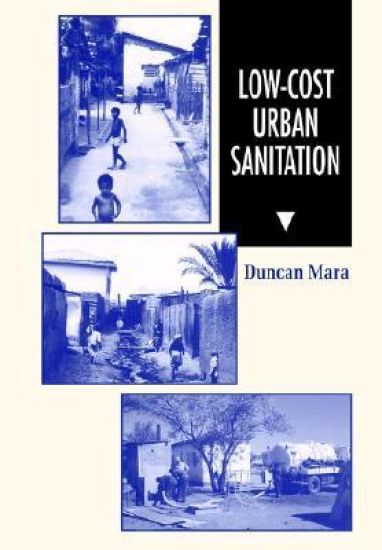
Low Cost Urban Sanitation

Low Cost Urban Sanitation

Duncan Mara

John Wiley Sons Inc
1996
nidottu
This book covers the public health, technical, socioeconomic, sociocultural and institutional aspects of sanitation in towns and cities of developing countries. The text features excreta-related diseases and the use of sanitation to reduce their transmission. The sanitation technologies covered in detail are VIP latrines, pour-flush toilets, septic tanks, settled sewerage and simplified sewerage, with additional chapters on sullage disposal, pit emptying, and sewage treatment and reuse. Sociocultural constraints on sanitation systems and their socioeconomic costing are described, together with hygiene education, which is essential in order to achieve maximum benefits to health. The text also explains how to choose the most appropriate sanitation option for a given low-income community. Finally, institutional aspects are reviewed, including effective sanitation programme planning, monitoring and evaluation.
Rethinking Reality

Rethinking Reality

Duncan F. Kennedy

The University of Michigan Press
2002
sidottu
How deeply into the structure of physical reality do the effects of our way of representing it reach? To what extent do constructivist accounts of scientific theorizing involve realist assumptions, and vice versa? This book provides a lucid and concise introduction to contemporary debates, taking as its theme the question of the relationship of representation and reality. It treats in an attractive and accessible way the historical, philosophical, and literary aspects of this question. In particular, it explores how the present relates to and configures claims to scientific knowledge from the past, taking as its main case study On the Nature of Things (De Rerum Natura), the poem on physics written by the Roman poet Lucretius in the 50s B.C.E. The book engages in a sustained argument about realist assumptions in scientific and other discourses through detailed analysis and discussion of some of the most important recent contributions to this debate. Engaging sympathetically but not uncritically with constructivist accounts of scientific knowledge, the book takes up a sustained critique of recent contributions to that debate, including those of Ian Hacking, Evelyn Fox Keller, Bruno Latour, and Hans-Jörg Rheinberger. What are the implications of regarding such knowledge as "discovered" or "invented"? How is the rhetoric of such claims to be identified and the pretentions of those claims assessed?In what ways can realist and constructivist approaches be reconciled? How do these considerations affect the way we read scientific texts from the past and regard them historically? What emerges is a fresh and challenging assessment of the role of time and temporal perspective in assessing claims to knowledge in scientific thought and of the importance of textuality to the history of knowledge. A wide variety of readers, from classicists and intellectual historians to epistemologists of science, will enjoy and learn from Rethinking Reality. Duncan Kennedy is Reader in Latin Literature and the Theory of Criticism, University of Bristol. He is also the author of The Arts of Love: Five Studies in the Discourse of Roman Love Elegy.
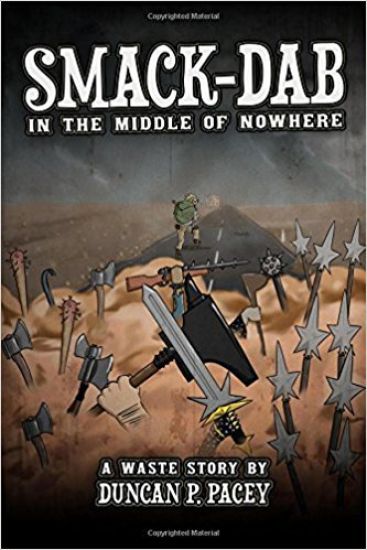
Smack-dab, in the Middle of Nowhere

Smack-dab, in the Middle of Nowhere

Duncan P Pacey

Silly Goose Content
2017
pokkari
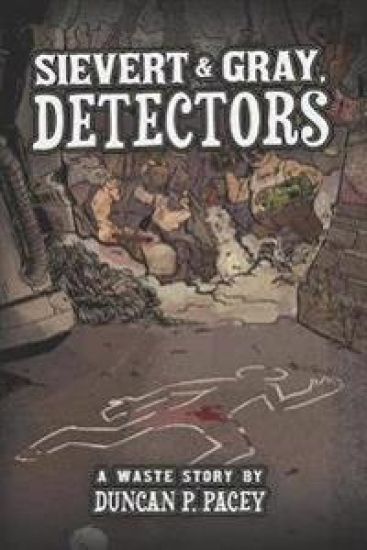
"Pratchetty humour with a hack n slash edge." "Smack-dab struck me most with just how well it balances comedy with the gritty frankness of life after the apocalypse.""Colourful characters and seriously funny plot." - Amazon Reviewers * * * "Smack-dab, in the Middle of Nowhere" is a post-apocalyptic comedy novel about a grumpy bar owner desperately trying to save her home and livelihood from the perils of the Waste - perils like bandits, tax, and...tourism? Think Terry Pratchett meets "Fallout", but not as good as either. * * * "Bert'd be damned if this bar did anything other than thrive. Smack-dab would prosper, or she'd shoot folk until it did." Bert is the takes-no-crap bar owner of Smack-dab, a struggling tavern halfway from nowhere to nowhere else. All around her is the barren, post-apocalyptic Waste, a terrifying place plagued by villainous bandits, ravenous monsters, and Things that go bump in the night (and also eat you). The Waste is in turmoil. Lord Ash has been overthrown, replaced by a terrifyingly powerful giant hell-bent on taxing anyone and everyone that can help fund his devious master plan. Smack-dab is threatened with total destruction, but Bert has a plan of her own. Can she rally enough help to fend off the bandits? Strange and hilarious, "Smack-dab, in the Middle of Nowhere" is the fresh new face of the post-apocalypse, even if that face has more creepy mutant eyes than you expected.
WipEout Futurism

WipEout Futurism

Duncan Harris; Ian Anderson

THAMES HUDSON LTD
2024
sidottu
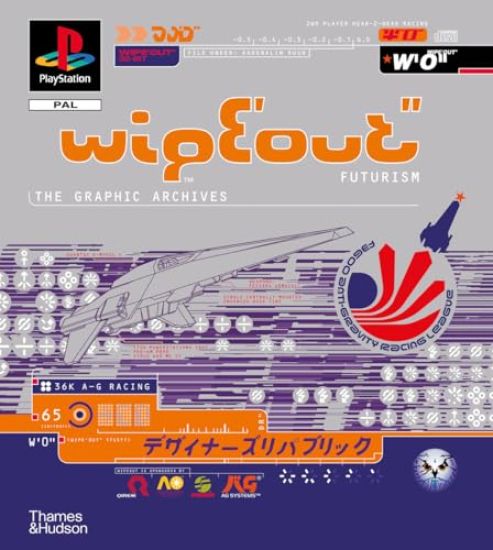
The definitive illustrated history of the cult videogame – a heart-thumping fusion of groundbreaking graphic design, architectural futurism, electronic music and high-speed racing. WipEout crashed onto the scene in 1995, shifting games into the cultural fast lane with its unique 3D visual designs. It propelled a wondrous hit of anti-gravity, hyperspeed racing into the heart of the freshly released PlayStation console and, over time, the series – developed by Psygnosis, later known as Studio Liverpool – grew into a cult phenomenon amongst graphic designers and gamers alike. With its club-land branding – devised by cutting-edge Sheffield agency The Designers Republic, and its on-the-pulse collaborations with electronic artists, from The Chemical Brothers to Kraftwerk, WipEout was not only a racing game – it was a vehicle for art. WipEout Futurism chronicles the iconic game’s vision, struggles and achievements – from first conception to future plans, in a distinctive union of trailblazing artwork and graphic design. The extraordinary, and rarely seen, concept art created for the game is beautifully reproduced throughout the book, while The Designers Republic’s peerless vision for an alternative future – with its roots planted in the rich earth of sci-fi iconography – weaves its way throughout the pages, making this publication a densely packed expansion to the beloved series.
Making Videogames

Making Videogames

Duncan Harris; Alex Wiltshire

Thames Hudson Ltd
2022
sidottu
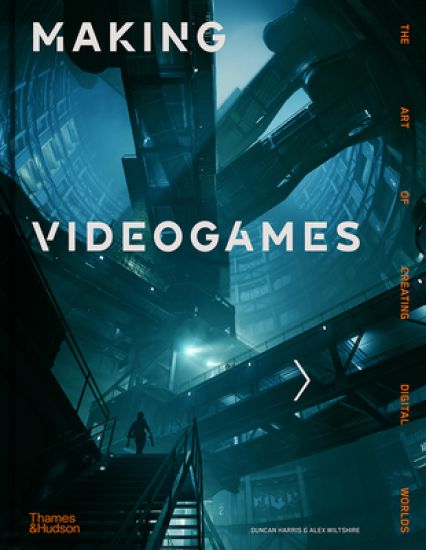
An in-depth visual guide presenting the captivating creative journeys behind the world’s leading videogames. Making Videogames is an unprecedented snapshot of modern interactive entertainment, with insight from true pioneers about the most important games in the world. Illustrated with some of the most arresting in-game images ever seen in print, the book explores the unique alchemy of technical and artistic endeavour that constitutes the magic of videogames, striking a captivating balance between insight and accessibility. Across eleven chapters, each focusing on a specific game from AAA blockbusters such as Control and Half-Life: Alyx to cult breakthrough games including No Man’s Sky and Return of the Obra Dinn, the book will document the incredible craft of videogame worldbuilding and visual storytelling via the world’s most popular, but seldom fully understood, entertainment medium. The book’s text orbits breathtaking, specially created imagery ‘photographed’ in-engine by the author, demonstrating the magic and method behind each studio’s work. A book not only for die-hard videogame fanatics, but also for designer-creatives and the visually curious, Making Videogames is a thrilling showcase of the boundless creativity of this amazing industry.
Workshop Guide to Ceramics

Workshop Guide to Ceramics

Duncan Hooson; Anthony Quinn

Thames Hudson Ltd
2012
sidottu
Collects the breadth and range of ceramic techniques. This title includes a guide to forming techniques, from pinch, coil, slab and wheel to mold-making, slip casting and extrusion, with sections on slip decoration, embossing and glazing, glaze recipes and applications.
The Liberal Anglican Idea of History

The Liberal Anglican Idea of History

Duncan Forbes

Cambridge University Press
2006
pokkari
This essay, which won the Prince Consort Prize for 1950, treats of the revolutionary change in historical writing that followed the entry into England, early in the nineteenth century, of the ideas of Vico and of the German historical school. Chiefly through Coleridge's influence, eighteenth-century rationalist suppositions gave place in certain men to a fundamentally opposed, 'Romantic' philosophy, and so to a new kind of History. Mr. Forbes is particularly concerned with the part played in this revolution by the liberal Anglicans: Thomas Arnold, Headmaster of Rugby and Regius Professsor of Modern History at Oxford; Richard Whitely, Professor of Political Economy at Oxford and Archbishop of Dublin; Julius Charles Hare, disciple of Coleridge and translator (with Thirlwall) of Niebuhr's History of Rome; Connop Thirlwall, Bishop of St David's and author of the History of Greece; Henry Hart Milman, Professor of Poetry and Oxford and Dean of St Paul's; Arthur Penrhyn Stanley, pupil and biographer of Thomas Arnold, and Dean of Westminster. They have elsewhere been studied in the compartments of 'classical' and 'ecclesiastical' history. But it is fundamental to their outlook on Church and State that for them no such compartments existed, and their idea of History as a whole has hitherto lacked an English historian. This essay does much more than clarify technical problems in one of the various ideas of History embraced in Professor Toynbee's system. Mr. Forbes addresses his book to all students of nineteenth-century thought.
Wordsworth's Reading 1770–1799

Wordsworth's Reading 1770–1799

Duncan Wu

Cambridge University Press
2007
pokkari
Wordsworth's Reading 1770–1799 lists all of the authors and (where possible) books known to have been read by William Wordsworth from his childhood until his move to Dove Cottage in 1799 at the age of twenty-nine. This information is presented in an easy-to-use form - in alphabetical order by author - and includes dates of reading and full discussions of the evidence. It draws on analyses of Wordsworth's manuscripts contained in current or forthcoming scholarly editions of his works, and incorporates a great deal of original research into the poet's intellectual development, including studies of the libraries of John Wordsworth Sr. (the poet's father), Hawkshead Grammar School, Racedown Lodge, and the Bristol Library Society. Where possible, surviving copies of Wordsworth's books are examined and described. This is a most complete study of Wordsworth's reading, and will be an essential reference tool for all scholars and students of his work.
Wordsworth's Reading 1800–1815

Wordsworth's Reading 1800–1815

Duncan Wu

Cambridge University Press
2007
pokkari
Wordsworth's Reading 1800–1815, first published in 1996, lists all of the authors and (where possible) books known to have been read by William Wordsworth during the years which saw the composition of some of his greatest poetry, including Poems, in Two Volumes, The Thirteen-Book Prelude, The White Doe of Rylstone and The Excursion. The information is presented in an easy-to-use form, and includes dates of reading and full discussions of evidence. It draws on analyses of Wordsworth's manuscripts contained in current and forthcoming scholarly editions of his works, and incorporates hitherto unpublished research into the poet's intellectual development, including a thorough survey of manuscript materials. Together with Duncan Wu's companion-volume, Wordsworth's Reading 1770–1799, this is a most complete study of Wordsworth's reading, and it will be an essential reference tool for all scholars and students of his work.
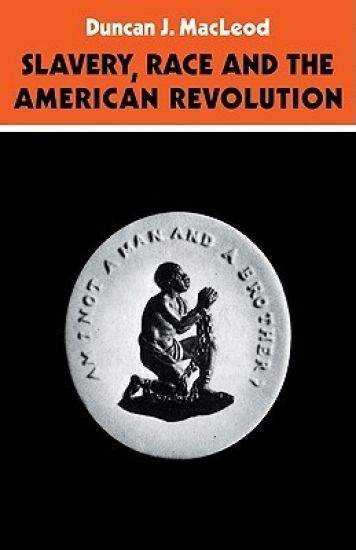
Slavery, Race and the American Revolution

Slavery, Race and the American Revolution

Duncan J. Macleod

Cambridge University Press
1975
pokkari
This book analyses the impact of American Revolutionary ideology upon conceptions of the place of slavery in American society. The ambivalence involved in a libertarian revolution occurring in a slave society was as obvious to eighteenth-century Americans as it is to twentieth-century historians yet the obvious sincerity of Southern Republicanism and the persistence of slavery have presented a paradox with which historians have hardly come to terms.
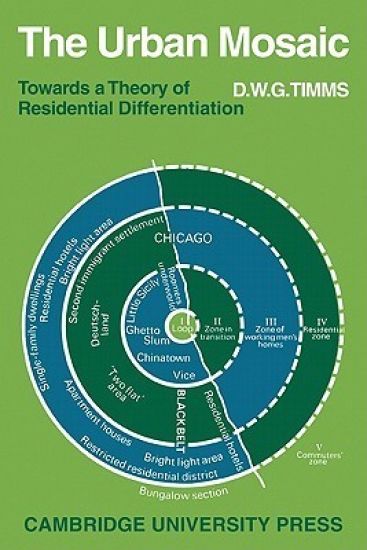
The Urban Mosaic

The Urban Mosaic

Duncan Timms

Cambridge University Press
1975
pokkari
The concept of the city as a mosaic of social worlds has achieved wide currency: the residential differentiation of the urban population provides the matrix for much human activity. In this detailed study, the author demonstrates that much of the manifold variation in the social characteristics of populations living in different parts of the city may be summarized in terms of a small number of factors relating to social rank, style of life preferences and ethnicity. Residential and social differentiation are seen as intimately connected. At the individual level, it is suggested that questions relating to social rank, style of life, and ethnicity provide the main framework for the choice of residential location. At the societal level, it is suggested that the variations in the inter-relationship of the basic differentiating factors are a function of modernization. Empirical material is drawn from an number of Australian cities.
Ben Jonson and the Lucianic Tradition

Ben Jonson and the Lucianic Tradition

Duncan Douglas

Cambridge University Press
2010
pokkari
The challenge to the audience in Jonson's major comedies is usually seen as an extension of the provocative techniques of English Morality drama. In this lucid and penetrating study, Professor Duncan aims to supplement that view by suggesting a more sophisticated precedent for Jonson's methods in the practice of 'oblique teaching', which Erasmus and More developed out of their admiration for the Greek author Lucian. Jonson shows that stage-comedy is not as incompatible with the techniques of 'Menippean' non-dramatic satire as has often been thought. More generally, what is called here his 'art of teasing' places him in the centre of a long line of Christian humanist writers - stretching from Erasmus and More to Milton and Swift - who used fiction to educate their public through devious processes of moral and intellectual testing.
Theory Committees and Elections

Theory Committees and Elections

Duncan Black

Cambridge University Press
2011
pokkari
In this book, first published in 1958, the social choice theorist and economist Duncan Black aims to formulate a pure science of politics. Focusing on the mathematics of committees and, accordingly, of elections, Black's writing engages with the theories of Condorcet, Borda and Laplace in order to describe the ways in which different systems of voting will yield different results. This can, as Black discusses in detail, influence whether the chosen candidate or motion is relatively agreeable to all, or only suited to the majority group of voters. Black also presents a history of the political science of elections, placing his own work within the context of earlier research and thought on this subject. Professor Black ensures that only a basic knowledge of arithmetic is needed to understand his arguments, although his methods of reasoning will be more familiar to those readers who have previously studied mathematics and economics.
Ben Jonson and the Lucianic Tradition

Ben Jonson and the Lucianic Tradition

Duncan Douglas

Cambridge University Press
1979
sidottu
The challenge to the audience in Jonson's major comedies is usually seen as an extension of the provocative techniques of English Morality drama. In this lucid and penetrating study, Professor Duncan aims to supplement that view by suggesting a more sophisticated precedent for Jonson's methods in the practice of 'oblique teaching', which Erasmus and More developed out of their admiration for the Greek author Lucian. Jonson shows that stage-comedy is not as incompatible with the techniques of 'Menippean' non-dramatic satire as has often been thought. More generally, what is called here his 'art of teasing' places him in the centre of a long line of Christian humanist writers - stretching from Erasmus and More to Milton and Swift - who used fiction to educate their public through devious processes of moral and intellectual testing.
Social Inequality and Class Radicalism in France and Britain
This book, first published in 1983, examines in depth the nature and sources of class radicalism in France and Britain and takes issue with some of the major theories of class consciousness and class action. Drawing on data both from detailed case studies and from wider national surveys, it shows that the conflict of class interests within capitalist societies can lead to sharply diverging attitudes to class inequality. It argues that the explanation of such differences cannot be found in some 'general' law of the evolution of social conflict in capitalist society. It must be sought in the profound institutional differences that exist between the two societies. In particular the study argues for a reassessment of the importance of the experience of war and of the way in which the business and political elite handled the social crises generated by war, in accounting for the long-term structural divergence of capitalist societies.