This volume collects fifteen original essays on E. J. Lowe’s work on metaphysics and ontology. The essays connect Lowe’s insights with contemporary issues in metaphysics.E. J. Lowe (1950–2014) was one of the most influential analytical philosophers of the twentieth and early twenty-first century. Drawing inspiration from Aristotle's thought, E. J. Lowe treated metaphysics as an autonomous discipline concerned with the fundamental structure of reality. The chapters in this volume reflect on his path-breaking work. They deal with a wide range of metaphysical issues including four-category ontology, the causal and non-causal aspects of agency, categorial fundamentality and non-fundamentality, the existence of relations, property dualism, powers and abilities, personal identity, predication, and topological ontology. Taken together, the chapters reflect the liveliness of contemporary debates in metaphysics and the enduring impact of Lowe’s thought on them.E. J. Lowe and Ontology will be of interest to researchers and advanced students working in metaphysics and philosophy of mind.
This volume collects fifteen original essays on E. J. Lowe’s work on metaphysics and ontology. The essays connect Lowe’s insights with contemporary issues in metaphysics.E. J. Lowe (1950–2014) was one of the most influential analytical philosophers of the twentieth and early twenty-first century. Drawing inspiration from Aristotle's thought, E. J. Lowe treated metaphysics as an autonomous discipline concerned with the fundamental structure of reality. The chapters in this volume reflect on his path-breaking work. They deal with a wide range of metaphysical issues including four-category ontology, the causal and non-causal aspects of agency, categorial fundamentality and non-fundamentality, the existence of relations, property dualism, powers and abilities, personal identity, predication, and topological ontology. Taken together, the chapters reflect the liveliness of contemporary debates in metaphysics and the enduring impact of Lowe’s thought on them.E. J. Lowe and Ontology will be of interest to researchers and advanced students working in metaphysics and philosophy of mind.
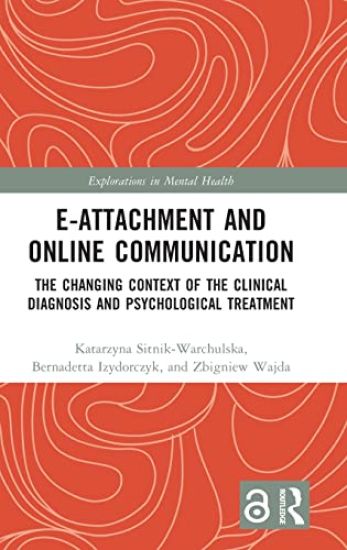
This book examines the use of modern technologies in clinical psychological practice. It considers how we define attachment in an age where changes in technology and the COVID-19 pandemic have increased the prevalence of online contact in the process of diagnosis and psychological treatment.Based on an attachment paradigm that is relatively unexplored, the book outlines how modern online contact influences mental health and development, along with the therapeutic relationship between client and professional. It discusses people’s relationships with new technologies, how relationships can be established using these technologies, and how these technologies affect professional relationships between psychologists and their clients, which they define as e-attachment. In the context of new technologies, the book draws on neurobiology and clinical psychology to consider mental health, social functioning, and emotional regulation.Presenting both theory and examples from case studies, this cutting-edge book will be of great interest to researchers, academics, and post-graduate students in the fields of clinical psychology, psychotherapy, and mental health. Those also carrying out research into digital and online learning within the field of mental health will also benefit from this text.The Open Access version of this book, available at www.taylorfrancis.com, has been made available under a Creative Commons Attribution-Non Commercial-No Derivatives 4.0 license
This book examines the use of modern technologies in clinical psychological practice. It considers how we define attachment in an age where changes in technology and the COVID-19 pandemic have increased the prevalence of online contact in the process of diagnosis and psychological treatment.Based on an attachment paradigm that is relatively unexplored, the book outlines how modern online contact influences mental health and development, along with the therapeutic relationship between client and professional. It discusses people’s relationships with new technologies, how relationships can be established using these technologies, and how these technologies affect professional relationships between psychologists and their clients, which they define as e-attachment. In the context of new technologies, the book draws on neurobiology and clinical psychology to consider mental health, social functioning, and emotional regulation.Presenting both theory and examples from case studies, this cutting-edge book will be of great interest to researchers, academics, and post-graduate students in the fields of clinical psychology, psychotherapy, and mental health. Those also carrying out research into digital and online learning within the field of mental health will also benefit from this text.The Open Access version of this book, available at www.taylorfrancis.com, has been made available under a Creative Commons Attribution-Non Commercial-No Derivatives 4.0 license
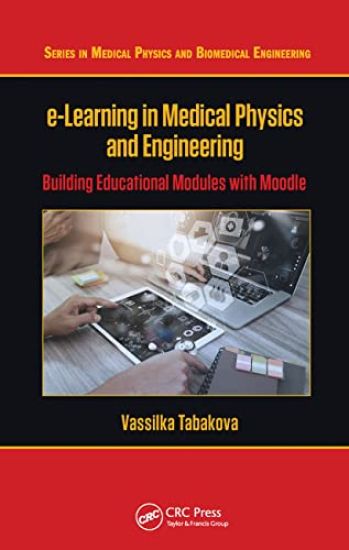
The need for qualified specialists to work with and apply sophisticated technology in contemporary medicine is rapidly growing. Professional bodies predict that meeting the needs of healthcare globally will require almost tripling the number of Medical Physicists by 2035. Similar challenges exist in the constantly growing profession of Medical Engineering. They can be solved most efficiently and effectively with the tools of e-Learning, and a free and open-source Virtual Learning Environment (VLE) platform such as Moodle is a welcome solution.The Moodle VLE platform is a free, open source learning management system that is the most popular choice for higher educational institutions worldwide. However, the best practices of the Moodle system are still unknown to many. This practical guide provides educators, programme administrators, and programme directors with a condensed guide to Moodle and step-by-step instructions on how to create a single course or an entire educational programme. It also discusses cost-effective ways to apply e-Learning in an educational institution.This guide is accessible to all professionals, even those without specialist IT skills, and will be helpful to educators of all levels in Medical Physics and Engineering, as well as in other medical and medical-related specialties or disciplines with a strong imaging component.Features:Provides step-by-step instructions of how to build a course/module for Higher Education on MoodleGives practical solutions to implementing e-Learning in Medical Physics and EngineeringExplores useful tips and tricks for best practice


![The Tourist's Guide To Cheddar Cliffs, And To Places Of Interest In The Environs Of Cheddar [signed E.g.]](/covers/9781024317800.jpg)
![The Tourist's Guide To Cheddar Cliffs, And To Places Of Interest In The Environs Of Cheddar [signed E.g.]](/covers/9781024321241.jpg)