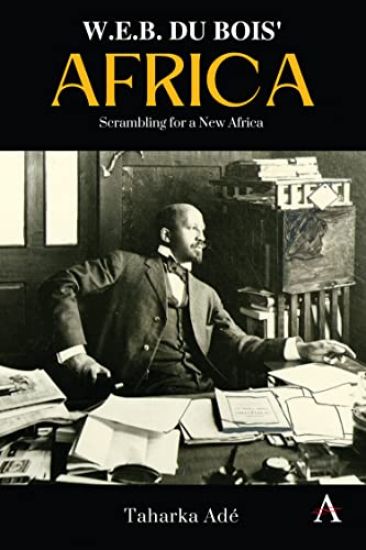
W. E. B. Du Bois is arguably the most important Black intellectual of the twentieth century and among the most important intellectual figures in modern African social thought. One of the founders of Pan-Africanism and a key figure in the postwar African liberation movement, he was champion of Africa and its people throughout his life. Despite this fact, his work on Africa has been underemphasized in scholarly writing about him. This book brings together for the first time Du Bois’s writings on Africa from the beginning of the twentieth century to his death in the early 1960s. Including over 50 magazine and journal articles, poems and book chapters, the works included in this volume clearly show not only Du Bois’s genius as a writer, but his profound understanding of how the quest for racial equality involved all of the people of African origin who suffered under colonial rule in Africa and in the Black disapora. The editors include a historical introduction, headnotes and a bibliography of Du Bois’s work on Africa.
W. E. B. Du Bois is arguably the most important Black intellectual of the twentieth century and among the most important intellectual figures in modern African social thought. One of the founders of Pan-Africanism and a key figure in the postwar African liberation movement, he was champion of Africa and its people throughout his life. Despite this fact, his work on Africa has been underemphasized in scholarly writing about him. This book brings together for the first time Du Bois’s writings on Africa from the beginning of the twentieth century to his death in the early 1960s. Including over 50 magazine and journal articles, poems and book chapters, the works included in this volume clearly show not only Du Bois’s genius as a writer, but his profound understanding of how the quest for racial equality involved all of the people of African origin who suffered under colonial rule in Africa and in the Black disapora. The editors include a historical introduction, headnotes and a bibliography of Du Bois’s work on Africa.
When you wander down the darker path and get lost in the pain, how do you find your way through the shadows? When you work tirelessly and your struggles become meaningless, how do you continue on? What makes existence worthwhile in the face of suffering? A philosophical tale of a young girl and the unlikely figure she befriends.
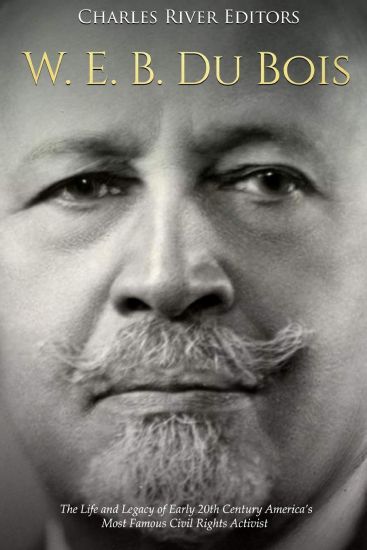
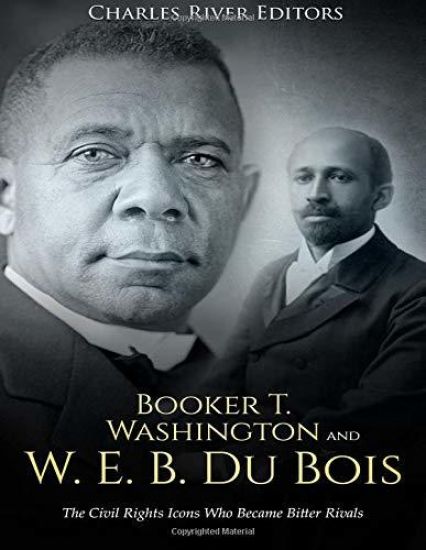
*Includes pictures *Includes online resources and a bibliography for further reading Despite a Union victory and Lincoln's Emancipation Proclamation, unthinkable in the previous century, a new form of suppression and violence descended on the African-American population. "Reconstruction" is employed as a generic term for the period that followed the American Civil War. Suggesting a successful rejuvenation of a war-ravaged South, it lamentably gave way to a resurrection of the same white ruling class and slave-owner mentality, protecting the status quo in the legislatures and courts. With the distortion of Reconstruction's intent came a body of racial policy and a tacitly understood social code that barred the pre-war slave class from personal freedom and opportunity, at the risk of great personal violence for anyone who objected. The arduous task of overthrowing Jim Crow codes and legislation marked one of the first strides toward the modern struggle for ethnic equality in American society and required nearly a century of struggle. That effort spawned a multitude of heroic African-American activists, but it is remembered in large part for the work of two iconic African-American men of stature. Much like their later counterparts, Reverend Martin Luther King, Jr. and Malcolm X, the debate between gradual integration through temporary accommodation and overtly insistent activism was led by Booker T. Washington and W. E. B. Du Bois. Through the last years of the 19th century, Washington's gentler approach of enhancing black prospects through vocational education, largely accomplished with white permission and funds, seemed the popular choice. His legacy can be sensed in King's subsequent willingness to extend an olive branch to white Americans in a sense of unity, although Washington's propensity for accommodation held no place in King's ministry. Ultimately, however, the vision that oversaw the creation of the Tuskegee Institute faded in the early 20th century as black intellectualism and stiffening resolve came to the fore. This side's greatest proponent, William Edward Burghardt Du Bois, still stands among the greatest and most controversial minds of any black leader in his country. The first African-American to receive a doctorate from Harvard University, Du Bois rose to become one of the most important social thinkers of his time in a 70-year career of combined scholarship, teaching, and activism. His lifelong efforts were devoted to the immediate acceptance of African-Americans as full citizens in good standing, and to the universal dismissal of white superiority. A co-founder of the National Association for the Advancement of Colored People, Du Bois was involved with virtually every equality-oriented organization of note in the early and mid-20th century, and his legacy can be found in a long line of extraordinary black scholars extending to the present day. Although Du Bois' name is still (and somewhat inexplicably) less well-known than that of Washington, his prolific writings serve as a bedrock to the modern social engines at work in the pursuit of racial equality in America. In his life and experience of nearly a century, he spanned the administrations of Andrew Johnson and Lyndon Baines Johnson, dying only one day before King's "I Have a Dream" speech. W. E. B. Du Bois: The Life and Legacy of Early 20th Century America's Most Famous Civil Rights Activist chronicles the life and work that made him one of America's most influential men. Along with pictures of important people, places, and events, you will learn about Du Bois like never before.
*Includes pictures *Includes online resources and a bibliography for further reading Despite a Union victory and Lincoln's Emancipation Proclamation, unthinkable in the previous century, a new form of suppression and violence descended on the African-American population. "Reconstruction" is employed as a generic term for the period that followed the American Civil War. Suggesting a successful rejuvenation of a war-ravaged South, it lamentably gave way to a resurrection of the same white ruling class and slave-owner mentality, protecting the status quo in the legislatures and courts. With the distortion of Reconstruction's intent came a body of racial policy and a tacitly understood social code that barred the pre-war slave class from personal freedom and opportunity, at the risk of great personal violence for anyone who objected. The arduous task of overthrowing Jim Crow codes and legislation marked one of the first strides toward the modern struggle for ethnic equality in American society and required nearly a century of struggle. That effort spawned a multitude of heroic African-American activists, but it is remembered in large part for the work of two iconic African-American men of stature. Much like their later counterparts, Reverend Martin Luther King, Jr. and Malcolm X, the debate between gradual integration through temporary accommodation and overtly insistent activism was led by Booker T. Washington and W. E. B. Du Bois. Through the last years of the 19th century, Washington's gentler approach of enhancing black prospects through vocational education, largely accomplished with white permission and funds, seemed the popular choice. His legacy can be sensed in King's subsequent willingness to extend an olive branch to white Americans in a sense of unity, although Washington's propensity for accommodation held no place in King's ministry. Ultimately, however, the vision that oversaw the creation of the Tuskegee Institute faded in the early 20th century as black intellectualism and stiffening resolve came to the fore. This side's greatest proponent, William Edward Burghardt Du Bois, still stands among the greatest and most controversial minds of any black leader in his country. The first African-American to receive a doctorate from Harvard University, Du Bois rose to become one of the most important social thinkers of his time in a 70-year career of combined scholarship, teaching, and activism. His lifelong efforts were devoted to the immediate acceptance of African-Americans as full citizens in good standing, and to the universal dismissal of white superiority. A co-founder of the National Association for the Advancement of Colored People, Du Bois was involved with virtually every equality-oriented organization of note in the early and mid-20th century, and his legacy can be found in a long line of extraordinary black scholars extending to the present day. Although Du Bois' name is still (and somewhat inexplicably) less well-known than that of Washington, his prolific writings serve as a bedrock to the modern social engines at work in the pursuit of racial equality in America. In his life and experience of nearly a century, he spanned the administrations of Andrew Johnson and Lyndon Baines Johnson, dying only one day before King's "I Have a Dream" speech. W. E. B. Du Bois: The Life and Legacy of Early 20th Century America's Most Famous Civil Rights Activist chronicles the life and work that made him one of America's most influential men. Along with pictures of important people, places, and events, you will learn about Du Bois like never before.
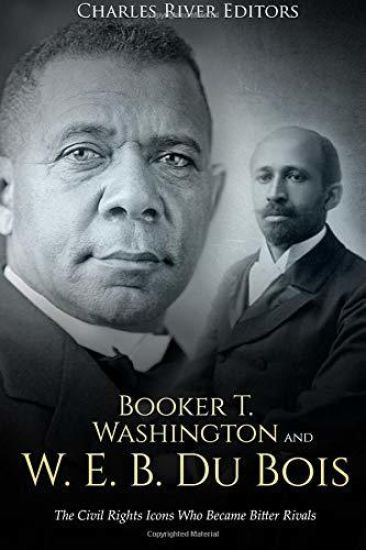
*Includes pictures *Includes online resources and a bibliography for further reading Despite a Union victory and Lincoln's Emancipation Proclamation, unthinkable in the previous century, a new form of suppression and violence descended on the African-American population. "Reconstruction" is employed as a generic term for the period that followed the American Civil War. Suggesting a successful rejuvenation of a war-ravaged South, it lamentably gave way to a resurrection of the same white ruling class and slave-owner mentality, protecting the status quo in the legislatures and courts. With the distortion of Reconstruction's intent came a body of racial policy and a tacitly understood social code that barred the pre-war slave class from personal freedom and opportunity, at the risk of great personal violence for anyone who objected. The arduous task of overthrowing Jim Crow codes and legislation marked one of the first strides toward the modern struggle for ethnic equality in American society and required nearly a century of struggle. That effort spawned a multitude of heroic African-American activists, but it is remembered in large part for the work of two iconic African-American men of stature. Much like their later counterparts, Reverend Martin Luther King, Jr. and Malcolm X, the debate between gradual integration through temporary accommodation and overtly insistent activism was led by Booker T. Washington and W. E. B. Du Bois. From 1890-1915, the most influential black man in America was Booker T. Washington, who less than 35 years earlier had been born into slavery. The young boy worked laboriously until emancipation before going on to seek an education, and by the time he was 40, he was consolidating a network of supporters that came to be known as the "Tuskegee Machine," helping coordinate action with the support of black businesses, religious communities, and others. Using his position of power, Washington spoke out against Jim Crow laws and Southern disfranchisement of blacks. Despite being so recognized, and perhaps in part because of it, by the early 20th century, Washington's tactics were questioned by other black leaders, notably W. E. B. Du Bois, who wanted to protest more vehemently in an effort to secure civil rights. Washington, 12 years Du Bois' senior, entered the field of education and founded the famous Tuskegee Institute based on his vision of what a population emerging from generations of slavery required in order to successfully integrate into modern life. His position was simply one of incremental entry by the provision of industrial education and political accommodation. He urged blacks to accept discrimination in the short term and concentrate on elevating themselves, thereby proving themselves through hard work and material prosperity. Du Bois would have none of that, believing it amounted to an approval of the Jim Crow regime of the South and a passive acceptance of racism. In opposition, he and other black leaders organized the Niagara Movement, citing opposition to Washington's moral leadership of the movement and marking their determination to fight for full civil equality for black Americans. The movement did not gain much traction, but it was in direct line of ascension to the much more influential National Association for the Advancement of Colored People (NAACP). Although Du Bois' name is still (and somewhat inexplicably) less well-known than that of Washington, his prolific writings serve as a bedrock to the modern social engines at work in the pursuit of racial equality in America. In his life and experience of nearly a century, he spanned the administrations of Andrew Johnson and Lyndon Baines Johnson, dying only one day before King's "I Have a Dream" speech.
*Includes pictures *Includes online resources and a bibliography for further reading Despite a Union victory and Lincoln's Emancipation Proclamation, unthinkable in the previous century, a new form of suppression and violence descended on the African-American population. "Reconstruction" is employed as a generic term for the period that followed the American Civil War. Suggesting a successful rejuvenation of a war-ravaged South, it lamentably gave way to a resurrection of the same white ruling class and slave-owner mentality, protecting the status quo in the legislatures and courts. With the distortion of Reconstruction's intent came a body of racial policy and a tacitly understood social code that barred the pre-war slave class from personal freedom and opportunity, at the risk of great personal violence for anyone who objected. The arduous task of overthrowing Jim Crow codes and legislation marked one of the first strides toward the modern struggle for ethnic equality in American society and required nearly a century of struggle. That effort spawned a multitude of heroic African-American activists, but it is remembered in large part for the work of two iconic African-American men of stature. Much like their later counterparts, Reverend Martin Luther King, Jr. and Malcolm X, the debate between gradual integration through temporary accommodation and overtly insistent activism was led by Booker T. Washington and W. E. B. Du Bois. From 1890-1915, the most influential black man in America was Booker T. Washington, who less than 35 years earlier had been born into slavery. The young boy worked laboriously until emancipation before going on to seek an education, and by the time he was 40, he was consolidating a network of supporters that came to be known as the "Tuskegee Machine," helping coordinate action with the support of black businesses, religious communities, and others. Using his position of power, Washington spoke out against Jim Crow laws and Southern disfranchisement of blacks. Despite being so recognized, and perhaps in part because of it, by the early 20th century, Washington's tactics were questioned by other black leaders, notably W. E. B. Du Bois, who wanted to protest more vehemently in an effort to secure civil rights. Washington, 12 years Du Bois' senior, entered the field of education and founded the famous Tuskegee Institute based on his vision of what a population emerging from generations of slavery required in order to successfully integrate into modern life. His position was simply one of incremental entry by the provision of industrial education and political accommodation. He urged blacks to accept discrimination in the short term and concentrate on elevating themselves, thereby proving themselves through hard work and material prosperity. Du Bois would have none of that, believing it amounted to an approval of the Jim Crow regime of the South and a passive acceptance of racism. In opposition, he and other black leaders organized the Niagara Movement, citing opposition to Washington's moral leadership of the movement and marking their determination to fight for full civil equality for black Americans. The movement did not gain much traction, but it was in direct line of ascension to the much more influential National Association for the Advancement of Colored People (NAACP). Although Du Bois' name is still (and somewhat inexplicably) less well-known than that of Washington, his prolific writings serve as a bedrock to the modern social engines at work in the pursuit of racial equality in America. In his life and experience of nearly a century, he spanned the administrations of Andrew Johnson and Lyndon Baines Johnson, dying only one day before King's "I Have a Dream" speech.
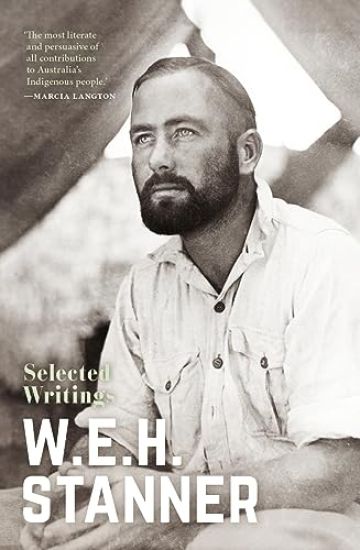
One of Australia's finest essayists, the first to cut through 'the great Australian silence' to convey the richness and uniqueness of Aboriginal culture to settler Australians'The most literate and persuasive of all contributions on Australia's Indigenous people' -Marcia LangtonW.E.H. Stanner's words changed Australia. In his 1968 Boyer Lectures he exposed a 'cult of forgetfulness practised on a national scale', regarding the fate of First Nations people, for which he coined the phrase 'the great Australian silence'. And in his essay 'Durmugam' he provided an unforgettable portrait of a warrior's attempt to hold back cultural change.The pieces collected here span Stanner's career as well as the history of Australian race relations. They reveal the extraordinary scholarship, humanity and vision of one of Australia's finest essayists. Stanner's writings remain relevant in a time of reckoning with white Australia's injustices against Aboriginal people and the path to reconciliation.With an introduction by Robert Manne'Bill Stanner was a superb essayist with a wonderful turn of phrase and ever fresh prose. He always had important things to say, which have not lost their relevance. It is wonderful that they will now be available to a new and larger audience.' -Henry Reynolds'Stanner's essays still hold their own among this country's finest writings on matters black and white.' -Noel Pearson
W. E. B. Du Bois: Pioneer American Sociologist highlights the contributions of W. E. B. Du Bois on the field of sociology. Robert A. Wortham shines a light on Du Bois’s role in shaping the scientific scope of the sociological perspective through his pioneering contributions in the areas of demography, urban and rural sociology, Southern Black Belt studies, and religion and society. This book provides a journey through the extensive sociological investigations of one of the key figures in the development of sociology in the United States and globally.
W. E. B. Du Bois: Pioneer American Sociologist highlights the contributions of W. E. B. Du Bois on the field of sociology.Robert A. Wortham shines a light on Du Bois's role in shaping the scientific scope of the sociological perspective through his pioneering contributions in the areas of demography, urban and rural sociology, Southern Black Belt studies, and religion and society. This book provides a journey through the extensive sociological investigations of one of the key figures in the development of sociology in the United States and globally.
W. E. B. Du Bois was one of the leading figures of Pan-African thought and activism in the twentieth century. As a sociologist, Du Bois wrote much about the historical and social circumstances of African Americans while often acknowledging the African historical background of much of African American, or Negro, culture. In 1946 Du Bois published The World and Africa, which was a culmination of previous attempts at penning a narrative of African history beginning with his 1915 publication The Negro, in which he included the social-historical experience of African Americans within the continuity of African history. This book delivers for the first time a comprehensive Afrocentric investigation and critique of Du Bois’s writings on African history. It argues that while Du Bois presented at the time a strong critique of the Eurocentric construction of African history, many of Du Bois’s descriptions and arguments about African people and history were likewise flawed with interpretations that projected the cultural subjectivities of Europe. Further, while Du Bois rightfully presents the historical relationship between African Americans and Africa as a justification for Pan-African activism, this book contends that Du Bois’s failure to center African culture instead of race leads to superficial justifications for Pan-African unity.
“The problem of the twentieth century is the problem of the color line.” These were the prescient words of W. E. B. Du Bois’s influential 1903 book The Souls of Black Folk. The preeminent Black intellectual of his generation, Du Bois wrote about the trauma of seeing the Reconstruction era’s promise of racial equality cruelly dashed by the rise of white supremacist terror and Jim Crow laws. Yet he also argued for the value of African American cultural traditions and provided inspiration for countless civil rights leaders who followed him. Now artist Paul Peart-Smith offers the first graphic adaptation of Du Bois’s seminal work. Peart-Smith’s graphic adaptation provides historical and cultural contexts that bring to life the world behind Du Bois’s words. Readers will get a deeper understanding of the cultural debates The Souls of Black Folk engaged in, with more background on figures like Booker T. Washington, the advocate of black economic uplift, and the Pan-Africanist minister Alexander Crummell. This beautifully illustrated book vividly conveys the continuing legacy of The Souls of Black Folk, effectively updating it for the era of the 1619 Project and Black Lives Matter.
“The problem of the twentieth century is the problem of the color line.” These were the prescient words of W. E. B. Du Bois’s influential 1903 book The Souls of Black Folk. The preeminent Black intellectual of his generation, Du Bois wrote about the trauma of seeing the Reconstruction era’s promise of racial equality cruelly dashed by the rise of white supremacist terror and Jim Crow laws. Yet he also argued for the value of African American cultural traditions and provided inspiration for countless civil rights leaders who followed him. Now artist Paul Peart-Smith offers the first graphic adaptation of Du Bois’s seminal work. Peart-Smith’s graphic adaptation provides historical and cultural contexts that bring to life the world behind Du Bois’s words. Readers will get a deeper understanding of the cultural debates The Souls of Black Folk engaged in, with more background on figures like Booker T. Washington, the advocate of black economic uplift, and the Pan-Africanist minister Alexander Crummell. This beautifully illustrated book vividly conveys the continuing legacy of The Souls of Black Folk, effectively updating it for the era of the 1619 Project and Black Lives Matter.
Souls of Black Folk is a classic work of American literature by W. E. B. Du Bois. It is a seminal work in the history of sociology, and a cornerstone of African-American literary history. The book, published in 1903, contains several essays on race, some of which the magazine Atlantic Monthly had previously published. To develop this work, Du Bois drew from his own experiences as an African American in the American society. Outside of its notable relevance in African-American history, The Souls of Black Folk also holds an important place in social science as one of the early works in the field of sociology. In "The Souls of Black Folk", Du Bois coined the term "double consciousness", which is the idea that black people must have two fields of vision at all times. They must be conscious of how they view themselves, as well as being conscious of how the world views them.