Kirjojen hintavertailu. Mukana 11 455 342 kirjaa ja 12 kauppaa.

Kirjahaku

Etsi kirjoja tekijän nimen, kirjan nimen tai ISBN:n perusteella.

1000 tulosta hakusanalla Edith Breburda

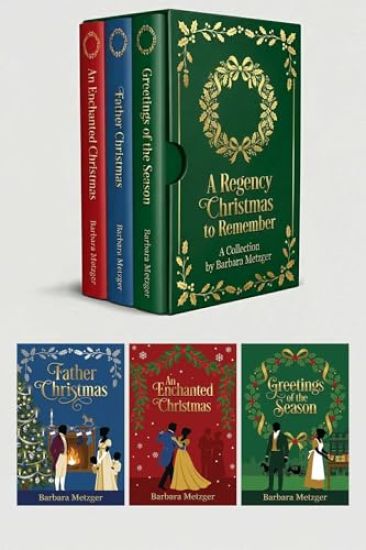
A Regency Christmas to Remember: A Collection by Barbara Metzger & Edith Layton
A Regency Christmas to Remember: A Collection by Barbara Metzger & Edith LaytonStep into a world of snowy manor houses, glittering balls, and heartwarming holiday miracles with this enchanting Christmas collection from two beloved voices of Regency romance--Edith Layton and Barbara Metzger.This festive box set gathers six timeless tales of love, laughter, and yuletide charm: It's a Wonderful Regency Christmas An Enchanting Regency Christmas A Magical Regency Christmasby Edith Layton - where holiday magic meets sparkling wit and tender romance. Father Christmas An Enchanted Christmas Greetings of the Seasonby Barbara Metzger - delightfully whimsical, full of charm and unexpected twists of fate.Whether it's a dashing duke caught under the mistletoe, a spirited heroine snowed in at a country estate, or a ghostly visitor reminding everyone of the true meaning of Christmas, these stories are guaranteed to warm your heart.Perfect for fans of Jane Austen, cozy fires, and happily-ever-afters with a holiday glow, this collection is a must-have for your winter reading list.
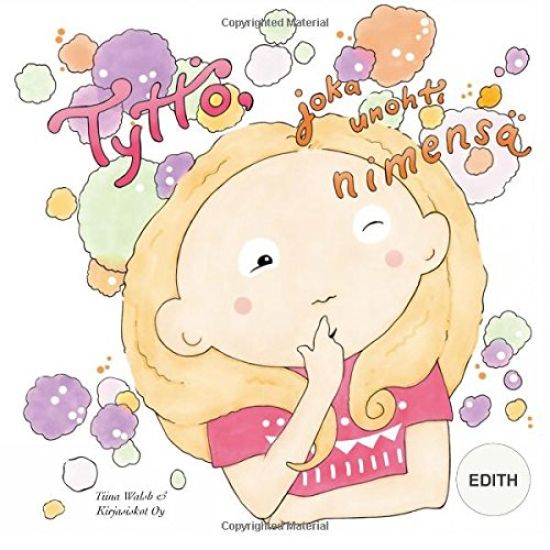
Tyttö, joka unohti nimensä EDITH

Tyttö, joka unohti nimensä EDITH

Tiina Walsh

Createspace Independent Publishing Platform
2017
pokkari
Yksiloity satukirja EDITH-nimisille tytoille Tytto heraa, eika muista nimeaan. Hikka-Hiiri osaa ratkaista pulman. Han vie tyton taikabussillaan jannittavalle seikkailulle. Seikkailun maaraa lapsen oma nimi Tytto, joka unohti nimensa - Taianomainen yksiloity satukirja Kirjasiskot Oy: lta, kirjasiskot.fi
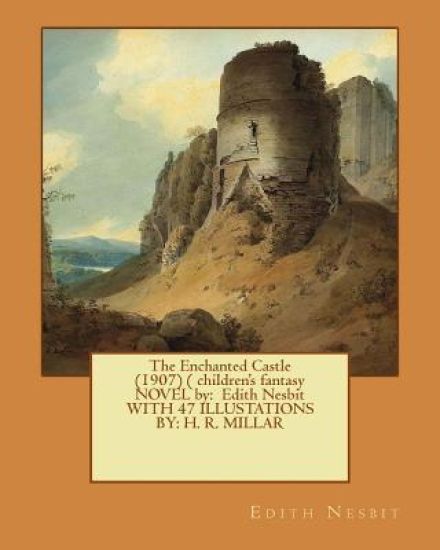
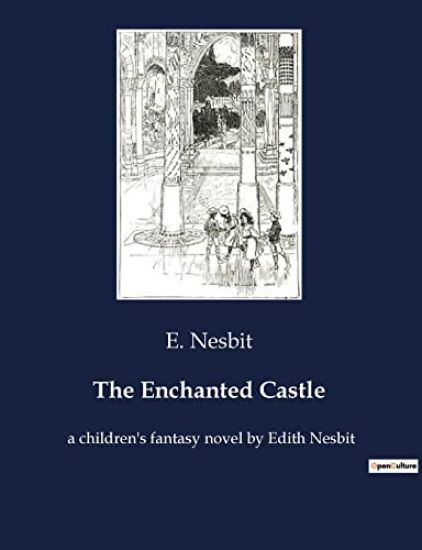
The Enchanted Castle: A children's fantasy novel by Edith Nesbit
The enchanted castle of the title is a country estate in the West Country seen through the eyes of three children, Jerry, Jimmy, and Kathy, who discover it while exploring during the school holidays. The lake, groves and marble statues, with white towers and turrets in the distance, make a fairy-tale setting, and then in the middle of the maze in the rose garden, they find a sleeping fairy-tale princess. The "princess" tells them that the castle is full of magic, and they almost believe her. She shows them the treasures of the castle, including a magic ring she says is a ring of invisibility, but when it actually turns her invisible she panics and admits that she is the housekeeper's niece, Mabel, and was just play-acting. The children soon find that the ring has other magical powers such as making the "Ugly-Wugglies" (Guy Fawkes style dummies they had made to swell the audience at one of their play-performances) come to life. They eventually discover that the ring is actually granting their own wishes, and that the disturbing results stem from their failure to specify those wishes precisely. The Enchanted Castle was written for both children and adults. It combines descriptions of the imaginative play of children, reminiscent of The Story of the Treasure Seekers, with a magic more muted than in her major fantasies such as The Story of the Amulet.
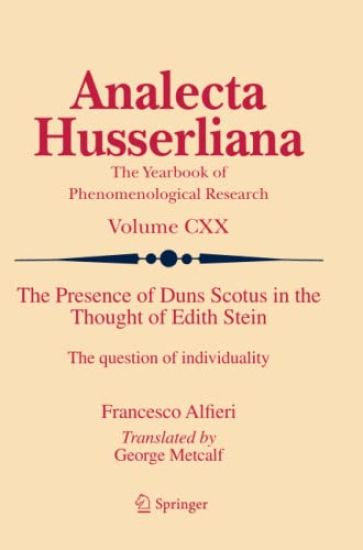
The Presence of Duns Scotus in the Thought of Edith Stein

The Presence of Duns Scotus in the Thought of Edith Stein

Francesco Alfieri

Springer International Publishing AG
2015
sidottu
This book examines the phenomenological anthropology of Edith Stein. It specifically focuses on the question which Stein addressed in her work Finite and Eternal Being: What is the foundational principle that makes the individual unique and unrepeatable within the human species? Traditional analyses of Edith Stein’s writings have tended to frame her views on this issue as being influenced by Aristotle and Thomas Aquinas, while neglecting her interest in the lesser-known figure of Duns Scotus. Yet, as this book shows, with regard to the question of individuality, Stein was critical of Aquinas’ approach, finding that of Duns Scotus to be more convincing. In order to get to the heart of Stein’s readings of Duns Scotus, this book looks at her published writings and her personal correspondence, in addition to conducting a meticulous analysis of the original codexes on which her sources were based. Written with diligence and flair, the book critically evaluates the authenticity of Stein’s sources and shows how the position of Scotus himself evolved. It highlights the originality of Stein’s contribution, which was to rediscover the relevance of Mediaeval scholastic thought and reinterpret it in the language of the Phenomenological school founded by Edmund Husserl.
The Presence of Duns Scotus in the Thought of Edith Stein

The Presence of Duns Scotus in the Thought of Edith Stein

Francesco Alfieri

Springer International Publishing AG
2016
nidottu
This book examines the phenomenological anthropology of Edith Stein. It specifically focuses on the question which Stein addressed in her work Finite and Eternal Being: What is the foundational principle that makes the individual unique and unrepeatable within the human species? Traditional analyses of Edith Stein’s writings have tended to frame her views on this issue as being influenced by Aristotle and Thomas Aquinas, while neglecting her interest in the lesser-known figure of Duns Scotus. Yet, as this book shows, with regard to the question of individuality, Stein was critical of Aquinas’ approach, finding that of Duns Scotus to be more convincing. In order to get to the heart of Stein’s readings of Duns Scotus, this book looks at her published writings and her personal correspondence, in addition to conducting a meticulous analysis of the original codexes on which her sources were based. Written with diligence and flair, the book critically evaluates the authenticity of Stein’s sources and shows how the position of Scotus himself evolved. It highlights the originality of Stein’s contribution, which was to rediscover the relevance of Mediaeval scholastic thought and reinterpret it in the language of the Phenomenological school founded by Edmund Husserl.
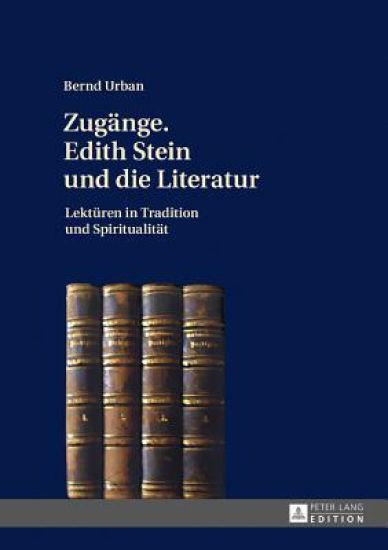
Zugaenge. Edith Stein Und Die Literatur
Das Buch versammelt grundlegende Studien zu Edith Stein und ihren Lekturen von Homer, mittelalterlicher Literatur, Lessing, Schleiermacher, Hauptmann und dem Expressionismus. Es geht den Lektureeinflussen in Tradition, Spiritualitat und Begegnungen nach und untersucht dazu aktuelle Fragen um Glaube, Wissen und eine neue Phanomenologie. Ein literarisch intensiver und aus der rekonstruierten Bibliothek quellenerschlossener Bildungsgang wirkte auf die Froemmigkeitsentwicklung der spateren Karmelitin und befruchtete massgeblich ihre Denkwelt und mystisch eigene Position.
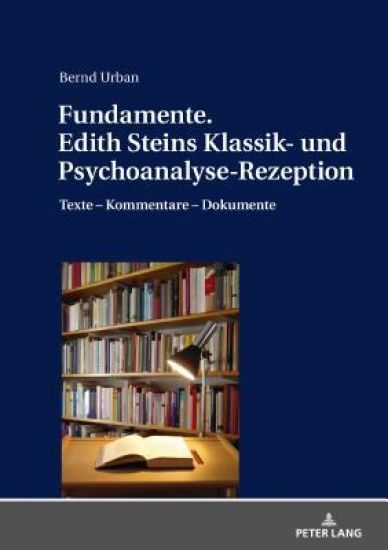
Fundamente. Edith Steins Klassik- Und Psychoanalyse-Rezeption
Der Band versammelt grundlegende Studien zur Klassik-Rezeption (Herder, Goethe, Schiller) und zur Psychoanalyse-Rezeption (Freud) Edith Steins, die langere Zeit im Gymnasium und als Deutschlehrerin tatig war denn als Karmelitin. Sie schrieb uber die genannten Autoren und zeigt in einem Literaturbrief eine ausserordentliche Literaturkenntnis; auch begrusst sie die neue "Tiefenpsychologie". Texte, Dokumente und Kommentare erganzen ihre Arbeit und den Denkweg einer Phanomenologin, deren Positionen ohne diese Fundamente nicht angemessen zu verstehen sind, weil sie dort auch ihren Ursprung haben. Der Band beschliesst - nach "Zugange" und "Wirkungszusammenhange" - die Trilogie "Edith Stein und die Literatur".
Sibling Saints: Twelve Extraordinary Stories from James and John to Edith and Rosa Stein
Through lively stories, comic strips, historical background, and prayers, get to know these brothers and sisters, models of faith and holiness: James and John; Lazarus, Martha, and Mary; Cosmas and Damian; Donatian and Rogatian; Ambrose, Marcellina, and Satyrus; Benedict and Scholastica; Cyril and Methodius, Bernard and Humbeline; Louis and Isabelle of France; The Martin Sisters; Elizabeth of the Trinity and Margaret; and Edith and Rosa Stein.
The General in His Labyrinth: Translated and Introduced by Edith Grossman
Gabriel Garc a M rquez's most political novel is the tragic story of General Sim n Bol var, the man who tried to unite a continent. Bol var, known in six Latin American countries as the Liberator, is one of the most revered heroes of the western hemisphere; in Garc a M rquez's brilliant reimagining he is magnificently flawed as well. The novel follows Bol var as he takes his final journey in 1830 down the Magdalena River toward the sea, revisiting the scenes of his former glory and lamenting his lost dream of an alliance of American nations. Forced from power, dogged by assassins, and prematurely aged and wasted by a fatal illness, the General is still a remarkably vital and mercurial man. He seems to remain alive by the sheer force of will that led him to so many victories in the battlefields and love affairs of his past. As he wanders in the labyrinth of his failing powers-and still-powerful memories-he defies his impending death until the last. The General in His Labyrinth is an unforgettable portrait of a visionary from one of the greatest writers of our time.
France in Mind: An Anthology: From Henry James, Edith Wharton, Gertrude Stein, and Ernest Hemingway to Peter Mayle and Adam Gopnik--A Feast of British
A tour of France, presented through the writings of thirty-three British and American authors, past and present, including Peter Mayle, Mark Twain, Edith Wharton, M. F. K. Fisher, Paul Theroux, and Ernest Hemingway, celebrates the country's food, people, cultures, and areas of interest. Original. 20,000 first printing.
Broken Glass: Mies Van Der Rohe, Edith Farnsworth, and the Fight Over a Modernist Masterpiece
The true story of the intimate relationship that gave birth to the Farnsworth House, a masterpiece of twentieth-century architecture--and disintegrated into a bitter feud over love, money, gender, and the very nature of art. "An intimate portrait . . . alive with architectural intrigue."--Architect Magazine In 1945, Edith Farnsworth asked the German architect Mies van der Rohe, already renowned for his avant-garde buildings, to design a weekend home for her outside of Chicago. Edith was a woman ahead of her time--unmarried, she was a distinguished medical researcher, as well as an accomplished violinist, translator, and poet. The two quickly began spending weekends together, talking philosophy, Catholic mysticism, and, of course, architecture over wine-soaked picnic lunches. Their personal and professional collaboration would produce the Farnsworth House, one of the most important works of architecture of all time, a blindingly original structure made up almost entirely of glass and steel. But the minimalist marvel, built in 1951, was plagued by cost overruns and a sudden chilling of the two friends' mutual affection. Though the building became world famous, Edith found it impossible to live in, because of its constant leaks, flooding, and complete lack of privacy. Alienated and aggrieved, she lent her name to a public campaign against Mies, cheered on by Frank Lloyd Wright. Mies, in turn, sued her for unpaid monies. The ensuing lengthy trial heard evidence of purported incompetence by an acclaimed architect, and allegations of psychological cruelty and emotional trauma. A commercial dispute litigated in a rural Illinois courthouse became a trial of modernist art and architecture itself. Interweaving personal drama and cultural history, Alex Beam presents a stylish, enthralling narrative tapestry, illuminating the fascinating history behind one of the twentieth century's most beautiful and significant architectural projects.