Kirjojen hintavertailu. Mukana 11 342 296 kirjaa ja 12 kauppaa.

Kirjahaku

Etsi kirjoja tekijän nimen, kirjan nimen tai ISBN:n perusteella.

1000 tulosta hakusanalla Edith Dunham

Ornament and Silence: Essays on Women's Lives from Edith Wharton to Germaine Greer
From one of The New Yorker's most revered writers comes "a brilliant collection" (The New York Times Book Review) about women in love affairs, friendships, marriages, and families--from Virginia Woolf and Flaubert's mistress to Russian novelist Nina Berberova and English naturalist Miriam Rothschild. In these fourteen essays, Fraser focuses on women in love affairs, friendships, marriages, and families; in relation to one another and to the talented men who so often rendered them invisible. In Ornament and Silence we see Virginia Woolf, haunted and eventually destroyed by the sexual secrets of her childhood. We meet Flaubert's theatrically importunate mistress, Louise Colet, the one woman who could briefly slip past the master's misogyny. Fraser offers vibrant portraits of the Russian novelist Nina Berberova and the English naturalist Miriam Rothschild. And here is Fraser herself, learning her craft at The New Yorker, tending her English garden and--on every page--delighting us with the manifold felicities of her prose.

Untold Power: The Fascinating Rise and Complex Legacy of First Lady Edith Wilson
A nuanced portrait of the first acting woman president, written with fresh and cinematic verve by a leading historian on women's suffrage and power While this nation has yet to elect its first woman president--and though history has downplayed her role--just over a century ago a woman became the nation's first acting president. In fact, she was born in 1872, and her name was Edith Bolling Galt Wilson. She climbed her way out of Appalachian poverty and into the highest echelons of American power and in 1919 effectively acted as the first woman president of the U.S. (before women could even vote nationwide) when her husband, Woodrow Wilson, was incapacitated. Beautiful, brilliant, charismatic, catty, and calculating, she was a complicated figure whose personal quest for influence reshaped the position of First Lady into one of political prominence forever. And still nobody truly understands who she was. For the first time, we have a biography that takes an unflinching look at the woman whose ascent mirrors that of many powerful American women before and since, one full of the compromises and complicities women have undertaken throughout time in order to find security for themselves and make their mark on history. She was a shape-shifter who was obsessed with crafting her own reputation, at once deeply invested in exercising her own power while also opposing women's suffrage. With narrative verve and fresh eyes, Untold Power is a richly overdue examination of one of American history's most influential, complicated women as well as the surprising and often absurd realities of American politics.
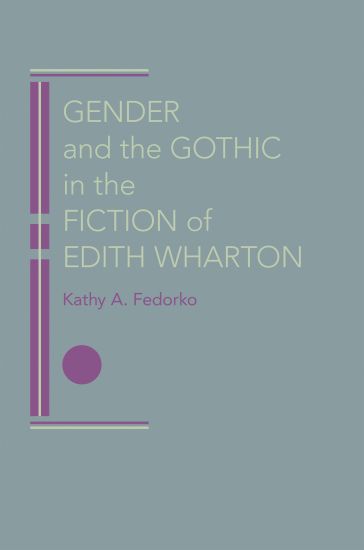
Gender and the Gothic in the Fiction of Edith Wharton

Gender and the Gothic in the Fiction of Edith Wharton

Kathy A. Fedorko

The University of Alabama Press
2017
nidottu
An investigation into Wharton's extensive use and adaptation of the Gothic in her fiction. Gender and the Gothic in the Fiction of Edith Wharton is an innovative study that provides fresh insights into Wharton's male characters while at the same time showing how Wharton's imagining of a fe/male self evolves throughout her career. Using feminist archetypal theory and theory of the female Gothic, Kathy A. Fedorko shows how Wharton, in sixteen short stories and six major novels written during four distinct periods of her life, adopts and adapts Gothic elements as a way to explore the nature of feminine and masculine ways of knowing and being and to dramatize the tension between them. Edith Wharton's contradictory views of women and men–her attitudes toward the feminine and the masculine–reflect a complicated interweaving of family and social environment, historical time, and individual psychology. Studies of Wharton have exhibited this same kind of contradiction, with some seeing her as disparaging men and the masculine and others depicting her as disparaging women and the feminine. The use of Gothic elements in her fiction provided Wharton, who was often considered the consummate realist, with a way to dramatize the conflict between feminine and masculine selves as she experienced them and to evolve and alternative to the dualism. Fedorko's work is unique in its careful consideration of Whartons's sixteen Gothic works which are seldom discussed. Further, the revelation of how these Gothic stories are reflected in her major realistic novels. In the novels with Gothic texts, Wharton draws multiple parallels between male and female protagonists, indicating the commonalities between women and men and the potential for a female self. Eventually, in her last completed novel and her last short story, Wharton imagines human beings who are comfortable with both gender selves.
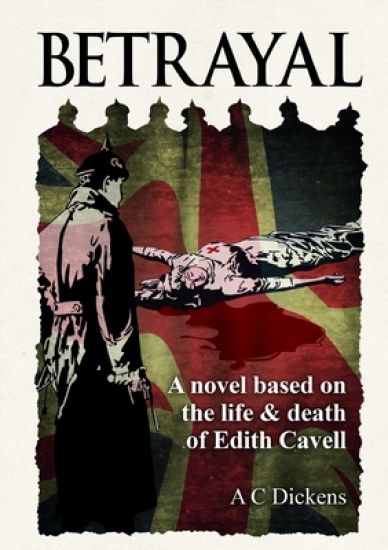
Betrayal: A Novel Based on the Life of Edith Cavel
On a sunny Norfolk beach, the Rev. Frederick Cavell and his wife row over her worries about Edith their independent and self-willed daughter. Little will they know that her mother's concerns would not only come true but also will impact, upon the nation, during the dark days of World War1. After training as a nurse and rising within the profession, Edith is approached by British Intelligence, to become an agent, when she returns to war torn Belgium, intending to open a Red Cross Hospital in Brussels. Will she accept and if so are the Government's motives honourable or more sinister? Should she get into trouble for helping her countrymen during the impending German Occupation, will it choose to intervene to avoid her becoming a tragic heroine or will her death better suit its purpose?
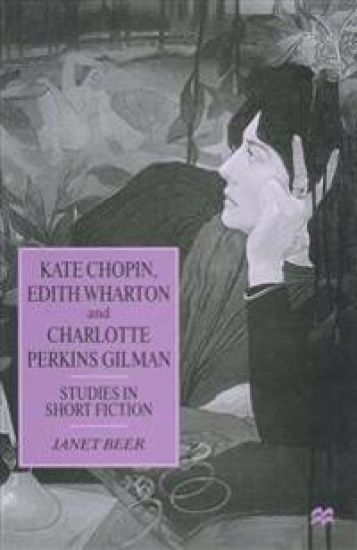
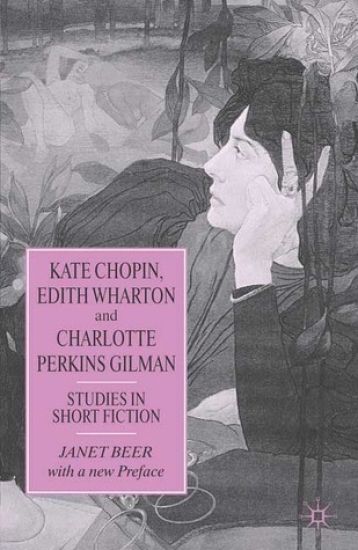
Kate Chopin, Edith Wharton and Charlotte Perkins Gilman
A wide range of short fiction by Kate Chopin, Edith Wharton and Charlotte Perkins Gilman is the focus for this study, examining both genre and theme. Chopin's short stories, Wharton's novellas, Chopin's frankly erotic writing and the homilies in which Gilman warns of the dangers of the sexually transmitted disease are compared. There are also essays on ethnicity in the work of Chopin, Wharton's New England stories, Gilman's innovative use of genre and 'The Yellow Wallpaper' on film. All three writers are still popular in US classrooms in particular. This paperback edition includes a new Preface to the material, providing a useful update on recent scholarship.
Kate Chopin, Edith Wharton and Charlotte Perkins Gilman
A wide range of short fiction by Kate Chopin, Edith Wharton and Charlotte Perkins Gilman is the focus for this study, examining both genre and theme. Chopin's short stories, Wharton's novellas, Chopin's frankly erotic writing and the homilies in which Gilman warns of the dangers of the sexually transmitted disease are compared. There are also essays on ethnicity in the work of Chopin, Wharton's New England stories, Gilman's innovative use of genre and 'The Yellow Wallpaper' on film. All three writers are still popular in US classrooms in particular. This paperback edition includes a new Preface to the material, providing a useful update on recent scholarship.
The Silence of a Life: The Life of Edith Krause

The Silence of a Life: The Life of Edith Krause

Yvonne Zuendler

Independently Published
2019
nidottu
Edith Krause, being five years old, strays through the ruins of Frankfurt on the Main. They pick her up, when she lies in the ruins of War completely exhausted. Her father had died on consumption, her mother had been committed to a mental hospital, thus the Welfare Office sent her to a children's home. Sister Ambrosia and the other nuns only convey an impression of decency and compassion to the outer world. Inside, unbelievable dramas take place, hard to beat in cruelty. Edith turned out to be a good worker and therefore they declare her being feeble-minded. This way she has to work hard for the nuns for another six years although they actually should have released her for long. After that, she works in a hotel laundry and meets a nice couple. Now finally the tide is turning. She can look back on and reappraise her memories. Although she meets extreme opposition, she does not give up and even finds one of the perpetrators. In the end she turns her back to the world and delves into the silence of her life.
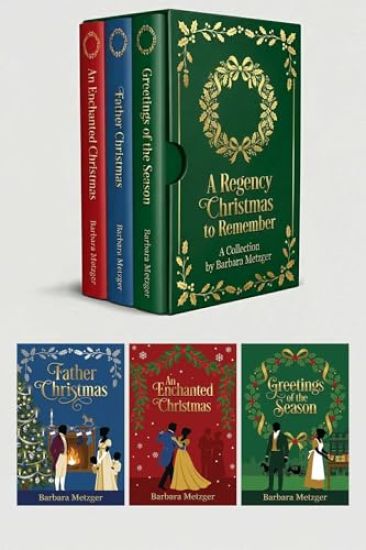
A Regency Christmas to Remember: A Collection by Barbara Metzger & Edith Layton
A Regency Christmas to Remember: A Collection by Barbara Metzger & Edith LaytonStep into a world of snowy manor houses, glittering balls, and heartwarming holiday miracles with this enchanting Christmas collection from two beloved voices of Regency romance--Edith Layton and Barbara Metzger.This festive box set gathers six timeless tales of love, laughter, and yuletide charm: It's a Wonderful Regency Christmas An Enchanting Regency Christmas A Magical Regency Christmasby Edith Layton - where holiday magic meets sparkling wit and tender romance. Father Christmas An Enchanted Christmas Greetings of the Seasonby Barbara Metzger - delightfully whimsical, full of charm and unexpected twists of fate.Whether it's a dashing duke caught under the mistletoe, a spirited heroine snowed in at a country estate, or a ghostly visitor reminding everyone of the true meaning of Christmas, these stories are guaranteed to warm your heart.Perfect for fans of Jane Austen, cozy fires, and happily-ever-afters with a holiday glow, this collection is a must-have for your winter reading list.
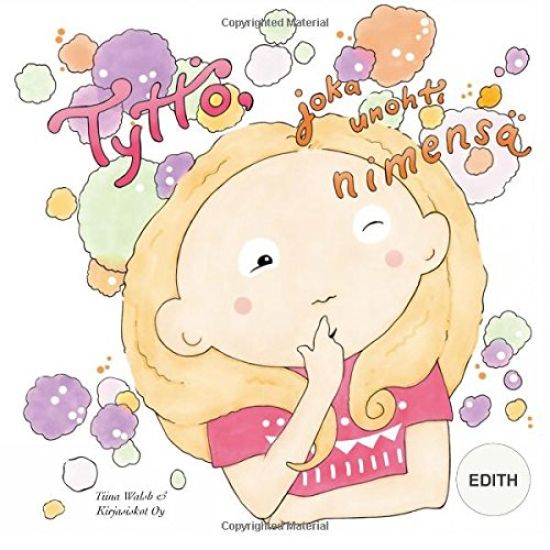
Tyttö, joka unohti nimensä EDITH

Tyttö, joka unohti nimensä EDITH

Tiina Walsh

Createspace Independent Publishing Platform
2017
pokkari
Yksiloity satukirja EDITH-nimisille tytoille Tytto heraa, eika muista nimeaan. Hikka-Hiiri osaa ratkaista pulman. Han vie tyton taikabussillaan jannittavalle seikkailulle. Seikkailun maaraa lapsen oma nimi Tytto, joka unohti nimensa - Taianomainen yksiloity satukirja Kirjasiskot Oy: lta, kirjasiskot.fi
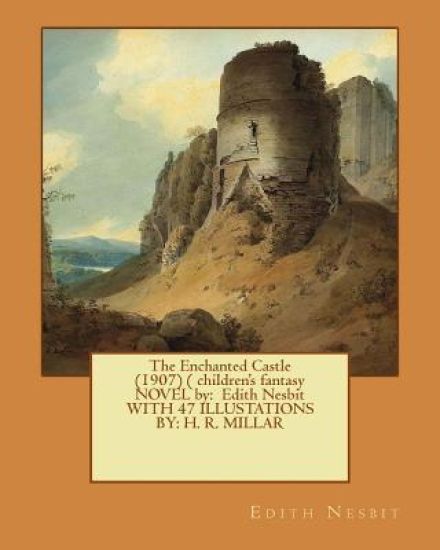
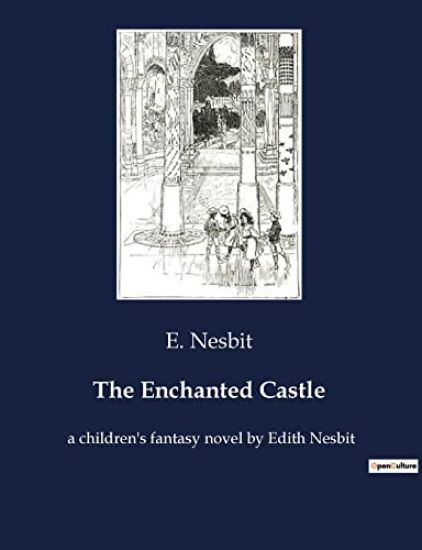
The Enchanted Castle: A children's fantasy novel by Edith Nesbit
The enchanted castle of the title is a country estate in the West Country seen through the eyes of three children, Jerry, Jimmy, and Kathy, who discover it while exploring during the school holidays. The lake, groves and marble statues, with white towers and turrets in the distance, make a fairy-tale setting, and then in the middle of the maze in the rose garden, they find a sleeping fairy-tale princess. The "princess" tells them that the castle is full of magic, and they almost believe her. She shows them the treasures of the castle, including a magic ring she says is a ring of invisibility, but when it actually turns her invisible she panics and admits that she is the housekeeper's niece, Mabel, and was just play-acting. The children soon find that the ring has other magical powers such as making the "Ugly-Wugglies" (Guy Fawkes style dummies they had made to swell the audience at one of their play-performances) come to life. They eventually discover that the ring is actually granting their own wishes, and that the disturbing results stem from their failure to specify those wishes precisely. The Enchanted Castle was written for both children and adults. It combines descriptions of the imaginative play of children, reminiscent of The Story of the Treasure Seekers, with a magic more muted than in her major fantasies such as The Story of the Amulet.
The Presence of Duns Scotus in the Thought of Edith Stein

The Presence of Duns Scotus in the Thought of Edith Stein

Francesco Alfieri

Springer International Publishing AG
2015
sidottu
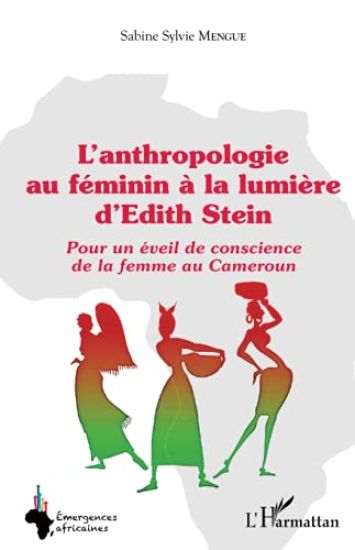
This book examines the phenomenological anthropology of Edith Stein. It specifically focuses on the question which Stein addressed in her work Finite and Eternal Being: What is the foundational principle that makes the individual unique and unrepeatable within the human species? Traditional analyses of Edith Stein’s writings have tended to frame her views on this issue as being influenced by Aristotle and Thomas Aquinas, while neglecting her interest in the lesser-known figure of Duns Scotus. Yet, as this book shows, with regard to the question of individuality, Stein was critical of Aquinas’ approach, finding that of Duns Scotus to be more convincing. In order to get to the heart of Stein’s readings of Duns Scotus, this book looks at her published writings and her personal correspondence, in addition to conducting a meticulous analysis of the original codexes on which her sources were based. Written with diligence and flair, the book critically evaluates the authenticity of Stein’s sources and shows how the position of Scotus himself evolved. It highlights the originality of Stein’s contribution, which was to rediscover the relevance of Mediaeval scholastic thought and reinterpret it in the language of the Phenomenological school founded by Edmund Husserl.
The Presence of Duns Scotus in the Thought of Edith Stein

The Presence of Duns Scotus in the Thought of Edith Stein

Francesco Alfieri

Springer International Publishing AG
2016
nidottu
This book examines the phenomenological anthropology of Edith Stein. It specifically focuses on the question which Stein addressed in her work Finite and Eternal Being: What is the foundational principle that makes the individual unique and unrepeatable within the human species? Traditional analyses of Edith Stein’s writings have tended to frame her views on this issue as being influenced by Aristotle and Thomas Aquinas, while neglecting her interest in the lesser-known figure of Duns Scotus. Yet, as this book shows, with regard to the question of individuality, Stein was critical of Aquinas’ approach, finding that of Duns Scotus to be more convincing. In order to get to the heart of Stein’s readings of Duns Scotus, this book looks at her published writings and her personal correspondence, in addition to conducting a meticulous analysis of the original codexes on which her sources were based. Written with diligence and flair, the book critically evaluates the authenticity of Stein’s sources and shows how the position of Scotus himself evolved. It highlights the originality of Stein’s contribution, which was to rediscover the relevance of Mediaeval scholastic thought and reinterpret it in the language of the Phenomenological school founded by Edmund Husserl.