Edith Wharton ( born Edith Newbold Jones; January 24, 1862 - August 11, 1937) was a Pulitzer Prize-winning American novelist, short story writer, and designer. She was nominated for the Nobel Prize in Literature in 1927, 1928 and 1930.Wharton combined her insider's view of America's privileged classes with a brilliant, natural wit to write humorous, incisive novels and short stories of social and psychological insight. She was well acquainted with many of her era's other literary and public figures, including Theodore Roosevelt.Edith Wharton was born Edith Newbold Jones to George Frederic Jones and Lucretia Stevens Rhinelander at their brownstone at 14 West Twenty-third Street in New York City. She had two much older brothers, Frederic Rhinelander, who was sixteen, and Henry Edward, who was eleven. She was baptized April 20, 1862, Easter Sunday, at Grace Church. To her friends and family she was known as "Pussy Jones".The saying "keeping up with the Joneses" is said to refer to her father's family. She was also related to the Rensselaer family, the most prestigious of the old patroon families. She had a lifelong lovely friendship with her Rhinelander niece, landscape architect Beatrix Farrand of Reef Point in Bar Harbor, Maine. Edith was born during the Civil War; she was three years old when the South surrendered. After the war, the family traveled extensively in Europe.From 1866 to 1872, the Jones family visited France, Italy, Germany, and Spain.During her travels, the young Edith became fluent in French, German, and Italian. At the age of ten, she suffered from typhoid fever while the family was at a spa in the Black Forest. After the family returned to the United States in 1872, they spent their winters in New York and their summers in Newport, Rhode Island. While in Europe, she was educated by tutors and governesses. She rejected the standards of fashion and etiquette that were expected of young girls at the time, intended to enable women to marry well and to be displayed at balls and parties. She thought these requirements were superficial and oppressive. Edith wanted more education than she received, so she read from her father's library and from the libraries of her father's friends.Her mother forbade her to read novels until she was married, and Edith complied with this command Edith began writing poetry and fiction as a young girl. She attempted to write a novel at age eleven. Her first publication was a translation of the German poem, "Was die Steine Erz hlen" ("What the Stones Tell") by Heinrich Karl Brugsch, which earned her $50. She was 15 at the time. Her family did not wish her name to appear in print because the names of upper class women of the time only appeared in print to announce birth, marriage, and death. Consequently, the poem was published under the name of a friend's father, E. A. Washburn. He was a cousin of Ralph Waldo Emerson and supported women's education. He played a pivotal role in Edith's efforts to educate herself, and he encouraged her ambition to write professionally.In 1877, at the age of 15, she secretly wrote a 30,000 word novella "Fast and Loose". In 1878 her father arranged for a collection of two dozen original poems and five translations, Verses, to be privately published. In 1880 she had five poems published anonymously in the Atlantic Monthly, then a revered literary magazine. Despite these early successes, she was not encouraged by her family nor her social circle, and though she continued to write, she did not publish anything again until her poem, "The Last Giustiniani", was published in Scribner's Magazine in October 1889. Edith was engaged to Henry Stevens in 1882 after a two-year courtship. The month the two were to marry, the engagement abruptly ended....
Edith Wharton ( born Edith Newbold Jones; January 24, 1862 - August 11, 1937) was a Pulitzer Prize-winning American novelist, short story writer, and designer. The Reef is a 1912 novel by American writer Edith Wharton. It concerns a romance between a widow and her former lover. The novel takes place in Paris and rural France, but primarily features American characters. While writing the novel, Edith Wharton visited England, Sicily, and Germany, among other locations.In a letter to Bernard Berenson in November 1912, Wharton expressed regret regarding her novel, calling it a "poor miserable lifeless lump". She wrote, "Anyhow, remember it's not me, though I thought it was when I was writing it-& that next time I'm going to do something worthwhile Plot: George Darrow, an American diplomat residing in London, has remained in contact with his former love, Anna Leath, who had previously married another man. Now widowed, she resumes contact with Darrow. Darrow desires to continue the relationship he had with Anna but remains concerned about her commitment to the relationship.The novel begins with Darrow preparing to join Anna in France when he receives a telegram ordering him to wait "til thirtieth" because of an "unexpected obstacle" - one of many such delays Anna has ordered. Deeply humiliated and disappointed, Darrow boards the boat regardless and runs into the young Sophy Viner, a woman he had previously encountered but never gotten to know thoroughly . Sophy, although down on her luck, is an ambitious aspiring actress determined to start a new life in France. Enthralled, Darrow convinces her to spend a few days with him so he can show her around Paris. During their time spent together, the two enter into a romantic affair. Months later, Darrow meets Anna at her French country chateau at Givr . They speak of their future and of Anna's stepson Owen, who wishes to marry a woman of which his grandmother, Dowager Marquise de Chantelle, does not approve. Additionally, Darrow informs Anna of his plans for their future together; he hopes to move to South America together for his job. It is revealed that Anna had hired a governess for her young daughter, Effie. That governess is Sophy Viner. Sophy, embarrassed by the situation, begs Darrow not to say anything that might jeopardize her employment. Darrow tries to convince Sophy not to marry Owen, and Sophy accuses him of jealousy. Darrow admits to Anna that he knew Sophy already. Anna quizzes him about Sophy, out of concern for Owen, who is engaged to Sophy. Darrow agrees with the Marquise that the union would not be wise. The Dowager Marquise requests that an old family friend, Adelaide Painter, talk some sense into the family. However, when Adelaide supports the union, the Marquise concedes to her grandson. The road is clear for Owen and Sophy to marry, which also frees the path for Darrow and Anna. Sophy unexpectedly breaks off the engagement to Owen. Owen becomes suspicious of Darrow's influence over Sophy. The main characters then attempt to figure out what happened by interrogating each other. This part of the novel shows an increase in dialogue, and an unusually high rate of dialogue for Wharton's novels. Sophy eventually reveals to Darrow that she has loved him since Paris. The affair between Darrow and Sophy is revealed to Anna. Darrow attempts to explain that the affair was short lived, but Anna cannot live with the knowledge and becomes convinced that the revelation destroyed any potential for a future relationship. Despite the fact that Anna believes herself to be well matched with Darrow, she is unable to overcome her jealousy of Sophy. She becomes obsessed with imagining the time they spent together. Owen leaves for Spain. Sophy is reemployed by Mrs. Murrett, her previous employer, and moves to India. Anna encounters Sophy's large, slovenly sister and her lover, which gives Anna the perspective that Sophy is not as much of a fallen woman as she originally thought
Stephen Glennard betrays a former love, selling her letters to him so that he may raise the money to marry his beautiful fiancee.Plot summary: Stephen Glennard's career is falling apart and he desperately needs money so that he may marry his beautiful fiancee. He happens upon an advertisement in a London magazine promising the prospect of financial gain. Glennard was once pursued by Margaret Aubyn, a famous and recently deceased author, and he still has her passionate love letters to him. Glennard removes his name from the letters and sells them, making him a fortune and building a marriage based on the betrayal of another. However, his mounting shame and his guilty conscience ultimately force him to confess his betrayal to his wife. He fully expects (and even desires) that his confession will cause her to despise him. However, her wise and forgiving response opens a way for him to forgive himself and to make what limited amends he can make for his actions.... Edith Wharton ( born Edith Newbold Jones; January 24, 1862 - August 11, 1937) was a Pulitzer Prize-winning American novelist, short story writer, and designer. She was nominated for the Nobel Prize in Literature in 1927, 1928 and 1930.Wharton combined her insider's view of America's privileged classes with a brilliant, natural wit to write humorous, incisive novels and short stories of social and psychological insight. She was well acquainted with many of her era's other literary and public figures, including Theodore Roosevelt.Edith Wharton was born Edith Newbold Jones to George Frederic Jones and Lucretia Stevens Rhinelander at their brownstone at 14 West Twenty-third Street in New York City. She had two much older brothers, Frederic Rhinelander, who was sixteen, and Henry Edward, who was eleven. She was baptized April 20, 1862, Easter Sunday, at Grace Church. To her friends and family she was known as "Pussy Jones".The saying "keeping up with the Joneses" is said to refer to her father's family. She was also related to the Rensselaer family, the most prestigious of the old patroon families. She had a lifelong lovely friendship with her Rhinelander niece, landscape architect Beatrix Farrand of Reef Point in Bar Harbor, Maine. Edith was born during the Civil War; she was three years old when the South surrendered. After the war, the family traveled extensively in Europe.From 1866 to 1872, the Jones family visited France, Italy, Germany, and Spain.During her travels, the young Edith became fluent in French, German, and Italian. At the age of ten, she suffered from typhoid fever while the family was at a spa in the Black Forest. After the family returned to the United States in 1872, they spent their winters in New York and their summers in Newport, Rhode Island. While in Europe, she was educated by tutors and governesses. She rejected the standards of fashion and etiquette that were expected of young girls at the time, intended to enable women to marry well and to be displayed at balls and parties. She thought these requirements were superficial and oppressive. Edith wanted more education than she received, so she read from her father's library and from the libraries of her father's friends.Her mother forbade her to read novels until she was married, and Edith complied with this command.........
Edith Wharton ( born Edith Newbold Jones; January 24, 1862 - August 11, 1937) was a Pulitzer Prize-winning American novelist, short story writer, and designer. She was nominated for the Nobel Prize in Literature in 1927, 1928 and 1930.Wharton combined her insider's view of America's privileged classes with a brilliant, natural wit to write humorous, incisive novels and short stories of social and psychological insight. She was well acquainted with many of her era's other literary and public figures, including Theodore Roosevelt.Edith Wharton was born Edith Newbold Jones to George Frederic Jones and Lucretia Stevens Rhinelander at their brownstone at 14 West Twenty-third Street in New York City. She had two much older brothers, Frederic Rhinelander, who was sixteen, and Henry Edward, who was eleven. She was baptized April 20, 1862, Easter Sunday, at Grace Church. To her friends and family she was known as "Pussy Jones".The saying "keeping up with the Joneses" is said to refer to her father's family. She was also related to the Rensselaer family, the most prestigious of the old patroon families. She had a lifelong lovely friendship with her Rhinelander niece, landscape architect Beatrix Farrand of Reef Point in Bar Harbor, Maine. Edith was born during the Civil War; she was three years old when the South surrendered. After the war, the family traveled extensively in Europe.From 1866 to 1872, the Jones family visited France, Italy, Germany, and Spain.During her travels, the young Edith became fluent in French, German, and Italian. At the age of ten, she suffered from typhoid fever while the family was at a spa in the Black Forest. After the family returned to the United States in 1872, they spent their winters in New York and their summers in Newport, Rhode Island. While in Europe, she was educated by tutors and governesses. She rejected the standards of fashion and etiquette that were expected of young girls at the time, intended to enable women to marry well and to be displayed at balls and parties. She thought these requirements were superficial and oppressive. Edith wanted more education than she received, so she read from her father's library and from the libraries of her father's friends.Her mother forbade her to read novels until she was married, and Edith complied with this command Edith began writing poetry and fiction as a young girl. She attempted to write a novel at age eleven. Her first publication was a translation of the German poem, "Was die Steine Erz hlen" ("What the Stones Tell") by Heinrich Karl Brugsch, which earned her $50. She was 15 at the time. Her family did not wish her name to appear in print because the names of upper class women of the time only appeared in print to announce birth, marriage, and death. Consequently, the poem was published under the name of a friend's father, E. A. Washburn. He was a cousin of Ralph Waldo Emerson and supported women's education. He played a pivotal role in Edith's efforts to educate herself, and he encouraged her ambition to write professionally.In 1877, at the age of 15, she secretly wrote a 30,000 word novella "Fast and Loose". In 1878 her father arranged for a collection of two dozen original poems and five translations, Verses, to be privately published. In 1880 she had five poems published anonymously in the Atlantic Monthly, then a revered literary magazine. Despite these early successes, she was not encouraged by her family nor her social circle, and though she continued to write, she did not publish anything again until her poem, "The Last Giustiniani", was published in Scribner's Magazine in October 1889.
Edith Wharton ( born Edith Newbold Jones; January 24, 1862 - August 11, 1937) was a Pulitzer Prize-winning American novelist, short story writer, and designer. She was nominated for the Nobel Prize in Literature in 1927, 1928 and 1930.Wharton combined her insider's view of America's privileged classes with a brilliant, natural wit to write humorous, incisive novels and short stories of social and psychological insight. She was well acquainted with many of her era's other literary and public figures, including Theodore Roosevelt.Edith Wharton was born Edith Newbold Jones to George Frederic Jones and Lucretia Stevens Rhinelander at their brownstone at 14 West Twenty-third Street in New York City. She had two much older brothers, Frederic Rhinelander, who was sixteen, and Henry Edward, who was eleven. She was baptized April 20, 1862, Easter Sunday, at Grace Church. To her friends and family she was known as "Pussy Jones".The saying "keeping up with the Joneses" is said to refer to her father's family. She was also related to the Rensselaer family, the most prestigious of the old patroon families. She had a lifelong lovely friendship with her Rhinelander niece, landscape architect Beatrix Farrand of Reef Point in Bar Harbor, Maine. Edith was born during the Civil War; she was three years old when the South surrendered. After the war, the family traveled extensively in Europe.From 1866 to 1872, the Jones family visited France, Italy, Germany, and Spain.During her travels, the young Edith became fluent in French, German, and Italian. At the age of ten, she suffered from typhoid fever while the family was at a spa in the Black Forest. After the family returned to the United States in 1872, they spent their winters in New York and their summers in Newport, Rhode Island. While in Europe, she was educated by tutors and governesses. She rejected the standards of fashion and etiquette that were expected of young girls at the time, intended to enable women to marry well and to be displayed at balls and parties. She thought these requirements were superficial and oppressive. Edith wanted more education than she received, so she read from her father's library and from the libraries of her father's friends.Her mother forbade her to read novels until she was married, and Edith complied with this command Edith began writing poetry and fiction as a young girl. She attempted to write a novel at age eleven. Her first publication was a translation of the German poem, "Was die Steine Erz hlen" ("What the Stones Tell") by Heinrich Karl Brugsch, which earned her $50. She was 15 at the time. Her family did not wish her name to appear in print because the names of upper class women of the time only appeared in print to announce birth, marriage, and death.
The Railway Children is a children's book by Edith Nesbit, originally serialised in The London Magazine during 1905 and first published in book form in 1906. It has been adapted for the screen several times, of which the 1970 film version is the best known. The Oxford Dictionary of National Biography credits Oswald Barron, who had a deep affection for Nesbit, with having provided the plot. The setting is thought to be inspired by Edith's walks to Chelsfield railway station close to where she lived, and her observance of the construction of the railway cutting and tunnel between Chelsfield and Knockholt. Plot: The story concerns a family who move from London to "The Three Chimneys", a house near the railway in Yorkshire, after the father, who works at the Foreign Office, is imprisoned after being falsely accused of spying. The children befriend an Old Gentleman who regularly takes the 9:15 train near their home; he is eventually able to help prove their father's innocence, and the family is reunited. The family takes care of a Russian exile, Mr Szczepansky, who came to England looking for his family (later located) and Jim, the grandson of the Old Gentleman, who suffers a broken leg in a tunnel. The theme of an innocent man being falsely imprisoned for espionage and finally vindicated might have been influenced by the Dreyfus Affair, which was a prominent worldwide news item a few years before the book was written. The Russian exile, persecuted by the Tsars for writing "a beautiful book about poor people and how to help them" and subsequently helped by the children, was most likely an amalgam of the real-life dissidents Sergius Stepniak and Peter Kropotkin who were both friends of the author.... Edith Nesbit (married name Edith Bland; 15 August 1858 - 4 May 1924) was an English author and poet; she published her books for children under the name of E. Nesbit. She wrote or collaborated on more than 60 books of children's literature. She was also a political activist and co-founded the Fabian Society, a socialist organisation later affiliated to the Labour Party. Nesbit was born in 1858 at 38 Lower Kennington Lane in Kennington, Surrey (now part of Greater London), the daughter of an agricultural chemist, John Collis Nesbit, who died in March 1862, before her fourth birthday. Her sister Mary's ill health meant that the family travelled around for some years, living variously in Brighton, Buckinghamshire, France (Dieppe, Rouen, Paris, Tours, Poitiers, Angoul me, Bordeaux, Arcachon, Pau, Bagn res-de-Bigorre, and Dinan in Brittany), Spain and Germany, before settling for three years at Halstead Hall in Halstead in north-west Kent, a location which later inspired The Railway Children (this distinction has also been claimed by the Derbyshire town of New Mills). At eighteen, Nesbit met the bank clerk Hubert Bland in 1877. Seven months pregnant, she married Bland on 22 April 1880, though she did not immediately live with him, as Bland initially continued to live with his mother. Their marriage was a stormy one. Early on Nesbit discovered that another woman believed she was Hubert's fiancee and had also borne him a child. A more serious blow came later when she discovered that her good friend, Alice Hoatson, was pregnant with Hubert's child. She had previously agreed to adopt Hoatson's child and allow Hoatson to live with her as their housekeeper. After she discovered the truth, they quarrelled violently and she suggested that Hoatson and the baby should leave; her husband threatened to leave Edith if she disowned the baby and its mother. Hoatson remained with them as a housekeeper and secretary and became pregnant by Bland again 13 years later....
"Conventionally our life-story ended in a shower of rice at the church door, amid the scent of white flowers, with a flutter of white favors all about us." Thus begins The Red House, Nesbit's charming novel of Chloe and Len, newlyweds adjusting to a new life and a new home. When Len inherits a house in the country from his uncle, Chloe insists they live there, whether the rumors of a ghost be true or not. When mysterious events happen, they are always blamed on the ghost. But the ultimate surprise rests in who that ghost really is. Edith Nesbit (married name Edith Bland; 15 August 1858 - 4 May 1924) was an English author and poet; she published her books for children under the name of E. Nesbit. She wrote or collaborated on more than 60 books of children's literature. She was also a political activist and co-founded the Fabian Society, a socialist organisation later affiliated to the Labour Party. Nesbit was born in 1858 at 38 Lower Kennington Lane in Kennington, Surrey (now part of Greater London), the daughter of an agricultural chemist, John Collis Nesbit, who died in March 1862, before her fourth birthday. Her sister Mary's ill health meant that the family travelled around for some years, living variously in Brighton, Buckinghamshire, France (Dieppe, Rouen, Paris, Tours, Poitiers, Angoul me, Bordeaux, Arcachon, Pau, Bagn res-de-Bigorre, and Dinan in Brittany), Spain and Germany, before settling for three years at Halstead Hall in Halstead in north-west Kent, a location which later inspired The Railway Children (this distinction has also been claimed by the Derbyshire town of New Mills). At eighteen, Nesbit met the bank clerk Hubert Bland in 1877. Seven months pregnant, she married Bland on 22 April 1880, though she did not immediately live with him, as Bland initially continued to live with his mother. Their marriage was a stormy one. Early on Nesbit discovered that another woman believed she was Hubert's fiancee and had also borne him a child. A more serious blow came later when she discovered that her good friend, Alice Hoatson, was pregnant with Hubert's child. She had previously agreed to adopt Hoatson's child and allow Hoatson to live with her as their housekeeper. After she discovered the truth, they quarrelled violently and she suggested that Hoatson and the baby should leave; her husband threatened to leave Edith if she disowned the baby and its mother. Hoatson remained with them as a housekeeper and secretary and became pregnant by Bland again 13 years later. Edith again adopted Hoatson's child. Nesbit's children were Paul Bland (1880-1940), to whom The Railway Children was dedicated; Iris Bland (1881-1950s); Fabian Bland (1885-1900); Rosamund Bland (1886-1950), to whom The Book of Dragons was dedicated; and John Bland (1898-1971) to whom The House of Arden was dedicated. Her son Fabian died aged 15 after a tonsil operation; Nesbit dedicated a number of books to him: Five Children and It and its sequels, as well as The Story of the Treasure Seekers and its sequels. Nesbit's adopted daughter Rosamund collaborated with her on the book Cat Tales....
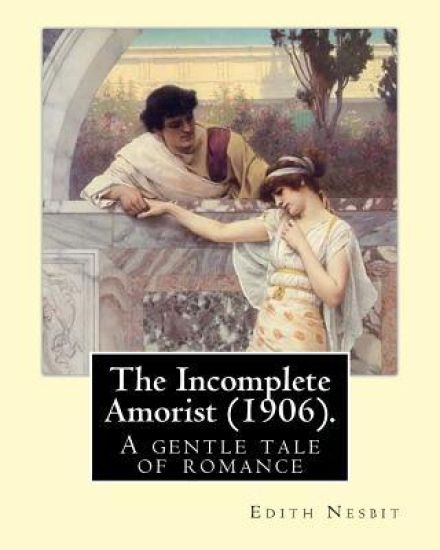
Edith Nesbit (married name Edith Bland; 15 August 1858 - 4 May 1924) was an English author and poet; she published her books for children under the name of E. Nesbit. She wrote or collaborated on more than 60 books of children's literature. She was also a political activist and co-founded the Fabian Society, a socialist organisation later affiliated to the Labour Party. Nesbit was born in 1858 at 38 Lower Kennington Lane in Kennington, Surrey (now part of Greater London), the daughter of an agricultural chemist, John Collis Nesbit, who died in March 1862, before her fourth birthday. Her sister Mary's ill health meant that the family travelled around for some years, living variously in Brighton, Buckinghamshire, France (Dieppe, Rouen, Paris, Tours, Poitiers, Angoul me, Bordeaux, Arcachon, Pau, Bagn res-de-Bigorre, and Dinan in Brittany), Spain and Germany, before settling for three years at Halstead Hall in Halstead in north-west Kent, a location which later inspired The Railway Children (this distinction has also been claimed by the Derbyshire town of New Mills). At eighteen, Nesbit met the bank clerk Hubert Bland in 1877. Seven months pregnant, she married Bland on 22 April 1880, though she did not immediately live with him, as Bland initially continued to live with his mother. Their marriage was a stormy one. Early on Nesbit discovered that another woman believed she was Hubert's fiancee and had also borne him a child. A more serious blow came later when she discovered that her good friend, Alice Hoatson, was pregnant with Hubert's child. She had previously agreed to adopt Hoatson's child and allow Hoatson to live with her as their housekeeper. After she discovered the truth, they quarrelled violently and she suggested that Hoatson and the baby should leave; her husband threatened to leave Edith if she disowned the baby and its mother. Hoatson remained with them as a housekeeper and secretary and became pregnant by Bland again 13 years later. Edith again adopted Hoatson's child. Nesbit's children were Paul Bland (1880-1940), to whom The Railway Children was dedicated; Iris Bland (1881-1950s); Fabian Bland (1885-1900); Rosamund Bland (1886-1950), to whom The Book of Dragons was dedicated; and John Bland (1898-1971) to whom The House of Arden was dedicated. Her son Fabian died aged 15 after a tonsil operation; Nesbit dedicated a number of books to him: Five Children and It and its sequels, as well as The Story of the Treasure Seekers and its sequels. Nesbit's adopted daughter Rosamund collaborated with her on the book Cat Tales.... A gentle tale of romance and art from a noted children's author . . . "He asked idle questions: she answered them with a conscientious tremulous truthfulness that showed to him as the most finished art. Betty told him nervously and in words ill-chosen everything that he asked to know, but all the while the undercurrent of questions rang strong within her -- 'When is he to teach me? Where? How' -- so that when at last there was left but the bare fifteen minutes needed to get one home in time for the midday dinner she said abruptly: 'And when shall I see you again'"
Edith Nesbit (married name Edith Bland; 15 August 1858 - 4 May 1924) was an English author and poet; she published her books for children under the name of E. Nesbit. She wrote or collaborated on more than 60 books of children's literature. She was also a political activist and co-founded the Fabian Society, a socialist organisation later affiliated to the Labour Party.Nesbit was born in 1858 at 38 Lower Kennington Lane in Kennington, Surrey (now part of Greater London), the daughter of an agricultural chemist, John Collis Nesbit, who died in March 1862, before her fourth birthday. Her sister Mary's ill health meant that the family travelled around for some years, living variously in Brighton, Buckinghamshire, France (Dieppe, Rouen, Paris, Tours, Poitiers, Angoul me, Bordeaux, Arcachon, Pau, Bagn res-de-Bigorre, and Dinan in Brittany), Spain and Germany, before settling for three years at Halstead Hall in Halstead in north-west Kent, a location which later inspired The Railway Children (this distinction has also been claimed by the Derbyshire town of New Mills
Set against the bleak winter landscape of New England, Ethan Frome is the story of a poor farmer, lonely and downtrodden, his wife Zeena, and her cousin, the enchanting Mattie Silver. In the playing out of this short novel's powerful and engrossing drama, Edith Wharton constructed her least characteristic and most celebrated book.
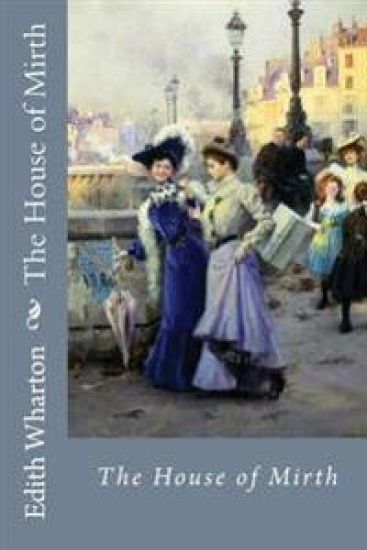
The House of Mirth (1905), a novel by Edith Wharton (1862-1937), tells the story of Lily Bart, a well-born but impoverished woman belonging to New York City's high society around the turn of the last century. a] Wharton creates a portrait of a stunning beauty who, though raised and educated to marry well both socially and economically, is reaching her 29th year, an age when her youthful blush is drawing to a close and her marital prospects are becoming ever more limited. The House of Mirth traces Lily's slow two-year social descent from privilege to a tragically lonely existence on the margins of society. Wharton uses Lily as an attack on "an irresponsible, grasping and morally corrupt upper class." (309-310)
Author of more than thirteen books and several volumes of poetry, screenwriter, and director, Edith Bruck is one of the leading literary voices in Italy, attracting increasing attention in the English-speaking world not least for her powerful Holocaust testimony, which is often compared with the work of her contemporaries Primo Levi and Giorgio Bassani. Born in Hungary in 1932, she was deported with her family to the concentration camps of Auschwitz, Dachau, Christianstadt, Landsberg, and Bergen-Belsen, where she lost both her parents and a brother. After the war, she traveled widely until 1954 when she settled in Rome. She has lived there ever since. This important new study is motivated by a desire to better understand and situate Bruck's art as well as to advance (and, when necessary, to revise) the critical discourse on her considerable and eclectic body of work. As such, it underscores and analyzes the intermedial nature of her contributions to contemporary Italian culture, which should no longer be understood merely in terms of her willingness to revisit the subject of the Holocaust on the printed page or the silver screen. It also includes previously unpublished interviews with the author. The book will be of broad interest to scholars and students of Jewish (especially Holocaust) studies, Italian literature, film studies, women's studies, and postcolonial culture."This is the first comprehensive scholarly analysis of the work produced by a main contemporary author of Italian Holocaust literature, focused on Bruck's overall artistic production (novels, poetry, film, and TV productions). It will offer scholars and students alike a new interpretive perspective and a valuable source of reference for their studies." Gabriella Romani, Seton Hall University.
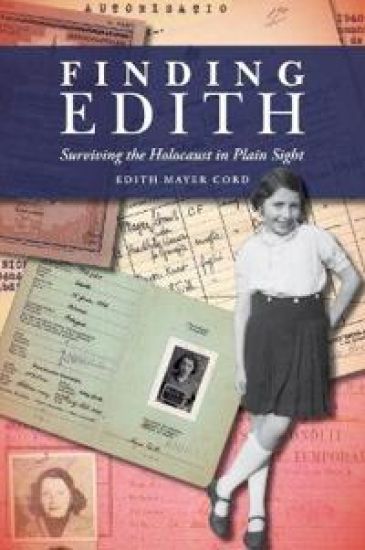
Finding Edith: Surviving the Holocaust in Plain Sight is the coming-of-age story of a young Jewish girl chased in Europe during World War II. Like a great adventure story, the book describes the childhood and adolescence of a Viennese girl growing up against the backdrop of the Great Depression, the rise of Nazism, World War II, and the religious persecution of Jews throughout Europe. Edith was hunted in Western Europe and Vichy France, where she was hidden in plain sight, constantly afraid of discovery and denunciation. Forced to keep every thought to herself, Edith developed an intense inner life. After spending years running and eventually hiding alone, she was smuggled into Switzerland. Deprived of schooling, Edith worked at various jobs until the end of the war when she was able to rejoin her mother, who had managed to survive in France.After the war, the truth about the deathcamps and the mass murder on an industrial scale became fully known. Edith faced the trauma of Germany's depravity, the murder of her father and older brother in Auschwitz, her mother's irrational behavior, and the extreme poverty of the post-war years. She had to make a living but also desperately wanted to catch up on her education. What followed were seven years of struggle, intense study, and hard work until finally, against considerable odds, Edith earned the baccalauréat in 1949 and the licence ès lettres from the University of Toulouse in 1952 before coming to the United States. In America, Edith started at the bottom like all immigrants and eventually became a professor and later a financial advisor and broker. Since her retirement, Edith dedicates her time to publicly speaking about her experiences and the lessons from her life.
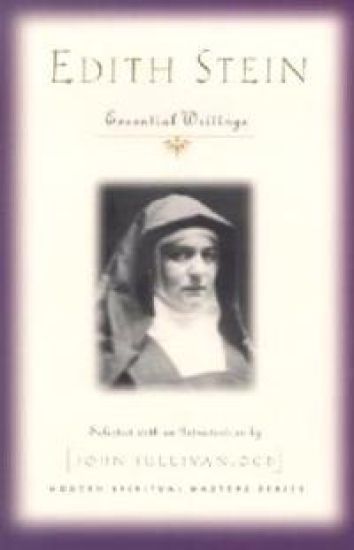
Edith Stein (1891-1942), who was recently canonized, was one of the most intriguing Catholics of the twentieth century. A Jewish convert, an eminent philosopher, educator, and advocate for women, she became a Discalced Carmelite nun, Sister Teresa Benedicta of the Cross. Arrested by the Nazis she died in Auschwitz in 1942. This volume highlights the extraordinary features of her spirituality -- a vision that integrated her philosophical training, her affinity for Carmelite mysticism, and her personal identification with the way of the Cross. Edith Stein provides a wonderful introduction to an extraordinary mind.