mile Reynaud (1844-1918) est-il un pionnier parmi d'autres ou le pionnier du cin ma ? C'est la question pos e par des chercheurs internationaux exceptionnellement rassembl s sur cette th matique. Ce livre interroge tour tour la pratique photographique du pionnier et ce que l'on sait aujourd'hui de son invention principale, le Th tre optique (1889), et de ses Pantomimes lumineuses - dessins anim s en couleurs et sonoris s projet s sur un cran, pour la premi re fois au monde au mus e Gr vin, Paris, en 1892. M taphoriquement, mile Reynaud. Nouveaux regards est aux ouvrages qui l'ont pr c d ce que le nouveau t lescope James-Webb est l'ancien t lescope Hubble: il permet - en tudiant la face cach e, la conservation actuelle, l'historiographie et la contemporan it de Reynaud - de distinguer le big-bang qui a vu na tre le cin ma. Espace polymorphe et d dalique, ce volume, qui met en lumi re quelques zones en jach re, est, en outre, jalonn de nombreux documents iconographiques in dits. Cet incontournable de l'historiographie cin matographique contemporaine, dirig par S bastien Roffat, Sylvie Saerens et Pascal Vimenet, est d di S bastien Roffat, d c d le 5 septembre 2022.
English summary: Emile Meyerson (1859-1933) developed a philosophy of science that combined classical sciences with principles such as thermodynamics, the theory of relativity, and quantum mechanics. Influential among many physicists, psychiatrists, and scientists, Meyersons philosophy of the mind made the examination of constants in nature a fundamental principle of reason and the spirit of the history of science. French description: Emile Meyerson (1859-1933), philosophe francais, juif d'origine polonaise, chimiste forme en Allemagne, a elabore une oeuvre de philosophie des sciences considerable, forte de plusieurs volumes, qui embrasse les conceptions de la science classique comme les principes de la thermodynamique, la theorie de la relativite et la mecanique quantique. L'oeuvre de Meyerson a longtemps ete negligee dans la tradition epistemologique francaise, alors qu'elle avait rallie a elle nombre des physiciens aussi eminents qu'Einstein et de Broglie ou des psychiatres comme Minkowski et le jeune Lacan. La philosophie de l'intellect de Meyerson fait de la recherche d'invariants dans la nature le principe fondamental de la raison et le ressort inapercu de l'histoire des sciences. Elle a su aussi bien s'expliquer avec la pensee idealiste allemande qu'interroger le fonctionnement du sens commun. Elle a entretenu des relations complexes avec certaines theories majeures de son temps, celles de Brunschvicg et de Bachelard, ou celles de Frege et de Schlick. Par son analyse des paradigmes scientifiques du passe, Meyerson annonce Koyre et Kuhn, qui se sont d'ailleurs reclames de lui. Il ouvre ainsi des perspectives plus que jamais d'actualite dans les debats contemporains en philosophie des sciences. Frederic Fruteau de Laclos, agrege de philosophie, est maitre de conferences a l'Universite Paris-I Pantheon-Sorbonne et membre du Centre d'histoire des systemes de pensee moderne. Il a publie en 2009 L'epistemologie d'Emile Meyerson. Une anthropologie de la connaissance et Le cheminement de la pensee selon E. Meyerson, et plus recemment La psychologie des philosophes. De Bergson a Vernant
Observera att förlaget som ger ut denna produkt baserar innehållet i sina produkter på fria källor som Wikipedia. Boken är med stor sannolikhet endast ett utdrag ur dessa informationskällor, alltså inte en vanlig bok i den bemärkelsen.
This four volume set is dedicated to the work of Emile Durkheim, one of the most important and prolific sociologists in the field, who is commonly cited as a founding father of modern social science. With volumes published between 1975 and 1991, this collection brings together a range of modern critical responses to Durkheim's work across a broad range of topics, including: epistemology, modernism and post-modernism, theories of social order, and the rise and development of modern society. The authors in the collection also draw important comparisons between Durkheim and other seminal sociologists, including Max Weber and Claude Bernard.
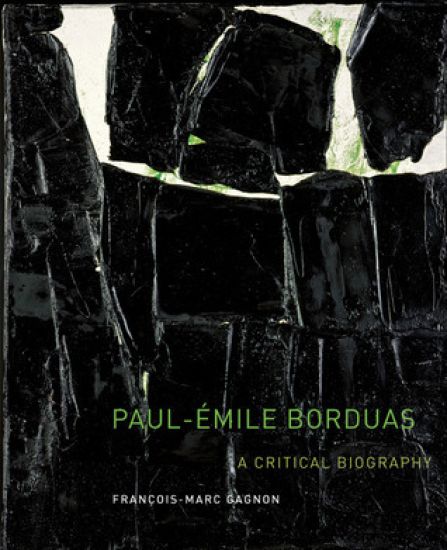
From his beginnings as a rural church decorator, to his role as catalyst of the social and artistic manifesto the Refus global, to a career as Canada's pre-eminent practitioner of radical abstraction abroad, Paul-Emile Borduas's short life encompassed the reversals and contradictions of the modern condition. Drawing on a lifetime of published research, Francois-Marc Gagnon's comprehensive biography is a far-reaching exploration of a Quebec cultural figure renowned for both his art and his thought. Gagnon details each period of Borduas's dynamic career - his apprenticeship with Ozias Leduc, his teaching in Montreal and the role within the Automatiste group, his move to New York at the height of the Abstract Expressionist movement, and then, against the current of the times, to Paris, where he created the iconic images of his "cosmic" period. Borduas's relentless search for an authentic art often put him at odds with his surroundings. As an avant-garde artist in a Montreal art world bound by tradition, his most important work had to be exhibited in makeshift venues; as a surrealist-influenced francophone in New York, he recognized the importance of the major figures of Abstract Expressionism but maintained an independent style and method. A full appreciation of Borduas's radical stance - an artistic and intellectual orientation that was always towards the universal - transforms a Canadian cultural landscape where the narrative of artistic modernism centres on figurative landscape art. An original and rigorously researched work, Paul-Emile Borduas: A Critical Biography provides an English-language readership with a much-needed understanding of a seminal modernist, an exemplary figure in Canadian art, and the origins of modern art in North America.
This work has been selected by scholars as being culturally important and is part of the knowledge base of civilization as we know it.This work is in the public domain in the United States of America, and possibly other nations. Within the United States, you may freely copy and distribute this work, as no entity (individual or corporate) has a copyright on the body of the work.Scholars believe, and we concur, that this work is important enough to be preserved, reproduced, and made generally available to the public. To ensure a quality reading experience, this work has been proofread and republished using a format that seamlessly blends the original graphical elements with text in an easy-to-read typeface.We appreciate your support of the preservation process, and thank you for being an important part of keeping this knowledge alive and relevant.
Nana is a novel by the French naturalist author mile Zola. Completed in 1880, Nana is the ninth installment in the 20-volume Les Rougon-Macquart series. Nana tells the story of Nana Coupeau's rise from streetwalker to high-class prostitute during the last three years of the French Second Empire. Nana first appeared near the end of Zola's earlier novel Rougon-Macquart series, L'Assommoir (1877), where she is the daughter of an abusive drunk. At the conclusion of that novel, she is living in the streets and just beginning a life of prostitution. Nana opens with a night at the Th tre des Vari t s in April 1867 just after the Exposition Universelle has opened. Nana is eighteen years old, though she would have been fifteen according to the family tree of the Rougon-Macquarts Zola had published years before starting work on this novel. Zola describes in detail the performance of La blonde V nus, a fictional operetta modeled after Offenbach's La belle H l ne, in which Nana is cast as the lead. All of Paris is talking about her, though this is her first stage appearance. When asked to say something about her talents, Bordenave, the manager of the theatre, explains that a star does not need to know how to sing or act: "Nana has something else, dammit, and something that takes the place of everything else. I scented it out, and it smells damnably strong in her, or else I lost my sense of smell." Just as the crowd is about to dismiss her performance as terrible, young Georges Hugon shouts: "Tr s chic " From then on, she owns the audience. Zola describes her appearance only thinly veiled in the third act: "All of a sudden, in the good-natured child the woman stood revealed, a disturbing woman with all the impulsive madness of her sex, opening the gates of the unknown world of desire. Nana was still smiling, but with the deadly smile of a man-eater." In the course of the novel Nana destroys every man who pursues her: Philippe Hugon is imprisoned after stealing from the army to lend Nana money; the wealthy banker Steiner bankrupts himself trying to please her; Georges Hugon stabs himself with scissors in anguish over her; Vandeuvres incinerates himself after Nana ruins him financially; Fauchery, a journalist and publisher who falls for Nana early on, writes a scathing article about her later, and falls for her again and is ruined financially; and Count Muffat, whose faithfulness to Nana brings him back for humiliation after humiliation until he finds her in bed with his elderly father-in-law. In George Becker's words: "What emerges from Nana] is the completeness of Nana's destructive force, brought to a culmination in the thirteenth chapter by a kind of roll call of the victims of her voracity". 1] Zola has Nana die a horrible death in July 1870 from smallpox: "What lay on the pillow was a charnel house, a heap of pus and blood, a shovelful of putrid flesh. The pustules had invaded the whole face, so that one pock touched the next". Outside her window the crowd is madly cheering "To Berlin To Berlin " to greet the start of the Franco-Prussian War, which will end in defeat for France and the end of the Second Empire.
Discours prononces sur la tombe de Monsieur Emile Flamant, decede a Douai le 31 octobre 1867 / par M. Talon, ... et M. Morisson, ..Date de l'edition originale: 1867Sujet de l'ouvrage: FlamantCe livre est la reproduction fidele d'une oeuvre publiee avant 1920 et fait partie d'une collection de livres reimprimes a la demande editee par Hachette Livre, dans le cadre d'un partenariat avec la Bibliotheque nationale de France, offrant l'opportunite d'acceder a des ouvrages anciens et souvent rares issus des fonds patrimoniaux de la BnF.Les oeuvres faisant partie de cette collection ont ete numerisees par la BnF et sont presentes sur Gallica, sa bibliotheque numerique.En entreprenant de redonner vie a ces ouvrages au travers d'une collection de livres reimprimes a la demande, nous leur donnons la possibilite de rencontrer un public elargi et participons a la transmission de connaissances et de savoirs parfois difficilement accessibles.Nous avons cherche a concilier la reproduction fidele d'un livre ancien a partir de sa version numerisee avec le souci d'un confort de lecture optimal. Nous esperons que les ouvrages de cette nouvelle collection vous apporteront entiere satisfaction.Pour plus d'informations, rendez-vous sur www.hachettebnf.fr
Anti-Emile / par M. Formey...Date de l'edition originale: 1763Ce livre est la reproduction fidele d'une oeuvre publiee avant 1920 et fait partie d'une collection de livres reimprimes a la demande editee par Hachette Livre, dans le cadre d'un partenariat avec la Bibliotheque nationale de France, offrant l'opportunite d'acceder a des ouvrages anciens et souvent rares issus des fonds patrimoniaux de la BnF.Les oeuvres faisant partie de cette collection ont ete numerisees par la BnF et sont presentes sur Gallica, sa bibliotheque numerique.En entreprenant de redonner vie a ces ouvrages au travers d'une collection de livres reimprimes a la demande, nous leur donnons la possibilite de rencontrer un public elargi et participons a la transmission de connaissances et de savoirs parfois difficilement accessibles.Nous avons cherche a concilier la reproduction fidele d'un livre ancien a partir de sa version numerisee avec le souci d'un confort de lecture optimal. Nous esperons que les ouvrages de cette nouvelle collection vous apporteront entiere satisfaction.Pour plus d'informations, rendez-vous sur www.hachettebnf.fr