
Kirjahaku
Etsi kirjoja tekijän nimen, kirjan nimen tai ISBN:n perusteella.
1000 tulosta hakusanalla Erasmus Wilson
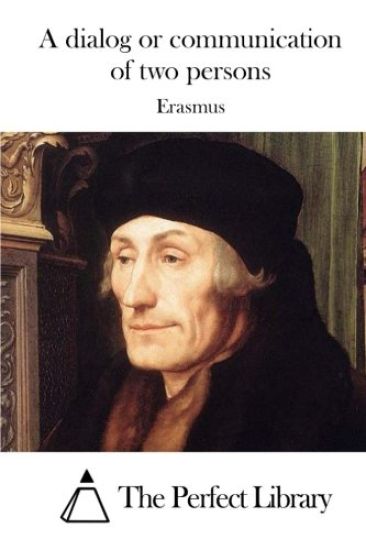
A dialog or communication of two persons
Erasmus
Createspace Independent Publishing Platform
2015
nidottu
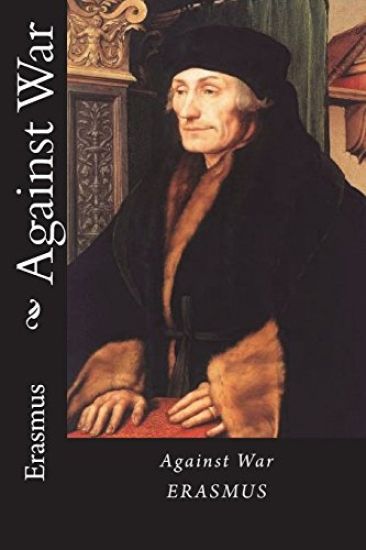
Desiderius Erasmus Roterodamus (28 October 1466 - 12 July 1536), known as Erasmus or Erasmus of Rotterdam, was a Dutch Christian Humanist who was the greatest scholar of the northern Renaissance.Originally trained as a Catholic priest, Erasmus was an important figure in classical scholarship who wrote in a pure Latin style. Among humanists he enjoyed the sobriquet "Prince of the Humanists," and has been called "the crowning glory of the Christian humanists." Using humanist techniques for working on texts, he prepared important new Latin and Greek editions of the New Testament, which raised questions that would be influential in the Protestant Reformation and Catholic Counter-Reformation. He also wrote On Free Will, In Praise of Folly, Handbook of a Christian Knight, On Civility in Children, Copia: Foundations of the Abundant Style, Julius Exclusus, and many other works. Erasmus lived against the backdrop of the growing European religious Reformation, but while he was critical of the abuses within the Catholic Church and called for reform, he kept his distance from Luther and Melanchthon and continued to recognise the authority of the pope, emphasizing a middle way with a deep respect for traditional faith, piety and grace, rejecting Luther's emphasis on faith alone. Erasmus remained a member of the Roman Catholic Church all his life, remaining committed to reforming the Church and its clerics' abuses from within. He also held to the Catholic doctrine of free will, which some Reformers rejected in favor of the doctrine of predestination. His middle road ("Via Media") approach disappointed, and even angered, scholars in both camps. Erasmus died suddenly in Basel in 1536 while preparing to return to Brabant, and was buried in Basel Minster, the former cathedral of the city. A bronze statue of Erasmus was erected in 1622 in his city of birth, replacing an earlier work in stone.
Desiderius Erasmus Roterodamus (28 October 1466 - 12 July 1536), known as Erasmus or Erasmus of Rotterdam, was a Dutch Renaissance humanist, Catholic priest, social critic, teacher, and theologian. Erasmus was a classical scholar and wrote in a pure Latin style. Among humanists he enjoyed the sobriquet "Prince of the Humanists", and has been called "the crowning glory of the Christian humanists". Using humanist techniques for working on texts, he prepared important new Latin and Greek editions of the New Testament, which raised questions that would be influential in the Protestant Reformation and Catholic Counter-Reformation. He also wrote On Free Will, The Praise of Folly, Handbook of a Christian Knight, On Civility in Children, Copia: Foundations of the Abundant Style, Julius Exclusus, and many other works. Erasmus lived against the backdrop of the growing European religious Reformation, but while he was critical of the abuses within the Catholic Church and called for reform, he kept his distance from Luther and Melanchthon and continued to recognise the authority of the pope, emphasizing a middle way with a deep respect for traditional faith, piety and grace, rejecting Luther's emphasis on faith alone. Erasmus remained a member of the Roman Catholic Church all his life, remaining committed to reforming the Church and its clerics' abuses from within. He also held to the Catholic doctrine of free will, which some Reformers rejected in favor of the doctrine of predestination. His middle road ("Via Media") approach disappointed, and even angered, scholars in both camps. Erasmus died suddenly in Basel in 1536 while preparing to return to Brabant, and was buried in Basel Minster, the former cathedral of the city. A bronze statue of Erasmus was erected in his city of birth in 1622, replacing an earlier work in stone.


Our self-understanding as human agents includes a commitment to three crucial claims about human agency: that agents must be active, that actions are part of the natural order of the universe, and that intentional actions can be explained by the agent's reasons for acting. While all of these claims are indispensable elements of our view of ourselves as human agents, they are in continuous conflict and tension with one another, especially once one adopts the currently predominant view of what the natural order must be like. One of the central tasks of philosophy of action consists in showing how, despite appearances, these conflicts can be resolved and our self-understanding as agents be vindicated. The mainstream of contemporary philosophy of action holds that this task can only be fulfilled by an event-causal reductive view of human agency, paradigmatically embodied in the so-called 'standard model' developed by Donald Davidson. Erasmus Mayr, in contrast, develops a new agent-causal solution to these conflicts and shows why this solution is superior both to event-causalist accounts and to Von Wright's intentionalism about agency. He offers a comprehensive theory of substance-causation on the basis of a realist conception of powers, which allows one to see how the widespread rejection of agent-causation rests on an unfounded 'Humean' view of nature and of causal processes. At the same time, Mayr addresses the question of the nature of reasons for acting and complements its substance-causal account of activity with a non-causal account of acting for reasons in terms of following a standard of success.
Our self-understanding as human agents includes a commitment to three crucial claims about human agency: that agents must be active, that actions are part of the natural order of the universe, and that intentional actions can be explained by the agent's reasons for acting. While all of these claims are indispensable elements of our view of ourselves as human agents, they are in continuous conflict and tension with one another, especially once one adopts the currently predominant view of what the natural order must be like. One of the central tasks of philosophy of action consists in showing how, despite appearances, these conflicts can be resolved and our self-understanding as agents be vindicated. The mainstream of contemporary philosophy of action holds that this task can only be fulfilled by an event-causal reductive view of human agency, paradigmatically embodied in the so-called 'standard model' developed by Donald Davidson. Erasmus Mayr, in contrast, develops a new agent-causal solution to these conflicts and shows why this solution is superior both to event-causalist accounts and to Von Wright's intentionalism about agency. He offers a comprehensive theory of substance-causation on the basis of a realist conception of powers, which allows one to see how the widespread rejection of agent-causation rests on an unfounded 'Humean' view of nature and of causal processes. At the same time, Mayr addresses the question of the nature of reasons for acting and complements its substance-causal account of activity with a non-causal account of acting for reasons in terms of following a standard of success.

This book presents case studies that deal with a question of growing concern in the American body politic—how to achieve accountability in American government. The cases deal with the agency that has the primary responsibility for assuring such accountability, the General Accounting Office.
This book presents case studies that deal with a question of growing concern in the American body politic—how to achieve accountability in American government. The cases deal with the agency that has the primary responsibility for assuring such accountability, the General Accounting Office.

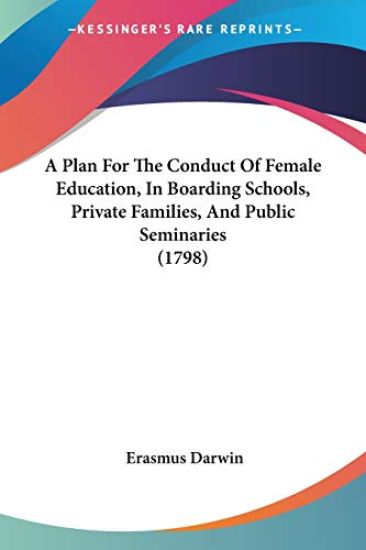
Plan For The Conduct Of Female Education, In Boarding Schools, Private Families, And Public Seminaries (1798)
Erasmus Darwin
KESSINGER PUBLISHING CO
2008
pokkari