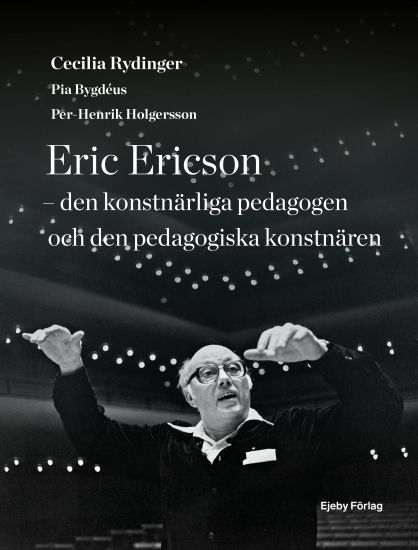
Kördirigenten, professor Eric Ericson (1918–2013) är en del av det svenska kulturarvet, tillhörande samma generation av konstnärer som Ingmar Bergman, Jussi Björling, Birgit Cullberg och Birgit Nilsson. Om de senare nämnda har det skrivits mycket, men en fördjupad analys, dokumentation och forskning om Eric Ericson har hittills saknats. Denna bok förmedlar ny kunskap om Ericsons livsgärning som dirigent och pedagog, om hur hans yrkesutövning fortsätter att påverka dagens musikliv och utbildning. Boken innehåller kvalitativa intervjuer med körsångare, tonsättare och kollegor till Ericson. Här återfinns också material om svensk körhistoria och repertoarutvecklingen både nationellt och internationellt under hans långa, aktiva liv. I boken lyfts också exempel på Ericsons internationella räckvidd och ledarskapet han utövade, hans intresse för såväl det professionella körlivet som amatörkörsången och hans förmåga att utveckla körklangen. Författarna analyserar hans karaktärsdrag som dirigent och pedagog samt söker svara på frågan om på vilka sätt han kan inspirera dirigenter, körsångare, tonsättare och publik av idag, för att på så sätt fortsatt vara med och utveckla körkonsten. Denna populärvetenskapliga bok är tänkt att användas av såväl lärare och studenter inom kördirigering som dirigentkollegor, körsångare och en intresserad allmänhet. Cecilia Rydinger är dirigent och professor vid Kungl. Musikhögskolan. Hon har tidigare publicerat en personligt hållen bok om Eric Ericson: Eric Ericson genom mina glasögon (Ejeby Förlag 2021). Pia Bygdéus är lektor i musikpedagogik och forskningssekreterare vid Musikaliska Akademien. Per-Henrik Holgersson är körledare och rektor vid Kungl. Musikhögskolan.
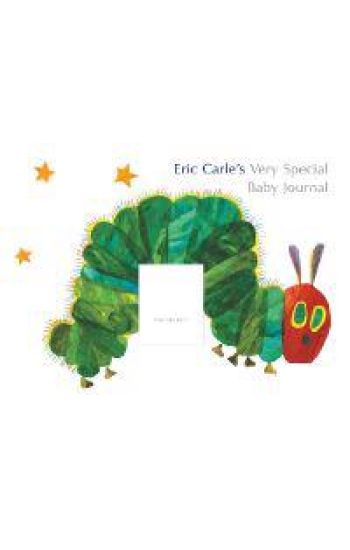
Presents a baby book in journal format which can be used to record birth and family information, first time events such as eating and teething, bedtime rituals, and a first birthday, with pages for photos.
(Strum It (Guitar)). Strum the chords and sing along with your favorite Clapton songs This Strum It songbook features authentic chords, strum patterns, melody and lyrics for 20 complete songs in their original keys. Includes: Bad Love * Badge * Change the World * Cocaine * For Your Love * Hello Old Friend * I Shot the Sheriff * Knockin' on Heaven's Door * Layla * My Father's Eyes * Tears in Heaven * White Room * Wonderful Tonight * more
Erich Zeisl (1905-1959) zahlt zu jenen vertriebenen Wiener Komponist: innen, deren Werke durch die Errungenschaften der Exilmusikforschung wieder in das gegenwartige musikalische Bewusstsein gelangten und Eingang in den aktuellen Kanon der musikalischen Praxis fanden. 1905 in der Leopoldstadt geboren, wurde Erich Zeisl 1920/21 an der damaligen Akademie fur Musik und darstellende Kunst Wien (heute mdw) aufgenommen. Das Exilarte Zentrum der mdw hat vor kurzem den gesamten musikalischen Nachlass sowie uber 5.000 Briefe von und an Zeisl erhalten. Daher ist es ein wichtiges Anliegen, diesen so intensiv mit Wien verbundenen und in Los Angeles verstorbenen Komponisten uber eine Ausstellung zu wurdigen. Zeisls Exilorte Paris, New York und Los Angeles bilden die Stationen der Erzahllinie. Die Ausstellung beschaftigt sich im Zusammenhang mit der Vertreibung mit dem signifikanten Feld "judischer Kunstmusik" und spannt eine dramaturgische Kontur vom unerwarteten Tod dieses "Urwieners" in der Fremde zur ehemaligen Heimat Wien, die er nie wieder gesehen hat.
Eric Ericson har hunnit bli legendarisk redan under sin livstid. Med de körer han sedan början av 50-talet regelbundet lett, Kammarkören (senare kallad Eric Ericsons kammarkör), Radiokören och Orphei Drängar, har han skapat ett "körsound" som fascinerar och beundras av hela körvärlden. Genom en drygt fyrtioårig lärarverksamhet på Musikhögskolan i Stockholm och otaliga dirigentkurser har han också förmedlat sina idéer och ideal till flera generationer körledare både här hemma och utomlands. Som återkommande gäst har han framträtt med världens ledande körensembler. I Ericskrönikan ger Eric Ericson på ett personligt och okonstlar sätt sin syn på musik och musicerande, berättar om viktiga händelser och skeenden under sitt långa körliv och förmedlar bilder och intryck av människor han mött. De tio samtalen tillsammans med förre producenten vid Sveriges Radio Jan Lennart Höglund bygger på en radioserie som sändes i Musikradion P2 första gången under våren 1988. Flertalet bilder i boken är hämtade ur Eric Ericsons privata arkiv. "Ericskrönikan" ingår i Musikaliska Akademiens skriftserie.
The twentieth century was defined by far-reaching social changes, and this fresh insight into the life and works of Erich Fromm offers a compelling overview of his observations. Fromm's views on personal relationships, therapy, and his critique of society were closely tied to his astute analysis of the changes he witnessed and made him into a highly influential social and political commentator. In this absorbing introduction, Thomson considers how Fromm's early experiences influenced his enquiry into the human condition and examines what relevance his ideas still hold for students and readers today.
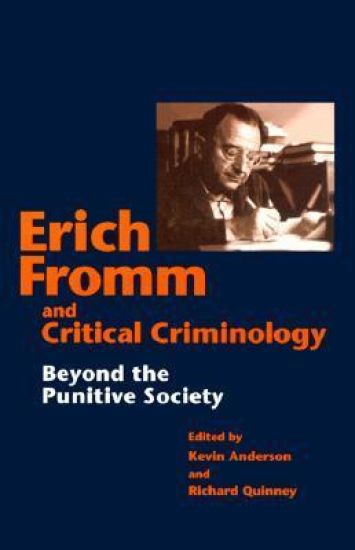
Linking the writings of the great humanist psychologist Erich Fromm to criminology, this collection shows how viewing crime patterns and the criminal justice system from Fromm's humanist perspective opens a path to more effective and more humane ways of understanding and dealing with crime and criminals. Contributors to Erich Fromm and Critical Criminology draw on Fromm's writings on alienation, sadomasochism, and patriarchal/matriarchal values to assess the kinds of crimes being committed and the kinds of people committing them. They explore the spiritual and intellectual sources of Fromm's thought--including Jewish theology, Freudian psychoanalysis, Marxism, and Buddhism--and demonstrate how his socialist humanism points toward a society free of crime and violence. This volume also includes translations of two of Fromm's early articles on criminal justice, never before available in English, in which he develops a psychoanalytic Marxist critique of the role of criminal justice in a class society. At a time when American society seems bent, to an unprecedented degree, on imprisonment, executions, and other violent responses to the problem of crime, Fromm's humanist critique offers a unique vantage point from which to renew and develop a critical criminology.
Erich Przywara, S.J. (1889–1972), is one of the important Catholic intellectuals of the twentieth century. Yet, in the English-speaking world Przywara remains largely unknown. Few of his sixty books or six hundred articles have been translated. In this engaging new book, Thomas O’Meara offers a comprehensive study of the German Jesuit Erich Przywara and his philosophical theology. Przywara’s scholarly contributions were remarkable. He was one of three theologians who introduced the writings of John Henry Cardinal Newman into Germany. From Przywara’s position at the Jesuit journal in Munich, Stimmen der ZeitSpiritual Exercises of Ignatius Loyola. Przywara was also deeply engaged in the ideas and authors of his times. He was the first Catholic dialogue partner of Karl Barth and Paul Tillich. Edmund Husserl was counted among Przywara’s friends, and Edith Stein was a close personal and intellectual friend. Through his interactions with important figures of his age and his writings, ranging from speculative systems to liturgical hymns, Przywara was of marked importance in furthering a varied dialogue between German Catholicism and modern culture. Following a foreword by Michael A. Fahey, S.J., O’Meara presents a chapter on Pryzwara’s life and a chronology of his writings. O’Meara then discusses Pryzwara’s philosophical theology, his lecture-courses at German universities on Augustine and Aquinas, his philosophy of religion, and his influence on important intellectual contemporaries. O’Meara concludes with an in-depth analysis of Pryzwara’s theology—focusing particularly on his Catholic views on person, liturgy, and church.
Erich Przywara, S.J. (1889–1972), is one of the important Catholic intellectuals of the twentieth century. Yet, in the English-speaking world Przywara remains largely unknown. Few of his sixty books or six hundred articles have been translated. In this engaging new book, Thomas O'Meara offers a comprehensive study of the German Jesuit Erich Przywara and his philosophical theology. Przywara's scholarly contributions were remarkable. He was one of three theologians who introduced the writings of John Henry Cardinal Newman into Germany. From his position at the Jesuit journal in Munich, Stimmen der Zeit, he offered an open and broad Catholic perspective on the cultural, philosophical, and theological currents of his time. As one of the first Catholic intellectuals to employ the phenomenologies of Edmund Husserl and Max Scheler, he was also responsible for giving an influential, more theological interpretation of the Spiritual Exercises of Ignatius Loyola. Przywara was also deeply engaged in the ideas and authors of his times. He was the first Catholic dialogue partner of Karl Barth and Paul Tillich. Edmund Husserl was counted among Przywara's friends, and Edith Stein was a close personal and intellectual friend. Through his interactions with important figures of his age and his writings, ranging from speculative systems to liturgical hymns, Przywara was of marked importance in furthering a varied dialogue between German Catholicism and modern culture. Following a foreword by Michael A. Fahey, S.J., O'Meara presents a chapter on Pryzwara's life and a chronology of his writings. O'Meara then discusses Pryzwara's philosophical theology, his lecture-courses at German universities on Augustine and Aquinas, his philosophy of religion, and his influence on important intellectual contemporaries. O'Meara concludes with an in-depth analysis of Pryzwara's theology—focusing particularly on his Catholic views on person, liturgy, and church.
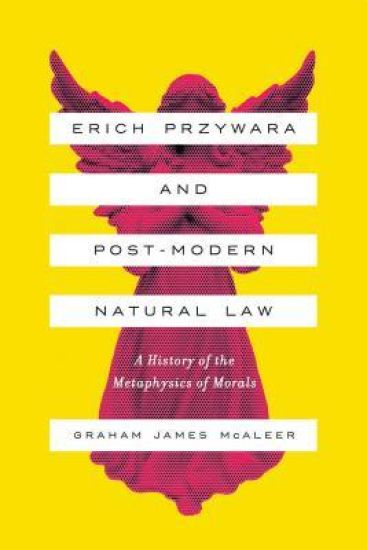
Graham McAleer's Erich Przywara and Postmodern Natural Law is the first work to present in an accessible way the thinking of Erich Przywara (1889-1972) for an English-speaking audience. Przywara's work remains little known to a broad Catholic audience, but it had a major impact on many of the most celebrated theologians of the twentieth century, including Hans Urs von Balthasar, Karl Rahner, Edith Stein, and Karl Barth. Przywara's ground-breaking text Analogia Entis (The analogy of being) brought theological metaphysics into the modern era. While the concept of "analogy of being" is typically understood in static terms, McAleer explores how Przywara transformed it into something dynamic. McAleer shows the extension of Przywara's thought into a range of disciplines: from a new theory of natural law to an explanation of how misunderstanding the analogy of being lies at the foundation of the puzzles of modernity and postmodernity. He demonstrates, through Przywara's conceptual framework, how contemporary moral problems, such as those surrounding robots, Islam and sumptuary laws, Nazism (including fascism and race), embryos, migration, and body modification, among others, are shaped by the failure of Western thought to address metaphysical quandaries. McAleer updates Przywara for a new audience searching for solutions to the failing humanism of the current age. This book will be of interest to intellectuals and scholars in a wide range of disciplines within philosophy or theology, and will appeal especially to those interested in systematic and moral theology.
Graham McAleer's Erich Przywara and Postmodern Natural Law is the first work to present in an accessible way the thinking of Erich Przywara (1889-1972) for an English-speaking audience. Przywara's work remains little known to a broad Catholic audience, but it had a major impact on many of the most celebrated theologians of the twentieth century, including Hans Urs von Balthasar, Karl Rahner, Edith Stein, and Karl Barth. Przywara's ground-breaking text Analogia Entis (The analogy of being) brought theological metaphysics into the modern era. While the concept of "analogy of being" is typically understood in static terms, McAleer explores how Przywara transformed it into something dynamic. McAleer shows the extension of Przywara's thought into a range of disciplines: from a new theory of natural law to an explanation of how misunderstanding the analogy of being lies at the foundation of the puzzles of modernity and postmodernity. He demonstrates, through Przywara's conceptual framework, how contemporary moral problems, such as those surrounding robots, Islam and sumptuary laws, Nazism (including fascism and race), embryos, migration, and body modification, among others, are shaped by the failure of Western thought to address metaphysical quandaries. McAleer updates Przywara for a new audience searching for solutions to the failing humanism of the current age. This book will be of interest to intellectuals and scholars in a wide range of disciplines within philosophy or theology, and will appeal especially to those interested in systematic and moral theology.
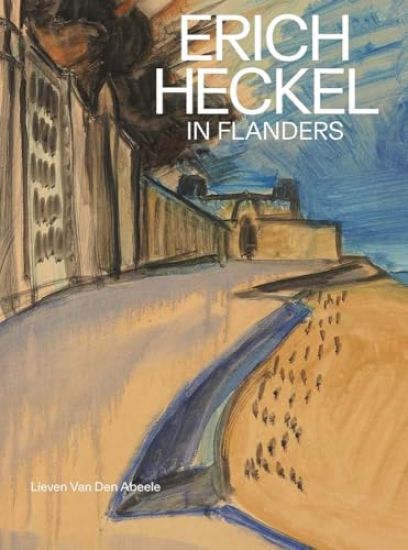
A monograph on one of the leading figures of German Expressionism, Erich Heckel and on artistic exchange in wartime Europe This book illuminates a less well-known yet coherent and deeply familiar period in the artistic career of the German expressionist Erich Heckel (1883–1970). The book contextualises the beginnings and the evolution of his work in the years from 1905 to 1918. In 1914 Heckel volunteered to go to the front, ending up on a hospital train that took him to Flanders. He remained there until the end of the First World War, working as an orderly in Roeselare, Ostend and Ghent. In Flanders, Heckel sketched daily events in the emergency hospital, of the places he visited and the people he encountered. He made woodcuts depicting expressive heads of the orderlies and their patients and of biblical subjects such as The Madonna of Ostend and The Good Samaritan. As a painter, Heckel was impressed by the landscape and the sea, and the unusual cloud formations. His landscapes and seascapes are an important highlight from this period of his work. The works included are romantic and expressive, natural and symbolic, spiritual, tangible and nostalgic.
From Love Story in 1970 to Prizes, his most recent bestseller, Erich Segal has created a body of fiction that testifies to the importance of traditional values and virtues in contemporary life. To drive home his views, Segal revitalizes the sentimental novel, which evokes emotion to assert moral precepts. This study, the first full-length examination of his work, explores the development of his art and analyzes each of his seven novels in turn. Pelzer shows how Segal's novels explore the parent-child relationship, the price of success, the importance of love, marriage, and human commitment, and the temptations and pressures that make it difficult for the individual to live rightly.A biographical chapter discusses Segal's career as a novelist and an academic. A chapter on genre examines his fiction in the tradition of the sentimental novel. Each novel is discussed in a separate chapter and analyzed for plot structure, characterization, thematic elements, literary devices, and style. In addition, Pelzer defines and applies a variety of alternative critical approaches to the novels to widen the reader's perspective. A complete bibliography of Segal's work as well as selected reviews and criticism complete the volume. In this study Pelzer shows how both Segal's short, sentimental tales of love and loss and his multi-character sagas, which range wide in time and place, tap into the deeply held beliefs of his readers and assert traditional values. It is this reaffirmation of values that is the source of his popular appeal to American readers.