Kirjojen hintavertailu. Mukana 11 342 296 kirjaa ja 12 kauppaa.

Kirjahaku

Etsi kirjoja tekijän nimen, kirjan nimen tai ISBN:n perusteella.

1000 tulosta hakusanalla FREEDOM DIVIDEND

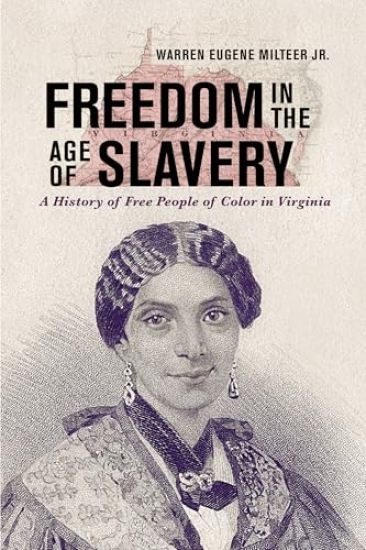
Freedom in the Age of Slavery

Freedom in the Age of Slavery

Warren Eugene Milteer Jr.

UNIVERSITY OF VIRGINIA PRESS
2026
pokkari
An authoritative study of the free people of color in the largest state of the Old South. Virginia was the state with the most enslaved people prior to the Civil War. It was also at one time the state with the most resident free people of color—free from the legal disabilities specifically associated with enslavement but still denied many basic civil rights. Written by an award-winning expert on free people of color in the American South, Freedom in the Age of Slavery is the first modern comprehensive history of free Virginians of color from the colonial period through Reconstruction. Milteer recounts in granular detail the discriminatory policies and resulting hardships that free Virginians of color faced, while also documenting the openings they created for themselves and the successes they enjoyed against overwhelming odds. Throughout, he highlights the commonwealth's significance as the laboratory for legal discrimination throughout the nation, while never losing sight of the ways free people of color seized their opportunities wherever possible and built meaningful lives in the face of massive white resistance.
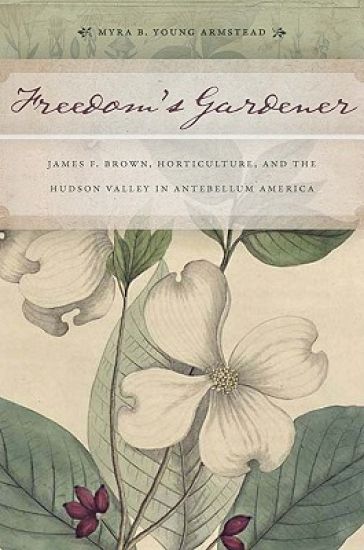
Freedom's Gardener

Freedom's Gardener

Myra B. Young Armstead

New York University Press
2012
sidottu
A fascinating study of freedom and slavery, told through the life of an escaped slave who built a life in the Hudson Valley In 1793 James F. Brown was born a slave, and in 1868 he died a free man. At age 34 he ran away from his native Maryland to pass the remainder of his life as a gardener to a wealthy family in the Hudson Valley. Two years after his escape and manumission, he began a diary which he kept until his death. In Freedom's Gardener, Myra B. Young Armstead uses the apparently small and domestic details of Brown's diaries to construct a bigger story about the transition from slavery to freedom. In this first detailed historical study of Brown's diaries, Armstead utilizes Brown's life to illuminate the concept of freedom as it developed in the United States in the early national and antebellum years. That Brown, an African American and former slave, serves as such a case study underscores the potential of American citizenship during his lifetime.
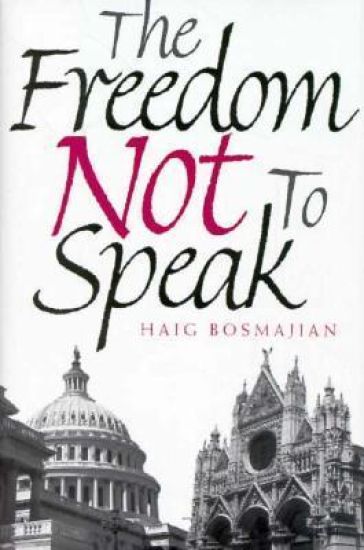
Freedom not to Speak

Freedom not to Speak

Haig Bosmajian

New York University Press
1999
sidottu
Hotly contested and vigorously defended since it was first written into the Bill of Rights, freedom of speech is a basic right that all Americans hold dear. But what of the freedom not to speak? Should, for instance, a special prosecutor be able to compel a mother to testify about, and incriminate, her own daughter? The freedom not to speak is an implicit "right" that holds great relevance for all of us-the freedom not to speak when commanded by church and state, not to sign an oath, not to salute a flag, not to assert a belief in God, or not to reveal one's political beliefs and associations. Bosmajian traces the history of the freedom not to speak from the Middle Ages and Inquisition to the twentieth century and the House Committee on Un-American Activities. His history addresses the Civil War and Reconstruction loyalty oaths by Union Confederate soldiers, and the expulsion of Jehovah's Witnesses from schools for refusing to salute the flag, and includes an analysis of coerced speech in a variety of literary works. Bosmajian also contemplates the future of this right to silence and argues for the importance of a specifically labeled and firmly established freedom not to speak.
Freedom's War

Freedom's War

Scott Lucas

New York University Press
1999
sidottu
"This book...broadens our understanding of the post-World War II confrontation between the United States and the USSR and serves as a strong stimulus for the study of the contribution to the clash of ideas, using documents from former Communist archives." --Ilya V. Gaiduk, American Historical Review Freedom's War is the first book to examine comprehensively the American pursuit of the liberation of Eastern Europe from the end of World War II until the failure of the Hungarian Revolution in 1956. It shows how the American vision of freedom led to interventions in Asia, Africa and Latin America, and it details the massive propaganda campaign to persuade people at home and abroad of the virtues of U.S. possession of the atomic bomb. Most significantly, Freedom's War explores in detail the most important legacy of the Cold War: the forging of a network linking government and private groups, from labor unions to women's organizations to academics in the crusade against Communism. Beginning with the declaration of the Truman Doctrine, Lucas argues that the Cold War was a total war that required the contribution of all sectors of American society. From its groundbreaking study of U.S. efforts to "liberate" Eastern Europe to its explanation of the ill-fated intervention in Vietnam, Freedom's War is an essential book for students and general readers alike.
Freedom to Differ

Freedom to Differ

Diane Helene Miller

New York University Press
1998
sidottu
Many of us have grown up with the language of civil rights, yet rarely consider how the construction of civil rights claims affects those who are trying to attain them. Diane Miller examines arguments lesbians and gay men make for civil rights, revealing the ways these arguments are both progressive--in terms of helping to win court cases seeking basic human rights--and limiting--in terms of framing representations of gay men and lesbians. Miller incorporates case studies of lesbians in the military and in politics into her argument. She discusses in detail the experiences of Colonel Margarethe Cammermeyer, who was dishonorably discharged from the National Guard after 27 years of service when she revealed that she was a lesbian, and Roberta Achtenberg, who was nominated by Clinton for the job of Assistant Director of Housing and Urban Development and became the first gay or lesbian to face the confirmation process. Drawing on these cases and their outcomes, Miller evaluates the advantages and disadvantages of privileging civil rights strategies in the struggle for gay and lesbian rights.
Freedom to Differ

Freedom to Differ

Diane Helene Miller

New York University Press
1998
pokkari
Many of us have grown up with the language of civil rights, yet rarely consider how the construction of civil rights claims affects those who are trying to attain them. Diane Miller examines arguments lesbians and gay men make for civil rights, revealing the ways these arguments are both progressive--in terms of helping to win court cases seeking basic human rights--and limiting--in terms of framing representations of gay men and lesbians. Miller incorporates case studies of lesbians in the military and in politics into her argument. She discusses in detail the experiences of Colonel Margarethe Cammermeyer, who was dishonorably discharged from the National Guard after 27 years of service when she revealed that she was a lesbian, and Roberta Achtenberg, who was nominated by Clinton for the job of Assistant Director of Housing and Urban Development and became the first gay or lesbian to face the confirmation process. Drawing on these cases and their outcomes, Miller evaluates the advantages and disadvantages of privileging civil rights strategies in the struggle for gay and lesbian rights.
Freedom's Prophet

Freedom's Prophet

Richard S. Newman

New York University Press
2008
sidottu
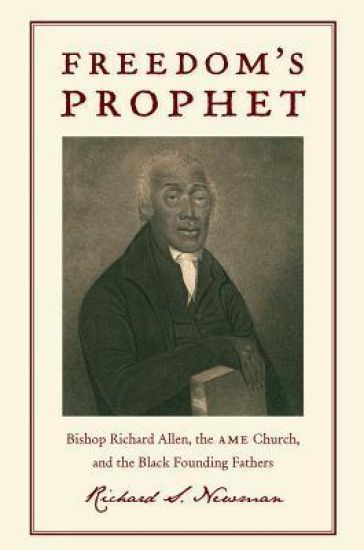
Gold Winner of the 2008 Foreword Magazine Book of the Year Award, Biography Category Brings to life the inspiring story of one of America's Black Founding Fathers, featured in the forthcoming documentary The Black Church: This is Our Story, This is Our Song Freedom's Prophet is a long-overdue biography of Richard Allen, founder of the first major African American church and the leading black activist of the early American republic. A tireless minister, abolitionist, and reformer, Allen inaugurated some of the most important institutions in African American history and influenced nearly every black leader of the nineteenth century, from Douglass to Du Bois. Born a slave in colonial Philadelphia, Allen secured his freedom during the American Revolution, and became one of the nation's leading black activists before the Civil War. Among his many achievements, Allen helped form the African Methodist Episcopal (AME) Church, co-authored the first copyrighted pamphlet by an African American writer, published the first African American eulogy of George Washington, and convened the first national convention of Black reformers. In a time when most Black men and women were categorized as slave property, Allen was championed as a Black hero. In this thoroughly engaging and beautifully written book, Newman describes Allen's continually evolving life and thought, setting both in the context of his times. From Allen's early antislavery struggles and belief in interracial harmony to his later reflections on Black democracy and Black emigration, Newman traces Allen's impact on American reform and reformers, on racial attitudes during the years of the early republic, and on the Black struggle for justice in the age of Adams, Jefferson, Madison, and Washington. Whether serving as Americas first Black bishop, challenging slave-holding statesmen in a nation devoted to liberty, or visiting the President's House (the first Black activist to do so), this important book makes it clear that Allen belongs in the pantheon of Americas great founding figures. Freedom's Prophet reintroduces Allen to today's readers and restores him to his rightful place in our nation's history.
Freedom's Prophet

Freedom's Prophet

Richard S. Newman

New York University Press
2009
pokkari
Gold Winner of the 2008 Foreword Magazine Book of the Year Award, Biography Category Brings to life the inspiring story of one of America's Black Founding Fathers, featured in the forthcoming documentary The Black Church: This is Our Story, This is Our Song Freedom's Prophet is a long-overdue biography of Richard Allen, founder of the first major African American church and the leading black activist of the early American republic. A tireless minister, abolitionist, and reformer, Allen inaugurated some of the most important institutions in African American history and influenced nearly every black leader of the nineteenth century, from Douglass to Du Bois. Born a slave in colonial Philadelphia, Allen secured his freedom during the American Revolution, and became one of the nation's leading black activists before the Civil War. Among his many achievements, Allen helped form the African Methodist Episcopal (AME) Church, co-authored the first copyrighted pamphlet by an African American writer, published the first African American eulogy of George Washington, and convened the first national convention of Black reformers. In a time when most Black men and women were categorized as slave property, Allen was championed as a Black hero. In this thoroughly engaging and beautifully written book, Newman describes Allen's continually evolving life and thought, setting both in the context of his times. From Allen's early antislavery struggles and belief in interracial harmony to his later reflections on Black democracy and Black emigration, Newman traces Allen's impact on American reform and reformers, on racial attitudes during the years of the early republic, and on the Black struggle for justice in the age of Adams, Jefferson, Madison, and Washington. Whether serving as Americas first Black bishop, challenging slave-holding statesmen in a nation devoted to liberty, or visiting the President's House (the first Black activist to do so), this important book makes it clear that Allen belongs in the pantheon of Americas great founding figures. Freedom's Prophet reintroduces Allen to today's readers and restores him to his rightful place in our nation's history.
Freedom: Political, Metaphysical, Negative and Positive
Isaiah Berlin made a now classic distinction between negative and positive conceptions of freedom. In this book Yildiz Silier introduces a fresh way of looking at these conceptions and presents a new defence of the positive conception of freedom. Revealing how the internal debate between various versions of negative freedom give rise to hybrid conceptions of freedom which in turn are superseded by various versions of the positive conception of freedom, Silier concludes that Marx's concrete historical account of positive freedom resolves many of the key debates in this area and provides a fruitful framework to evaluate the freedoms and unfreedoms that are specific to capitalism. This book examines the thought of the paradigm thinkers in this debate, F.A. Hayek on negative freedom and T.H. Green on positive freedom and then ranges over the contributions to this debate made by both classical thinkers such as Kant, Hegel, and Marx, and those involved in contemporary debates on communitarianism, capitalism and self-determination, such as C. Taylor, D. Miller, F. Oppenheim and C.B. Macpherson.
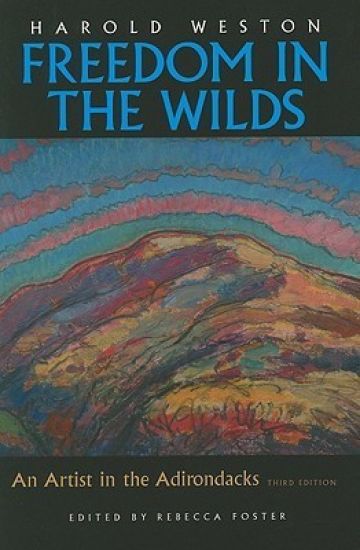
Freedom in the Wilds

Freedom in the Wilds

Rebecca Foster

Syracuse University Press
2008
sidottu
Harold Weston's captivating account of his intimate relationship with the wilderness, ""Freedom in the Wilds"" combines an informal history of the Adirondack Mountain Reserve with his own experiences there as a painter and woodsman. He incorporates stories gathered over many years from the region's guides and lumbermen and the wealthy visionaries seeking to preserve the wilderness.First published in 1971, ""Freedom in the Wilds"" became a classic among Adirondack literature for its thoughtful exploration of wilderness and creativity. In this third edition, Rebecca Foster updates the original by bringing to the foreground Weston's compelling personal story. She also adds a rich trove of Weston's letters and Journal entries, along with new illustrations, explanatory notes, and a new introduction that will give Weston's story greater resonance with contemporary readers.
Freedom, Modernity, and Islam

Freedom, Modernity, and Islam

Richard K. Khuri

Syracuse University Press
1998
sidottu
This text discusses the philosophical origins of the notions of freedom in both a Western and Islamic context. The author then examines the status of freedom in the past and present Arab Muslim world, determining which ideas have led to the lack of freedom that marks many Middle Eastern societies.
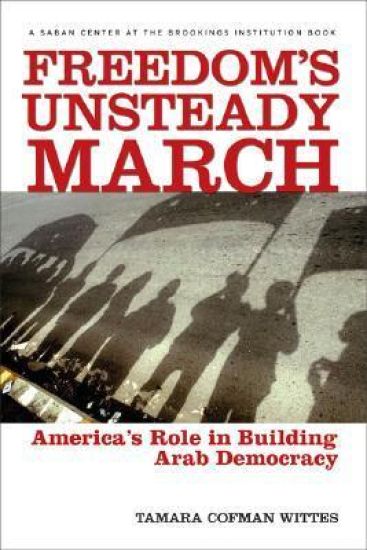
Freedom's Unsteady March

Freedom's Unsteady March

Tamara Cofman Wittes

Brookings Institution
2008
sidottu
President Bush promised to democratize the Middle East, but the results so far have dispirited democracy advocates and brought their project into disrepute. After the debacle in Iraq and the electoral success of Hamas, the pursuit of Arab democracy seems to many observers a fool's errand, an unfortunate combination of ideology and wishful thinking. In Freedom's Unsteady March, Tamara Cofman Wittes dissects the Bush administration's failure to advance freedom in the Middle East and lays out a better strategy for future efforts to promote democracy. Wittes argues that only the development of a more liberal and democratic politics in the Arab world will secure America's long-term goals in the region and that America must continue trying to foster progress in that direction. To do so, however, it must confront more honestly the risks of change and act more effectively to contain them. A dangerous combination of growing populations, economic stagnation, and political alienation poses the primary threat to Middle East stability today, severely testing the legitimacy and governability of key states such as Egypt and Saudi Arabia. If Arab governments cannot sustain the support of their citizens, they will find it difficult to work with America on issues of common concern such as stabilizing Iraq, confronting Iran on nuclear weapons, and promoting Arab-Israeli peace. Despite President Bush's failures, Wittes argues, the United States cannot afford to ignore the momentous social, economic, and political changes already taking place in Arab states. Wittes' detailed analysis of Arab politics and American policy presents an alternative —in her view, the only alternative: overcoming America's deep ambivalence about Arab democracy to support positive, liberal change in the region that will create a firmer foundation for Arab-American ties.
Freedom's Ferment

Freedom's Ferment

Alice Felt Tyler

University of Minnesota Press
1944
nidottu
Freedom's Ferment was first published in 1944. Minnesota Archive Editions uses digital technology to make long-unavailable books once again accessible, and are published unaltered from the original University of Minnesota Press editions.In this historical synthesis of men and movements, Alice Felt Tyler shows in action the democratic faith of the young American republic. She tells the stories of the reform movements and social and religious experiments characteristic of the early half of the nineteenth century.The early efforts toward social and economic equality — later engulfed in the urgent issues of the Civil War—are here depicted and interpreted in their relation to the history of American thought and action.Freedom's Ferment divides the movements of the early 1800's into two groups: the cults and utopias of varied origins and the humanitarian crusades. A wave of revivalistic religions swept the country. Here is the story of the Millerites, who believed the end of the world would come on October 22, 1844, of the Spiritualists, Rappites, the Mormons, the Shakers.Many experiments in communal living were instituted by religious groups, but others were entirely social in concept. Life at Brook Farm, in Robert Owen's colony, in the Oneida Community, and a score of others, is interestingly reconstructed. Humanitarian reforms and crusades represent the other phase of the movements. Tyler, "exasperated by all the silly twaddle being written about the eccentricities" of the early American republic, shows these movements and the leaders—event the crackpots—as manifestations of the American creed of perfectibility.Prison and educational reforms, work for delinquents and unfortunates, crusades for world peace, temperance, and women's rights flourished. All to be overshadowed by the antislavery movement and submerged temporarily by the Civil War.Freedom's Ferment pictures the days when the pattern for the American way of life and the fundamentals of the American faith were being set by crusaders who fought for righteousness. The changes in out social picture have altered the form of the humanitarian movements but not the purpose.Interpretative and critical, the book show the ferment of the period and the urge to reform, found in every phase of life, to be the result of the fusion of religious freedom and political democracy.
Freedom Through Education

Freedom Through Education

Lotus Coffman

University of Minnesota Press
1939
nidottu
Freedom Through Education was first published in 1939. Minnesota Archive Editions uses digital technology to make long-unavailable books once again accessible, and are published unaltered from the original University of Minnesota Press editions.February 15, 1939To the People of Minnesota:Knowing President Coffman as well as I did, I know he would have deprecated any elaborate eulogy of his work in and for the University of Minnesota. I know also that he welcomed always any opportunity to present his though about it and his reflections on the changing world that conditioned the flexible and forward-looking policy he thought the University should pursue. In the pages here published by the University are embodied some of his last and most suggestive thinking about the problems that concerned him always. They were prepared in large part in the year he used to rebuild his health and to formulate his ideas, free from the discursive and unending tasks of a university presidency. Of that year he in his last public address said:“. . . I am almost convinced that it would be a good thing if the administrative officers of the university, certainly the president, were compelled to take a leave of absence once every fife years. Their strength would be renewed and they would have ample opportunity, free from the restraints and responsibilities of office, to read, to reflect on education, and to visit other educational institutions . . .”Here were give voice to his thinking in the full faith that the works of men who are really builders are the reflection of their thinking.This booklet is also a memorial tribute that he would not deny us the right to pay to him and the work he did as an educator. His labors at Minnesota were so conceived and so carried on that they have a significance beyond the boundaries of the state and beyond the days of their doing.It is with profound appreciation of the importance of the contributions that Lotus Delta Coffman made to the University of Minnesota, and with deep admiration for the extent of his influence, that the Regents of the University of Minnesota issue Freedom Through Education as a tribute to him.Guy Stanton Ford,President
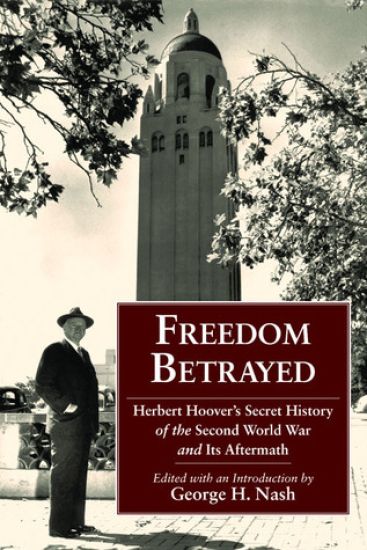
Freedom Betrayed

Freedom Betrayed

Hoover Institution Press,U.S.
2011
sidottu
Herbert Hoover's "magnum opus"—at last published nearly fifty years after its completion—offers a revisionist reexamination of World War II and its cold war aftermath and a sweeping indictment of the "lost statesmanship" of Franklin Roosevelt. Hoover offers his frank evaluation of Roosevelt's foreign policies before Pearl Harbor and policies during the war, as well as an examination of the war's consequences, including the expansion of the Soviet empire at war's end and the eruption of the cold war against the Communists.
Freedom, Justice and the State

Freedom, Justice and the State

Ronald H. Nash

University Press of America
1980
nidottu
What do the terms 'freedom' and 'justice' mean? What is the State? Is the existence of the State justified? What are the proper limits of the power of the State? What about the intervention of the State in economic matters that gives rise to the disputes between advocates of capitalism, socialism, and the welfare state? These are some of the broader questions addressed in this book.
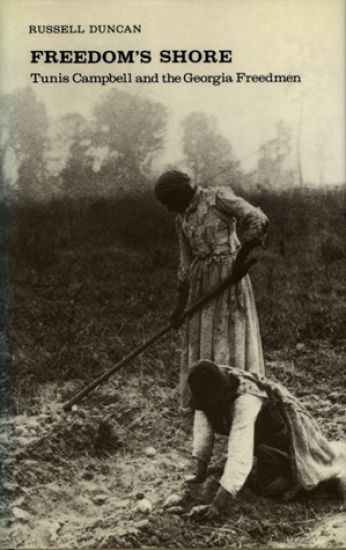
Freedom's Shore

Freedom's Shore

Russell Duncan

University of Georgia Press
1986
pokkari
For the first time since the early years of the American republic, the period following emancipation held out the promise of a true colorblind democracy. The freed slaves hoped for forty acres and a mule by which they could work as small farmers, erect houses, establish families, and live free from the gaze of planter and overseer. In this first light of freedom, blacks needed help to learn how to function in a democracy and how to protect themselves from whites eager to find a new way to exploit their labor. In Freedom's Shore, Russell Duncan tells of the efforts of Tunis Campbell, a black carpetbagger and fellow abolitionist and friend of Frederick Douglass, to lift his race to equal participation in American society. Duncan focuses on Campbell's determined work to push radical reforms, draft a new constitution for Georgia, and pass laws designed to ensure equality for all citizens of the state. Campbell made significant contributions at the state level, but his true importance was in his home district of Liberty and McIntosh counties on the Georgia coast. There he forged the black majority into a powerful political machine that controlled county elections for years. He successfully protected black rights, always promoting freedom-in-fact, not merely freedom-by-law. Yet, as many black politicians throughout the South were discovering, radical strength at the local level was insufficient to stop the growing strength of reactionary white politics at the state level. After years of struggle, Campbell was finally defeated by the white Democrats. Charged with political corruption, he was removed from his state and local political offices; at the age of sixty-four, over the protests of President Grant among others, Campbell was sentenced to Georgia's hire-out convict labor program. The black machine in McIntosh County, however, was not destroyed in Campbell's defeat, but instead remained an active force in county politics for forty years, returning a black legislator to the General Assembly in every election, except for the decade of the 1890s, until 1907.Presenting the beginnings of the battle for civil rights in the South, Freedom's Shore tells of the tenacity and achievements of one black political figure, of the hopes and dreams of a legally free people amid the political and social realities of Reconstruction Georgia.