Kirjahaku
Etsi kirjoja tekijän nimen, kirjan nimen tai ISBN:n perusteella.
1000 tulosta hakusanalla Fernando Monteiro
Este libro te ayudara a encontrar en los evangelios conceptos revolucionarios que seran como un verdadero golpe a tus rutinas, transformando tu relacion con el Creador. La vida abundante ofrecida por Jesus es mucho mas que un listado de obligaciones y prohibiciones, es una emocionante realidad llena de frescura y aventura que solo pueden disfrutar aquellos que no se dejan vencer por la religiosidad. Es curioso ver que los enfrentamientos mas acalorados de Jesus, no los tuvo con los corruptos de su epoca, sino con los pastores y lideres de la iglesia de entonces. La religion suele hacernos perder el foco distorsionandonos la imagen de Dios, de los demas y de nosotros mismos. Muchos de nuestros conceptos y practicas cristianas parten del error de pensar que Dios dijo algo que en realidad nunca dijo, alejandonos asi de la esencia de la propuesta original de Jesus. La practica diaria de nuestra fe puede estar infectada por la frialdad que surge de limitarse a cumplir con una serie de costumbres, por mas buenas y cristianas que estas sean. Fernando Altare te ayudara a entender la fe practica, la que importa, la real, la que vale la pena ser vivida. Despues de una lectura y reflexion profunda de estas lineas no quedaras indiferente a la emocionante aventura que significa caminar con Jesus.
Toward a Prophetic Youth Ministry: Theory and PRAXIS in Urban Context
Fernando Arzola
IVP Academic
2008
nidottu
Fernando Arzola Jr. addresses the gap in the literature of youth ministry resources conceived and realized in an urban setting. He brings together three dominant paradigms--traditional, liberal and activist--to create an approach that is informed by Scripture and the contemporary realities of adolescent development in an urban setting.
Soulmates: True stories from the world of online dating is a fascinating, eye-opening and often riotously funny look at modern Britain through the lens of the oddest form of socialising yet invented - internet dating. Online dating has taken the nation by storm - 7.8 million Brits, that's half the population of British singletons, tried it out last year. Beautifully written and researched by award-winning filmmaker and author Sonali Fernando, Soulmates is a deliciously quirky, perceptive and entertaining read. The book features a unique collection of over a hundred true stories from the frontline of online dating, recounted by some of the brilliant and brainy, imaginative and inspiring people who use leading British dating websites. Cultural history meets personal testimony as Sonali Fernando takes the temperature of modern British relationships. Embracing stories told by online daters aged between 21 and 83 she freewheels through themes ranging from dating disasters to long-distance love affairs, cybercourtship to online lies. Here, finally, is a thinking person's guide to online dating that traces the cultural context of this intimate form of social networking and explores the colossal impact of the internet on our personal lives. Life-affirming, poignant and funny,Soulmates offers an utterly fresh and original view of contemporary Britain.
Eco-efficient Construction and Building Materials
Fernando Pacheco-Torgal; Luisa F. Cabeza; Joao Labrincha; Aldo Giuntini de Magalhaes
Woodhead Publishing Ltd
2013
sidottu
Eco-efficient Construction and Building Materials reviews ways of assessing the environmental impact of construction and building materials. Part one discusses the application of life cycle assessment (LCA) methodology to building materials as well as eco-labeling. Part two includes case studies showing the application of LCA methodology to different types of building material, from cement and concrete to wood and adhesives used in building. Part three includes case studies applying LCA methodology to particular structures and components.
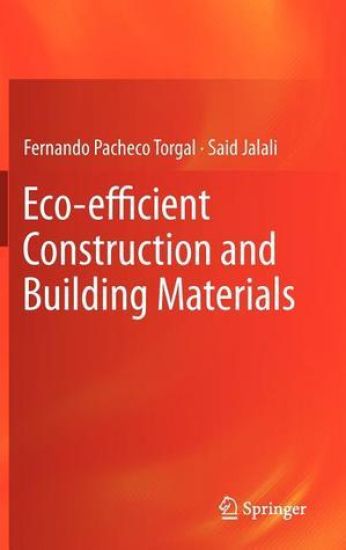
Eco-efficient Construction and Building Materials
Fernando Pacheco Torgal; Said Jalali
Springer London Ltd
2011
sidottu
Eco-efficient Construction and Building Materials provides essential reading about materials for the construction industry in the twenty-first century. It covers the latest findings in the field, especially the toxicity aspects, embodied energy, construction and demolition wastes, the use of wastes in concrete, masonry units, materials reinforced with vegetable fibres, earth construction, the durability aspects, and also the importance of nanotechnology to the development of more environmentally-friendly materials.Based on more than nine hundred references, Eco-efficient Construction and Building Materials is of fundamental importance to academics, engineers and architects who are dedicated to the creation of a greener and more holistic construction industry.
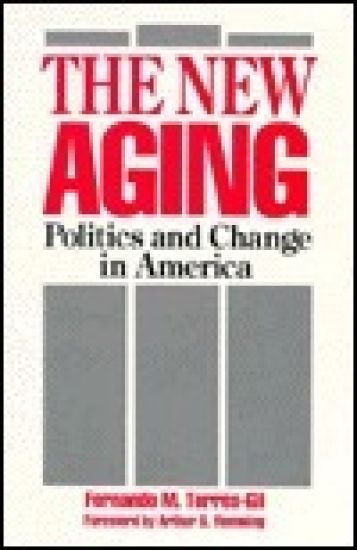
This most timely, authoritative, and insightful book provides a new framework for understanding the circumstances currently surrounding America's elderly. It establishes the important foundation of three key forces which are changing the national perspective on the aging. They are: generational claims on the government to respond to social needs; diversity in aging populations; and increasing longevity. Torres-Gil provides a context, supported by informative background material, for recognizing the significant demographic changes being experienced in the United States. The work considers the policy issues, decisions, controversies, and choices now associated with aging and demonstrates how the perception of the elderly has changed from the 1960s and 1970s to today. It asks what is fair in the allocation of public and private resources to the elderly. How does the nation pay for services? How do we make and implement the political and economic decisions with which a government and a society are now faced?Torres-Gil examines the ability of the government and the active labor force to support a large elderly population and urges a change in the current delivery of services and benefits. He addresses all the essential issues necessary to avoid inter-generational conflict--including comprehensive planning, the building of social consensus, and inter-generational coalitions.
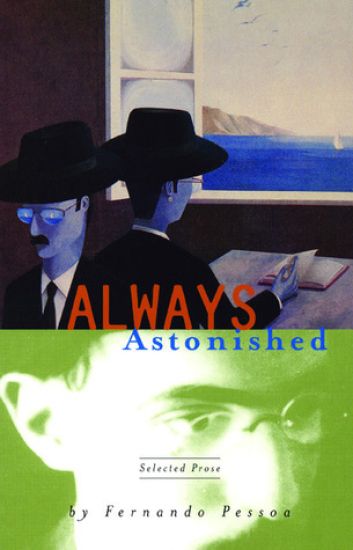
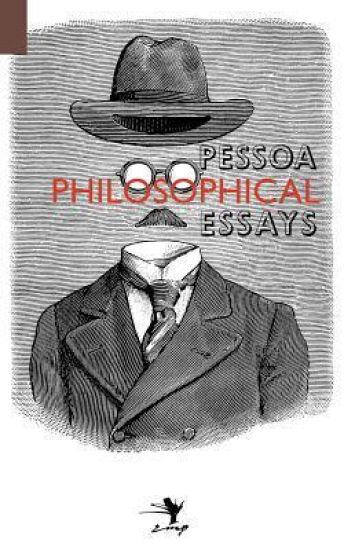
"After looking for him in the poems, we search for him in the prose. The pursuit of the Other in Pessoa's work is never-ending," writes Edwin Honig. Essential to understanding the great Portuguese poet are the essays written about (and by) his heteronyms--Alberto Caeiro, Ricardo Reis, and Alvaro de Campos--the several pseudonyms under which he wrote an extraordinary body of poetry. In Always Astonished, Pessoa and his several selves debate and discuss one another's work, revealing how Portuguese modernism was shaped. Fernando Pessoa is one of the great voices of twentieth-century literature, and these manifestos, letters, journal notes, and critical essays range through aesthetics, lyric poetry, dramatic and visual arts, and the psychology of the artist. He gives us, too, a singularly heterodox political position in his strange work of fiction, The Anarchist Banker. "Eloquent, volatile and obsessed with life--and death--[Pessoa is one of the] modernist giants in whose shadow we live and who made our century one of the extraordinary richness."--The New York Times "Only a few years ago Fernando Pessoa was all but invisible in English. Now this outsider's outsider looms as the latest icon of modern poetry. Eugenio Lisboa devised A Centenary Pessoa in 1995, a lavish miscellany of poems, essays, biography, photographs, even paintings he inspired. Edwin Honig and Susan M. Brown reissued Poems of Fernando Pessoa, along with Honig's Always Astonished, a selected prose."-Robert Polito, BOMB Magazine Fernando Pessoa is Portugal's most important contemporary poet. He wrote under several identities, which he called heteronyms: Albet Caeiro, Alvaro de Campos, Ricardo Reis, and Bernardo Soares. He wrote fine poetry under his own name as well, and each of his "voices" is completely different in subject, temperament, and style.
La España que sobrevive
Fernando Díaz-Plaja; William W. Cressey
Georgetown University Press
1996
pokkari
Students of Spanish language and culture can now benefit from a text that provides them with an understanding of contemporary Spanish history and society while refining their knowledge of the language and expanding their vocabulary. "La Espana que sobrevive" (originally published in Madrid in 1987) explores the aftermath of the Franco era in Spain. It presents an objective and nonpartisan, yet humorous and affectionate, view of the important aspects of contemporary Spanish history and society. Topics include the transition to democracy; regionalism and nationalism; key players in current affairs; important institutions such as the monarchy, military, and the church; sexual mores; culture; the media; and, politicized approaches to Spanish history. For this edition, William W. Cressey has edited Fernando Diaz-Plaja's text to make it accessible to English-speaking students at an advanced level of Spanish reading skills. Cressey has also added study aids to the book - vocabulary and footnotes, glosses on proper names, questions for discussion, notes on grammar and rhetoric, and exercises. The study aids are gradually phased out, so that the final chapter is presented as stand-alone reading without any supplementary materials. Cressey's adaptation of Diaz-Plaja's highly respected work provides an alternative to literary sources for foreign language instruction - a new resource for teaching foreign languages across the curriculum and instruction through content. Bridging the gap between the fairly simple intermediate readers and texts written for adult native speakers, this book can serve as either a supplementary or main text in the advanced study of language or history, or in preparation for study abroad. "La Espana que sobrevive" is a practical tool for teaching not only the language but also the many facets of modern Spanish culture.
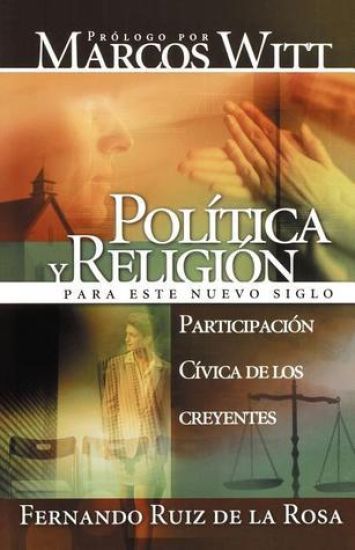
Ejemplos de encomiendas preponderantemente políticas tales como las desarrolladas por José el soñador al lado de Faraón, de Nehemías al lado del rey Artajerjes, de Daniel al lado de Nabucodonosor, de Darío y de Ciro de Persa, de Ester y Mardoqueo al lado del rey Asuero, de Isaías al lado del rey Uzías así como otros másm tanto del Nuevo como del Antiguo Testamento, permitirán conceder al lector, sustento escritural, pero emitir un juicio de mayor conciencia en este especto.El objectivo del libro es concientizar a los lectores de la gran responsabilidad cívica y social que cada cristiano tiene.
A Guide to Groups, Rings, and Fields
Fernando Q. Gouve^a
Mathematical Association of America
2012
sidottu
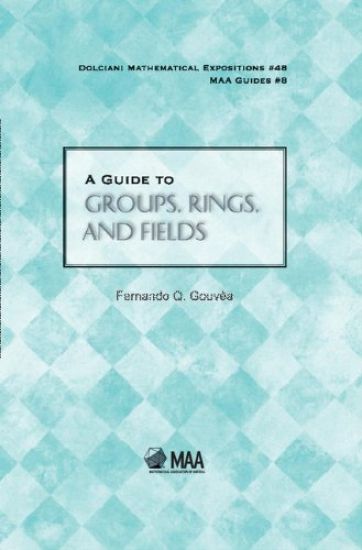
Algebraic structures have come to be ubiquitous in mathematics, with almost all mathematicians encountering groups, rings, fields or more exotic related objects during the course of their research. This book presents an overview of some of the most important algebraic structures in modern mathematics, with an emphasis on creating a coherent picture of how they all interact. In addition to the standard material on groups, rings, modules, fields and Galois theory, the book includes discussions of other important topics, including linear groups, group representations, Artinian rings, projective, injective and flat modules, Dedekind domains and central simple algebras. All of the important theorems are discussed, typically without proofs, but often with a discussion of the intuitive ideas behind those proofs. This insightful guide is ideal for both graduate students in mathematics who are beginning their studies, and researchers who wish to understand the bigger picture of the algebraic structures they encounter.
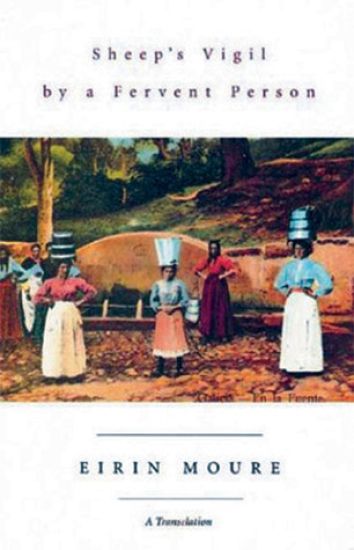
A temporary move to Toronto in the winter of 2000, a twisted ankle, an empty house -- all inspired Moure as she read Alberto Caeiro/Fernando Pessoa's classic long poem O Guardador de Rebanhos. For fun, she started to translate, altering tones and vocabularies. From the Portuguese countryside and roaming sheep of 1914, a 21st century Toronto emerged, its neighbourhoods still echoing the 1950s, their dips and hollows, hordes of wild cats, paved creeks. Her poem became a translation, a transcreation, the jubilant and irrepressible vigil of a fervent person. "Suddenly," says Moure impishly, "I had found my master." Caeiro's sheep were his thoughts and his thoughts, he claimed, were all sensations. Moure's sheep are stray cats and from her place in Caeiro's poetry, she creates a woman alive in an urban world where the rural has not vanished, where the archaic suffuses us even when we do not beckon it, and yet the present tense floods us fully.
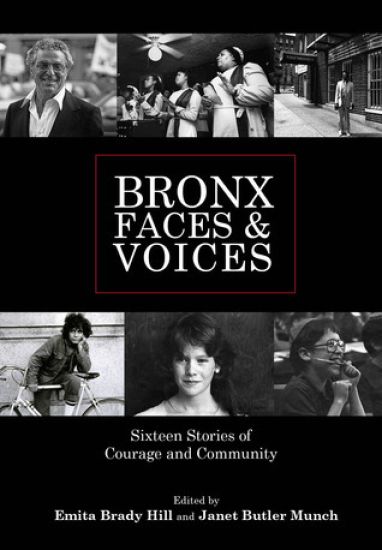
In Bronx Faces and Voices, sixteen men and women tell their personal, uncensored stories of the New York City borough—before, during, and after the troubled years of arson, crime, abandonment, and flight in the 1970s and 1980s. The voices in this volume are as eclectic as the Bronx itself: elected officials, religious leaders, and activists who were determined to preserve the beauty of their parks and stability of their community. They had the courage to stay and fight against drug dealers, absent and indifferent landlords, banks that red-lined entire neighbourhoods, and a voracious media that made of the Bronx an international symbol of urban disaster. Some are no longer alive. But each of the sixteen played a positive role in a pivotal time, and they all deserve to be remembered and to have their voices heard.Portraits in this volume by noted photographers Georgeen Comerford and Walter Rosenblum document the Bronx “faces” in their beauty and diversity: young and old, witnesses to the history they lived and created.
The Canonical Path of Opus Dei.
Fernando Ocariz; Amadeo De Fuenmayor; Valentin Gomez-iglesias
Scepter Pubs
1994
sidottu
As Greek tragedy says a Spanish writer was composed from the crumbs that fell from Homer's table so the Spanish drama owed its earliest forms to La Celestina (1499). ÞFernando de Rojas' tragi-comedy ä which has also been called a novel in dialogue ä runs to about three hundred pages in the James Mabbe translation here adapted to the stage by Eric Bentley in a five-act 93-page version.ÞThe central and pervasive situation is a simple one: a dirty old woman is helping a courtly young gentleman to seduce a girl. The wonder of the thing lies in the art with which Fernando do Rojas derives from such commonplace materials a towering tragedy ä or rather tragi-comedy.
Josef Strau – The New World 2, Travels in Turtle Island
Fernando Mesta; Solveig Øvstebø; José Rojas; Jay Sanders; Josef Strau; Stefan Tcherepnin; Bernadette Van–huy; Antek Walczak
Renaissance Society at the University of Chicago
2014
nidottu
The second of two books published alongside Strau's 2014 Renaissance Society exhibition, The New World, Application for Turtle Island, this features an essay by Jay Sanders alongside introductions to different aspects of Strau’s practice by artists with whom he has recently collaborated: Bernadette Van-Huy, Stefan Tcherepnin, Antek Walczak, Fernando Mesta, and José Rojas. Also included are full color images of the installation and an exhibition checklist, as well as an introduction by Solveig Øvstebø and a text by Strau.
A panoramic survey of the vast spectrum of modern and contemporary mathematics and the new philosophical possibilities they suggest.A panoramic survey of the vast spectrum of modern and contemporary mathematics and the new philosophical possibilities they suggest, this book gives the inquisitive non-specialist an insight into the conceptual transformations and intellectual orientations of modern and contemporary mathematics.The predominant analytic approach, with its focus on the formal, the elementary and the foundational, has effectively divorced philosophy from the real practice of mathematics and the profound conceptual shifts in the discipline over the last century. The first part discusses the specificity of modern (1830-1950) and contemporary (1950 to the present) mathematics, and reviews the failure of mainstream philosophy of mathematics to address this specificity. Building on the work of the few exceptional thinkers to have engaged with the "real mathematics" of their era (including Lautman, Deleuze, Badiou, de Lorenzo and Chatelet), Zalamea challenges philosophy's self-imposed ignorance of the "making of mathematics."In the second part, thirteen detailed case studies examine the greatest creators in the field, mapping the central advances accomplished in mathematics over the last half-century, exploring in vivid detail the characteristic creative gestures of modern master Grothendieck and contemporary creators including Lawvere, Shelah, Connes, and Freyd.Drawing on these concrete examples, and oriented by a unique philosophical constellation (Peirce, Lautman, Merleau-Ponty), in the third part Zalamea sets out the program for a sophisticated new epistemology, one that will avail itself of the powerful conceptual instruments forged by the mathematical mind, but which have until now remained largely neglected by philosophers.
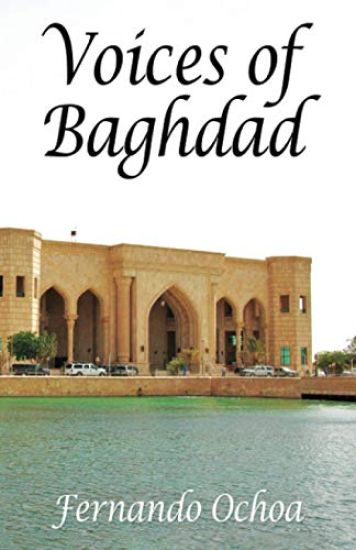
Roger is on another adventure. As a journalist, he travels to Iraq for the first elections since Saddam Hussein was deposed. At first, he finds a population that wants to create a democracy and freedom, but when he returns after the election, he finds a people who are demoralized and learns about the tragedy that is Iraq.