Kirjojen hintavertailu. Mukana 11 238 005 kirjaa ja 12 kauppaa.

Kirjahaku

Etsi kirjoja tekijän nimen, kirjan nimen tai ISBN:n perusteella.

1000 tulosta hakusanalla Gavin Pyakurel

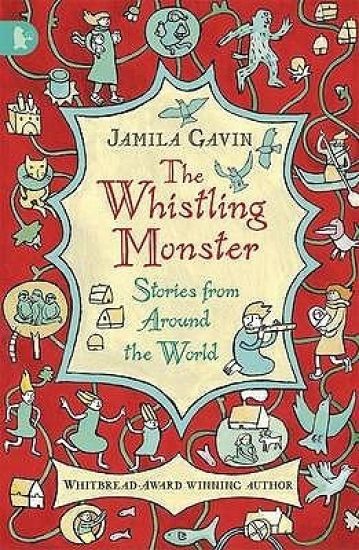
The Whistling Monster: Stories from Around the World
All children love stories. Here, master storyteller Jamila Gavin draws them from the four corners of the globe: “The Whistling Monster”, a cautionary tale from Brazil; “The Coming of Raven”, a creation myth from Canada; “The Birth of Krishna”, an ancient legend from India… Full of mystery, wit and wisdom, with enduring themes of good versus evil, these ten tales have survived hundreds of years of retelling to become favourites among children all around the world.
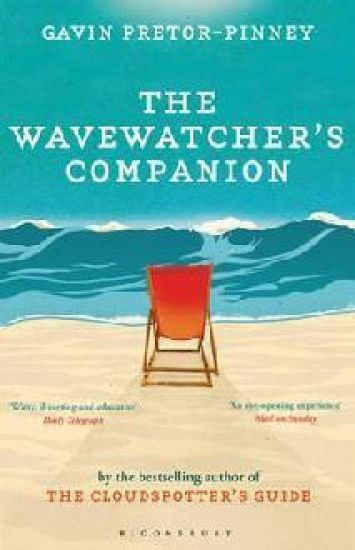
The Wavewatcher's Companion

The Wavewatcher's Companion

Gavin Pretor-Pinney

Bloomsbury Publishing PLC
2011
nidottu
One bright February afternoon on a beach in Cornwall, GavinPretor-Pinney took a break from cloudspotting and started watching thewaves rolling into shore. Mesmerised, he wondered where they had comefrom, and decided to find out. He soon realised that waves don't justappear on the ocean, they are everywhere around us, and our livesdepend on them.From the rippling beats of our hearts, to the movement of food throughour digestive tracts and of signals across our brains, waves are thetransport systems of our bodies. Everything we see and hear reaches usvia light and sound waves, and our information age is reliant on themicrowaves and infrared waves used by the telephone and internetinfrastructure. From shockwaves unleashed by explosions to torsionalwaves that cause suspension bridges to collapse, from sonar waves thatallow submarines to ‘see' with sound to Mexican waves that sweepthrough stadium crowds... there were waves, it seemed, wherever Gavinlooked. But what, he wondered, could they all have in common with oneswe splash around in on holiday?By the time he made the ultimate surfer's pilgrimage to Hawaii, Gavinhad become a world-class wavewatcher, although he was still rubbish atsurfing. And, while this fascinating, funny book may not teach you howto ride the waves, it will show you how to tune into the shapes,colours and forms of life's many undulations.
3 of a Kind

3 of a Kind

Gavin Rohan

Bloomsbury Childrens Books
2016
nidottu
Who will hold the winning hand? Sherlock meets Ocean's Eleven in this wickedly funny, action-packed crime caper. Darkus Knightley is used to expecting the unexpected. An extraordinary solver of crimes, with immense powers of deduction, and regularly found bedecked in tweed, Darkus is anything but the average 13-year-old. But he is the person to call when strange goings-on are afoot! Despite trying to leave his detective ways behind to lead a normal teenage life, when his father’s loyal housekeeper, Bogna, goes missing, Darkus must return to the family fold and follow the clues to America and the bright lights of Las Vegas. Alongside his father, Alan, and stepsister, Tilly, Darkus must once again face the deadly criminal organisation, the Combination – and this time, all bets are off. With danger at every turn, Knightley and Son will need an ace or two up their sleeves in order to win this game. Will the odds be in our detective duo’s favour? Or will this be the Knightleys' final roll of the dice? Perfect for fans of Sherlock, this thrilling crime adventure will keep you on the edge of your seats. www.knightleyandson.com
The Crime Committee

The Crime Committee

Gavin MacDonald

Lulu.com
2008
pokkari
Sergeant MacRae's first case with Chief Inspector Ian Forsyth, explaining their odd relationship and giving a humorous insight into the Scottish university scene. A lecturer is murdered in Inverforth University and MacRae is appalled when Forsyth lets an academic committee loose on the investigation, making a bet with the University's Principal on who will solve the crime. A second murder occurs and MacRae is in despair, fearing for his job, when an academic admits he has solved the mystery and the other two say likewise. But it emerges each has fastened on a clue relevant to his own discipline and they have come to three different solutions. Forsyth again triumphs by using logical deduction to name the killer.
My Frail Blood

My Frail Blood

Gavin MacDonald

Lulu.com
2008
pokkari
DCI Forsyth and DS MacRae skive off from a course they are attending in Inverness to investigate the murder of the alcoholic wife of a professor. She appears to have been knifed after returning to their house up a glen from a drinking binge, her body being dumped in a nearby loch. When ome of her lovers is shot dead with an arrow in the back after attempting to blackmail the murderer, Forsyth presents his former assistant, who is in charge of the case, with the solution, arrived at by logical deduction.
Swallow Them Up

Swallow Them Up

gavin macdonald

Lulu.com
2008
pokkari
A young woman's body is found in woodland near Edinburgh but no-one of that description is on a missing list. When Chief Inspector Forsyth solves that mystery, it becomes clear that the death is connected with an amateur theatrical company. The man who ran the company is found dead after being tortured and the death of one of the sponsors follows. It seems clear that someone is taking revenge for the death of the young woman and, though everyone else is baffled, Forsyth applies logical deduction to arrive at the name of the killer
Dishing The Dirt

Dishing The Dirt

gavin macdonald

Lulu.com
2008
nidottu
When six professors are drugged at a dinner and then humiliated by being smeared with unpleasant substances, Sergeant MacRae is baffled, but Chief Inspector Forsyth forsees a related incident which turns out to be the murder of a lecturer notorious for seducing local wives and female undergraduates. When a campus wife, who was having an affair with the lecturer, is also murdered on a lonely beach at the time that her husband is holding a departmental party, everyone is at sea except Forsyth who comes up with a solution to all the incidents by the application of some brilliant logical deductions.
A Family Affair

A Family Affair

gavin macdonald

Lulu.com
2009
nidottu
When an ex-army man is killed during a burglary, Chief Inspector Forsyth suspects that one of the family is involved. When another member of the household is found shot at close range in a room where entry by the window is impossible and no-one is found in the room after the shots are fired, it requires all Forsyth's ingenuity to arrive at a solution of both murders by logical deduction.
Horses, People and Parliament in the English Civil War

Horses, People and Parliament in the English Civil War

Gavin Robinson

Ashgate Publishing Limited
2012
sidottu
Horses played a major role in the military, economic, social and cultural history of early-modern England. This book uses the supply of horses to parliamentary armies during the English Civil War to make two related points. Firstly it shows how control of resources - although vital to success - is contingent upon a variety of logistical and political considerations. It then demonstrates how competition for resources and construction of individuals’ identities and allegiances fed into each other. Resources, such as horses, did not automatically flow out of areas which were nominally under Parliament’s control. Parliament had to construct administrative systems and make them work. This was not easy when only a minority of the population actively supported either side and property rights had to be negotiated, so the success of these negotiations was never a foregone conclusion. The study also demonstrates how competition for resources and construction of identities fed into each other. It argues that allegiance was not a fixed underlying condition, but was something external and changeable. Actions were more important than thoughts and to secure victory, both sides needed people to do things rather than feel vaguely sympathetic. Furthermore, identities were not always self-fashioned but could be imposed on people against their will, making them liable to disarmament, sequestration, fines or imprisonment. More than simply a book about resources and logistics, this study poses fundamental questions of identity construction, showing how culture and reality influence each other. Through an exploration of Parliament’s interaction with local communities and individuals, it reveals fascinating intersections between military necessity and issues of gender, patriarchy, religion, bureaucracy, nationalism and allegiance.
Impure and Worldly Geography

Impure and Worldly Geography

Gavin Bowd; Daniel Clayton

Ashgate Publishing Limited
2019
sidottu
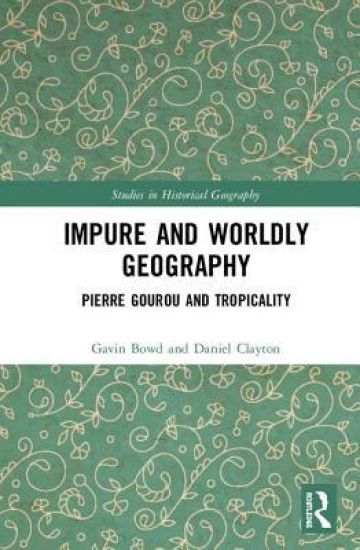
Tropicality is a centuries-old Western discourse that treats otherness and the exotic in binary – ‘us’ and ‘them’ – terms. It has long been implicated in empire and its anxieties over difference. However, little attention has been paid to its twentieth-century genealogy.This book explores this neglected history through the work of Pierre Gourou, one of the century’s foremost purveyors of what anti-colonial writer Aimé Césaire dubbed tropicalité. It explores how Gourou’s interpretations of ‘the nature’ of the tropical world, and its innate difference from the temperate world, were built on the shifting sands of twentieth-century history – empire and freedom, modernity and disenchantment, war and revolution, culture and civilisation, and race and development. The book addresses key questions about the location and power of knowledge by focusing on Gourou’s cultivation of the tropics as a romanticised, networked and affective domain. The book probes what Césaire described as Gourou’s ‘impure and worldly geography’ as a way of opening up interdisciplinary questions of geography, ontology, epistemology, experience and materiality.This book will be of great interest to scholars and students within historical geography, history, postcolonial studies, cultural studies and international relations.
Making Nothing Happen

Making Nothing Happen

Gavin D'Costa; Eleanor Nesbitt; Mark Pryce; Ruth Shelton

Ashgate Publishing Limited
2014
nidottu
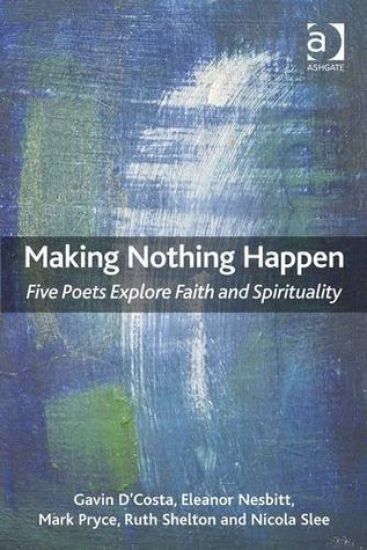
Making Nothing Happen is a conversation between five poet-theologians who are broadly within the Christian tradition - Nicola Slee, Ruth Shelton, Mark Pryce, Eleanor Nesbitt and Gavin D'Costa. Together they form The Diviners - a group which has been meeting together for a number of years for poetry, and theological and literary reflection. Each poet offers an illuminating reflection on how they understand the relation between poetry and faith, rooting their reflections in their own writing, and illustrating discussion with a selection of their own poems. The poets open up issues for deeper exploration and reflection, including: the nature of creativity and the distinction between divine and human creation; the creative process as exploration, epiphany and revelation; the forging of identity through writing; ways in which the arts reflect, challenge and dialogue with faith, and faith can inform and challenge the arts; power and voice in poetry and faith; and ways in which race, gender and culture interact with and shape poetic and theological discourse. This book will be of interest to poets and theologians, to all who read poetry and are interested in the connections between literature and faith, to those seeking inspiration for preaching, liturgy and pastoral care, and to those committed to the practice and nurturing of a contemplative attitude to life in which profound attention and respect are offered to words and to the creative Word at work.
Making Nothing Happen

Making Nothing Happen

Gavin D'Costa; Eleanor Nesbitt; Mark Pryce; Ruth Shelton

Ashgate Publishing Limited
2014
sidottu
Making Nothing Happen is a conversation between five poet-theologians who are broadly within the Christian tradition - Nicola Slee, Ruth Shelton, Mark Pryce, Eleanor Nesbitt and Gavin D'Costa. Together they form The Diviners - a group which has been meeting together for a number of years for poetry, and theological and literary reflection. Each poet offers an illuminating reflection on how they understand the relation between poetry and faith, rooting their reflections in their own writing, and illustrating discussion with a selection of their own poems. The poets open up issues for deeper exploration and reflection, including: the nature of creativity and the distinction between divine and human creation; the creative process as exploration, epiphany and revelation; the forging of identity through writing; ways in which the arts reflect, challenge and dialogue with faith, and faith can inform and challenge the arts; power and voice in poetry and faith; and ways in which race, gender and culture interact with and shape poetic and theological discourse. This book will be of interest to poets and theologians, to all who read poetry and are interested in the connections between literature and faith, to those seeking inspiration for preaching, liturgy and pastoral care, and to those committed to the practice and nurturing of a contemplative attitude to life in which profound attention and respect are offered to words and to the creative Word at work.
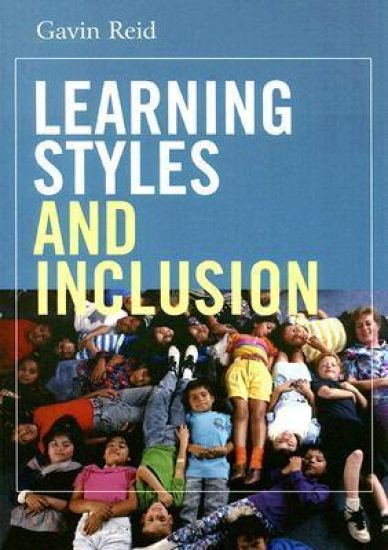
Learning Styles and Inclusion

Learning Styles and Inclusion

Gavin Reid

SAGE Publications Inc
2005
sidottu
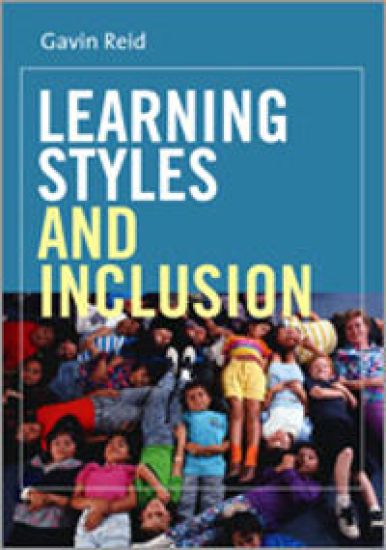
'[Gavin Reid] provides some useful links to websites devoted to different approaches. Some of the ideas relating to specific areas of the curriculum, for example, the suggested approaches to the teaching of modern languages, are likely to be particularly valuable. Reid also outlines strategies using learning styles for pupils with learning differences, including attention disorders, dyslexia, developmental co-ordination difficulties, number difficulties, and those on the autistic spectrum' - Times Educational Supplement Extra for Special Needs `We have been lucky enough to hear Gavin speak twice in the last year and those of you who have also heard him will know that he is at the cutting edge of his field. This book really encompasses those areas that are particularly topical and the "buzz" words on everyone's lips! This book clearly sets out "who" is involved in inclusion and "what" is actually meant by learning styles. Gavin not only offers practical strategies but also suggests how "old hands" could vary their teaching styles to appeal to all types of learners. Therefore we feel this book is for the main stream teacher as well as the specialist and, if this is a target area for your school, this book might be a valuable addition to your bookshelf' - SATIPS `In this book, Gavin Reid has grasped the nettle (of inclusion) with both hands and provided a text that is full of common sense and practical suggestions as to how the mainstream teacher can draw upon recent psychological theory and research to enhance the learning of all children. He jumps on no bandwagons but draws judiciously from a wide range of approaches to assessing learning styles and links what can be learned about groups and individuals from such techniques to helpful classroom practice' - Professor Bob Burden, School of Education and Lifelong Learning, University of Exeter `Gavin Reid is that rare professional who not only explains how and why children learn best, but also suggests a myriad of practical strategies to help them. I highly recommend this book for everyone from undergraduates to "old hands" working toward successful inclusion. Parents, too, will profit from Dr. Reid's wise and comprehensive experience' - Jane M. Healy, Ph.D., Educational Psychologist and Author of "Your Child's Growing Mind: Brain Development and Learning from Birth to Adolescence." 3rd Edition. NY: Broadway Books, 2004. Drawing on his considerable experience as a teacher, educational psychologist, lecturer and author, Gavin Reid illustrates how to assess pupils' different learning styles and how to vary your teaching style to appeal to all types of learners, including disaffected students and those with special educational needs. This book provides an overview of the different stages in the learning cycle; describes the differences between learners; and emphasizes the role the classroom environment and different teaching styles play in children's ability to learn. Readers will see how an understanding of learning styles can be used to encourage and promote good inclusive practice. Ideas for assessment of learning styles and examples of different teaching styles will prove invaluable to class teachers, trainee teachers, SENCOs, LEA advisers; NQTs and NQT advisers and school management
Learning Styles and Inclusion

Learning Styles and Inclusion

Gavin Reid

SAGE Publications Inc
2005
nidottu
'[Gavin Reid] provides some useful links to websites devoted to different approaches. Some of the ideas relating to specific areas of the curriculum, for example, the suggested approaches to the teaching of modern languages, are likely to be particularly valuable. Reid also outlines strategies using learning styles for pupils with learning differences, including attention disorders, dyslexia, developmental co-ordination difficulties, number difficulties, and those on the autistic spectrum' - Times Educational Supplement Extra for Special Needs `We have been lucky enough to hear Gavin speak twice in the last year and those of you who have also heard him will know that he is at the cutting edge of his field. This book really encompasses those areas that are particularly topical and the "buzz" words on everyone's lips! This book clearly sets out "who" is involved in inclusion and "what" is actually meant by learning styles. Gavin not only offers practical strategies but also suggests how "old hands" could vary their teaching styles to appeal to all types of learners. Therefore we feel this book is for the main stream teacher as well as the specialist and, if this is a target area for your school, this book might be a valuable addition to your bookshelf' - SATIPS `In this book, Gavin Reid has grasped the nettle (of inclusion) with both hands and provided a text that is full of common sense and practical suggestions as to how the mainstream teacher can draw upon recent psychological theory and research to enhance the learning of all children. He jumps on no bandwagons but draws judiciously from a wide range of approaches to assessing learning styles and links what can be learned about groups and individuals from such techniques to helpful classroom practice' - Professor Bob Burden, School of Education and Lifelong Learning, University of Exeter `Gavin Reid is that rare professional who not only explains how and why children learn best, but also suggests a myriad of practical strategies to help them. I highly recommend this book for everyone from undergraduates to "old hands" working toward successful inclusion. Parents, too, will profit from Dr. Reid's wise and comprehensive experience' - Jane M. Healy, Ph.D., Educational Psychologist and Author of "Your Child's Growing Mind: Brain Development and Learning from Birth to Adolescence." 3rd Edition. NY: Broadway Books, 2004. Drawing on his considerable experience as a teacher, educational psychologist, lecturer and author, Gavin Reid illustrates how to assess pupils' different learning styles and how to vary your teaching style to appeal to all types of learners, including disaffected students and those with special educational needs. This book provides an overview of the different stages in the learning cycle; describes the differences between learners; and emphasizes the role the classroom environment and different teaching styles play in children's ability to learn. Readers will see how an understanding of learning styles can be used to encourage and promote good inclusive practice. Ideas for assessment of learning styles and examples of different teaching styles will prove invaluable to class teachers, trainee teachers, SENCOs, LEA advisers; NQTs and NQT advisers and school management
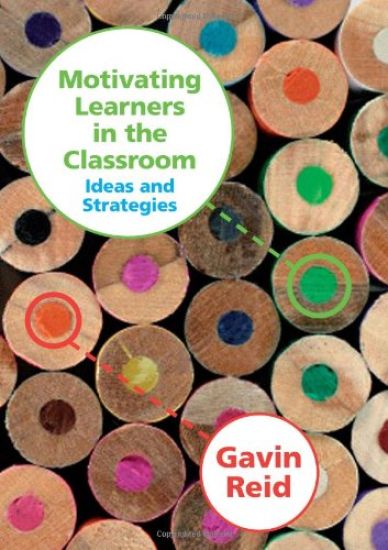
Motivating Learners in the Classroom

Motivating Learners in the Classroom

Gavin Reid

SAGE Publications Inc
2007
sidottu
`This is a rare find, a book that manages to turn educational theory into accessible practice. It will appeal to teachers, managers, support staff and anyone interested in how we learn...This is a book relevant to everyone involved in education as it gets right to the heart of what makes us achieve: motivation. An empowering read - don't miss it!' - Support for Learning `As the title suggests, motivation is a key theme, and this is explored with reference to theoretical perspectives on learning and how these can be translated into practice. A real strength of the book lies in its emphasis on the importance of managing learning and developing effective whole-school approaches to improving the motivation of pupils' - SENCO Update Help all your students become better learners! This book tells you how to recognise and meet the individual needs of different kinds of learners, and provides adaptable strategies for helping every learner develop their own successful approach to learning. Packed full of advice, the book contains: o ideas for ways to motivate all pupils o a chapter on learning styles in the early years o advice on how to create the best learning environment possible o questionnaires, memory games and organizational charts o key practice points o visual summaries at the end of each chapter The practical ideas offered in this book will be invaluable to all class teachers, trainee teachers and SENCOs.
Motivating Learners in the Classroom

Motivating Learners in the Classroom

Gavin Reid

SAGE Publications Inc
2007
nidottu
`This is a rare find, a book that manages to turn educational theory into accessible practice. It will appeal to teachers, managers, support staff and anyone interested in how we learn...This is a book relevant to everyone involved in education as it gets right to the heart of what makes us achieve: motivation. An empowering read - don't miss it!' - Support for Learning `As the title suggests, motivation is a key theme, and this is explored with reference to theoretical perspectives on learning and how these can be translated into practice. A real strength of the book lies in its emphasis on the importance of managing learning and developing effective whole-school approaches to improving the motivation of pupils' - SENCO Update Help all your students become better learners! This book tells you how to recognise and meet the individual needs of different kinds of learners, and provides adaptable strategies for helping every learner develop their own successful approach to learning. Packed full of advice, the book contains: o ideas for ways to motivate all pupils o a chapter on learning styles in the early years o advice on how to create the best learning environment possible o questionnaires, memory games and organizational charts o key practice points o visual summaries at the end of each chapter The practical ideas offered in this book will be invaluable to all class teachers, trainee teachers and SENCOs.