The book focuses on the historical evolution of firms, and industry leaders and their strategies. Sheffield's experience is then related to current historical and economic debates about industrial structure, entrepreneurship and UK decline. Sheffield is revealed (with some important qualifications) as a remarkably enduring and successful centre; and also a highly complex one, which cannot be fitted easily into present theories of mass production and entrepreneurial failure.
This book examines the evolution of multinational trading companies from the eighteenth century to the present day. During the Industrial Revolution, British merchants established overseas branches which became major trade intermediaries and subsequently engaged in foreign direct investment. Complex multinational business groups emerged controlling large investments in natural resources, processing, and services in Asia, Latin America, and Africa.
Asbestos was once known as the 'magic mineral' because of its ability to withstand flames. Yet since the 1960s, it has become a notorious and feared 'killer dust' that is responsible for thousands of deaths and an epidemic that will continue into the millennium. This is the first comprehensive history of the UK asbestos health problem, which provides an in-depth look at the occupational health experience of one of the world's leading asbestos companies - British asbestos giant, Turner and Newall. Based on a vast company archive recently released in American litigation, Magic Mineral to Killer Dust gives an unprecedented insight into all aspects of the asbestos hazard - dust control, workmen's compensation, government regulation, and the development of medical knowledge. In particular, it looks at the role of industrialists, doctors, factory inspectors, and trade unionists, highlighting the failures in regulation that accompanied the commercial development of a material that was already known to be lethal at the start of the twentieth century.
This book presents the first comprehensive legal analysis of the Oslo Accords. Professor Geoffrey Watson begins by rejecting suggestions that the Accords are non-binding political undertakings. He argues instead that they are binding international agreements between subjects of international law. Professor Watson next analyses Israeli and Palestinian compliance with the Accords. Watson concludes that each side has a mixed record of compliance, but that neither side has committed so serious a breach as to warrant termination of the Accords. Finally, Professor Watson offers some suggestions on how international law might help shape a final status agreement between the parties.
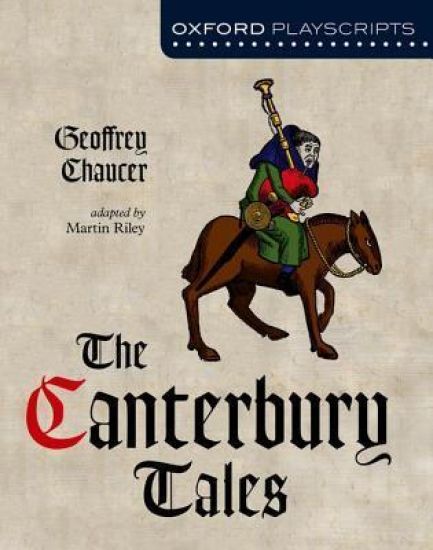
An engaging classroom playscript. Canterbury Tales Geoffrey Chaucer is dead! In a dramatic attempt to bring him back to life, four medieval alchemists invite a group of Chaucer's best-known pilgrims - the Knight, the Wife of Bath, the Pardoner, the Nun's Priest, and the Miller - to tell their Canterbury Tales. New, innovative activities specifically tailored to support the KS3 Framework for Teaching English and help students to fulfil the Framework objectives. Activities include work on Speaking and Listening, close text analysis, and the structure of playscripts, and act as a springboard for personal writing.
Traditional theories of associative learning have found no place for the possibility that the way in which events are perceived might change as a result of experience. Evidence for the reality of perceptual learning has come from those studied by learning theorists. The work reviewed in this book shows that learned changes in perceptual organization can in fact be demonstrated, even in experiments using procedures (such as conditioning and simple discrimination learning) of the type on which associative theories have been based. These results come from procedures that have been the focus of detailed theoretical and empirical analysis; and from this analysis emerges an outline of the mechanisms responsible. Some of these are themselves associative; others require the addition of nonassociative mechanisms to the traditional theory. The result is an extended version of associative theory which, it is argued, will be relevant not only to the experimental procedures discussed in this book but to the entire range of instances of perceptual learning.
This book provides the first comprehensive treatment of feed-forward neural networks from the perspective of statistical pattern recognition. After introducing the basic concepts of pattern recognition, the book describes techniques for modelling probability density functions, and discusses the properties and relative merits of the multi-layer perceptron and radial basis function network models. It also motivates the use of various forms of error functions, and reviews the principal algorithms for error function minimization. As well as providing a detailed discussion of learning and generalization in neural networks, the book also covers the important topics of data processing, feature extraction, and prior knowledge. The book concludes with an extensive treatment of Bayesian techniques and their applications to neural networks.
People have been interested in knots at least since the time of Alexander the Great and his encounter with the Gordian knot. There are famous knot illustrations in the Book of Kells and throughout traditional Islamic art. Lord Kelvin believed that atoms were knots in the ether and he encouraged Tait to compile a talbe of knots about 100 years ago. In recent years, the Jones polynomial has stimulated much interest in possible relationships between knot theory and physics. The book is concerned with the fundamental question of the classification of knots, and more generally the classification of arbitrary (compact) topological objects which can occur in our normal space of physical reality. Professor Hemion explains his classification algorithm - using the method of normal surfaces - in a simple and concise way. The reader is thus shown the relevance of such traditional mathematical objects as the Klein bottle or the hyperbolic plane to this basic classification theory. The Classification of Knots and 3-dimensional Spaces will be of interest to mathematicians, physicists, and other scientists who want to apply this basic classification algorithm to their research in knot theory.
The book gives accounts of non-quantum optical phenomena and of instruments and technology based on them, at a level suitable for the last two years of an honours degree in physics and for graduates starting out. Topics covered include the conventional (diffraction, coherence, thin films, holography...) but also the less conventional (étendue, Gaussian beams, laser cavities, cd reader, confocal microscope...) which belong in today's university courses, for example, to support laser physics. Even the conventional material has frequently been given a fresh presentation by giving a tidier-than-usual route through a calculation, or finding insightful connections with other parts of physics, or simply avoiding common errors. Problems offer opportunities for checking the reader's basic understanding, or for taking a careful route through reasoning, or for checking orders of magnitude. But most problems contain exploratory and critical material: investigating possible alternative approaches, asking searching questions about fundamentals, or solving apparent paradoxes.
This work gives accounts of non-quantum optical phenomena and of instruments and technology based on them, at a level suitable for the last two years of an honours degree in physics and for graduates starting out. Topics covered include the conventional (diffraction, coherence, thin films, holography) and the less conventional (etendue, Gaussian beams, laser cavities, CD reader, confocal microscope) which belong in today's university courses, for example, to support laser physics. Even the conventional material has frequently been given a fresh presentation by giving a tidier-than-usual route through a calculation, or finding insightful connections with other parts of physics, or simply avoiding common errors. Problems offer opportunities for checking the reader's basic understanding, or for taking a careful route through reasoning, or for checking orders of magnitude. But most problems contain exploratory and critical material: investigating possible alternative approaches, asking searching questions about fundamentals, or solving apparent paradoxes.
Cinema was the first, and is arguably still the greatest, of the industrialized art forms that came to dominate the cultural life of the twentieth century. Today, it continues to adapt and grow as new technologies and viewing platforms become available, and remains an integral cultural and aesthetic entertainment experience for people the world over. Cinema developed against the backdrop of the two world wars, and over the years has seen smaller wars, revolutions, and profound social changes. Its history reflects this changing landscape, and, more than any other art form, developments in technology. In this Very Short Introduction, Nowell-Smith looks at the defining moments of the industry, from silent to sound, black and white to colour, and considers its genres from intellectual art house to mass market entertainment. ABOUT THE SERIES: The Very Short Introduction series from Oxford University Press contains hundreds of titles in almost every subject area. These pocket-sized books are the perfect way to get ahead in a new subject quickly. Our expert authors combine facts, analysis, perspective, new ideas, and enthusiasm to make interesting and challenging topics highly readable.
Are profits and sustainability compatible? This book brings unique perspectives to this key debate by exploring the history of green entrepreneurship since the nineteenth century, and its spread globally in industries including renewable energy, organic food, natural beauty, ecotourism, recycling, architecture, and finance. The book uses the lens of the extraordinary and often eccentric men and women who defied convention and imagined that business could help save the planet, rather than consume it. The social and religious beliefs that drove many of these individuals are explored as the book looks at how they overcame huge obstacles to execute their strategies. The green entrepreneurs seen here are shown to have created new markets and industries, and driven innovations in sustainable practices, even at times when most consumers and governments marginalized the entire subject. The struggles of early pioneers appear to have been rewarded by the growth of environmental awareness among consumers, business leaders, and others in recent years, but the Earth's environmental health continues to deteriorate. If profits and sustainability have proved challenging to reconcile, the book argues that one reason was how they were both defined.
Probability is an area of mathematics of tremendous contemporary importance across all aspects of human endeavour. This book is a compact account of the basic features of probability and random processes at the level of first and second year mathematics undergraduates and Masters' students in cognate fields. It is suitable for a first course in probability, plus a follow-up course in random processes including Markov chains. A special feature is the authors' attention to rigorous mathematics: not everything is rigorous, but the need for rigour is explained at difficult junctures. The text is enriched by simple exercises, together with problems (with very brief hints) many of which are taken from final examinations at Cambridge and Oxford. The first eight chapters form a course in basic probability, being an account of events, random variables, and distributions - discrete and continuous random variables are treated separately - together with simple versions of the law of large numbers and the central limit theorem. There is an account of moment generating functions and their applications. The following three chapters are about branching processes, random walks, and continuous-time random processes such as the Poisson process. The final chapter is a fairly extensive account of Markov chains in discrete time. This second edition develops the success of the first edition through an updated presentation, the extensive new chapter on Markov chains, and a number of new sections to ensure comprehensive coverage of the syllabi at major universities.
Probability is an area of mathematics of tremendous contemporary importance across all aspects of human endeavour. This book is a compact account of the basic features of probability and random processes at the level of first and second year mathematics undergraduates and Masters' students in cognate fields. It is suitable for a first course in probability, plus a follow-up course in random processes including Markov chains. A special feature is the authors' attention to rigorous mathematics: not everything is rigorous, but the need for rigour is explained at difficult junctures. The text is enriched by simple exercises, together with problems (with very brief hints) many of which are taken from final examinations at Cambridge and Oxford. The first eight chapters form a course in basic probability, being an account of events, random variables, and distributions - discrete and continuous random variables are treated separately - together with simple versions of the law of large numbers and the central limit theorem. There is an account of moment generating functions and their applications. The following three chapters are about branching processes, random walks, and continuous-time random processes such as the Poisson process. The final chapter is a fairly extensive account of Markov chains in discrete time. This second edition develops the success of the first edition through an updated presentation, the extensive new chapter on Markov chains, and a number of new sections to ensure comprehensive coverage of the syllabi at major universities.
Today there is much talk of a 'crisis of trust'; a crisis which is almost certainly genuine, but usually misunderstood. Trust: A History offers a new perspective on the ways in which trust and distrust have functioned in past societies, providing an empirical and historical basis against which the present crisis can be examined, and suggesting ways in which the concept of trust can be used as a tool to understand our own and other societies. Geoffrey Hosking argues that social trust is mediated through symbolic systems, such as religion and money, and the institutions associated with them, such as churches and banks. Historically these institutions have nourished trust, but the resulting trust networks have tended to create quite tough boundaries around themselves, across which distrust is projected against outsiders. Hosking also shows how nation-states have been particularly good at absorbing symbolic systems and generating trust among large numbers of people, while also erecting distinct boundaries around themselves, despite an increasingly global economy. He asserts that in the modern world it has become common to entrust major resources to institutions we know little about, and suggests that we need to learn from historical experience and temper this with more traditional forms of trust, or become an ever more distrustful society, with potentially very destabilising consequences.
Varieties of Continua explores the development of the idea of the continuous. Hellman and Shapiro begin with two historical episodes. The first is the remarkably rapid transition in the course of the nineteenth century from the ancient Aristotelian view, that a true continuum cannot be composed of points, to the now standard, point-based frameworks for analysis and geometry found in modern mainstream mathematics (stemming from the work of Bolzano, Cauchy, Weierstrass, Dedekind, Cantor, et al.). The second is the mid-tolate-twentieth century revival of pre-limit methods in analysis and geometry using infinitesimals including non-standard analysis (due to Abraham Robinson), and the more radical smooth infinitesimal analysis that uses intuitionistic logic. Hellman and Shapiro present a systematic comparison of these and related alternatives (including constructivist and predicative conceptions), weighing various trade-offs, helping articulate a modern pluralist perspective, and articulate a modern pluralist perspective on continuity. The main creative work of the book is the development of rigorous regions-based theories of classical continua, including Euclidean and non-Euclidean geometries, that are mathematically equivalent (inter-reducible) to the currently standard, point-based accounts in mainstream mathematics.
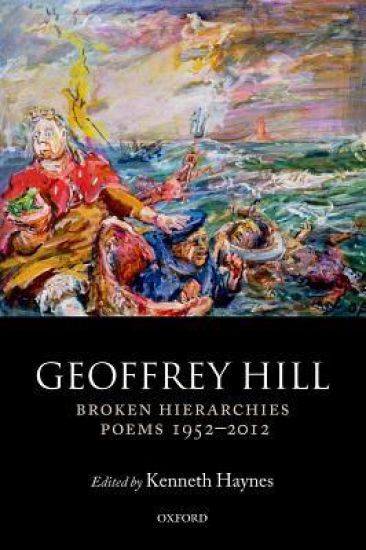
Broken Hierarchies collects twenty books of poems by Geoffrey Hill, written over sixty years, and presents them in their definitive form. Four of these books (Ludo, Expostulations on the Volcano, Liber Illustrium Virorum, and Al Tempo de' Tremuoti) have never before appeared in print, and three of them (Hymns to Our Lady of Chartres, Pindarics, and Clavics) have been greatly revised and expanded.
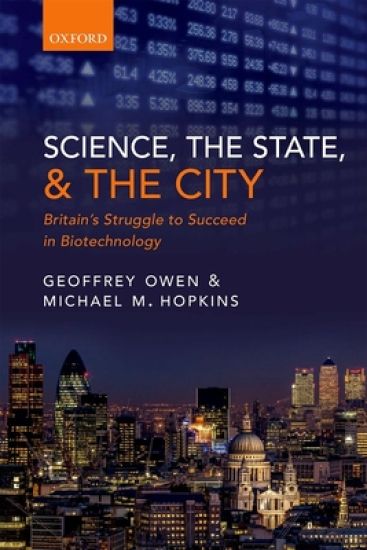
The book examines the evolution of one of the most important technologies that has emerged in the last fifty years: biotechnology - the use of living organisms, or parts thereof to create useful products and services. The most important application of biotechnology has been in medicine, in the development of new drugs. The central purpose of the book is to explain how firms based in the US took the lead in commercialising the technology, and why it has been so difficult for firms in other countries to match what the leading American companies have achieved. The book looks at the institutions and policies which have underpinned US success in biotechnology. This is the US innovation "ecosystem," and it is made up of several interlocking elements which constitute a powerful competitive advantage for US biotechnology firms. These include, a higher education system which has close links with industry, massive support from the Federal government for biomedical research, and a financial system which is well equipped to support young entrepreneurial firms in a science-based industry. In the light of US experience the book examines in detail the performance of UK biotechnology firms over the past forty years, starting with the creation of the UK's first dedicated biotech firm, Celltech, in 1980. The book shows how the UK made a promising start in the 1980s and 1990s but failed to build on it. Several leading firms failed, and after an initial burst of enthusiasm investors lost confidence in the British biotech sector. It is only the last few years that the sector has staged a revival, attracting fresh investment from the US as well from the UK. The story told in this book, based on extensive interviews with industry participants, investors, and policy makers in the UK, Continental Europe, and the US, sheds new light on one of the central issues facing governments in the advanced industrial countries - how to create and sustain new science-based industries.
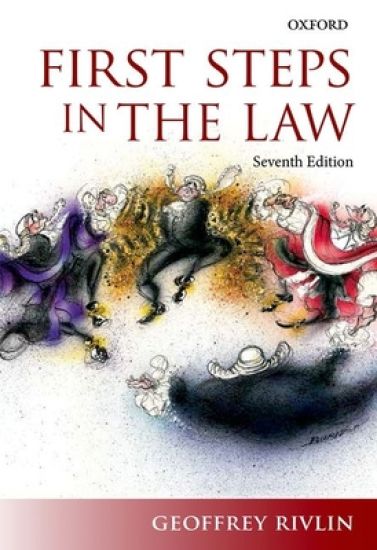
First Steps in the Law is an entertaining and insightful overview of the legal system. Geoffrey Rivlin, who boasts a wealth of experience as a former senior resident judge, barrister, and QC, leads the reader through the quirks of English law, offering fascinating details. Readers are regaled with lively descriptions of the workings of the legal system and vivid tales of the law in times gone by. Real life cases bring the book to life, enabling the reader to see the law in action, while descriptions of the participants in the legal system (including judges, lawyers, and police officers) root the book in the everyday reality of the legal profession. This is an essential read for anyone who is preparing for a law course or requires an understanding of the law in their working life.
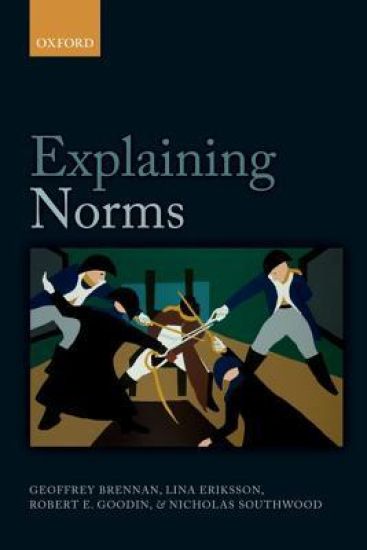
Norms are a pervasive yet mysterious feature of social life. In Explaining Norms, four philosophers and social scientists team up to grapple with some of the many mysteries, offering a comprehensive account of norms: what they are; how and why they emerge, persist and change; and how they work. Norms, they argue, should be understood in non-reductive terms as clusters of normative attitudes that serve the function of making us accountable to one another--with the different kinds of norms (legal, moral, and social norms) differing in virtue of being constituted by different kinds of normative attitudes that serve to make us accountable in different ways. Explanations of and by norms should be seen as thoroughly pluralist in character. Explanations of norms should appeal to the ways that norms help us to pursue projects and goals, individually and collectively, as well as to enable us to constitute social meanings. Explanations by norms should recognise the multiplicity of ways in which norms may bear upon the actions we perform, the attitudes we form and the modes of deliberation in which we engage: following, merely conforming with, and even breaching norms. While advancing novel and distinctive positions on all of these topics, Explaining Norms will also serve as a sourcebook with a rich array of arguments and illustrations for others to reassemble in ways of their own choosing.