
Kirjahaku
Etsi kirjoja tekijän nimen, kirjan nimen tai ISBN:n perusteella.
1000 tulosta hakusanalla Hamilton Nigel
Alexander Hamilton: The Riverside Biographical Series Volume 10
Charles a. Conant
Createspace Independent Publishing Platform
2013
nidottu
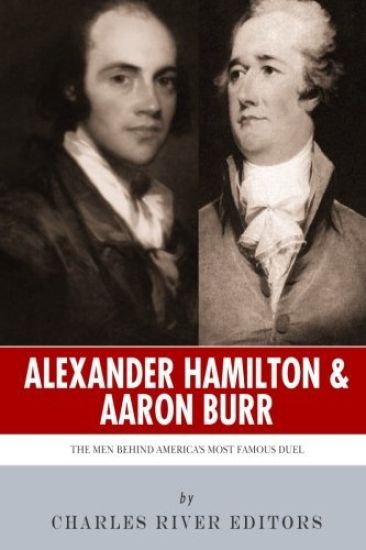
Alexander Hamilton & Aaron Burr: The Men Behind America's Most Famous Duel
Charles River
Createspace Independent Publishing Platform
2013
nidottu
*Includes pictures of Burr, Hamilton, and important people and places. *Explains the origins of their duel and includes the correspondence between them leading up to the duel. *Includes accounts of the duel and explains the mysteries and controversies still surrounding what happened. *Includes a Bibliography for further reading. "General Hamilton and Judge Kent have declared in substance that they looked upon Mr. Burr to be a dangerous man, and one who ought not be trusted with the reins of government." The Founding Fathers have been revered by Americans for over 200 years, celebrated for creating a new nation founded upon the loftiest ideals of democracy and meritocracy. But if the American Dream has come to represent the ability to climb the social ladder with skill and hard work, no Founding Father represented the new America more than Alexander Hamilton. Unfortunately, one of the best known aspects of Hamilton's (1755-1804) life is the manner in which he died, shot and killed in a famous duel with Aaron Burr in 1804. But Hamilton started as an orphaned child in the West Indies before becoming one of the most instrumental Founding Fathers of the United States in that time, not only in helping draft and gain support for the U.S. Constitution but in also leading the Federalist party and building the institutions of the young federal government as Washington's Secretary of Treasury. Hamilton is also well remembered for his authorship, along with John Jay and James Madison, of the Federalist Papers. The Federalist Papers sought to rally support for the Constitution's approval when those three anonymously wrote them, but they demonstrate how men of vastly different political ideologies came to accept the same Constitution. Conversely, it is hard if not impossible to find a figure with a more controversial legacy than Aaron Burr, one of the most reviled yet mysterious characters of the last 200 years. Today Burr is remembered almost solely for participating in the duel with Hamilton, but it is often forgotten that Burr killed Hamilton while he was Thomas Jefferson's sitting Vice President. As if that wasn't incredible enough, Burr's path to the Vice Presidency sparked a Constitutional crisis after the Election of 1800, and in addition to leading to the establishment of the 12th Amendment, it was Hamilton's support of his principal political foe Jefferson over Burr that helped ignite the arguments that culminated with their duel. Burr was charged with murder for participating in the controversial and illegal duel, bringing his political career to an end, but he saved his most controversial act for last. After leaving politics, Burr headed west, where he engaged in a mysterious and convoluted scheme that eventually led to charges of treason for conspiring to create a new Western empire. Like the murder charges, he was never convicted of treason for the controversial and confusing conspiracy, but Burr had burned nearly every bridge by then. Having incurred massive debt, Burr took to practicing law and staying out of the public eye for the rest of his life. Alexander Hamilton & Aaron Burr: The Men Behind America's Most Famous Duel chronicles the lives and legacies of both men and their notorious duel, but it also humanizes them and provides contemporary accounts that offer conflicting opinions of them. Along with pictures and a bibliography, you will learn about Hamilton, Burr and their duel like you never have before.
Alexander Hamilton: The Little Lion of the Treasury
Clifford Smyth
Literary Licensing, LLC
2013
nidottu

If Hamilton Were Here Today: American Fundamentals Applied to Modern Problems
Arthur Hendrick Vandenberg
Literary Licensing, LLC
2013
nidottu
Alexander Hamilton: An Essay on American Union
Frederick Scott Oliver
Literary Licensing, LLC
2013
nidottu


Dick Hamilton's Football Team: Or A Young Millionaire On The Gridiron
Howard R. Garis
Literary Licensing, LLC
2014
nidottu

Alexander Hamilton And Robert Fulton: Makers Of American History
William Graham Sumner; Robert H. Thurston
Literary Licensing, LLC
2014
nidottu

Patrick Hamilton: A Tragedy of the Reformation in Scotland, 1528
T. P. Johnston
Literary Licensing, LLC
2014
sidottu
""Patrick Hamilton: A Tragedy Of The Reformation In Scotland, 1528"" is a book written by T.P. Johnston. The book is a historical account of the life of Patrick Hamilton, a Scottish nobleman and Protestant reformer who lived during the 16th century. The book chronicles Hamilton's life, from his early years as a student in Paris to his eventual return to Scotland, where he became a leading figure in the Protestant Reformation.The book provides a detailed account of the political and religious climate in Scotland during the 16th century, including the tensions between the Catholic Church and the growing Protestant movement. It also explores Hamilton's relationship with his family, his friends, and his fellow reformers, as well as his interactions with key figures in Scottish history, such as James V and Cardinal Beaton.The book is written in a scholarly style, with extensive footnotes and references to primary sources. It is aimed at readers with an interest in Scottish history, the Protestant Reformation, and the life of Patrick Hamilton. Overall, ""Patrick Hamilton: A Tragedy Of The Reformation In Scotland, 1528"" provides a fascinating insight into a pivotal moment in Scottish history and the life of one of its most important figures.This Is A New Release Of The Original 1882 Edition.This scarce antiquarian book is a facsimile reprint of the old original and may contain some imperfections such as library marks and notations. Because we believe this work is culturally important, we have made it available as part of our commitment for protecting, preserving, and promoting the world's literature in affordable, high quality, modern editions, that are true to their original work.

Patrick Hamilton: A Tragedy of the Reformation in Scotland, 1528
T. P. Johnston
Literary Licensing, LLC
2014
nidottu
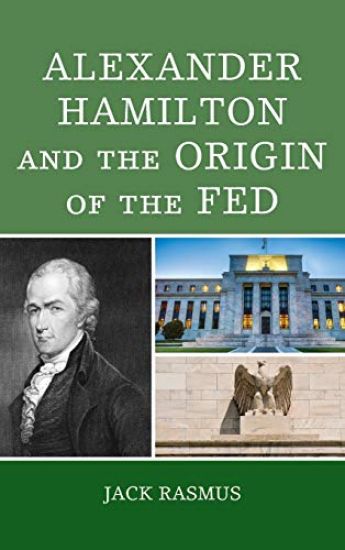
The US in 1913 was one of the last major economies to establish an institution of a central bank. The book examines, however, the history and evolution of central banking in the US from the perspective of central banking functions—i.e. aggregator of private lending to the federal government, fiscal agent for the government, regulator of money supply, monopoly over currency issuance, banking system supervision, and lender of last resort. The evolution of central banking functions is traced from earliest pre-1987 proposals, through the Constitutional Convention and Congressional debates on Hamilton’s 1st Report on Credit, the rise and fall of the 1st and 2nd Banks of the United States, through the long period of the National Banking System, 1862-1913. The book describes how US federal governments—often in cooperation with the largest US private banks in New York, Philadelphia, and elsewhere in the northeast—attempted to expand and develop those functions, sometimes successfully sometimes not, from 1781 through the creation of the Federal Reserve Act of 1913. Other themes include how rapid US economic growth, and an expanding, geographically dispersed private banking system, created formidable resistance by banks at the state and local level to the evolution and consolidation of central banking functions at the national level. Whenever central banking functions were dismantled (1810s, 1830s) or were weakened (after 1860s), the consequences were financial instability and severe economic depressions. The book concludes with a detailed narrative on how, from 1903 to 1913, big eastern banks—leveraging the Panic of 1907, weak economic recovery of 1909-13, and need to expand internationally—allied with Congressional supporters to prevail over state and local banking interests and created the Fed; how the structure of the 1913 Fed clearly favored New York banks while granting concessions to state and local banks to win Congressional approval; and how that compromise central bank structure doomed US monetary policy to fail after 1929.
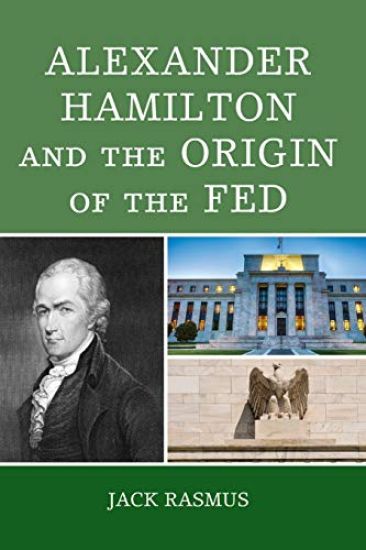
The US in 1913 was one of the last major economies to establish an institution of a central bank. The book examines, however, the history and evolution of central banking in the US from the perspective of central banking functions—i.e. aggregator of private lending to the federal government, fiscal agent for the government, regulator of money supply, monopoly over currency issuance, banking system supervision, and lender of last resort. The evolution of central banking functions is traced from earliest pre-1987 proposals, through the Constitutional Convention and Congressional debates on Hamilton’s 1st Report on Credit, the rise and fall of the 1st and 2nd Banks of the United States, through the long period of the National Banking System, 1862-1913. The book describes how US federal governments—often in cooperation with the largest US private banks in New York, Philadelphia, and elsewhere in the northeast—attempted to expand and develop those functions, sometimes successfully sometimes not, from 1781 through the creation of the Federal Reserve Act of 1913. Other themes include how rapid US economic growth, and an expanding, geographically dispersed private banking system, created formidable resistance by banks at the state and local level to the evolution and consolidation of central banking functions at the national level. Whenever central banking functions were dismantled (1810s, 1830s) or were weakened (after 1860s), the consequences were financial instability and severe economic depressions. The book concludes with a detailed narrative on how, from 1903 to 1913, big eastern banks—leveraging the Panic of 1907, weak economic recovery of 1909-13, and need to expand internationally—allied with Congressional supporters to prevail over state and local banking interests and created the Fed; how the structure of the 1913 Fed clearly favored New York banks while granting concessions to state and local banks to win Congressional approval; and how that compromise central bank structure doomed US monetary policy to fail after 1929.

Dick Hamilton's Fortune or the Stirring Doings of a Millionaire's Son
Howard R. Garis
Createspace Independent Publishing Platform
2014
nidottu
Alexander Hamilton: An Essay on American Union
Frederick Scott Oliver
Createspace Independent Publishing Platform
2014
nidottu

Dick Hamilton's Football Team: Or A Young Millionaire on the Gridiron
Howard R. Garis
Createspace Independent Publishing Platform
2014
nidottu
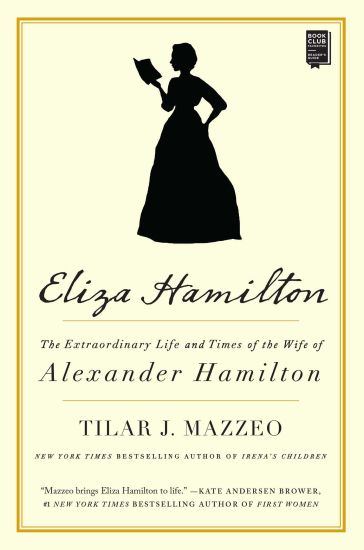
From the New York Times bestselling author of Irena’s Children comes a “vivid, compelling, and unputdownable new biography” (Christopher Andersen, #1 New York Times bestselling author) about the extraordinary life and times of Eliza Hamilton, the wife of founding father Alexander Hamilton, and a powerful, unsung hero in America’s early days. Fans fell in love with Eliza Hamilton—Alexander Hamilton’s devoted wife—in Lin-Manuel Miranda’s phenomenal musical Hamilton. But they don’t know her full story. A strong pioneer woman, a loving sister, a caring mother, and in her later years, a generous philanthropist, Eliza had many sides—and this fascinating biography brings her multi-faceted personality to vivid life. This “expertly told story” (Publishers Weekly) follows Eliza through her early years in New York, into the ups and downs of her married life with Alexander, beyond the aftermath of his tragic murder, and finally to her involvement in many projects that cemented her legacy as one of the unsung heroes of our nation’s early days. This captivating account of the woman behind the famous man is perfect for fans of the works of Ron Chernow, Lisa McCubbin, and Nathaniel Philbrick.
Ian Hamilton Finlay - A Memoir
Christopher McIntosh
Createspace Independent Publishing Platform
2014
nidottu
This is a personal portrait of the Scottish poet and artist Ian Hamilton Finlay, his life and work, by Christopher McIntosh, his friend of nearly three decades, who took part in many of his battles and campaigns. McIntosh recounts Finlay's emergence as an avant-garde writer and poet in the 1950s, the creation, together with his wife Sue, of his famous garden at his home Stonypath-Little Sparta in Lanarkshire, his espousal of the ideals of the French Revolution, his defence of classical values, his idiosyncratic form of paganism (Little Sparta was dedicated to Apollo), his struggle against what he called the "secular terror", his many battles (with the local taxation authorities, with the French cultural establishment, with publishers and with authors who misunderstood his work. In many ways he was a paradoxical figure on the cultural scene - a contemporary artist who opposed modern culture and fiercely upheld tradition, in other words a kind of radical traditionalist. Having been seen by many as an enfant terrible, he was in his later years f ted by the establishment, given honorary doctorates and an honorary professorship, awarded a CBE and hailed as Scotland's greatest artist. Today he has a world-wide reputation, and in 2004 a panel of artists and arts professionals voted the garden at Stonypath-Little Sparta the most important work of Scottish art. This lively personal tribute is a must for Finlay scholars and admirers.