Kirjojen hintavertailu. Mukana 12 016 292 kirjaa ja 12 kauppaa.

Kirjahaku

Etsi kirjoja tekijän nimen, kirjan nimen tai ISBN:n perusteella.

1000 tulosta hakusanalla Jamie M Hocking

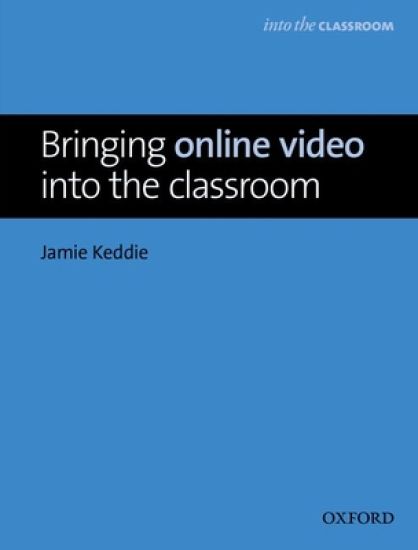
Bringing Online Video into the Classroom

Bringing Online Video into the Classroom

Jamie Keddie

Oxford University Press
2014
nidottu
Bringing Online Video into the Classroom is written for teachers of young learners and teenagers, teacher trainers and materials designers. The book explores principles, techniques and practical ideas for teaching English with video and includes suggestions for using and creating online video in the language classroom.
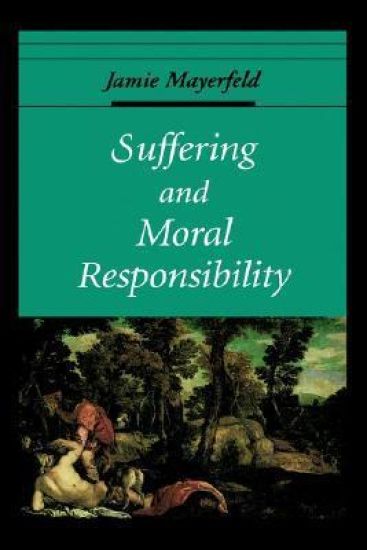
Suffering and Moral Responsibility

Suffering and Moral Responsibility

Jamie Mayerfeld

Oxford University Press Inc
1999
sidottu
This book is about the duty to relieve suffering. Jamie Mayerfield argues that this duty is far stronger than most of us acknowledge - an argument with far-reaching implications for how we should live. He begins by offering an account of the meaning of suffering. From there he moves on to a discussion of the measurement and moral significance of suffering. Mayerfield argues that the prima facie duty (which may be overridden by other duties) to relieve suffering arises directly from the badness of suffering. The alleviation of suffering, he claims, is morally more important than the promotion of happiness. He goes on to examine the proper resolution of trade-offs internal to the duty to relieve suffering: e.g., what should we do when we can eliminate the suffering of one group of people or another, but not both? Finally, Mayerfield addresses the question of how to identify those occasions when the relief of suffering is not morally required or is indeed wrong.
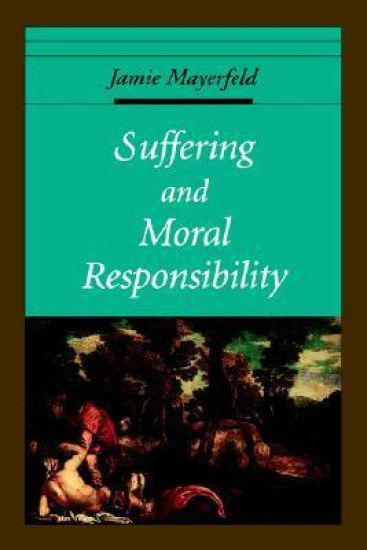
Suffering and Moral Responsibility

Suffering and Moral Responsibility

Jamie Mayerfeld

Oxford University Press Inc
2002
nidottu
In this original study, Jamie Mayerfeld undertakes a careful inquiry into the meaning and moral significance of suffering. Understanding suffering in hedonistic terms as an affliction of feeling, he addresses difficulties associated with its identification and measurement. He then turns to an examination of the duty to relieve suffering: its content, its weight relative to other moral considerations, and the role it should play in our lives. Among the claims defended in the book are that suffering needs to be distinguished from both physical pain and the frustration of desire, that interpersonal comparisons of the intensity of happiness and suffering are possible, that several psychological processes hinder our awareness of other people's suffering, and that the prevention of suffering should often be pursued indirectly. Mayerfeld concludes his discussion by arguing that the reduction of suffering is morally more important than the promotion of happiness, and that most of us greatly underestimate the force of the duty to prevent suffering. As the first systematic book-length inquiry into the moral significance of suffering, Suffering and Moral Responsibility makes an important contribution to moral philosophy and political theory, and will interest specialists in each of these areas.
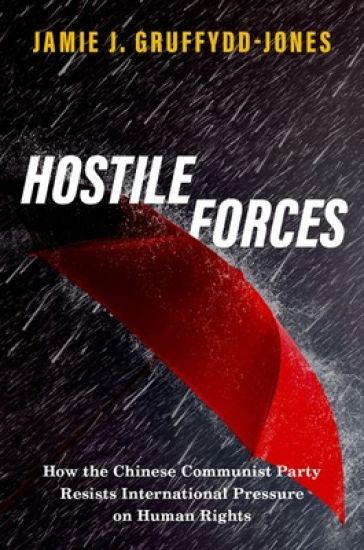
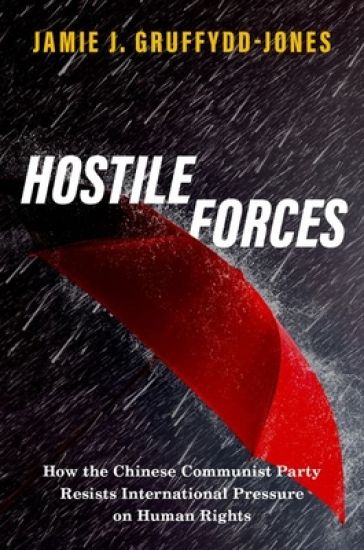
Hostile Forces

Hostile Forces

Jamie J. Gruffydd-Jones

OXFORD UNIVERSITY PRESS INC
2023
sidottu
How do authoritarian regimes deal with pressure from the international community? China's leaders have been subject to decades of international attention, condemnation, resolutions, boycotts, and sanctions over their treatment of human rights. We assume that hearing about all this pressure will make the public more concerned about human rights, and so regimes like the Chinese Communist Party (CCP) should do what they can to prevent this from happening. In Hostile Forces, Jamie Gruffydd-Jones argues that while international pressure may indeed embarrass authoritarian leaders on the international stage, it may, in fact, benefit them at home. The targets of human rights pressure, regimes like the Communist Party, are not merely passive recipients, but actors who can proactively shape and deploy that pressure for their own advantage. Taking us through an exploration of the history of the Communist Party's reactions to foreign pressure, from condemnation of Mao's crackdowns in Tibet to outrage at the outbreak of COVID-19, analysis of a novel database drawn from state media archives, as well as multiple survey experiments and hundreds of interviews, Gruffydd-Jones shows that the CCP uses the most 'hostile' pressure strategically - and successfully - to push citizens to view human rights in terms of international geopolitics rather than domestic injustice, and reduce their support for change. The book shines a light on how regimes have learnt to manage, manipulate, and resist foreign pressure on their human rights, and illustrates how support for authoritarian and nationalist policies might grow in the face of a liberal international system.
Hostile Forces

Hostile Forces

Jamie J. Gruffydd-Jones

OXFORD UNIVERSITY PRESS INC
2022
nidottu
How do authoritarian regimes deal with pressure from the international community? China's leaders have been subject to decades of international attention, condemnation, resolutions, boycotts, and sanctions over their treatment of human rights. We assume that hearing about all this pressure will make the public more concerned about human rights, and so regimes like the Chinese Communist Party (CCP) should do what they can to prevent this from happening. In Hostile Forces, Jamie Gruffydd-Jones argues that while international pressure may indeed embarrass authoritarian leaders on the international stage, it may, in fact, benefit them at home. The targets of human rights pressure, regimes like the Communist Party, are not merely passive recipients, but actors who can proactively shape and deploy that pressure for their own advantage. Taking us through an exploration of the history of the Communist Party's reactions to foreign pressure, from condemnation of Mao's crackdowns in Tibet to outrage at the outbreak of COVID-19, analysis of a novel database drawn from state media archives, as well as multiple survey experiments and hundreds of interviews, Gruffydd-Jones shows that the CCP uses the most 'hostile' pressure strategically - and successfully - to push citizens to view human rights in terms of international geopolitics rather than domestic injustice, and reduce their support for change. The book shines a light on how regimes have learnt to manage, manipulate, and resist foreign pressure on their human rights, and illustrates how support for authoritarian and nationalist policies might grow in the face of a liberal international system.
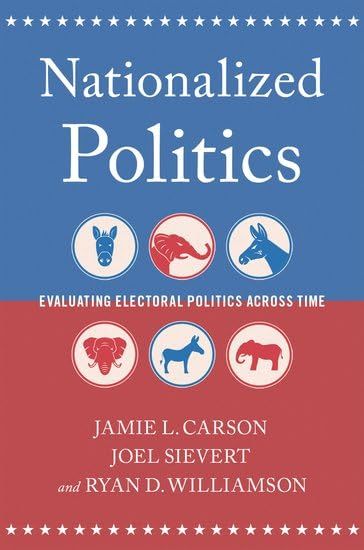
Nationalized Politics

Nationalized Politics

Jamie L. Carson; Joel Sievert; Ryan D. Williamson

OXFORD UNIVERSITY PRESS INC
2023
sidottu
In the United States, politics has become increasingly nationalized in recent years as voter decision-making is now driven by partisan or national political forces rather than the attributes of individual candidates. Indeed, voters now seem more concerned with which of the two national parties will be in power across all levels of government as opposed to which candidate will represent them individually. The phenomenon has now reached levels unseen since the nineteenth century, when the party ballot was in use and voters were generally unable to select among individual candidates. Nationalized Politics asks and answers the question, "how has nationalization influenced elections across different political eras?" Jamie L. Carson, Joel Sievert, and Ryan D. Williamson look at historical variation in nationalization through an analysis of congressional elections from 1840 to 2020. By examining roughly 180 years of elections, the authors leverage considerable differences in electoral competition, electoral rules, nationalization, polarization, and partisan advantage via the incumbency advantage. Moreover, Carson, Sievert, and Williamson employ a unique survey design to capture citizen attitudes toward the nationalization of politics to further consider the question of how nationalization is currently shaping politics. Providing a comprehensive history of US congressional elections, Nationalized Politics illustrates the roots of the current electoral landscape in the US.
Nationalized Politics

Nationalized Politics

Jamie L. Carson; Joel Sievert; Ryan D. Williamson

OXFORD UNIVERSITY PRESS INC
2023
nidottu
In the United States, politics has become increasingly nationalized in recent years as voter decision-making is now driven by partisan or national political forces rather than the attributes of individual candidates. Indeed, voters now seem more concerned with which of the two national parties will be in power across all levels of government as opposed to which candidate will represent them individually. The phenomenon has now reached levels unseen since the nineteenth century, when the party ballot was in use and voters were generally unable to select among individual candidates. Nationalized Politics asks and answers the question, "how has nationalization influenced elections across different political eras?" Jamie L. Carson, Joel Sievert, and Ryan D. Williamson look at historical variation in nationalization through an analysis of congressional elections from 1840 to 2020. By examining roughly 180 years of elections, the authors leverage considerable differences in electoral competition, electoral rules, nationalization, polarization, and partisan advantage via the incumbency advantage. Moreover, Carson, Sievert, and Williamson employ a unique survey design to capture citizen attitudes toward the nationalization of politics to further consider the question of how nationalization is currently shaping politics. Providing a comprehensive history of US congressional elections, Nationalized Politics illustrates the roots of the current electoral landscape in the US.
Protestant Relics in Early America

Protestant Relics in Early America

Jamie L. Brummitt

OXFORD UNIVERSITY PRESS INC
2025
sidottu
In Protestant Relics in Early America, Jamie L. Brummitt upends long-held assumptions about religion and material culture in the early United States. Brummitt chronicles how American Protestants cultivated a lively relic culture centered around collecting supernatural memory objects associated with dead Christian leaders, family members, and friends. These objects materialized the real physical presences of God, Jesus, the Holy Spirit, and souls of the dead on earth. As Brummitt demonstrates, people of nearly all Protestant denominations and walks of life--including members of Congress, college presidents, ministers, mothers, free Black activists, schoolchildren, and enslaved people--sought embodied and supernatural sense experiences with relics. They collected relics from deathbeds, stole relics from tombs, made relics in schools, visited relics at pilgrimage sites like George Washington's Mount Vernon, purchased relics in the marketplace, and carried relics into the American Revolution and the Civil War. Locks of hair, blood, bones, portraits, daguerreotypes, post-mortem photographs, memoirs, deathbed letters, Bibles, clothes, embroidered and painted mourning pieces, and a plethora of other objects that had been touched, used, or owned by the dead became Protestant relics. These relic practices were so pervasive that they shaped systems of earthly and heavenly power, from young women's education to national elections to Protestant-Catholic relations to the structure of freedom and families in the afterlife. In recovering the forgotten history and presence of Protestant relics in early America, Brummitt demonstrates how material practices of religion defined early American politics and how the Enlightenment enhanced rather than diminished embodied presence. Moreover, Brummitt reveals how the secular historical method has obscured the supernatural significance of relics for the Protestants who made, collected, exchanged, treasured, and passed them down. This book will be an essential resource for scholars and students of early American history, religion, politics, art, and popular culture.
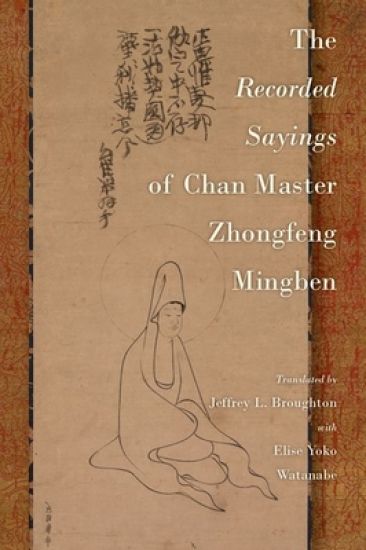
The Recorded Sayings of Chan Master Zhongfeng Mingben

The Recorded Sayings of Chan Master Zhongfeng Mingben

Jamie L. Brummitt

OXFORD UNIVERSITY PRESS INC
2023
sidottu
After the death of his master Gaofeng Yuanmiao, Zhongfeng Mingben (1263-1323) left Gaofeng's mountain and lived in solitude. For many years, he resided in various small mountain hermitages (often called "Dwelling-in-the-Phantasmal Hermitages") or houseboats. He drew students from all over East Asia: Yunnan, Turfan, Mongolia, Korea, Japan, and elsewhere. The Recorded sayings of Chan Master Zhongfeng Mingben provides an introduction, from the perspective of Chan/Zen Studies, to the teachings of this key figure of Yuan-dynasty Chan. Jeffrey Broughton focuses on selected works in Zhongfeng's two Chan records, the enormous Extensive Record of Preceptor Tianmu Zhongfeng, and the much smaller ancillary Zhongfeng Record B. Included translations are Instructions to the Assembly; selected Dharma Talks; the miscellany Night Conversations in a Mountain Hermitage; the dharma talk entitled House Instructions for Dwelling-in-the-Phantasmal Hermitage; In Imitation of Hanshan's Poems (one-hundred poems); Song of Dwelling-in-the-Phantasmal Hermitage; Cross-Legged Sitting Chan Admonitions (with Preface); Ten Poems on Living on a Boat; and Ten Poems on Living in Town.
Oxford Reading Tree Story Sparks: Oxford Level 8: Superhero Bunny League Saves the World!
Meet the rabbits who eat carrots, fight robots and save the world - it's the Superhero Bunny League! A laser, set off by the villainous Dr Fuzzleglove, gives all of the rabbits in the world superpowers. There's Handsome Steve who is super-strong, Derek who is enormous and Windy who can fly ... and then there's Stumpy, who isn't sure what his superpower is yet. When Dr Fuzzleglove and his robots attack, the bunnies must work together to defeat him! With a lovable cast of crazy bunnies, this is a superhero comic like no other. Oxford Reading Tree Story Sparks is an emotionally-engaging fiction series that will fire children's imaginations. These 36 original stories will get children thinking, and develop and deepen their comprehension skills. The variety of authors and illustration styles broadens children's reading experience, with something to appeal to every child. All the books in the series are carefully levelled, so it's easy to match every child to the right book for them. They also contain inside cover notes, to enable parents and teachers to support children in their reading. Help with children's reading development is also available at www.oxfordowl.co.uk.
Oxford Reading Tree Story Sparks: Oxford Level 9: Superhero Bunny League in Space!
The superhero bunnies are back in their latest comic-strip adventure! This time they must stop cake-loving space pirates from stealing all of Earths sweets. But can the bunnies stop arguing and work as a team to save Earth, before its too late? This vibrant comic-strip is full of fun, adventure and pudding! Oxford Reading Tree Story Sparks is an emotionally-engaging fiction series that will fire children's imaginations. These 36 original stories will get children thinking, and develop and deepen their comprehension skills. The variety of authors and illustration styles broadens children's reading experience, with something to appeal to every child. All the books in the series are carefully levelled, so it's easy to match every child to the right book for them. They also contain inside cover notes, to enable parents and teachers to support children in their reading. Help with children's reading development is also available at www.oxfordowl.co.uk.
Oxford Reading Tree Story Sparks: Oxford Level 4: Pip, Lop, Mip, Bop and the Stuck Star
A star has fallen out of the sky and now it is stuck! Can Pip, Lop, Mip and Bop think of a way to get it back? Oxford Reading Tree Story Sparks is an emotionally-engaging fiction series that will fire children's imaginations and develop their comprehension skills. The variety of authors and illustrators broadens children's reading experience, with something to appeal to every child. This story is one of six titles at Oxford Level 4, which are phonically decodable with some extra high-interest words to expand children's vocabularies and enrich the stories. All the books in the series are carefully levelled, making it easy to match every reader to the right book.
Oxford Reading Tree Story Sparks: Oxford Level 5: Mixed Pack of 6

Oxford Reading Tree Story Sparks: Oxford Level 5: Mixed Pack of 6

Jamie Smart; Joanna Nadin; Timothy Knapman; Simon Puttock; Abie Longstaff; Narinder Dhami

Oxford University Press
2017
nidottu
Oxford Reading Tree Story Sparks is an emotionally-engaging fiction series that will fire children's imaginations and develop their comprehension skills. The variety of authors and illustrators broadens children's reading experience, with something to appeal to every child. The titles at Oxford Levels 1+ to 5 are phonically decodable with some extra high-interest words to expand children's vocabularies and enrich the stories. All the books in the series are carefully levelled, making it easy to match every reader to the right book. This pack contains six books, one of each of the following titles: Pip, Lop, Mip, Bop and the Bumbles, Tomorrow Never Comes, The Night Knight, Snoot's Birthday Surprise, Sometimes Mum is Silly and The Festival of Colours.
Oxford Reading Tree Story Sparks: Oxford Level 5: Class Pack of 36

Oxford Reading Tree Story Sparks: Oxford Level 5: Class Pack of 36

Jamie Smart; Joanna Nadin; Timothy Knapman; Simon Puttock; Abie Longstaff; Narinder Dhami

Oxford University Press
2017
nidottu
Oxford Reading Tree Story Sparks is an emotionally-engaging fiction series that will fire children's imaginations and develop their comprehension skills. The variety of authors and illustrators broadens children's reading experience, with something to appeal to every child. The titles at Oxford Levels 1+ to 5 are phonically decodable with some extra high-interest words to expand children's vocabularies and enrich the stories. All the books in the series are carefully levelled, making it easy to match every reader to the right book. This pack contains 36 books, six of each of the following titles: Pip, Lop, Mip, Bop and the Bumbles, Tomorrow Never Comes, The Night Knight, Snoot's Birthday Surprise, Sometimes Mum is Silly and The Festival of Colours.
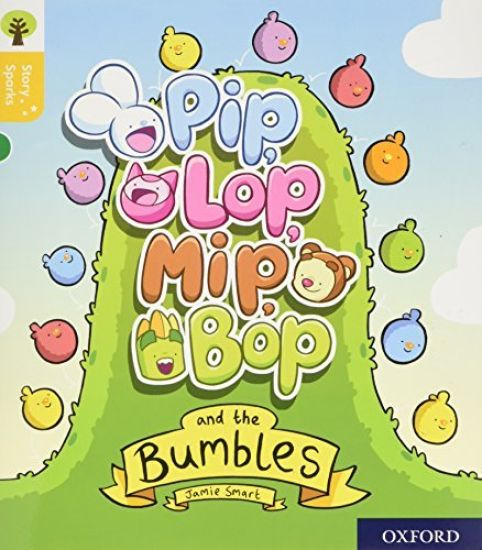
Oxford Reading Tree Story Sparks: Oxford Level 5: Pip, Lop, Mip, Bop and the Bumbles
Pip, Lop, Mip and Bop make some new friends - the bumbles. But disaster strikes and the bumbles get trapped in a moat! Pip, Lop, Mip and Bop need to get the bumbles out and safely back to King Bumble. Oxford Reading Tree Story Sparks is an emotionally-engaging fiction series that will fire children's imaginations and develop their comprehension skills. The variety of authors and illustrators broadens children's reading experience, with something to appeal to every child. This story is one of six titles at Oxford Level 5, which are phonically decodable with some extra high-interest words to expand children's vocabularies and enrich the stories. All the books in the series are carefully levelled, making it easy to match every reader to the right book.
Passions and Persuasion in Aristotle's Rhetoric

Passions and Persuasion in Aristotle's Rhetoric

Jamie Dow

Oxford University Press
2015
sidottu
For Aristotle, arousing the passions of others can amount to giving them proper grounds for conviction. On that basis a skill in doing so can be something valuable, an appropriate constituent of the kind of expertise in rhetoric that deserves to be cultivated and given expression in a well-organised state. Such are Jamie Dow's principal claims in Passions and Persuasion in Aristotle's Rhetoric. He attributes to Aristotle a normative view of rhetoric and its role in the state, and ascribes to him a particular view of the kinds of cognitions involved in the passions. In the first sustained treatment of these issues, and the first major monograph on Aristotle's Rhetoric in twenty years, Dow argues that Aristotle held distinctive and philosophically interesting views of both rhetoric and the nature of the passions. In Aristotle's view, he argues, rhetoric is exercised solely in the provision of proper grounds for conviction (pisteis). This is rhetoric's valuable contribution to the proper functioning of the state. Dow explores, through careful examination of the text of the Rhetoric, what normative standards must be met for something to qualify in Aristotle's view as 'proper grounds for conviction', and how he supposed these standards could be met by each of his trio of 'technical proofs' (entechnoi pisteis)--those using reason, character and emotion. In the case of the passions, Dow suggests, meeting these standards is a matter of arousing passions that constitute the reasonable acceptance of premises in arguments supporting the speaker's conclusion. Dow then seeks to show that Aristotle's view of the passions is compatible with this role in rhetorical expertise. This involves taking a stand on a number of controversial issues in Aristotle studies. In Passions and Persuasion, Dow rejects the view that Aristotle's Rhetoric expresses inconsistent views on emotion-arousal. Aristotle's treatment of the passions in the Rhetoric is, he argues, best understood as expressing a substantive theory of the passions as pleasures and pains. This is supported by a new representationalist reading of Aristotle's account of pleasure (and pain) in Rhetoric 1. Dow also defends a distinctive understanding of how Aristotle understood the contribution of phantasia ('appearance') to the cognitive component of the passions. On this interpretation, Aristotelian passions must involve the subject's affirming things to be the way that they are represented. Thus understood, the passions of an emotionally-engaged audience can constitute a part of their reasonable acceptance of a speaker's argument.
Offshore

Offshore

Jamie Peck

Oxford University Press
2017
sidottu
Offshore outsourcing-the movement of jobs to lower-wage countries-is one of the defining features of globalization. Routine blue-collar work has been going offshore for decades, but the digital revolution beginning in the 1990s extended this process to many parts of the service economy too. Politically controversial from the beginning, "offshoring" is conventionally seen as a threat to jobs, wages, and economic security in higher-income countries-having become synonymous with the dirty work of globalization. Even though the majority of corporations make some use of offshore outsourcing, fearful of negative publicity most now choose to manage these activities in a discreet manner. Partly as a result, the global sourcing business, now reckoned to be worth more $120 billion, largely operates under the radar, its ocean-spanning activities in low-cost labour arbitrage being poorly documented and poorly understood. Offshore is the first sustained investigation of the workings of the global sourcing industry, its business practices, its market dynamics, its technologies, and its politics. The book traces the complex transformation of the worlds of global sourcing, from its origins in the new international division of labour in the 1970s, through the rapid growth of back-office economies in India and the Philippines since the 1990s, to the development of "nearshore" markets in Latin America and Eastern Europe. Recently, this evolving process of geographical and organizational restructuring has included experiments in "backshoring" within low-cost, ex-urban locations in the United States and a wave of software-enabled automation, which threatens to remove labour from many back offices altogether. In these and other ways, the offshore revolution continues.
Synthetic Biology

Synthetic Biology

Jamie A. Davies

Oxford University Press
2018
nidottu
Synthetic biology is one of the 21st century's fastest growing fields of research, as important for technology as for basic science. Building on traditional genetic engineering, which was restricted to changing one or two genes, synthetic biology uses multi-gene modules and pathways to make very significant changes to what cells can do. Synthetic biologists aim to have an impact in fields as diverse as drug manufacture, biofuel production, tackling pollution, and medical diagnostics. Further ahead, synthetic biology may even make possible the long-standing goal of creating new life from non-living starting materials. This Very Short Introduction provides a concise explanation of what synthetic biology is, and how it is beginning to affect many fields of technology. Jamie Davies also discusses the considerable controversies surrounding synthetic biology, from questions over the assumption that engineering concepts can be applied to living systems easily, to scepticism over the claims for commercial promise, fears that the dangers of engineering life are worse than its benefits, and concerns over whether humans should be designing living systems at all. ABOUT THE SERIES: The Very Short Introductions series from Oxford University Press contains hundreds of titles in almost every subject area. These pocket-sized books are the perfect way to get ahead in a new subject quickly. Our expert authors combine facts, analysis, perspective, new ideas, and enthusiasm to make interesting and challenging topics highly readable.
Future Politics

Future Politics

Jamie Susskind

Oxford University Press
2018
sidottu
Future Politics confronts one of the most important questions of our time: how will digital technology transform politics and society? The great political debate of the last century was about how much of our collective life should be determined by the state and what should be left to the market and civil society. In the future, the question will be how far our lives should be directed and controlled by powerful digital systems - and on what terms? Jamie Susskind argues that rapid and relentless innovation in a range of technologies - from artificial intelligence to virtual reality - will transform the way we live together. Calling for a fundamental change in the way we think about politics, he describes a world in which certain technologies and platforms, and those who control them, come to hold great power over us. Some will gather data about our lives, causing us to avoid conduct perceived as shameful, sinful, or wrong. Others will filter our perception of the world, choosing what we know, shaping what we think, affecting how we feel, and guiding how we act. Still others will force us to behave certain ways, like self-driving cars that refuse to drive over the speed limit. Those who control these technologies - usually big tech firms and the state - will increasingly control us. They will set the limits of our liberty, decreeing what we may do and what is forbidden. Their algorithms will resolve vital questions of social justice, allocating social goods and sorting us into hierarchies of status and esteem. They will decide the future of democracy, causing it to flourish or decay. A groundbreaking work of political analysis, Future Politics challenges readers to rethink what it means to be free or equal, what it means to have power or property, what it means for a political system to be just or democratic, and proposes ways in which we can - and must - regain control.