Kirjahaku
Etsi kirjoja tekijän nimen, kirjan nimen tai ISBN:n perusteella.
1000 tulosta hakusanalla Janel Rodriguez
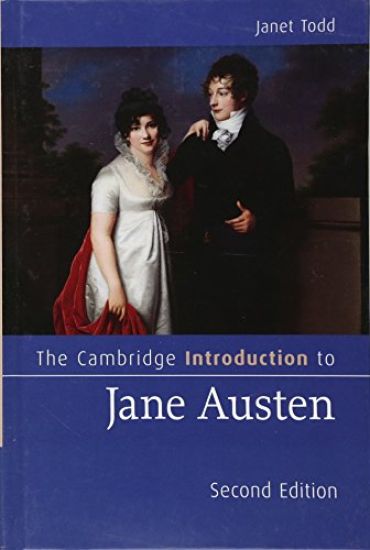
Jane Austen is unique among British novelists in maintaining her popular appeal while receiving more scholarly attention now than ever before. This introduction by Janet Todd, leading scholar and editor of Austen's work, explains what students need to know about her novels, life, context and reception. Each novel is discussed in detail, and the essential information is given about her life and literary influences, her novels and letters, and her impact on later literature. For this second edition, the book has been fully revised; a new chapter explores the ways in which Austen's work has prompted imitations, adaptations and creative spin-offs. Key areas of current critical focus are considered throughout, but the book's analysis remains thoroughly grounded in readings of the texts themselves. Janet Todd outlines what makes Austen's prose style so innovative and gives useful starting points for the study of the major works, with suggestions for further reading.
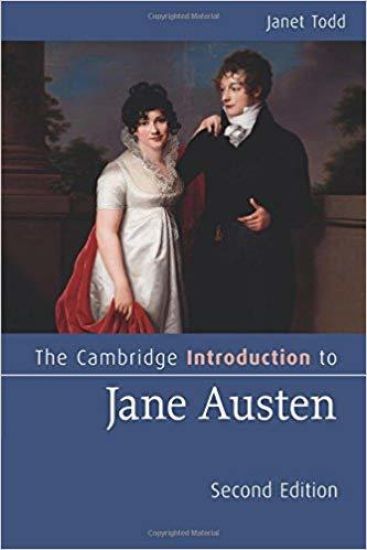
Jane Austen is unique among British novelists in maintaining her popular appeal while receiving more scholarly attention now than ever before. This introduction by Janet Todd, leading scholar and editor of Austen's work, explains what students need to know about her novels, life, context and reception. Each novel is discussed in detail, and the essential information is given about her life and literary influences, her novels and letters, and her impact on later literature. For this second edition, the book has been fully revised; a new chapter explores the ways in which Austen's work has prompted imitations, adaptations and creative spin-offs. Key areas of current critical focus are considered throughout, but the book's analysis remains thoroughly grounded in readings of the texts themselves. Janet Todd outlines what makes Austen's prose style so innovative and gives useful starting points for the study of the major works, with suggestions for further reading.
Originally published in 1935, this volume contains the text of the Leslie Stephen Lecture for that year, delivered by Lord David Cecil at the University of Cambridge. This book will be of value to anyone with an interest in Jane Austen's life, career and characters.
The son of Jane Austen's 'favourite niece' Fanny Knight, Lord Brabourne had inherited a large number of letters from Jane Austen including some to her sister Cassandra and others to members of the Knight family. The Letters of Jane Austen (2 volumes, 1884) not only publishes these letters for the first time, but sets them in a family context drawn from the reminiscences of those who knew Jane Austen personally. The letters begin in 1796, when Jane Austen was twenty, and end with her death in 1817; they are informal, even intimate, in tone, and they range across domestic, family, social and literary topics. The letters are framed by a biographical essay and some other previously unpublished family documents. As a whole the material gave unprecedented access to the mind of a writer beginning, in the late nineteenth century, to be recognised as one of Britain's greatest novelists.
The son of Jane Austen's 'favourite niece' Fanny Knight, Lord Brabourne, had inherited a large number of letters from Austen including some to her sister Cassandra and others to members of the Knight family. The Letters of Jane Austen (1884) publishes these letters for the first time, and sets them in a family context drawn from the reminiscences of those who knew Austen personally. This first of two volumes begins with a biographical essay and then includes letters from 1796, when Austen was a young woman of twenty preoccupied with social events and the courtship of her friends, to 1807, which found her in lodging with her mother and sister in Southampton, much sobered by the recent death of her father. Her topics are often domestic ('You know how interesting the purchase of a sponge-cake is to me') and her wit is evident throughout.
The son of Jane Austen's 'favourite niece' Fanny Knight, Lord Brabourne, had inherited a large number of letters from Jane Austen including some to her sister Cassandra and others to members of the Knight family. The Letters of Jane Austen (1884) publishes these letters for the first time, and sets them in a family context drawn from the reminiscences of those who knew Austen personally. This second of two volumes presents a series of letters written between 1808 and her death in 1817, that is, mostly in the years she was settled at Chawton in Hampshire; in addition Brabourne includes a little group of poems, and other family documents. The letters cover the years of her career as a published author, and include many fascinating comments about her own and others' writings, as well as observations about the world around her.
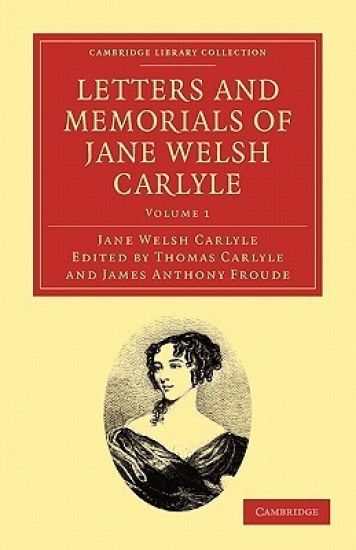
Letters and Memorials of Jane Welsh Carlyle
Jane Welsh Carlyle
Cambridge University Press
2011
pokkari
Widely recognised as one of the greatest female letter writers in English, Jane Welsh Carlyle (1801–1866) possessed a famous sense of wit and irony, which, together with her keen observational skills, made her an important literary figure in her own right. This three-volume set of her letters, published in 1883 and annotated throughout by her husband Thomas Carlyle, represents a fine example of the letter-writing genre. The publication of the letters made a significant contribution to a growing acceptance and critical recognition of this often dismissed literary form. Volume 1 (from 1834 to 1847) is introduced by Thomas, who recollects the events of the day in June 1834 when the first letter of the collection was written. Through Jane's correspondence with her family and friends, the reader will be entertained by her amusing descriptions of everyday life, and will gain a revealing insight into the highs and lows of her marriage.
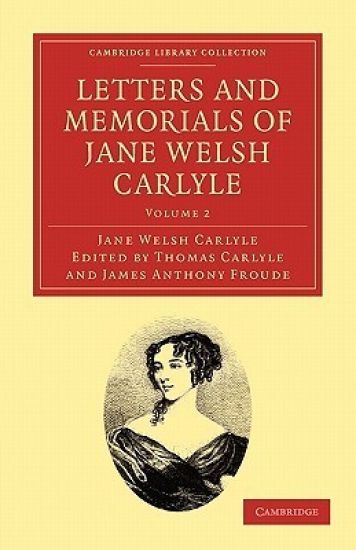
Letters and Memorials of Jane Welsh Carlyle
Jane Welsh Carlyle
Cambridge University Press
2011
pokkari
Widely recognised as one of the greatest female letter writers in English, Jane Welsh Carlyle (1801–1866) possessed a famous sense of wit and irony, which, together with her keen observational skills, made her an important literary figure in her own right. This three-volume set of her letters, published in 1883 and annotated throughout by her husband Thomas Carlyle, represents a fine example of the letter-writing genre. The publication of the letters made a significant contribution to a growing acceptance and critical recognition of this often dismissed literary form. In Volume 2 (from 1847 to 1859) the reader will find humorous observations of eminent figures of the time, such as Emerson and Ruskin, witness Jane's strong devotion to her mother and sympathise with her failing health. Her descriptions of everyday life will entertain and amuse, and will reveal a fascinating insight into the highs and lows of her marriage.
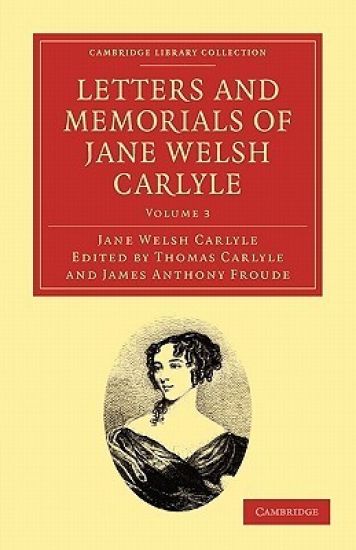
Letters and Memorials of Jane Welsh Carlyle
Jane Welsh Carlyle
Cambridge University Press
2011
pokkari
Widely recognised as one of the greatest female letter writers in English, Jane Welsh Carlyle (1801–1866) possessed a famous sense of wit and irony, which, together with her keen observational skills, made her an important literary figure in her own right. This three-volume set of her letters, published in 1883 and annotated throughout by her husband Thomas Carlyle, represents a fine example of the letter-writing genre. The publication of the letters made a significant contribution to a growing acceptance and critical recognition of this often dismissed literary form. Volume 3 covers the years between 1859 and 1866: Jane died just a few days after her last letter, and the volume ends with a letter received by Thomas informing him of his wife's death. Jane's letters were praised by Virginia Woolf for their 'incomparable brilliancy', and the reader will be entertained and amused by her satirical observations of everyday life.
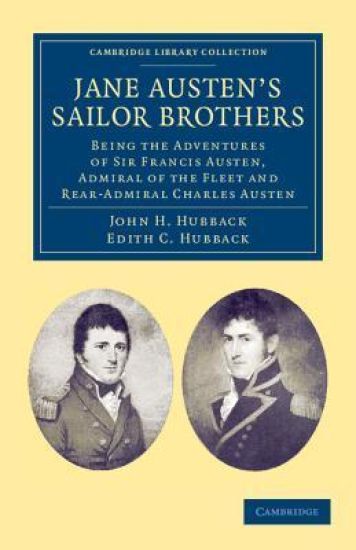
Jane Austen's Sailor Brothers
Hubback John H.; Hubback Edith C.
Cambridge University Press
2012
pokkari
Two of Jane Austen's brothers made successful careers in the Navy: Francis (1774–1865) rose to the rank of Admiral; Charles (1779–1852) to Rear-Admiral. Jane's naval heroes, most notably Captain Wentworth in Persuasion, as well as much of her knowledge of naval life and contemporary affairs during the Napoleonic Wars, owe much to the stories and letters of her brothers. Written by Francis Austen's grandson John Hubback and his daughter Edith, this double biography is informed by family tradition as well as research into contemporary documents. The Hubbacks, with their unique insight, suggest many family anecdotes and characteristics as possible sources for Jane's novels. Beyond its interest as a record of how her brothers' naval careers influenced her work, this book, first published in 1906, also remains of great interest to historians of the Navy in the first half of the nineteenth century.
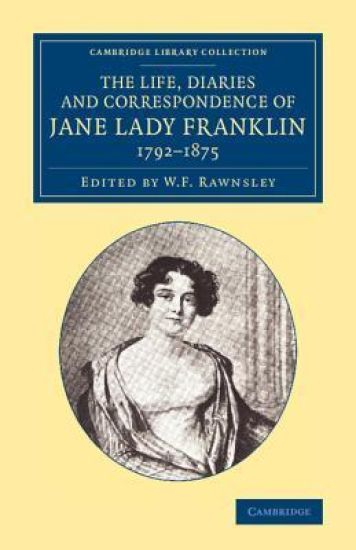
The Life, Diaries and Correspondence of Jane Lady Franklin 1792–1875
Jane Griffin Franklin
Cambridge University Press
2014
pokkari
Jane Franklin (1792–1875) became well known in the middle of the nineteenth century for her tireless campaign to discover the fate of the lost Arctic expedition led by her husband, Sir John Franklin (1786–1847). The editor of this volume, Willingham Franklin Rawnsley (1845–1927), was Sir John's great-nephew, with access to the family papers. The four sections of this work, first published in 1923, address Jane's life before her marriage in 1828; the period when her husband was posted to the Mediterranean; life in Tasmania, where Sir John served as governor; and Lady Franklin's quest to learn the fate of her husband's expedition in search of the North-West Passage. Given appropriate context, the extracts illuminate her interest in European travel, her activities in Tasmania - especially in education and the treatment of female convicts - and her movements over the globe after searches discovered evidence of her husband's demise.
Jane Austen is renowned for the economy of her art: for the close focus of her romantic plots and the precision of her writing style. Exploring that economy stylistically and structurally, this book traces Austen's keen interest in narrative form. Anne Toner pinpoints techniques that are fundamental to the distinctiveness of Austen's fiction, many of which have been little explored to date. Toner argues that Austen's conciseness in terms of plotting, narrative description and in the depiction of dialogue also contributed to her innovations in representing thought, expanding the novel's capacity to depict consciousness. Narrative and rhetorical features are presented clearly and accessibly and will open up new ways of thinking about prose style with implications for the study of fiction beyond Austen's own.
Jane Austen is renowned for the economy of her art: for the close focus of her romantic plots and the precision of her writing style. Exploring that economy stylistically and structurally, this book traces Austen's keen interest in narrative form. Anne Toner pinpoints techniques that are fundamental to the distinctiveness of Austen's fiction, many of which have been little explored to date. Toner argues that Austen's conciseness in terms of plotting, narrative description and in the depiction of dialogue also contributed to her innovations in representing thought, expanding the novel's capacity to depict consciousness. Narrative and rhetorical features are presented clearly and accessibly and will open up new ways of thinking about prose style with implications for the study of fiction beyond Austen's own.