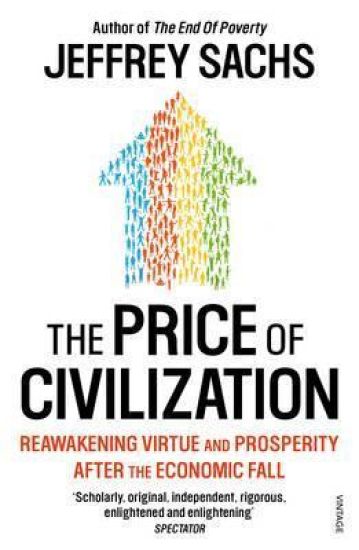
and reveals why we must - and how we can - change our economic culture in this time of crisis. This is a masterful roadmap for prosperity, a programme designed to bridge divides and provide a way forward that we - and our leaders - ignore at our peril.
How well do you know your dog? Did you know that dogs have dreams and fears? That they do see colour, that they smell electric storms, and feel scent as an emotion? This title takes us into the world of the dog, a world created by a sense of smell one hundred million times more acute than ours, and reintroduces us to man's best friend.
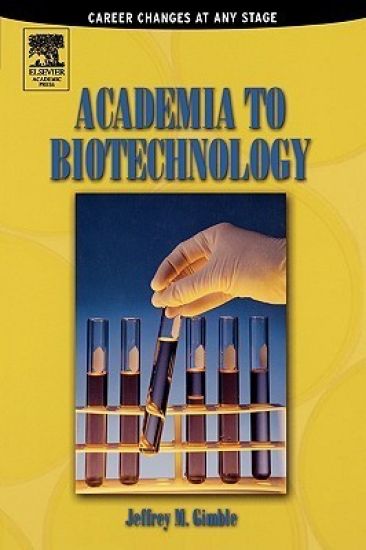
Academia to Biotechnology deals with both the abstract and practical aspects of moving from a univerisity laboratory to a position in the biotech industry. Each chapter lists common and unique features to evaluate breaking down complex decisions into manageable elements. Several sections provide "how to" guides for the preparation of manuscripts, patents, grants, and internal company documents.
How do you keep track of basic information on the proteins you work with? Where do you find details of their physicochemical properties, amino acid sequences, and structure? Are you tired of scanning review articles, primary papers, and databases to locate that elusive fact? The Academic Press FactsBook Series has established itself as the best source of easily-accessible and accurate facts about protein groups. Described as "a growing series of excellent manuals" by Molecular Medicine Today and "essential works of reference" by Trends in Biochemical Sciences, the FactsBooks have become the most popular comprehensive data resources available. Using an easy-to-follow format, the FactsBooks will keep you up-to-date with the latest advances in structure, amino acid sequences, physicochemical properties, and biological activity. Meticulously researched and compiled by experts in the field, keeping abreast of developments has never been so easy!The Transporter FactsBook contains entries covering almost 800 transporters. Organized into 55 families of structurally related transporters, this volume includes ATPases, ABC transporters, H+-dependent antiporters and symporters, Na+-dependent antiporters and symporters, and other transporters such as mitochondrial transporters.
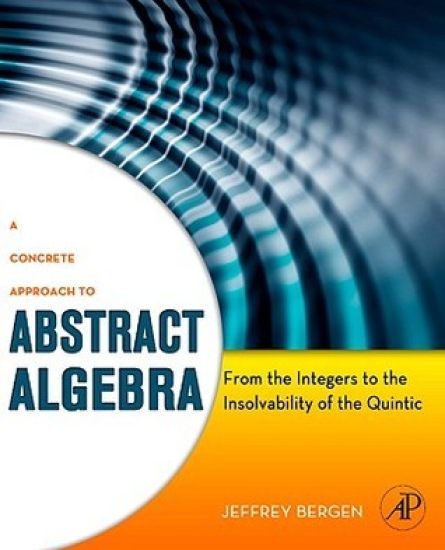
A Concrete Approach to Abstract Algebra presents a solid and highly accessible introduction to abstract algebra by providing details on the building blocks of abstract algebra. It begins with a concrete and thorough examination of familiar objects such as integers, rational numbers, real numbers, complex numbers, complex conjugation, and polynomials. The author then builds upon these familiar objects and uses them to introduce and motivate advanced concepts in algebra in a manner that is easier to understand for most students. Exercises provide a balanced blend of difficulty levels, while the quantity allows the instructor a latitude of choices. The final four chapters present the more theoretical material needed for graduate study. This text will be of particular interest to teachers and future teachers as it links abstract algebra to many topics which arise in courses in algebra, geometry, trigonometry, precalculus, and calculus.
Organic Structure Determination Using 2-D NMR Spectroscopy: A Problem-Based Approach, Second Edition, is a primary text for a course in two-dimensional (2-D) nuclear magnetic resonance (NMR) techniques, with the goal to learn to identify organic molecular structure. It presents strategies for assigning resonances to known structures and for deducing structures of unknown organic molecules based on their NMR spectra. The book begins with a discussion of the NMR technique, while subsequent chapters cover instrumental considerations; data collection, processing, and plotting; chemical shifts; symmetry and topicity; through-bond effects; and through-space effects. The book also covers molecular dynamics; strategies for assigning resonances to atoms within a molecule; strategies for elucidating unknown molecular structures; simple and complex assignment problems; and simple and complex unknown problems. Each chapter includes problems that will enable readers to test their understanding of the material discussed. The book contains 30 known and 30 unknown structure determination problems. It also features a supporting website from which instructors can download the structures of the unknowns in selected chapters, digital versions of all figures, and raw data sets for processing. This book will stand as a single source to which instructors and students can go to obtain a comprehensive compendium of NMR problems of varying difficulty.
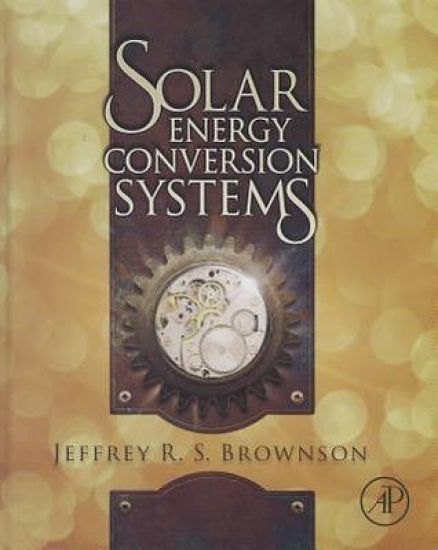
Solar energy conversion requires a different mind-set from traditional energy engineering in order to assess distribution, scales of use, systems design, predictive economic models for fluctuating solar resources, and planning to address transient cycles and social adoption. Solar Energy Conversion Systems examines solar energy conversion as an integrative design process, applying systems thinking methods to a solid knowledge base for creators of solar energy systems. This approach permits different levels of access for the emerging broad audience of scientists, engineers, architects, planners, and economists. Traditional texts in solar energy engineering have often emerged from mechanical or chemical engineering fields. Instead, Solar Energy Conversion Systems approaches solar energy conversion from the perspectives of integrative design, environmental technology, sustainability science, and materials science in the wake of amazing new thin films, polymers, and glasses developed by the optoelectronics and semiconductor industries. This is a new solar text for the new generation of green job designers and developers. It’s highlighted with vignettes that break down solar conversion into useful stories and provides common points of reference, as well as techniques, for effective estimation of evolving technologies.
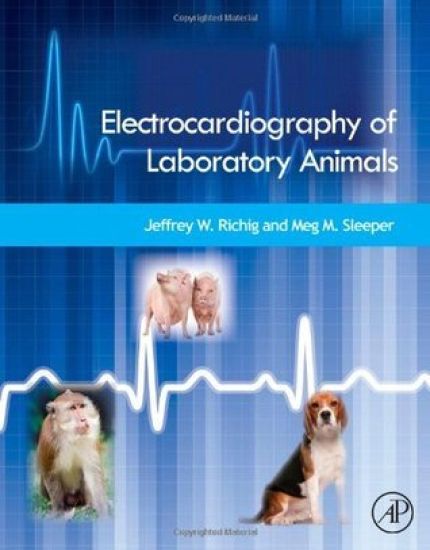
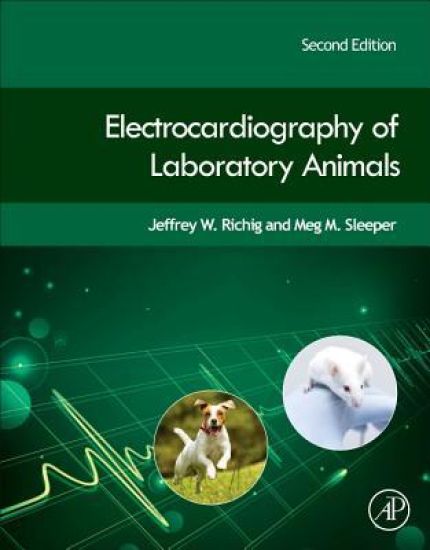
Electrocardiography of Laboratory Animals is the only book covering electrocardiography of laboratory animals, including dogs, mini-pigs, and cynomologus monkeys. As more countries institute requirements for the care of laboratory animals in research, this publication offers an effective standard on performing and analyzing ECGs. Topics covered include safety electrocardiography, toxicology, safety pharmacology, and telemetry. Electrocardiography of Laboratory Animals will assist biological and medical researchers, veterinarians, zoologists, and students in understanding electrocardiography of various species of animals used in research.
System Requirements Analysis gives the professional systems engineer the tools to set up a proper and effective analysis of the resources, schedules and parts needed to successfully undertake and complete any large, complex project. This fully revised text offers readers the methods for rationally breaking down a large project into a series of stepwise questions, enabling you to determine a schedule, establish what needs to be procured, how it should be obtained, and what the likely costs in dollars, manpower, and equipment will be to complete the project at hand. System Requirements Analysis is compatible with the full range of popular engineering management tools, from project management to competitive engineering to Six Sigma, and will ensure that a project gets off to a good start before it's too late to make critical planning changes. The book can be used for either self-instruction or in the classroom, offering a wealth of detail about the advantages of requirements analysis to the individual reader or the student group.
Introductory Immunology quickly acquaints readers with natural immune responses manifesting in diseases and disorders. The book presents a complete picture of natural defenses to infectious agents, as well as the mechanisms that lead to autoimmune dysfunction. In addition, it examines immunologically based diseases, giving the reader sufficient knowledge to make sound clinical decisions leading to better treatment outcomes. Introductory Immunology is aimed at researchers, postgraduates, or any scientifically inclined reader interested in immunology. No prior expertise in medical, biochemical, or cellular science is needed to benefit from the clear presentation of immunology concepts in this book.
The technology of crystal growth has advanced enormously during the past two decades. Among, these advances, the development and refinement of molecular beam epitaxy (MBE) has been among the msot important. Crystals grown by MBE are more precisely controlled than those grown by any other method, and today they form the basis for the most advanced device structures in solid-state physics, electronics, and optoelectronics. As an example, Figure 0.1 shows a vertical-cavity surface emitting laser structure grown by MBE.
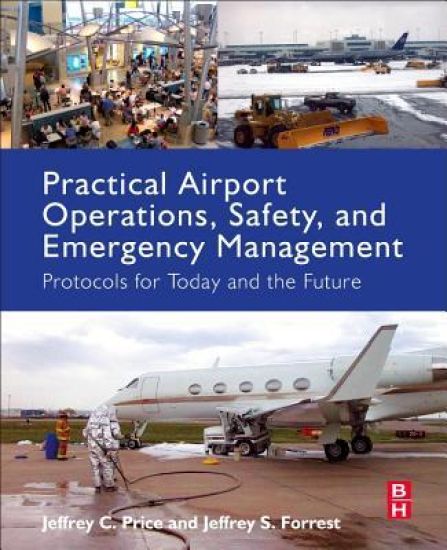
Practical Airport Operations, Safety, and Emergency Management: Protocols for Today and the Future focuses on the airport itself, not the aircraft, manufacturers, designers, or even the pilots. The book explores the safety of what's been called ‘the most expensive piece of pavement in any city’— the facility that operates, maintains, and ensures the safety of millions of air passengers every year. The book is organized into three helpful sections, each focusing on one of the sectors described in the title. Section One: Airport Safety, explores the airport environment, then delves into safety management systems. Section Two: Airport Operations, continues the conversation on safety management systems before outlining airside and landside operations in depth, while Section Three: Airport Emergency Management, is a careful, detailed exploration of the topic, ending with a chapter on the operational challenges airport operations managers can expect to face in the future. Written by trusted experts in the field, users will find this book to be a vital resource that provides airport operations managers and students with the information, protocols, and strategies they need to meet the unique challenges associated with running an airport.
Widely used in the construction of bridges, dams and pavements, concrete and masonry are two of the world’s most utilized construction materials. However, many engineers lack a proper understanding of the methods for predicting and mitigating their movements within a structure. Concrete and Masonry Movements provides practical methods for predicting and preventing movement in concrete and masonry, saving time and money in retrofitting and repair cost. With this book in hand, engineers will discover new prediction models for masonry such as: irreversible moisture expansion of clay bricks, elasticity, creep and shrinkage. In addition, the book provides up-to-date information on the codes of practice.
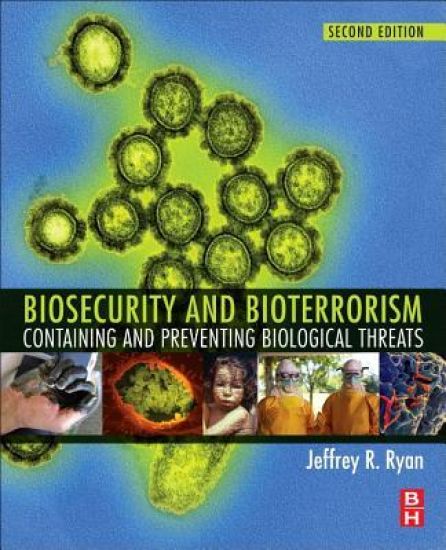
Biosecurity and Bioterrorism, Second Edition, takes a holistic approach to biosecurity, with coverage of pathogens, prevention, and response methodology. It addresses these hazards in the context of vulnerability assessments and the planning strategies government and industry can use to prepare for and respond to such events. The book is organized into four thematic sections: Part I provides a conceptual understanding of biowarfare, bioterrorism and the laws we have to counteract this; Part II investigates known bioagents and the threat from emerging diseases; Part III focuses on agricultural terrorism and food security; and Part IV outlines international, US, and local initiatives for biodefense and biosecurity. Case studies illustrate biodefense against both intentional terrorism and natural outbreaks.
NMR Case Studies: Data Analysis of Complicated Molecules provides a detailed discussion of the full logical flow associated with assigning the NMR spectra of complex molecules, also helping readers further develop their NMR spectral assignment skills. The robust case studies present the logic of each assignment, from beginning to end, fully exploring the available range of potential solutions. Readers will gain a better appreciation of various approaches and develop an intuitive sense for when this particular concept should be implemented, thus enhancing their skillsets and providing a host of methodologies potentially amenable to yielding correct assignments. Authored by a scientist with more than 20 years of experience in research and instruction, this book is the ideal reference for anyone in search of application-based content. The book addresses complicated molecules, including corticosteroids, biomolecules, polypeptides, and secondary metabolites.
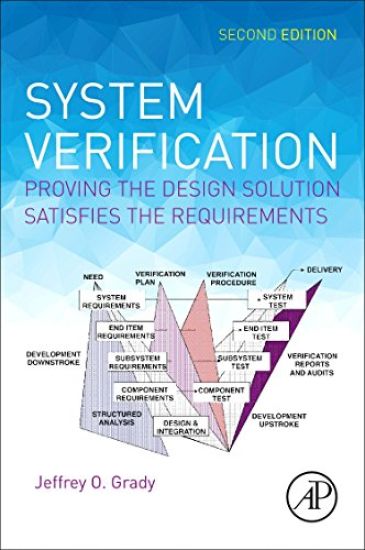
System Verification: Proving the Design Solution Satisfies the Requirements, Second Edition explains how to determine what verification work must be done, how the total task can be broken down into verification tasks involving six straightforward methods, how to prepare a plan, procedure, and report for each of these tasks, and how to conduct an audit of the content of those reports for a particular product entity. This process-centered book is applicable to engineering and computing projects of all kinds, and the lifecycle approach helps all stakeholders in the design process understand how the verification and validation stage is significant to them. In addition to many flowcharts that illustrate the verification procedures involved, the book also includes 14 verification form templates for use in practice. The author draws on his experience of consulting for industry as well as lecturing to provide a uniquely practical and easy to use guide which is essential reading for systems and validation engineers, as well as everyone involved in the product design process.
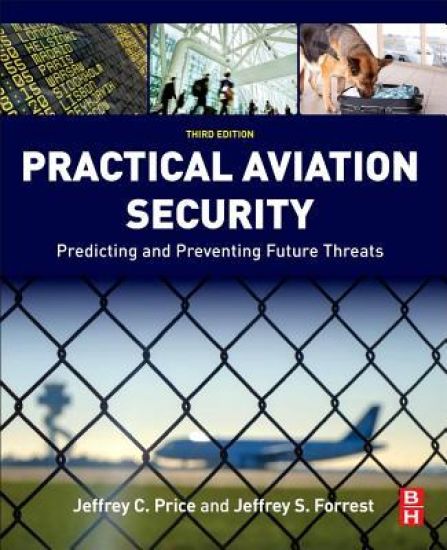
Practical Aviation Security: Predicting and Preventing Future Threats, Third Edition is a complete guide to the aviation security system, from crucial historical events to the policies, policymakers, and major terrorist and criminal acts that have shaped the procedures in use today, as well as the cutting edge technologies that are shaping the future. This text equips readers working in airport security or other aviation management roles with the knowledge to implement effective security programs, meet international guidelines, and responsibly protect facilities or organizations of any size. Using case studies and practical security measures now in use at airports worldwide, readers learn the effective methods and the fundamental principles involved in designing and implementing a security system. The aviation security system is comprehensive and requires continual focus and attention to stay a step ahead of the next attack. Practical Aviation Security, Third Edition, helps prepare practitioners to enter the industry and helps seasoned professionals prepare for new threats and prevent new tragedies.
A Concrete Approach to Abstract Algebra: From the Integers to the Insolvability of the Quintic, Second Edition provides a primer and reference on abstract algebra for readers whose interests lie in mathematics and information and physical sciences. Adopting the unique 'rings first' approach, the work provides a gentle transition into abstract structures that will make abstract algebra more natural to interested readers. In addition to introducing the major concepts of modern algebra, the book covers numerous applications which are intended to illustrate the concepts and convince the reader of the utility and relevance of algebra today. This Second Edition features 40% new or revised content, including complete and self-contained proofs of the fundamental theorems of algebra and the Insolvability of the Quintic, and new coverage of commutative rings and linear transformations.
Electrocardiography of Laboratory Animals, Second Edition, is the only publication covering electrocardiography of laboratory animals. With countries instituting requirements for the care of laboratory animals in research, this publication offers a standard on performing and analyzing ECGs. Topics covered include safety electrocardiography, toxicology, safety pharmacology, and telemetry, all important areas of discussion for biological and medical researchers, veterinarians, zoologists, and students who need to understand the electrocardiography of five species of animals used in research: canines, nonhuman primates, mini pigs, rodents (rats and mice), rabbits and cats.
General Chemistry for Engineers explores the key areas of chemistry needed for engineers. This book develops material from the basics to more advanced areas in a systematic fashion. As the material is presented, case studies relevant to engineering are included that demonstrate the strong link between chemistry and the various areas of engineering.