
Kirjahaku
Etsi kirjoja tekijän nimen, kirjan nimen tai ISBN:n perusteella.
1000 tulosta hakusanalla John Butler Johnson

The renowned Johannine scholar John Ashton (1931-2016) left a large number of unpublished essays at the end of his life, representing his ongoing exegetical work. Introduced here by Christopher Rowland and Catrin H. Williams, they explore important themes such as mystery and Christology arising from his ground-breaking study, Understanding the Fourth Gospel. Alongside them is an intellectual autobiography originally intended for that volume, contextualizing Ashton's work both in the wider context of biblical scholarship and the particularities of his life. This in itself is an exceptional contribution, and together with the essays it sheds light not only on the current state of Johannine studies, but also on the situation of those involved with both church and academy in the closing decades of the twentieth century.
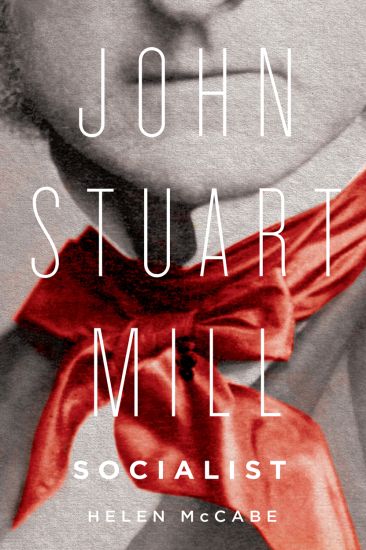
Best known as the author of On Liberty, John Stuart Mill remains a canonical figure in liberalism today. Yet according to his autobiography, by the mid-1840s he placed himself "under the general designation of Socialist." Taking this self-description seriously, John Stuart Mill, Socialist reinterprets Mill's work in its light.Helen McCabe explores the nineteenth-century political economist's core commitments to egalitarianism, social justice, social harmony, and a socialist utopia of cooperation, fairness, and human flourishing. Uncovering Mill's changing relationship with the radicalism of his youth and his excitement about the revolutionary events of 1848, McCabe argues that he saw liberal reforms as solutions to contemporary problems, while socialism was the path to a better future. In so doing, she casts new light on his political theory, including his theory of social progress; his support for democracy; his feminism; his concept of utility; his understanding of individuality; and his account of "the permanent interests of man as a progressive being," which is so central to his famous harm principle.As we look to rebuild the world in the wake of financial crises, climate change, and a global pandemic, John Stuart Mill, Socialist offers a radical rereading of the philosopher and a fresh perspective on contemporary meanings of socialism.

Best known as the author of On Liberty, John Stuart Mill remains a canonical figure in liberalism today. Yet according to his autobiography, by the mid-1840s he placed himself "under the general designation of Socialist." Taking this self-description seriously, John Stuart Mill, Socialist reinterprets Mill's work in its light.Helen McCabe explores the nineteenth-century political economist's core commitments to egalitarianism, social justice, social harmony, and a socialist utopia of cooperation, fairness, and human flourishing. Uncovering Mill's changing relationship with the radicalism of his youth and his excitement about the revolutionary events of 1848, McCabe argues that he saw liberal reforms as solutions to contemporary problems, while socialism was the path to a better future. In so doing, she casts new light on his political theory, including his theory of social progress; his support for democracy; his feminism; his concept of utility; his understanding of individuality; and his account of "the permanent interests of man as a progressive being," which is so central to his famous harm principle.As we look to rebuild the world in the wake of financial crises, climate change, and a global pandemic, John Stuart Mill, Socialist offers a radical rereading of the philosopher and a fresh perspective on contemporary meanings of socialism.
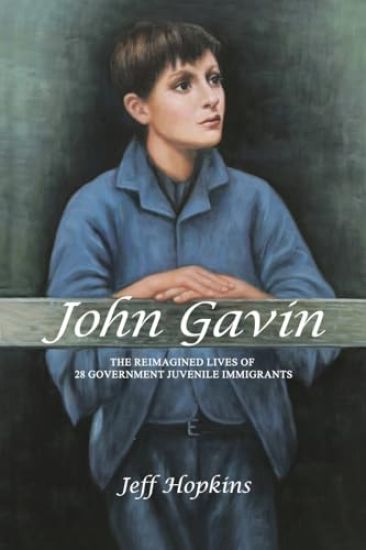
On the sixth of April, 1844, John Gavin was the first European hanged in the Swan River Colony. He was fifteen years old. His crime, trial, and execution still stir controversy and passions almost one hundred and eighty years after the event.John Gavin was a convicted street thief in Birmingham and became incarcerated at Parkhurst Prison on the Isle of Wight. In 1843 he made the voyage to the Swan River Colony on the barque the 'Shepherd'. Subsequently he became an assigned servant on the Pollard family farm in North Dandalup.Significant personalities like Guardian John Schoales, Barrister Richard Nash, and the Reverend George King had important roles to play in the Parkhurst apprentice's life.John Gavin's life spanned approximately five thousand, five hundred days. The one hundred and sixty-three days he spent in the Swan River Colony have been reimagined here.
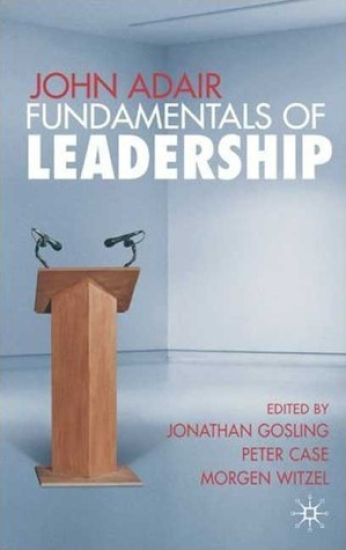
John Adair
Palgrave Macmillan
2007
sidottu
John Adair is one of the most important figures on leadership thought and practice. This book shows the depth of his influence and offers fresh perspectives on his ideas. Anyone convinced that leadership is crucial to improved performance, but who is suspicious of quick fix approaches, should read this book for understanding and practical advice

In this book, Judith Thompson restores a powerful but long-suppressed voice to our understanding of British Romanticism. Drawing on newly discovered archives, this book offers the first full-length study of the poetry of John Thelwallas well as his partnership with Samuel Taylor Coleridge and William Wordsworth.

While there are many biographies of JFK and accounts of the early years of US space efforts, this book uses primary source material and interviews with key participants to provide a comprehensive account of how the actions taken by JFK's administration have shaped the course of the US space program over the last 45 years.
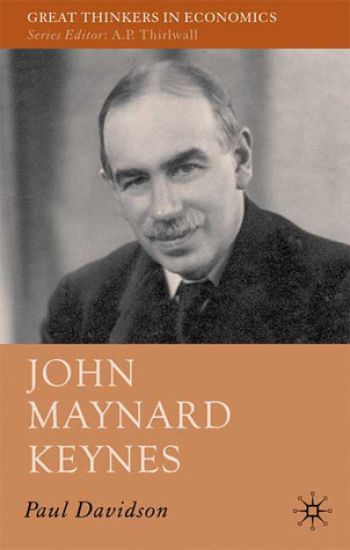
This book looks at the life of Keynes leading up to the writing of his seminal General Theory , examines the General Theory in detail, and explores how it differs from classical theory. The impact of Keynes's work on the economy postwar and up to the present day is also assessed.
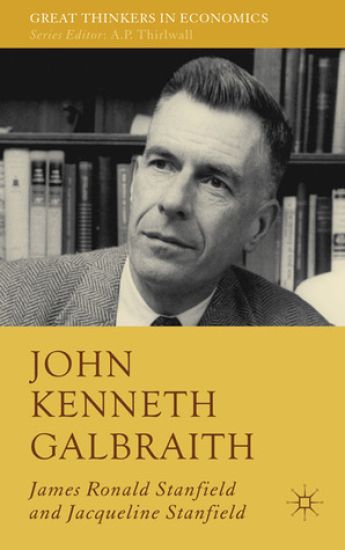
This book examines the life and work of John Kenneth Galbraith, a truly iconic figure in progressive modern liberalism and a seminal influence in the rise of heterodox political economy. It emphasizes his continuing relevance to the current research of today, and to the multifaceted crisis of democratic capitalism.

This book investigates what it is that makes John Clare’s poetic vision so unique, and asks how we use Clare for contemporary ends. It explores much of the criticism that has appeared in response to his life and work, and asks hard questions about the modes and motivations of critics and editors. Clare is increasingly regarded as having been an environmentalist long before the word appeared; this book investigates whether this ‘green’ rush to place him as a radical proto-ecologist does any disservice to his complex positions in relation to social class, work, agriculture, poverty and women. This book attempts to unlock Clare’s own theorisations and practices of what we might now call an ‘ecological consciousness’, and works out how his ‘ecocentric’ mode might relate to that of other Romantic poets. Finally, this book asks how we might treat Clare as our contemporary while still being attentive to the peculiarities of his unique historical circumstances.
Paradise Lost is for many the greatest poem written in English. Composed late in the author's life, it deals with nothing less than the destiny of mankind.This essential introductory guide:- Leads the reader into the epic poem through detailed analysis of key extracts, exploring Milton's original thought and style- Provides useful sections on 'Methods of Analysis' and 'Further Work' to aid independent study- Offers valuable information on Milton's life, times and literary legacy- Examines the development of critical opinion and discusses some recent critical views of the poem.John Milton: Paradise Lost is ideal for anyone who is studying this complex and beautiful work for the first time. It will enable you to approach your own critical analysis of the poem with confidence.
Paradise Lost is for many the greatest poem written in English. Composed late in the author's life, it deals with nothing less than the destiny of mankind.This essential introductory guide:- Leads the reader into the epic poem through detailed analysis of key extracts, exploring Milton's original thought and style- Provides useful sections on 'Methods of Analysis' and 'Further Work' to aid independent study- Offers valuable information on Milton's life, times and literary legacy- Examines the development of critical opinion and discusses some recent critical views of the poem.John Milton: Paradise Lost is ideal for anyone who is studying this complex and beautiful work for the first time. It will enable you to approach your own critical analysis of the poem with confidence.

This vibrant collection of original essays sheds new light on all of Fowles' writings, with a special focus on The French Lieutenant's Woman as the most widely studied of Fowles' works. The impressive cast of contributors offers an outstanding range of expertise on Fowles, providing fresh reassessments and new perspectives.

In reading Banville's novels through the work of key psychoanalytical theorists, John Banville's Narcissistic Fictions brings together apparently disparate thematic strands - missing twins, shame, false identities - and presents these as manifestations of a central concern with narcissism.

John Stuart Mill
Palgrave Macmillan
2013
sidottu
This edited collection highlights the inquisitive and synthetic aspects of John Stuart Mill's mode of philosophising while exploring various aspects of Mill's thought, intellectual development and influence. The contributors to this volume discuss a number of Mill's ideas including those on political participation, democracy, liberty and justice.