Kirjojen hintavertailu. Mukana 11 699 587 kirjaa ja 12 kauppaa.

Kirjahaku

Etsi kirjoja tekijän nimen, kirjan nimen tai ISBN:n perusteella.

1000 tulosta hakusanalla Jonathan Webb

Jonathan Williams: Lord of Orchards
Jonathan Williams’ work of more than half a century is such that no one activity or identity takes primacy over any other?he was the seminal small press publisher of The Jargon Society; a poet of considerable stature; book designer; editor; photographer; legendary correspondent; literary, art, and photography critic and collector; early collector and proselytizer of visionary folk art; cultural anthropologist and Juvenalian critic; curmudgeon; happy gardener; resolute walker; and keen and adroit raconteur and gourmand.Williams’ refined decorum and speech, and his sartorial style, contrasted sharply, yet pleasingly, with his delight in the bawdy, with his incisive humor and social criticism, and his confidently experimental, masterful poems and prose.His interests raised ?the common to grace,” while paying ?close attention to the earthy.” At the forefront of the Modernist avant-garde?yet possessing a deep appreciation of the traditional?Williams celebrated, rescued, and preserved those things he described as, ?more and more away from the High Art of the city,” settling ?for what I could unearth and respect in the tall grass.” Subject to much indifference?despite being celebrated as publisher and poet?he nurtured the nascent careers of hundreds of emerging or neglected poets, writers, artists, and photographers.Recognizing this, Buckminster Fuller once called him ?our Johnny Appleseed”, Guy Davenport described him as a ?kind of polytechnic institute,” while Hugh Kenner hailed Jargon as ?the Custodian of Snowflakes” and Williams as ?the truffle-hound of American poetry.” Lesser known for his extraordinary letters and essays, and his photography and art collecting, he is never only a poet or photographer, an essayist or publisher.This book of essays, images, and shouts aims to bring new eyes and contexts to his influence and talent as poet and publisher, but also heighten appreciation for the other facets of his life and art. One might call Williams’ life a poetics of gathering, and this book a first harvest.
Jonathan Strange & MR Norrell

Jonathan Strange & MR Norrell

Susanna Clarke

BLOOMSBURY PUBLISHING
2020
nidottu
The 20th Anniversary Edition of the Hugo-award winning, epic New York Times Bestseller and basis for the BBC miniseries, where two men change England's history when they bring magic back into the world, now with a new introduction from V.E. Schwab. In the midst of the Napoleonic Wars in 1806, most people believe magic to have long since disappeared from England - until the reclusive Mr. Norrell reveals his powers and becomes an overnight celebrity. Another practicing magician then emerges: the young and daring Jonathan Strange. He becomes Norrell's pupil, and the two join forces in the war against France. But Strange is increasingly drawn to the wild, most perilous forms of magic, and he soon risks sacrificing his partnership with Norrell and everything else he holds dear. Susanna Clarke's brilliant first novel is an utterly compelling epic tale of nineteenth-century England and the two magicians who, first as teacher and pupil and then as rivals, emerge to change its history.
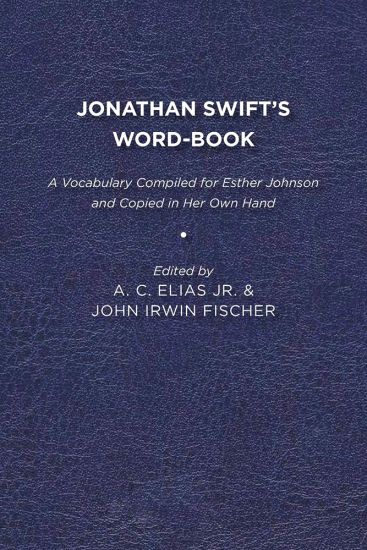
Jonathan Swift's Word-Book

Jonathan Swift's Word-Book

ELIAS FISCHER REI

University of Delaware Press
2017
sidottu
Since the 1690s, Jonathan Swift had been formulating a list of words and definitions for his protégé Esther Johnson, beginning with terms from the Book of Common Prayer. His was apparently an ongoing list, kept rather haphazardly, with open spaces for adding new words.
Jonathan Swift

Jonathan Swift

Eugene Hammond

University of Delaware Press
2016
sidottu
Covers the arc of the first half of Jonathan Swift's life, offering fresh details of the contentment and exuberance of his childhood, of the support he received from his grandmother, of his striking affection for Esther Johnson, of his precocious entry into English politics, and of his naive determination to do well both as vicar and writer.
Jonathan Swift

Jonathan Swift

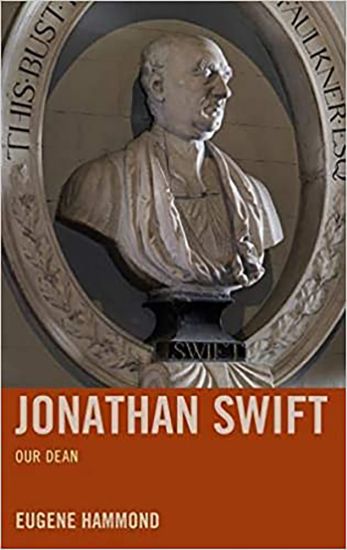
Eugene Hammond

University of Delaware Press
2016
nidottu
Jonathan Swift: Our Dean details the political climax of his remarkable career—his writing and publication of The Drapier’s Letters (1724), Gulliver’s Travels (1726), and A Modest Proposal (1729)—stressing the relentless political opposition he faced and the numerous ways, including through his sermons, that he worked from his political base as Dean of St. Patrick’s Cathedral, psychologically as well as physically just outside the Dublin city walls, to attempt to rouse the Irish people to awareness of the ways that England was abusing them.This book faces squarely the likelihood that Swift had a physical affair with Esther Vanhomrigh between 1719 and 1723, and reassesses in the light of that likelihood his conflicting relations with Esther Vanhomrigh and Esther Johnson. It traces the many loving friendships with both men and women in Ireland that sustained Swift during the years when his health gradually failed him, enabling him to continue indefatiguably, both through his writings and his authority as Dean of St. Patrick’s, to contribute to the public welfare in the face of relentless British attempts to squeeze greater and greater profits out of their Irish colony. Finally, it traces how Swift’s political indignation led to his treating many people, friends and enemies, cruelly during the 1730s, even while his humor and his ability to make and attract new friends sustained themselves until his memory finally failed him in 1742.This biography, in two books, Jonathan Swift: Irish Blow-in and Jonathan Swift:Our Dean, comes closer than past biographies to capturing how it felt to Swift himself to live his life. Published by University of Delaware Press. Distributed worldwide by Rutgers University Press.
Jonathan Swift

Jonathan Swift

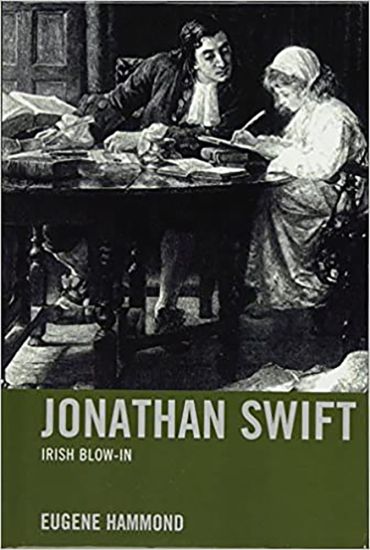
Eugene Hammond

University of Delaware Press
2016
sidottu
Covers the arc of the first half of Jonathan Swift's life, offering fresh details of the contentment and exuberance of his childhood, of the support he received from his grandmother, of his striking affection for Esther Johnson, of his precocious entry into English politics, and of his naive determination to do well both as vicar and writer.
Jonathan Swift

Jonathan Swift

Eugene Hammond

University of Delaware Press
2016
nidottu
Jonathan Swift: Irish Blow-in covers the arc of the first half of Jonathan Swift’s life, offering fresh details of the contentment and exuberance of his childhood, of the support he received from his grandmother, of his striking affection for Esther Johnson from the time she was ten years old (his pet name for her in her twenties was “saucebox”), of his precocious entry into English politics with his Contests and Dissensions pamphlet, of his brilliant and much misunderstood Tale of a Tub, and of his naive determination to do well both as a vicar of the small parish of Laracor in Ireland and as a writer for the Tory administration trying to pull England out of debt by ending the war England was engaged in with France. I do not share with past biographers the sense that Swift had a deprived childhood. I do not share the suspicion that most of Swift’s enmities were politically motivated. I do not feel critical of him because he was often fastidious with his money. I do not think he was insincere about his religious faith. His pride, his sexual interests, his often shocking or uninhibited language, his instinct for revenge – emphasized by many previous biographers – were all fundamental elements of his being, but elements that he either used for rhetorical effect, or that he tried to keep in check, and that he felt that religion helped him to keep in check. Swift had as firm a conviction as did Freud that we are born with wayward tendencies; unlike Freud, though, he saw both religion and civil society as necessary and helpful checks on those wayward tendencies, and he (frequently, but certainly not always) acknowledged that he shared those tendencies with the rest of us.This biography, in two books, Jonathan Swift: Irish Blow-in and Jonathan Swift: Our Dean, will differ from most literary biographies in that it does not aim to show how Swift’s life illuminates his writings, but rather how and why Swift wrote in order to live the life he wanted to live. I have liberally quoted Swift’s own words in this biography because his inventive expression of ideas, both in his public works and in his private letters, was what has made him a unique and compelling figure in the history of literature. I hope in these two books to come closer than past biographies to capturing how it felt to Swift himself to live his life. Published by University of Delaware Press. Distributed worldwide by Rutgers University Press.
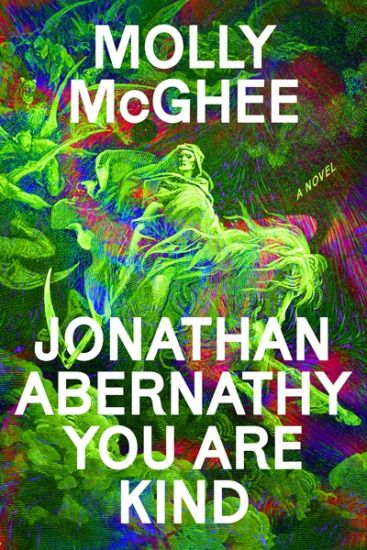
Jonathan Abernathy You Are Kind

Jonathan Abernathy You Are Kind

Molly McGhee

Astra House
2023
sidottu
A New York Times Book Review Editors' Choice "Disturbing and darkly funny, McGhee's surrealist debut is sure to keep readers up at night." --People Now in paperback, an Electric Literature and Chicago Review of Books best book of the year, the debut Xochitl Gonzalez called "wildly imaginative, tender and piercing critique of the squeeze of capitalism." Jonathan Abernathy is a self-proclaimed loser--he's behind on his debts, has no prospects, no friends, and no ambitions. But when a government loan forgiveness program offers him a literal dream job, he thinks he's found his big break. If he can appear to be competent at his new job, entering the minds of middle-class workers while they sleep and removing the unsavory detritus of their waking lives from their unconscious, he might have a chance at a new life. As Abernathy finds his footing in this role, reality and morality begin to warp around him. Soon, the lines between life and work, love and hate, right and wrong, even sleep and consciousness, begin to blur. Molly McGhee touches on themes most people know all too well--the relentlessly crushing weight of debt, the recognition that work won't love you back, and the awkwardness of finding love when you are without hope. A workplace novel, at once tender, startling, and deeply funny, Jonathan Abernathy You Are Kind is a stunning, critical work of surrealist fiction, a piercing critique of late-stage capitalism, and a reckoning with its true cost.
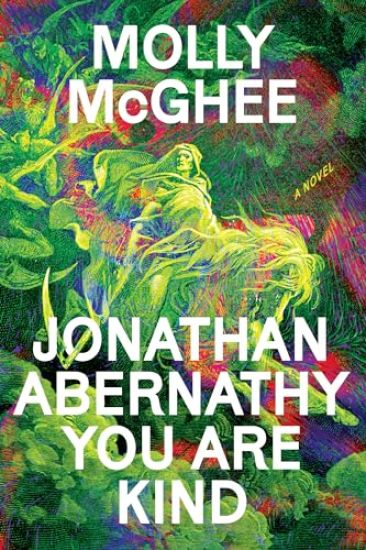
Jonathan Abernathy You Are Kind

Jonathan Abernathy You Are Kind

Molly McGhee

Astra House
2024
nidottu
A New York Times Book Review Editors' Choice "Disturbing and darkly funny, McGhee's surrealist debut is sure to keep readers up at night." --People Now in paperback, an Electric Literature and Chicago Review of Books best book of the year, the debut Xochitl Gonzalez called "wildly imaginative, tender and piercing critique of the squeeze of capitalism." Jonathan Abernathy is a self-proclaimed loser--he's behind on his debts, has no prospects, no friends, and no ambitions. But when a government loan forgiveness program offers him a literal dream job, he thinks he's found his big break. If he can appear to be competent at his new job, entering the minds of middle-class workers while they sleep and removing the unsavory detritus of their waking lives from their unconscious, he might have a chance at a new life. As Abernathy finds his footing in this role, reality and morality begin to warp around him. Soon, the lines between life and work, love and hate, right and wrong, even sleep and consciousness, begin to blur. Molly McGhee touches on themes most people know all too well--the relentlessly crushing weight of debt, the recognition that work won't love you back, and the awkwardness of finding love when you are without hope. A workplace novel, at once tender, startling, and deeply funny, Jonathan Abernathy You Are Kind is a stunning, critical work of surrealist fiction, a piercing critique of late-stage capitalism, and a reckoning with its true cost.
Jonathan Edwards on Genesis

Jonathan Edwards on Genesis

Brian Borgman; Adriaan C Neele

Wipf Stock Publishers
2021
pokkari
The Jonathan Edwards Renaissance is fully underway, with an increased emphasis on Edwards as an exegete and interpreter of Scripture. In this work, Brian Borgman explores Edwards's exegetical, hermeneutical, and theological treatment of the book of Genesis. This study gives special attention to Edwards's hermeneutics and exegesis of Genesis, his pastoral methods for preaching it, and his theological development of the meaning of ""the image of God."" The result is a fruitful study on Edwards's interaction with the first book of the Bible.
Jonathan Edwards on Genesis

Jonathan Edwards on Genesis

Brian Borgman; Adriaan C Neele

Wipf Stock Publishers
2021
sidottu
The Jonathan Edwards Renaissance is fully underway, with an increased emphasis on Edwards as an exegete and interpreter of Scripture. In this work, Brian Borgman explores Edwards's exegetical, hermeneutical, and theological treatment of the book of Genesis. This study gives special attention to Edwards's hermeneutics and exegesis of Genesis, his pastoral methods for preaching it, and his theological development of the meaning of ""the image of God."" The result is a fruitful study on Edwards's interaction with the first book of the Bible.
Jonathan Tries New Clothes

Jonathan Tries New Clothes

Andrew W. Merced

Independently Published
2019
nidottu
Jonathan Tries New Clothes is a story of a toy elephant who discovers a treasure chest filled with clothes. Jonathan the Elephant must decide whether he should wear the clothing. Fear of being rejected by God and his friends Jonathan must choose wisely.
Jonathan's Letter and Number Box

Jonathan's Letter and Number Box

Jonathan Brandstater

Independently Published
2019
nidottu
Jonathan's Letter and Number Box includes a series of cartoons involving letters and numbers. Each panel includes thought and speech bubbles containing whimsical comments in the form of puns and alliteration. Children, especially between the ages of seven and eleven, may find the word play entertaining and amusing.
Jonathan Swift: Son génie et ses oeuvres

Jonathan Swift: Son génie et ses oeuvres

Hippolyte Taine

Createspace Independent Publishing Platform
2018
nidottu
En 1685, dans la grande salle de l'universit de Dublin, les professeurs occup s conf rer les grades de bachelier eurent un singulier spectacle: un pauvre colier, tre bizarre, gauche, aux yeux bleus et durs, orphelin, sans amis, mis rablement entretenu par la charit d'un oncle, d j refus pour son ignorance en logique, se pr sentait une seconde fois sans avoir daign lire la logique. En vain son tutor lui apportait les in-folio les plus respectables: Smeglesius, Keckermannus, Burgersdicius. Il en feuilletait trois pages, et les refermait au plus vite. Quand vint l'argumentation, le proctor fut oblig de lui mettre ses arguments en forme. On lui demandait comment il pourrait bien raisonner sans les r gles; il r pondit qu'il raisonnait fort bien sans les r gles. Cet exc s de sottise fit scandale; on le re ut pourtant, mais grand'peine, speciali gratia, dit le registre, et les professeurs s'en all rent, sans doute avec des ris es de piti , plaignant le cerveau d bile de Jonathan Swift...
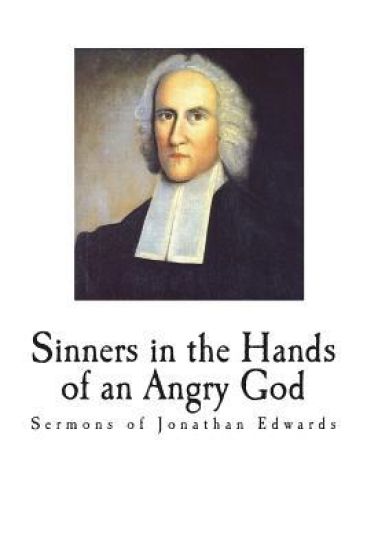
Sinners in the Hands of an Angry God: Sermons of Jonathan Edwards

Sinners in the Hands of an Angry God: Sermons of Jonathan Edwards

Jonathan Edwards

Createspace Independent Publishing Platform
2018
nidottu
Sinners in the Hands of an Angry God: Sermons of Jonathan Edwards by Jonathan Edwards. Jonathan Edwards was an American revivalist preacher, philosopher, and Congregationalist Protestant theologian. Like most of the Puritans, he held to the Reformed theology. His colonial followers later distinguished themselves from other Congregationalists as "New Lights" (endorsing the Great Awakening), as opposed to "Old Lights" (non-revivalists). Edwards is widely regarded as "one of America's most important and original philosophical theologians". Edwards' theological work is broad in scope, but he was rooted in Reformed theology, the metaphysics of theological determinism, and the Puritan heritage. In this verse is threatened the vengeance of God on the wicked unbelieving Israelites, that were God's visible people, and lived under means of grace; and that notwithstanding all God's wonderful works that he had wrought towards that people, yet remained, as is expressed verse 28, void of counsel, having no understanding in them; and that, under all the cultivations of heaven, brought forth bitter and poisonous fruit; as in the two verses next preceding the text.