Kirjojen hintavertailu. Mukana 12 016 292 kirjaa ja 12 kauppaa.

Kirjahaku

Etsi kirjoja tekijän nimen, kirjan nimen tai ISBN:n perusteella.

1000 tulosta hakusanalla Jorge Laborda

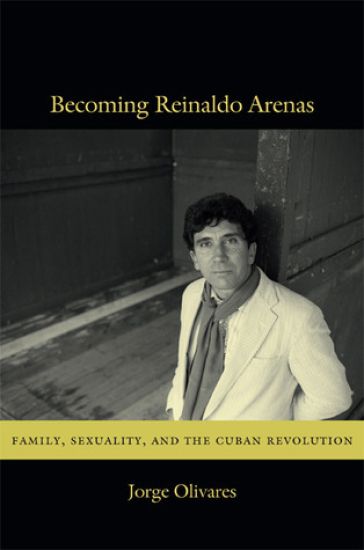
Becoming Reinaldo Arenas

Becoming Reinaldo Arenas

Jorge Olivares

Duke University Press
2013
sidottu
Becoming Reinaldo Arenas explores the life and work of the Cuban writer Reinaldo Arenas (1943–1990), who emerged on the Latin American cultural scene in the 1960s and quickly achieved literary fame. Yet as a political dissident and an openly gay man, Arenas also experienced discrimination and persecution; he produced much of his work amid political controversy and precarious living conditions. In 1980, having survived ostracism and incarceration in Cuba, he arrived in the United States during the Mariel boatlift. Ten years later, after struggling with poverty and AIDS in New York, Arenas committed suicide. Through insightful close readings of a selection of Arenas's works, including unpublished manuscripts and correspondence, Olivares examines the writer's personal, political, and artistic trajectory, focusing on his portrayals of family, sexuality, exile, and nostalgia. He documents Arenas's critical engagement with cultural and political developments in revolutionary Cuba and investigates the ways in which Arenas challenged literary and national norms. Olivares's analysis shows how Arenas drew on his life experiences to offer revealing perspectives on the Cuban Revolution, the struggles of Cuban exiles, and the politics of sexuality.
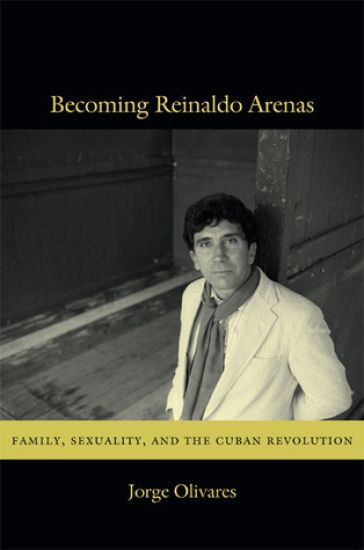
Becoming Reinaldo Arenas

Becoming Reinaldo Arenas

Jorge Olivares

Duke University Press
2013
pokkari
Becoming Reinaldo Arenas explores the life and work of the Cuban writer Reinaldo Arenas (1943–1990), who emerged on the Latin American cultural scene in the 1960s and quickly achieved literary fame. Yet as a political dissident and an openly gay man, Arenas also experienced discrimination and persecution; he produced much of his work amid political controversy and precarious living conditions. In 1980, having survived ostracism and incarceration in Cuba, he arrived in the United States during the Mariel boatlift. Ten years later, after struggling with poverty and AIDS in New York, Arenas committed suicide. Through insightful close readings of a selection of Arenas's works, including unpublished manuscripts and correspondence, Olivares examines the writer's personal, political, and artistic trajectory, focusing on his portrayals of family, sexuality, exile, and nostalgia. He documents Arenas's critical engagement with cultural and political developments in revolutionary Cuba and investigates the ways in which Arenas challenged literary and national norms. Olivares's analysis shows how Arenas drew on his life experiences to offer revealing perspectives on the Cuban Revolution, the struggles of Cuban exiles, and the politics of sexuality.
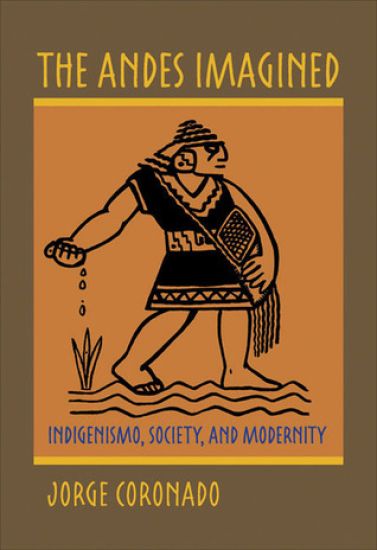
The Andes Imagined

The Andes Imagined

Jorge Coronado

University of Pittsburgh Press
2009
nidottu
In The Andes Imagined, Jorge Coronado not only examines but also recasts the indigenismo movement of the early 1900s. Coronado departs from the common critical conception of indigenismo as rooted in novels and short stories, and instead analyzes an expansive range of work in poetry, essays, letters, newspaper writing, and photography. He uses this evidence to show how the movement's artists and intellectuals mobilize the figure of the Indian to address larger questions about becoming modern, and he focuses on the contradictions at the heart of indigenismo as a cultural, social, and political movement.By breaking down these different perspectives, Coronado reveals an underlying current in which intellectuals and artists frequently deployed their indigenous subject in order to imagine new forms of political inclusion. He suggests that these deployments rendered particular variants of modernity and make indigenismo representational practices a privileged site for the examination of the region's cultural negotiation of modernization. His analysis reveals a paradox whereby the un-modern indio becomes the symbol for the modern itself.The Andes Imagined offers an original and broadly based engagement with indigenismo and its intellectual contributions, both in relation to early twentieth-century Andean thought and to larger questions of theorizing modernity.
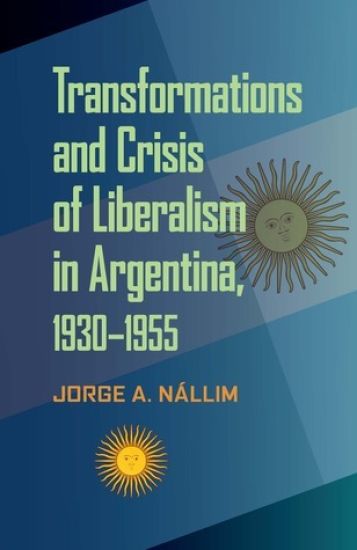
Transformations and Crisis of Liberalism in Argentina, 1930–1955

Transformations and Crisis of Liberalism in Argentina, 1930–1955

Jorge A. Nállim

University of Pittsburgh Press
2012
nidottu
Nállim chronicles the decline of liberalism in Argentina during the volatile period between two military coups—the 1930 overthrow of Hipólito Yrigoyen and the deposing of Juan Perón in 1955. While historians have primarily focused on liberalism in economic or political contexts, Nállim instead documents a wide range of locations where liberalism was claimed and ultimately marginalized in the pursuit of individual agendas.Nállim shows how concepts of liberalism were espoused by various groups who “invented traditions” to legitimatize their methods of political, religious, class, intellectual, or cultural hegemony. In these deeply fractured and corrupt processes, liberalism lost political favor and alienated the public. These events also set the table for Peronism and stifled the future of progressive liberalism in Argentina.Nállim describes the main political parties of the period and deconstructs their liberal discourses. He also examines major cultural institutions and shows how each attached liberalism to their cause.Nállim compares and contrasts the events in Argentina to those in other Latin American nations and reveals their links to international developments. While critics have positioned the rhetoric of liberalism during this period as one of decadence or irrelevance, Nállim instead shows it to be a vital and complex factor in the metamorphosis of modern history in Argentina and Latin America as well.
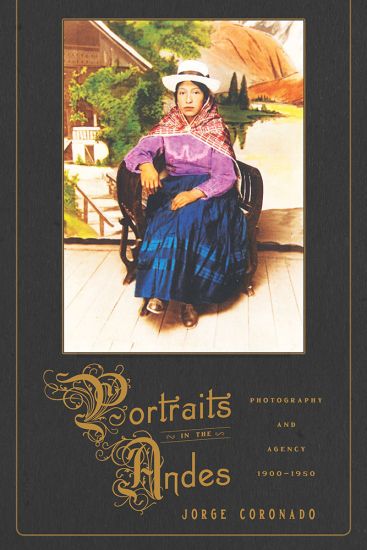
Portraits in the Andes

Portraits in the Andes

Jorge Coronado

University of Pittsburgh Press
2018
nidottu
Portraits in the Andes examines indigenous and mestizo self-representation through the medium of photography from the early to mid twentieth century. As Jorge Coronado reveals, these images offer a powerful counterpoint to the often-slanted, predominant view of indigenismo produced by the intellectual elite. Photography offered an inexpensive and readily available technology for producing portraits and other images that allowed lower- and middle-class racialized subjects to create their own distinct rhetoric and vision of their culture. The powerful identity-marking vehicle that photography provided to the masses has been overlooked in much of Latin American cultural studies—which have focused primarily on the elite's visual arts. Coronado's study offers close readings of Andean photographic archives from the early- to mid-twentieth century, to show the development of a consumer culture and the agency of marginalized groups in creating a visual document of their personal interpretations of modernity.
The Last Cacique

The Last Cacique

Jorge Heine

University of Pittsburgh Press
1993
nidottu
This pioneering study of the dynamics of city politics in one of Puerto Rico's largest townships examines the fascinating career to Benjamin Cole. A quasi-legendary figure in island politics, Cole served as mayor of Mayagüez from 1968 to 1992. His spectacular success often ran counter to the broader political trends in Puerto Rico and offers insights in the currents of change that swept the island from the 1960s through the 1990s.Based on years of intensive research, including unusually candid interviews with members of Puerto Rico's political elite, The Last Cacique offers the first in-depth study of local politics in Puerto Rico and one of the very few available for the Caribbean region.
Biocosmism

Biocosmism

Jorge Quintana Navarrete

VANDERBILT UNIVERSITY PRESS
2024
nidottu
Most scholars study postrevolutionary Mexican culture as a period in which cultural production significantly shaped national identity through murals, novels, essays, and other artifacts that registered the changing political and social realities in the wake of the Revolution. In Biocosmism, Jorge Quintana Navarrete shifts the focus to examine how a group of scientists, artists, and philosophers conceived the manifold relations of the human species with cosmological forces and nonhuman entities (animals, plants, inorganic matter, celestial bodies, among others). Drawing from recent theoretical trends in new materialisms, biopolitics, and posthumanism, this book traces for the first time the intellectual constellation of biocosmism or biocosmic thought: the study of universal life understood as the vital vibrancy that animates everything in the cosmos from inorganic matter to living organisms to outer space. It combines both analysis of unexplored areas—such as Alfonso L. Herrera’s plasmogeny—and innovative readings of canonical texts like Vasconcelos’s La raza cÓsmica to examine how biocomism produced a wide array of utopian projects and theorizations that continue to challenge anthropocentric, biopolitical frameworks.
Biocosmism

Biocosmism

Jorge Quintana Navarrete

VANDERBILT UNIVERSITY PRESS
2024
sidottu
Most scholars study postrevolutionary Mexican culture as a period in which cultural production significantly shaped national identity through murals, novels, essays, and other artifacts that registered the changing political and social realities in the wake of the Revolution. In Biocosmism, Jorge Quintana Navarrete shifts the focus to examine how a group of scientists, artists, and philosophers conceived the manifold relations of the human species with cosmological forces and nonhuman entities (animals, plants, inorganic matter, celestial bodies, among others). Drawing from recent theoretical trends in new materialisms, biopolitics, and posthumanism, this book traces for the first time the intellectual constellation of biocosmism or biocosmic thought: the study of universal life understood as the vital vibrancy that animates everything in the cosmos from inorganic matter to living organisms to outer space. It combines both analysis of unexplored areas—such as Alfonso L. Herrera’s plasmogeny—and innovative readings of canonical texts like Vasconcelos’s La raza cÓsmica to examine how biocomism produced a wide array of utopian projects and theorizations that continue to challenge anthropocentric, biopolitical frameworks.
El camino a casa: Mi vida con los Yankees

El camino a casa: Mi vida con los Yankees

Jorge Posada

HarperCollins Espanol
2015
nidottu
Ahora, en este esperado libro que abarca grandes recuerdos, Jorge Posada detalla su viaje a la meta, compartiendo una remarcable historia generacional de su viaje desde los campos de pelota de Puerto Rico hasta la casa que Ruth construy . Ofreciendo una visi n desde atr s de la m scara a diferencia de cualquier otro, Jorge analiza los momentos clave y jugadas de los equipos que forjaron un legado que llegaron a definir a los Yankees de b isbol durante una generaci n. Con el recuerdo "pitchbypitch", Jorge mira hacia atr s a trav s de los a os, explicando c mo siendo parte de las Cuatro Core junto a Derek Jeter, Andy Pettitte y Mariano Rivera ayud a restablecer los Yankees como una dinast a y ganar cinco Series Mundiales. M s all de su carrera estrella, Jorge tambi n comparte su vida en su totalidad, por primera vez, examinando c mo comenz su viaje extraordinario a las grandes ligas en las m s inesperadas maneras. Excavando en sus ra ces culturales en Puerto Rico, la Rep blica Dominicana y Cuba, Jorge ilumina tres generaciones de relaciones padre e hijo preciadas que le han convertido en el hombre que es hoy. En el centro de este profundo v nculo que comparte con su padre y hom nimo, Sr. Jorge, quien escap de Cuba y con el tiempo moldeo a su hijo para ser un jugador de pelota, perfeccionando su talento e inculcando en l lo necesario para cumplir su sue o de la infancia de jugar en el Bronx.
The '80s

The '80s

Jorge Yarur Bascunan

RIZZOLI INTERNATIONAL PUBLICATIONS
2026
sidottu
Celebrating the unapologetic excess, glamour, and bold eccentricity of 1980s style, The 80s is the definitive two volume tome showcasing an extraordinary collection of garments and accessories from that era with original interviews from the decade's most influential fashion figures. The Museo de la Moda, captures the thriving creative sartorial period during the 1980s through a carefully curated collection of over 900 rare vintage pieces. Founded in 1999 and opened in 2007, the Museo de la Moda has amassed one of the world's largest collections of 1980s garments, accessories, and design objects, from vintage couture Chanel dresses worn by Joan Collins on Dynasty to subversive, deconstructed ensembles by Comme des Gar ons and avant-garde outwear designed the underground icon and performance artist Leigh Bowery. The 80s captures a decade marked by bold displays of opulence, ber-glamour, and daring experimentation where the worlds of music, art, fashion, and design collided and informed each other. This seminal two-volume catalogue housed in a slipcase features over 1,000 pages of fabulous garments and accessories--many featured in international magazines like Vogue, Elle, L'Officiel--from an Alaia bodycon dress worn by Naomi Campbell in British Vogue, to iconic pop culture pieces like Madonna's black and gold corset with nipple tassles by Jean Paul Gaultier, worn during her "Who's That Girl" tour in 1987, and Cyndi Lauper's vintage pink satin and lace dress worn in 1983's "Girls Just Wanna Have Fun Video," to an exceptionally rare collection of Princess Diana's dresses worn during her royal engagements, and Michael Jacket's "amour" t-shirt worn in 1982's "Beat It" video. Pieces from cult-favorite designers of the decade such as Vivienne Westwood, BodyMap, Katherine Hamnett are featured in this dynamic collection of vintage dresses, streetwear, menswear, jewelry, watches, alongside new interviews with the brightest and boldest international personalities and fashion designers of that era who reminisce on their experiences during the 80s. Aesthetic themes explored include: urban fashion, dressing for the evening, fashion for men, motifs and color, and accessories. Undeniably, the ultimate book on 80s fashion, this groundbreaking two volume set will be treasured by fashion, style, popular culture, and design enthusiasts alike.
Designing Paradise: Juan Montoya

Designing Paradise: Juan Montoya

Jorge Arango

Rizzoli International Publications
2021
sidottu
No typology lends itself more naturally to Juan Montoya s creative impulses than tropical residences. There is such a sense of appropriateness to place in the architecture and interiors that our assumption that the designer s stylistic affinity is somehow inborn becomes inescapable. In this book, the reader will visit Montoya-designed residences that occupy ravishing sites in Punta Mita (Mexico), Cap Cana (Dominican Republic), Miami Beach, Fisher Island, and other idyllic oceanfront locales. As much as these homes are escapist fantasias, they are also inextricably rooted to their geographic location and their regional culture. And while their sense of luxury is palpable, so is their lack of pretension, the practicality that makes them functional for the families who reside there, and their resilience to the natural conditions in which they are found. Luxuriate in open-air pavilions with endless views of sea and sand, on sweeping terraces with glimmering pools and dramatic sunsets, and in sumptuous interiors with blue-and-white tiles, intricate beadwork, global textiles, and thatched roofs. This book is a must-have for interior designers, owners or potential buyers of seaside property, and armchair travellers who relish an escape to paradise.
Soul: The Interior Design of Orlando Diaz-Azcuy

Soul: The Interior Design of Orlando Diaz-Azcuy

Jorge Arango

RIZZOLI INTERNATIONAL PUBLICATIONS
2022
sidottu
San Francisco based Orlando Diaz-Azcuy s mastery of the home interior has made him one of America s most renowned designers. His elegantly composed rooms speak volumes for his spare, intelligent, and disciplined touch. His interiors located in Miami and New York as well as San Francisco combine a modernist approach of architecturally clean lines and urbane sensibility with smart flashes of bold colour or a pedigreed period statement piece to balance a curated look. Regarded by professionals as a dean of interior design and a pioneer of minimalist design since the early 1980s, Diaz-Azcuy has been an epic influence to the worlds of interior architecture and design.
Roman Portugal, II, Gazetteer, Fasc. 2

Roman Portugal, II, Gazetteer, Fasc. 2

Jorge de Alarcao

Aris Phillips Ltd
1988
nidottu
Of the set: The heart of this work is the Gazetteer in which nearly 3,000 Roman sites are plotted on the 8 sheets of the 1:250,000 survey of Portugal and briefly described with their bibliography. This is the first time that such a comprehensive survey has been attempted for the country that was the heart of ancient Lusitania and included parts of Callaecia. Much new and unpublished information has come to light in the course of the detailed research of this survey which has enabled Professor Alarcao to write a new Introduction to Roman Portugal. For the first time scholars and tourists alike will have a comprehensive, up-to-date and accurate account of this country in the English language. It is hoped that this will help kindle interest in an area with many parallels with Roman Britain which has hitherto been neglected through lack of accessible published information.
Bookshops

Bookshops

Jorge Carrión

MacLehose Press
2018
pokkari
"A lot of people will be interested in the famous bookshops of the world: Jorge Carrión has gone and visited them all. We can't travel right now, but we can travel in books." MARGARET ATWOODWhy do bookshops matter? How do they filter our ideas and literature? In this inventive and highly entertaining extended essay, Jorge Carrion takes his reader on a journey around the world, via its bookshops. His travels take him to Shakespeare & Co in Paris, Wells in Winchester, Green Apple Books in San Francisco, Librairie des Colonnes in Tangier, the Strand Book Store in New York and provoke encounters with thinkers, poets, dreamers, revolutionaries and readers. Bookshops is the travelogue of a lucid and curious observer, filled with anecdotes and stories from the universe of writing, publishing and selling books. A bookshop in Carrion's eyes never just a place for material transaction; it is a meeting place for people and their ideas, a setting for world changing encounters, a space that can transform lives.Written in the midst of a worldwide recession, Bookshops examines the role of these spaces in today's evershifting climate of globalisation, vanishing high streets, e-readers and Amazon. But far from taking a pessimistic view of the future of the physical bookshop, Carrion makes a compelling case for hope, underlining the importance of these places and the magic that can happen there. A vital manifesto for the future of the traditional bookshop, and a delight for all who love them.Translated from the Spanish by Peter Bush
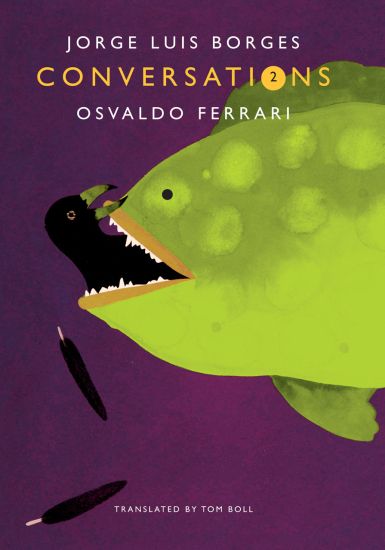
Conversations, Volume 2

Conversations, Volume 2

Jorge Luis Borges; Osvaldo Ferrari

Seagull Books London Ltd
2015
sidottu
Recorded during Jorge Luis Borges's final years, this second volume of his conversations with Osvaldo Ferrari provides a wide-ranging reflection on the life and work of Argentina's master writer and favorite conversationalist. In Conversations: Volume 2, Borges and Ferrari engage in a dialogue that is both improvisational and frequently humorous as they touch on subjects as diverse as epic poetry, detective fiction, Buddhism, and the moon landing. With his signature wit, Borges offers insight into the philosophical basis of his stories and poems, his fascination with religious mysticism, and the idea of life as dream. He also dwells on more personal themes, including the influence of his mother and father on his intellectual development, his friendships, and living with blindness. These recollections are alive to the passage of history, whether in the changing landscape of Buenos Aires or a succession of political conflicts, leading Borges to contemplate what he describes as his "South American destiny." The recurrent theme of these conversations, however, is a life lived through books. Borges draws on the resources of a mental library that embraces world literature-ancient and modern. He recalls the works that were a constant presence in his memory and maps his changing attitudes to a highly personal canon. In the prologue to the volume, Borges celebrates dialogue and the transmission of culture across time and place. These conversations are a testimony to the supple ways that Borges explored his own relation to numerous traditions. Praise for Borges "Borges is arguably the great bridge between modernism and post-modernism in world literature."-David Foster Wallace
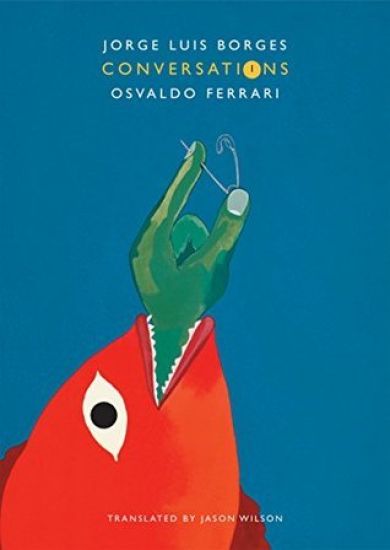
Conversations, Volume 1

Conversations, Volume 1

Jorge Luis Borges; Osvaldo Ferrari

Seagull Books London Ltd
2016
nidottu
Buddhism, love, Henry James, and the tango are just a few of the topics Jorge Luis Borges, Argentina's master writer, and extraordinary conversationalist, discusses in the first volume of the remarkable new series, Conversations. The eighty-four-year-old blind man's wit is unending and results in lively and insightful discussions that configure a loose autobiography of a subtle, teasing mind. Borges' favorite concepts such as time and dreaming are touched upon, but these dialogues are not a true memoir, they are unrestricted conversations about life at present. The Argentine short-story writer, essayist, poet and translator, contributed immensely to twentieth-century literature, and more specifically to the genres of magical realism and fantasy. As he progressively lost his sight he became completely blind by the age of fifty-five the darkness behind his eyelids held enchanting imagery that translated into rich symbolism in his work. The inner workings of his curious mind are seen vividly in his conversations with Ferrari, and there's not a subject on which he doesn't cast surprising new light. As in his tale The Other, where two Borgeses meet up on a bench beside the River Charles, this is a dialogue between a young poet and the elder teller of tales where all experience floats in a miracle that defies linear time.
Conversations, Volume 3

Conversations, Volume 3

Jorge Luis Borges; Osvaldo Ferrari

Seagull Books London Ltd
2017
sidottu
I wrote a poem this morning, and one of the themes of the poem is that languages are not equivalent, that each language is a new way of feeling the world. Jorge Luis Borges Recorded during Borges' final years, this third volume of his conversations with Osvaldo Ferrari offers a rare glimpse into the life and work of Argentina's master writer and favorite conversationalist. In Conversations: Volume 3, Borges and Ferrari discuss subjects as diverse as film criticism, fantastic literature, science fiction, the Argentinian literary tradition, and the works of writers such as Bunyan, Wilde, Joyce, and Yeats, among others. With his signature wit, Borges converses on the philosophical basis of his writing, his travels, and his fascination with religious mysticism. He also ruminates on more personal themes, including the influence of his family on his intellectual development, his friendships, and living with blindness. The recurrent theme of these conversations, however, is a life lived through books. Borges draws on the resources of a mental library that embraces world literature, both ancient and modern. He recalls the works that were a constant presence in his memory and maps his changing attitudes to a highly personal canon. These conversations are a testimony to the supple ways that Borges explored his own relation to numerous traditions the conjunction of his life, his lucidity, and his imagination.
Katie Ridder

Katie Ridder

Jorge Arango; Dominique Browning

Vendome Press
2020
sidottu
Bold combinations of primary and secondary colours; exquisitely crafted trims, embroidery, lampshades and countless accessories (all designed by her); imaginative room surfaces from silver leaf to custom stencilling ... These are but a few of the signature elements of a Katie Ridder interior. Katie Ridder: More Rooms explores her unique aesthetic room by room to underscore the astounding breadth and depth of her decorating ingenuity. The illuminating text by Jorge Arango details Ridder’s singularly creative approach to the essential elements of the room, including furniture plan, colour, lighting, finishes, pattern, layering and scale. Illustrated with specially commissioned photographs by Eric Piasecki and featuring a foreword by former editor-in-chief of House & Garden Dominique Browning, Katie Ridder: More Rooms provides endless inspiration for design aficionados.
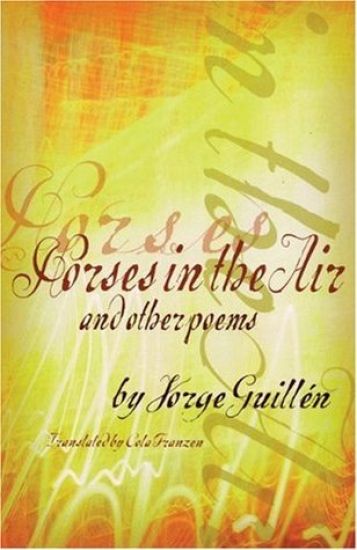
Horses in the Air and Other Poems

Horses in the Air and Other Poems

Jorge Guillén

Roberts Rinehart Publishers
2001
pokkari
Winner of the 2000 Harold Morton Landon Translation Award.Jorge Guillen, one of the greatest poets of the Generation of '27, went into voluntary exile during the Spanish Civil War, and spent many years in the US and Latin America.While some poems in Horses in the Air were written in America, many of them had never been translated into English before. Guillen's view of Europe from the New World, his experience as an exile and an immigrant, as well as his encounters with Spanish America provide insights into our shared culture that are fresh and relevant today.This is the best possible introduction to a major Spanish poet. Jore Guillen sang memorably of the joys and sorrows of mortal existence: of life together and life alone. His luminous intelligence, cordiality toward the reader, vast knowledge of literature, and epigrammatic wit are governed by an impeccable sense of form. In selecting from his work and capturing his voice, Cola Franzen has proven herself, once again, the most graceful and faithful of translators. --Christopher MaurerA noteworthy retrospective of an overlooked and undervalued poet.--Library Journal. . . well represents the breadth and depth of the poet's marvelous achievement.--Kirkus ReviewsJorge Guill n was born in Valladolid, Old Castile. At the outbreak of the Spanish Civil War in 1936 he was arrested and detained briefly in Pamplona as a political prisoner. He left Spain in 1938 to go into voluntary exile in the United States, where he remained until after the death of Franco. In 1978 he returned to live in Spain. He died in M laga in 1984.