Kirjojen hintavertailu. Mukana 11 699 587 kirjaa ja 12 kauppaa.

Kirjahaku

Etsi kirjoja tekijän nimen, kirjan nimen tai ISBN:n perusteella.

1000 tulosta hakusanalla Joyce Rodgers

Foundational Essays in James Joyce Studies
This collection presents, in a single volume, key seminal essays in the study of James Joyce. Representing important contributions to scholarship that have helped shape current methods of approaching Joyce’s works, the volume reacquaints contemporary readers with the literature that forms the basis of ongoing scholarly inquiries in the field.Foundational Essays in James Joyce Studies makes this trailblazing scholarship readily accessible to readers. Offering three essays each on Joyce’s four main works (Dubliners, A Portrait of the Artist as a Young Man, Ulysses, and Finnegans Wake), editor Michael Patrick Gillespie provides a contextual general introduction as well as short introductions to each section that describe the essays that follow and their original contribution to the field. Featuring works by Robert Boyle, Edmund L. Epstein, S. L. Goldberg, Clive Hart, A. Walton Litz, Robert Scholes, Thomas F. Staley, James R. Thrane, Thomas F. Van Laan, and Florence L. Walzl, this is a volume that no serious scholar of Joyce can be without.
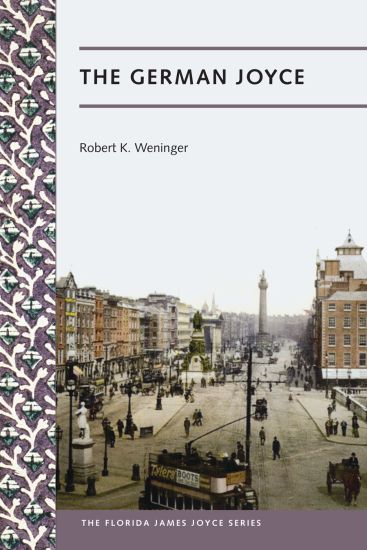
The German Joyce

The German Joyce

Robert Weninger; Sebastian D. G. Knowles

University Press of Florida
2012
sidottu
In August 1919, a production of James Joyce's Exiles was mounted at the Munich Schauspielhaus and quickly fell due to harsh criticism. The reception marked the beginning of a dynamic association between Joyce, German-language writers, and literary critics. It is this relationship that Robert Weninger analyzes in The German Joyce. Opening a new dimension of Joycean scholarship, this book provides the premier study of Joyce's impact on German-language literature and literary criticism in the twentieth century. The opening section follows Joyce's linear intrusion from the 1910s to the 1990s by focusing on such prime moments as the first German translation of Ulysses, Joyce's influence on the Marxist Expressionism debate, and the Nazi blacklisting of Joyce's work. Utilizing this historical reception as a narrative backdrop, Weninger then presents Joyce's horizontal diffusion into German culture. Weninger succeeds in illustrating both German readers' great attraction to Joyce's work as well as Joyce's affinity with some of the great German masters, from Goethe to Rilke, Brecht, and Thomas Mann. He argues that just as Shakespeare was a model of linguistic exuberance for Germans in the eighteenth century, Joyce became the epitome of poetic inspiration in the twentieth. A volume in The Florida James Joyce Series, edited by Sebastian D. G. Knowles
Foundational Essays in James Joyce Studies
This collection presents, in a single volume, key seminal essays in the study of James Joyce. Representing important contributions to scholarship that have helped shape current methods of approaching Joyce’s works, the volume reacquaints contemporary readers with the literature that forms the basis of ongoing scholarly inquiries in the field.Foundational Essays in James Joyce Studies makes this trailblazing scholarship readily accessible to readers. Offering three essays each on Joyce’s four main works (Dubliners, A Portrait of the Artist as a Young Man, Ulysses, and Finnegans Wake), editor Michael Patrick Gillespie provides a contextual general introduction as well as short introductions to each section that describe the essays that follow and their original contribution to the field. Featuring works by Robert Boyle, Edmund L. Epstein, S. L. Goldberg, Clive Hart, A. Walton Litz, Robert Scholes, Thomas F. Staley, James R. Thrane, Thomas F. Van Laan, and Florence L. Walzl, this is a volume that no serious scholar of Joyce can be without.
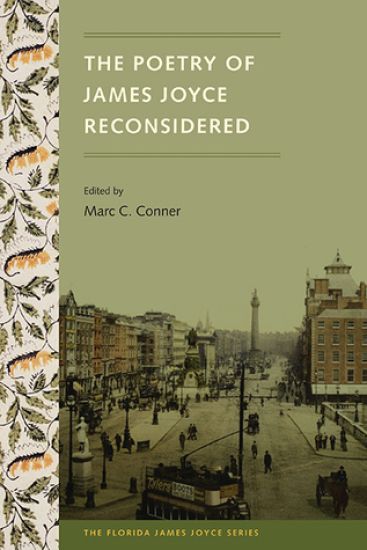
The Poetry of James Joyce Reconsidered

The Poetry of James Joyce Reconsidered

University Press of Florida
2015
nidottu
To many, James Joyce is simply the greatest novelist of the twentieth century. Scholars have pored over every minutia of his public and private life from utility bills to deeply personal letters in search of new insights into his life and work. Yet, for the most part, they have paid scant attention to the two volumes of poetry he published.The nine contributors to The Poetry of James Joyce Reconsideredconvincingly challenge the critical consensus that Joyce's poetry is inferior to his prose. They reveal how his poems provide entries into Joyce's most personal and intimate thoughts and ideas. They also demonstrate that Joyce's poetic explorations - of the nature of knowledge, sexual intimacy, the changing quality of love, the relations between writing and music, and the religious dimensions of the human experience - were fundamental to his development as a writer of prose.This exciting new work is sure to spark new interest in Joyce's poetry, and will become an essential and indispensable resource for students and scholars of his life and work.
The German Joyce

The German Joyce

Robert Weninger

University Press of Florida
2016
nidottu
In August 1919, a production of James Joyce’s Exiles was mounted at the Munich Schauspielhaus and quickly fell due to harsh criticism. The reception marked the beginning of a dynamic association between Joyce, German-language writers, and literary critics. It is this relationship that Robert Weninger analyzes in The German Joyce.Opening a new dimension of Joycean scholarship, this book provides the premier study of Joyce’s impact on German-language literature and literary criticism in the twentieth century. The opening section follows Joyce’s linear intrusion from the 1910s to the 1990s by focusing on such prime moments as the first German translation of Ulysses, Joyce’s influence on the Marxist Expressionism debate, and the Nazi blacklisting of Joyce’s work. Utilizing this historical reception as a narrative backdrop, Weninger then presents Joyce’s horizontal diffusion into German culture.Weninger succeeds in illustrating both German readers’ great attraction to Joyce’s work as well as Joyce’s affinity with some of the great German masters, from Goethe to Rilke, Brecht, and Thomas Mann. He argues that just as Shakespeare was a model of linguistic exuberance for Germans in the eighteenth century, Joyce became the epitome of poetic inspiration in the twentieth.
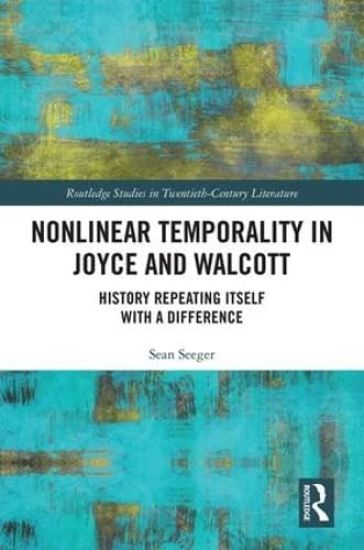
Nonlinear Temporality in Joyce and Walcott
Nonlinear Temporality in Joyce and Walcott is the first dedicated comparative study of James Joyce and Derek Walcott. The book examines the ways in which both Joyce’s fiction and Walcott’s poetry articulate a nonlinear conception of time with radical cultural and political implications. For Joyce and Walcott equally, the book argues, it is only by reconceiving time in this way that it becomes possible to envisage a means of escape from what Joyce calls “force, hatred, history” and what Walcott calls the “madness of history seen as sequential time”. A starting point for the comparisons drawn between Joyce and Walcott is their relationship to Homer. Joyce’s Ulysses is in one respect a rewriting of Homer’s Odyssey; Walcott’s Omeros stands in an analogous relationship to the Iliad. This book argues that these acts of rewriting, far from being instances of influence, intertexuality, or straightforward repetition, exemplify Joyce and Walcott’s complex stance, not just toward literary history, but toward the idea of history as such. The book goes on to demonstrate how an enhanced appreciation of the role of nonlinear temporality in Joyce and Walcott can help to illuminate numerous other aspects of their work.
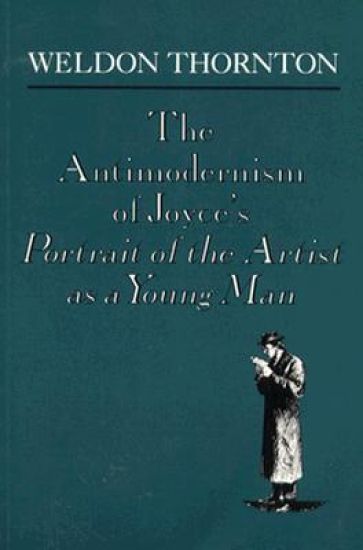
The Anti-Modernism of Joyce's a Portrait of the Artist as a Young Man
In this study of Joyce's ""Portrait of the Artist as a Young Man"", the author considers the important psychological and cultural issues arising in the novel. He argues that although ""Portrait"" may be a classic text of literary modernism, it is a fundamentally antimodernist work. To demonstrate this reading, Thornton first provides three contexts for reading the novel: the issue of defining modernism, especially the philosophical roots and implications of the modernist view of the self; Joyce's literary aims; and the genre of the ""Bildungsroman"". The novel itself is then examined in detail, with the focus on its overall structure, the verbal presentation of Stephen's milieu, and the uses of motif and allusion. Thornton's comprehensive study offers readers a cultural critique and intellectual history of ""Portrait"", and aims to provide a major basis for discussion of the novel.
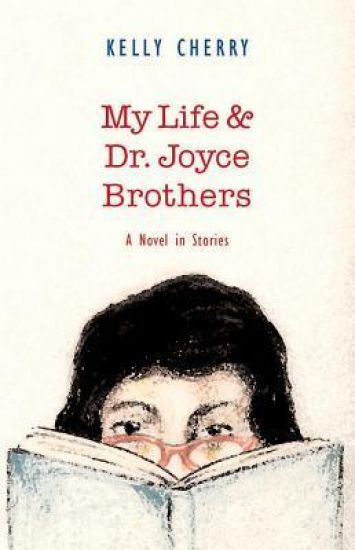
My Life and Dr.Joyce Brothers

My Life and Dr.Joyce Brothers

Kelly Cherry

The University of Alabama Press
2002
nidottu
Nina is a Virginia belle, now out shoveling Wisconsin snow. Divorced, childless, and middle-aged, she's alone again, having been recently left by the man she loves. She has a cute, cuddly dog for company, but what she really wants is a baby - a desire magnified by the insistent ticks of her biological clock - and the ""right man"" to father it. She consults the gurus of self-help for guidance. In so doing, she must confront an old ghost - that of family incest and the handsome, brilliant, ruined brother whose Svengalian pull has dominated her life. When it was first published in 1990, My Life and Dr. Joyce Brothers received glowing reviews for its freshness and mastery. Alison Lurie praised it as ""a witty and moving account of what it's like to be a woman in America today, when the promise to 'Have It All' has become a demand."" The Washington Post stated, ""so honest are the passion and pain...so complete the world created...Historics are revealed with a well-timed line, ironies distilled to a moment."" And the Los Angeles Times Book Review commented that rather than becoming a sad tale of the battle between the sexes, this book is ""far too witty, too savvy, too lyrical and compassionate to resort to bitterness."" In My Life and Dr. Joyce Brothers, Kelly Cherry writes with lightness and grace about some of life's most serious subjects - the nature of family, aging parents, alcoholism, sexual violation. As her brave heroine journeys from self-blame to self-help, a beam of humor lights her way. How Nina finds her answers - and triumphs in a way she couldn't possibly have predicted - makes this a fascinating story alive with joy and with sorrow.
A Handlist to James Joyce's Ulysses
First published in 1986, this book provides a handlist to James Joyce’s Ulysses, or a complete alphabetical index to the critical reading text, that is, the text on the right-hand pages in the critical edition of 1984 and all its future reprintings. The list is an unedited compilation to meet immediate needs of orientation for the new original text of Ulysses.
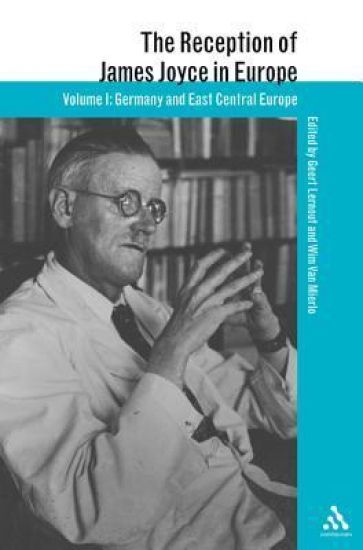
The Reception of James Joyce in Europe

The Reception of James Joyce in Europe

Continuum International Publishing Group Ltd.
2004
sidottu
James Joyce is now widely considered the most influential writer of the twentieth century. His name and his most important works appeared again and again in fin-de-millennium surveys. This is the case not only in the English-speaking world, but also in many European literatures. Joyce's influence is most pronounced in French, German and Italian literatures, where translations of most of his works appeared during his life-time and where he had a clear impact on his fellow-writers. In other countries and cultures, his influence took more time to register, sometimes after the war in the fifties and sixties, and sometimes only in the final decade of the century. This was the case in most of the languages of Eastern Europe, where the translation of Joyce's work could only begin after the collapse of the Soviet Union in the 1990s.This book contains two volumes.Series Editor: Dr Elinor Shaffer FBA, Institute of Germanic & Romance Studies, School of Advanced Study, University of London Contributors to the volume include: Sonja Basic (University of Zagreb) Eric Bulson, (Columbia University) Astradur Eysteinsson (University of Reykjavik) Kalina Filipova (University of Sofia) Marta Goldmann (University of Budapest) Jakob Greve (University of Copenhagen) Manana Khergiani (New York) Teresa Iribarren (University of Barcelona) Onno R. Kosters and Ron Hoffman (The Netherlands) Alberto Lázaro (University of Alcalá, Madrid) Marisol Morales Ladrón (University of Alcalá, Madrid) Maria Filomena Louro (University of Minho, Portugal) Tina Mahkota (University of Ljubljana) John McCourt (University of Trieste) Patrick O'Neill (Queen's University, Canada) Adrian Otoiu (North University of Baia Mare, Rumania) Miltos Pehlivanos (Aristotle University, Greece) Aleš Pogacnik (Slovenia) Jina Politi (Aristotle University, Greece) Steen Klitgård Povlsen (University of Aarhus) H.K.Riikonen (University of Helsinki) Frank Sewell (University of Ulster) Sam Slote (University of Buffalo) Per Svenson (Sweden) Emily Tall (University of Buffalo) Björn Tysdahl (University of Oslo) Tomo Virk (University of Ljubljana) Jolanta W. Wawrzycka (Radford University) Robert Weninger (Oxford Brookes University) Wolfgang Wicht (University of Potsdam) Serenella Zanotti (University of Rome)
The Measureless Time of Joyce, Deleuze and Derrida

The Measureless Time of Joyce, Deleuze and Derrida

Ruben Borg

Continuum International Publishing Group Ltd.
2007
sidottu
By examining the relation between time and processes of figuration in James Joyce's later work, this ground-breaking study identifies his attempt to engage with the philosophical problem of describing time's characteristic movement whilst acknowledging the impossibility of reducing this movement to anything that can be observed, represented or even experienced. Ruben Borg argues that this problem informs the narrative structure, imagery and complex rhetorical strategies in Finnegan's Wake and Ulysses. Drawing on the work of Deleuze and Derrida, Borg challenges the assumption that Joycean time is organised around the idea of a totalising present. Emphasising his treatment of time as a force of measureless passing, Borg offers a better understanding of Joyce's endeavour to characterise time as a multiplicity that resists representation or objective measurement and its role as a central theme and structural element in his later work.
Vico and Joyce

Vico and Joyce

STATE UNIVERSITY OF NEW YORK PRESS
1987
pokkari
Joyce said, "My imagination grows when I read Vico as it doesn't when I read Freud or Jung." This volume is the first extended examination of the connections between Vico and Joyce. Joyce employed Vico's New Science as the basis of Finnegans Wake, as he employed Homer's Odyssey as the basis of Ulysses. In what ways are Vico and Joyce similar? To what extent is Vico an influence on Joyce? And in what ways can Vico's philosophy be newly understood when seen in relation to Joyce's use of it? This book suggests ways to see both thinkers anew. Vico and Joyce is divided into three major parts: "Cycles and History," in which Vico's famous conception of the course and recourse of historical events is examined in relation to Joyce's use of this idea in Finnegans Wake; "Joyce and Vico," in which the relationship between the two thinkers is approached more from the side of Joyce than Vico; "Language and Myth," in which the similarities of Vico's and Joyce's grasp of language and imaginative forms of thought are considered. This book opens up a relationship and set of ideas whose time has come. In the last decade there has been an exciting renaissance in the study of Vico that originated in the English-speaking world and spread back to Italy. Joyce has been the one major twentieth-century figure through which most English readers have come to know something of Vico. To consider them together opens up new avenues for our understanding of the imagination, memory, and the cyclic course of human history.
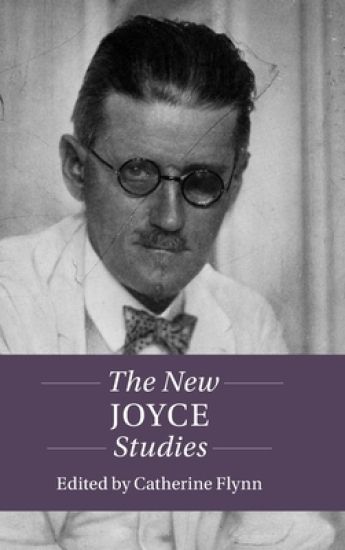
The New Joyce Studies

The New Joyce Studies

Cambridge University Press
2022
sidottu
The New Joyce Studies indicates the variety and energy of research on James Joyce since the year 2000. Essays examine Joyce's works and their reception in the light of a larger set of concerns: a diverse international terrain of scholarly modes and methodologies, an imperilled environment, and crises of racial justice, to name just a few. This is a Joyce studies that dissolves early visions of Joyce as a sui generis genius by reconstructing his indebtedness to specific literary communities. It models ways of integrating masses of compositional and publication details with literary and historical events. It develops hybrid critical approaches from posthuman, medical, and queer methodologies. It analyzes the nature and consequences of its extension from Ireland to mainland Europe, and to Africa and Latin America. Examining issues of copyright law, translation, and the history of literary institutions, this volume seeks to use Joyce's canonical centrality to inform modernist studies more broadly.