

Kirjahaku
Etsi kirjoja tekijän nimen, kirjan nimen tai ISBN:n perusteella.
1000 tulosta hakusanalla Kenneth Neill Cameron

The Columbia Guide to Standard American English
Kenneth Wilson
Columbia University Press
1996
pokkari
In the most reliable and readable guide to effective writing for the Americans of today, Wilson answers questions of meaning, grammar, pronunciation, punctuation, and spelling in thousands of clear, concise entries. His guide is unique in presenting a systematic, comprehensive view of language as determined by context. Wilson provides a simple chart of contexts-from oratorical speech to intimate, from formal writing to informal-and explains in which contexts a particular usage is appropriate, and in which it is not. The Columbia Guide to Standard American English provides the answers to questions about American English the way no other guide can with: * an A-Z format for quick reference; * over five thousand entries, more than any other usage book; * sensible and useful advice based on the most current linguistic research; * a convenient chart of levels of speech and writing geared to context; * both descriptive and prescriptive entries for guidance; * guidelines for nonsexist usage; * individual entries for all language terms. A vibrant description of how our language is being spoken and written at the end of the twentieth century-and how we ourselves can use it most effectively-The Columbia Guide to Standard American English is the ideal handbook to language etiquette: friendly, sensible, and reliable.
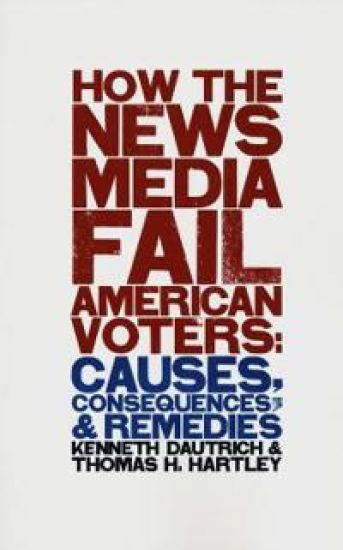
How the News Media Fail American Voters
Kenneth Dautrich; Thomas H. Hartley
Columbia University Press
1999
pokkari
It is often noted that the public is frustrated with the news media. But what do American voters really think about how the media present political information? While studies have examined how the news shapes opinions as well as what people respond to and remember, this is the first book to provide an in-depth analysis of how voters use and evaluate the news media in political elections and the impact these trends have on their use of the news. Kenneth Dautrich and Thomas H. Hartley performed a four-wave national panel survey of voters during the 1996 presidential campaign. They found that although voters are profoundly dissatisfied with the usefulness of news in helping them make decisions, they are unlikely to stop using the news media or switch media (from network news to public broadcasting, for instance). Thus the media have little incentive to adjust to the needs or wishes of voters. Here is an important contribution to the debate about the responsibilities of the news media raging among pundits and policymakers.

What are the causes of war? To answer this question, Professor Waltz examines the ideas of major thinkers throughout the history of Western civilization. He explores works both by classic political philosophers, such as St. Augustine, Hobbes, Kant, and Rousseau, and by modern psychologists and anthropologists to discover ideas intended to explain war among states and related prescriptions for peace.

During World War I, over six million men became prisoners-of-war, a burden that overwhelmed the resources of the belligerent powers, which had a responsibility to care for these men. Becoming aware of the POWs plight, the American YMCA was determined to provide welfare relief to these prisoners, and in early 1915, the Association sent two representatives to negotiate access to military prison camps in England, France, and Germany. Archibald Harte convinced the German government that the YMCA's assistance would benefit German POWs in Allied prison camps as well as Allied prisoners incarcerated in Germany. The Germans agreed to Harte's terms on the condition that the British, French, and Russians accept similar arrangements for prisoners under their care. This began a process of reciprocity that would yield the Association POW access agreements with the governments of Britain, France, Russia, Serbia, Austria-Hungary, Bulgaria, and Romania. After the Armistice was signed in 1918, the YMCA facilitated the return of Allied prisoners to their home countries and continued to provide relief to Russian POWs stranded in German prisons. The wartime activities of the YMCA have largely "fallen between the cracks" of history, and scant attention has been paid to the role of non-governmental organizations in contributing to American neutrality and foreign policymaking during World War I. Pursuit of an Unparalleled Opportunity addresses this lacuna with a remarkable study of the social, spiritual, and physical relief offered to POWs by these dedicated, apolitical groups.
Can techniques traditionally thought to be outside the scope of literature, including word processing, databasing, identity ciphering, and intensive programming, inspire the reinvention of writing? The Internet and the digital environment present writers with new challenges and opportunities to reconceive creativity, authorship, and their relationship to language. Confronted with an unprecedented amount of texts and language, writers have the opportunity to move beyond the creation of new texts and manage, parse, appropriate, and reconstruct those that already exist. In addition to explaining his concept of uncreative writing, which is also the name of his popular course at the University of Pennsylvania, Goldsmith reads the work of writers who have taken up this challenge. Examining a wide range of texts and techniques, including the use of Google searches to create poetry, the appropriation of courtroom testimony, and the possibility of robo-poetics, Goldsmith joins this recent work to practices that date back to the early twentieth century. Writers and artists such as Walter Benjamin, Gertrude Stein, James Joyce, and Andy Warhol embodied an ethos in which the construction or conception of a text was just as important as the resultant text itself. By extending this tradition into the digital realm, uncreative writing offers new ways of thinking about identity and the making of meaning.
Can techniques traditionally thought to be outside the scope of literature, including word processing, databasing, identity ciphering, and intensive programming, inspire the reinvention of writing? The Internet and the digital environment present writers with new challenges and opportunities to reconceive creativity, authorship, and their relationship to language. Confronted with an unprecedented amount of texts and language, writers have the opportunity to move beyond the creation of new texts and manage, parse, appropriate, and reconstruct those that already exist. In addition to explaining his concept of uncreative writing, which is also the name of his popular course at the University of Pennsylvania, Goldsmith reads the work of writers who have taken up this challenge. Examining a wide range of texts and techniques, including the use of Google searches to create poetry, the appropriation of courtroom testimony, and the possibility of robo-poetics, Goldsmith joins this recent work to practices that date back to the early twentieth century. Writers and artists such as Walter Benjamin, Gertrude Stein, James Joyce, and Andy Warhol embodied an ethos in which the construction or conception of a text was just as important as the resultant text itself. By extending this tradition into the digital realm, uncreative writing offers new ways of thinking about identity and the making of meaning.
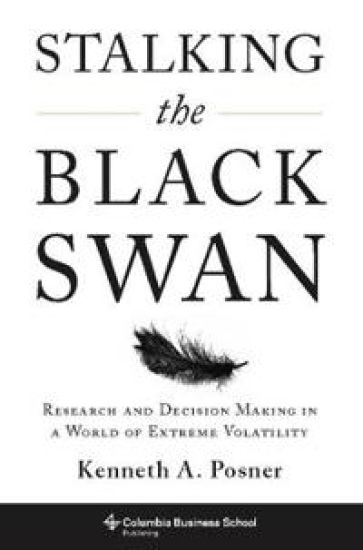
Kenneth A. Posner spent close to two decades as a Wall Street analyst, tracking the so-called "specialty finance" sector, which included controversial companies such as Countrywide, Fannie Mae, Freddie Mac, CIT, and MasterCard--many of which were caught in the subprime mortgage and capital markets crisis of 2007. While extreme volatility is nothing new in finance, the recent downturn caught many off guard, indicating that the traditional approach to decision making had let them down. Introducing a new framework for handling and evaluating extreme risk, Posner draws on years of experience to show how decision makers can best cope with the "Black Swans" of our time. Posner's shrewd assessment combines the classic fundamental research approach of Benjamin Graham and David Dodd with more recent developments in cognitive science, computational theory, and quantitative finance. He outlines a probabilistic approach to decision making that involves forecasting across a range of scenarios, and he explains how to balance confidence, react accurately to fast-breaking information, overcome information overload, zero in on the critical issues, penetrate the information asymmetry shielding corporate executives, and integrate the power of human intuition with sophisticated analytics. Emphasizing the computational resources we already have at our disposal--our computers and our minds--Posner offers a new track to decision making for analysts, investors, traders, corporate executives, risk managers, regulators, policymakers, journalists, and anyone who faces a world of extreme volatility.
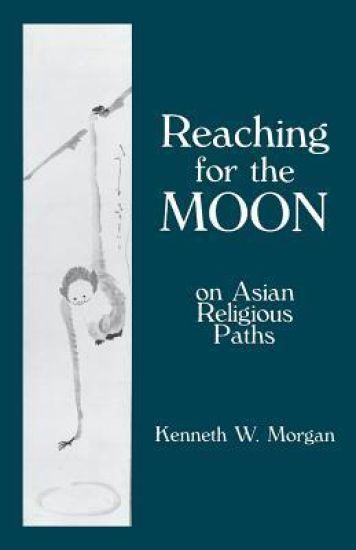
-- Joseph M. Kitagawa, University of Chicago
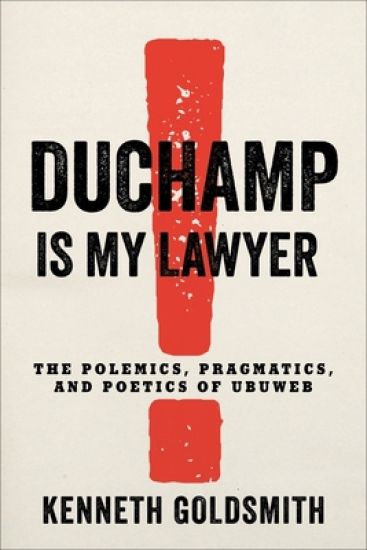
In 1996, during the relatively early days of the web, Kenneth Goldsmith created UbuWeb to post hard-to-find works of concrete poetry. What started out as a site to share works from a relatively obscure literary movement grew into an essential archive of twentieth- and twenty-first-century avant-garde and experimental literature, film, and music. Visitors around the world now have access to both obscure and canonical works, from artists such as Kara Walker, Yoko Ono, Pauline Oliveros, Samuel Beckett, Marcel Duchamp, Cecil Taylor, Glenn Ligon, William Burroughs, and Jean-Luc Godard.In Duchamp Is My Lawyer, Goldsmith tells the history of UbuWeb, explaining the motivations behind its creation and how artistic works are archived, consumed, and distributed online. Based on his own experiences and interviews with a variety of experts, Goldsmith describes how the site navigates issues of copyright and the ways that UbuWeb challenges familiar configurations and histories of the avant-garde. The book also portrays the growth of other “shadow libraries” and includes a section on the artists whose works reflect the aims, aesthetics, and ethos of UbuWeb. Goldsmith concludes by contrasting UbuWeb’s commitment to the free-culture movement and giving access to a wide range of artistic works with today’s gatekeepers of algorithmic culture, such as Netflix, Amazon, and Spotify.
In 1996, during the relatively early days of the web, Kenneth Goldsmith created UbuWeb to post hard-to-find works of concrete poetry. What started out as a site to share works from a relatively obscure literary movement grew into an essential archive of twentieth- and twenty-first-century avant-garde and experimental literature, film, and music. Visitors around the world now have access to both obscure and canonical works, from artists such as Kara Walker, Yoko Ono, Pauline Oliveros, Samuel Beckett, Marcel Duchamp, Cecil Taylor, Glenn Ligon, William Burroughs, and Jean-Luc Godard.In Duchamp Is My Lawyer, Goldsmith tells the history of UbuWeb, explaining the motivations behind its creation and how artistic works are archived, consumed, and distributed online. Based on his own experiences and interviews with a variety of experts, Goldsmith describes how the site navigates issues of copyright and the ways that UbuWeb challenges familiar configurations and histories of the avant-garde. The book also portrays the growth of other “shadow libraries” and includes a section on the artists whose works reflect the aims, aesthetics, and ethos of UbuWeb. Goldsmith concludes by contrasting UbuWeb’s commitment to the free-culture movement and giving access to a wide range of artistic works with today’s gatekeepers of algorithmic culture, such as Netflix, Amazon, and Spotify.

What are the causes of war? How might the world be made more peaceful? In this landmark work of international relations theory, first published in 1959, the eminent realist scholar Kenneth N. Waltz offers a foundational analysis of the nature of conflict between states. He explores works by both classic political philosophers, such as St. Augustine, Hobbes, Kant, and Rousseau, and modern psychologists and anthropologists to discover ideas intended to explain war among states and related prescriptions for peace. Waltz influentially distinguishes among three “images” of the origins of war: those that blame individual leaders or human nature, those rooted in states’ internal composition, and those concerning the structure of the international system. With a foreword by Stephen M. Walt on the legacy and continued relevance of Waltz’s work, this anniversary edition brings new life to a perennial international relations classic.

What are the causes of war? How might the world be made more peaceful? In this landmark work of international relations theory, first published in 1959, the eminent realist scholar Kenneth N. Waltz offers a foundational analysis of the nature of conflict between states. He explores works by both classic political philosophers, such as St. Augustine, Hobbes, Kant, and Rousseau, and modern psychologists and anthropologists to discover ideas intended to explain war among states and related prescriptions for peace. Waltz influentially distinguishes among three “images” of the origins of war: those that blame individual leaders or human nature, those rooted in states’ internal composition, and those concerning the structure of the international system. With a foreword by Stephen M. Walt on the legacy and continued relevance of Waltz’s work, this anniversary edition brings new life to a perennial international relations classic.
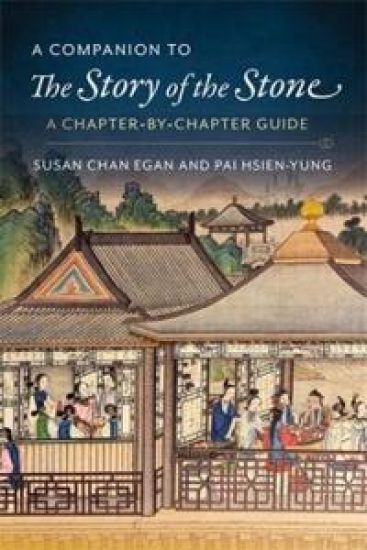
A Companion to The Story of the Stone
Kenneth Hsien-Yung Pai; Susan Chan Egan
Columbia University Press
2021
sidottu
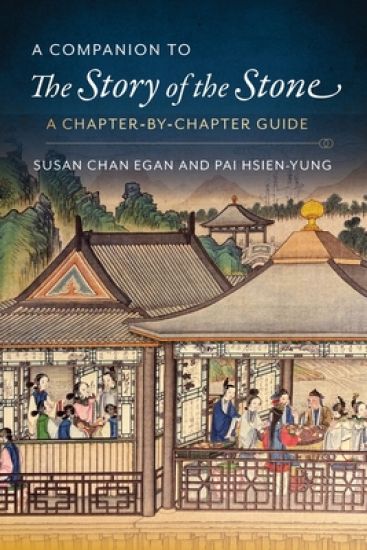
The Story of the Stone (also known as Dream of the Red Chamber) is widely held to be the greatest work of Chinese literature, beloved by readers ever since it was first published in 1791. The story revolves around the young scion of a mighty clan who, instead of studying for the civil service examinations, frolics with his maidservants and girl cousins. The narrative is cast within a mythic framework in which the protagonist’s rebellion against Confucian strictures is guided by a Buddhist monk and a Taoist priest. Embedded in the novel is a biting critique of imperial China’s political and social system.This book is a straightforward guide to a complex classic that was written at a time when readers had plenty of leisure to sort through the hundreds of characters and half a dozen subplots that weave in and out of the book’s 120 chapters. Each chapter of the companion summarizes and comments on each chapter of the novel. The companion provides English-speaking readers—whether they are simply dipping into this novel or intent on a deep analysis of this masterpiece—with the cultural context to enjoy the story and understand its world.The book is keyed to David Hawkes and John Minford’s English translation of The Story of the Stone and includes an index that gives the original Chinese names and terms.
A Companion to The Story of the Stone
Kenneth Hsien-Yung Pai; Susan Chan Egan
Columbia University Press
2021
pokkari
The Story of the Stone (also known as Dream of the Red Chamber) is widely held to be the greatest work of Chinese literature, beloved by readers ever since it was first published in 1791. The story revolves around the young scion of a mighty clan who, instead of studying for the civil service examinations, frolics with his maidservants and girl cousins. The narrative is cast within a mythic framework in which the protagonist’s rebellion against Confucian strictures is guided by a Buddhist monk and a Taoist priest. Embedded in the novel is a biting critique of imperial China’s political and social system.This book is a straightforward guide to a complex classic that was written at a time when readers had plenty of leisure to sort through the hundreds of characters and half a dozen subplots that weave in and out of the book’s 120 chapters. Each chapter of the companion summarizes and comments on each chapter of the novel. The companion provides English-speaking readers—whether they are simply dipping into this novel or intent on a deep analysis of this masterpiece—with the cultural context to enjoy the story and understand its world.The book is keyed to David Hawkes and John Minford’s English translation of The Story of the Stone and includes an index that gives the original Chinese names and terms.

Sex in City Plants, Animals, Fungi, and More
Kenneth D. Frank; Jonathan Silvertown
Columbia University Press
2022
sidottu
Cities pose formidable obstacles to nonhuman life. Vast expanses of asphalt and concrete are inhospitable to plants and animals; traffic noise and artificial light disturb natural rhythms; sewage and pollutants imperil existence. Yet cities teem with life: In rowhouse neighborhoods, tiny flowers bloom from cracks in the sidewalk. White clover covers lawns, its seeds dispersed by shoes and birds. Moths flutter and spiders weave their webs near electric lights. Sparrows and squirrels feast on the scraps people leave behind. Pairs of red-tailed hawks nest on window ledges. How do wild plants and animals in urban areas find mates? How do they navigate the patchwork of habitats to reproduce while avoiding inbreeding? In what ways do built environments enable or inhibit mating?This book explores the natural history of sex in urban bacteria, fungi, plants, and nonhuman animals. Kenneth D. Frank illuminates the reproductive behavior of scores of species. He examines topics such as breeding systems, sex determination, sex change, sexual conflict, sexual trauma, sexually transmitted disease, sexual mimicry, sexual cannibalism, aphrodisiacs, and lost sex. Frank offers a guide to urban reproductive diversity across a range of conditions, showing how understanding of sex and mating furthers the appreciation of biodiversity. He presents reproductive diversity as elegant but vulnerable, underscoring the consequences of human activity. Featuring compelling photographs of a multitude of life forms in their city habitats, this book provides a new lens on urban natural history.

Sex in City Plants, Animals, Fungi, and More
Kenneth D. Frank; Jonathan Silvertown
Columbia University Press
2022
pokkari
Cities pose formidable obstacles to nonhuman life. Vast expanses of asphalt and concrete are inhospitable to plants and animals; traffic noise and artificial light disturb natural rhythms; sewage and pollutants imperil existence. Yet cities teem with life: In rowhouse neighborhoods, tiny flowers bloom from cracks in the sidewalk. White clover covers lawns, its seeds dispersed by shoes and birds. Moths flutter and spiders weave their webs near electric lights. Sparrows and squirrels feast on the scraps people leave behind. Pairs of red-tailed hawks nest on window ledges. How do wild plants and animals in urban areas find mates? How do they navigate the patchwork of habitats to reproduce while avoiding inbreeding? In what ways do built environments enable or inhibit mating?This book explores the natural history of sex in urban bacteria, fungi, plants, and nonhuman animals. Kenneth D. Frank illuminates the reproductive behavior of scores of species. He examines topics such as breeding systems, sex determination, sex change, sexual conflict, sexual trauma, sexually transmitted disease, sexual mimicry, sexual cannibalism, aphrodisiacs, and lost sex. Frank offers a guide to urban reproductive diversity across a range of conditions, showing how understanding of sex and mating furthers the appreciation of biodiversity. He presents reproductive diversity as elegant but vulnerable, underscoring the consequences of human activity. Featuring compelling photographs of a multitude of life forms in their city habitats, this book provides a new lens on urban natural history.
The Republican Party was founded in 1854 to oppose slavery and its spread to new territories and states. Today, under the sway of Donald Trump, it is hardly recognizable as the party of Lincoln or even the party of Eisenhower. How and why has the Republican Party changed so drastically?Kenneth Janda sheds new light on the Republican Party’s transformations, drawing on a wide range of quantitative and qualitative evidence. He examines nearly three thousand planks from every Republican platform since 1856 as well as candidate statements and historical sources, tracing the evolution of the party’s positions on topics such as states’ rights, trade, taxation, regulation, law and order, immigration, environmental protection, and voting rights. Janda argues that the GOP has gone through three main phases over the course of its history, transforming from a party committed to governance to one vehemently opposed to government. In its first several decades, the Republican Party emphasized national authority and economic development. By the late 1920s, Republicans had begun downplaying the role of government in favor of a new philosophy steeped in free markets. The nomination of Barry Goldwater in 1964 marked a key turning point. Since then, the party has endorsed states’ rights, opposed civil rights, and become increasingly ethnocentric. Richly documented with scores of figures and tables, The Republican Evolution offers new perspective on how the GOP became an antigovernment party—and whether it can step back from the brink of authoritarianism.
The Republican Party was founded in 1854 to oppose slavery and its spread to new territories and states. Today, under the sway of Donald Trump, it is hardly recognizable as the party of Lincoln or even the party of Eisenhower. How and why has the Republican Party changed so drastically?Kenneth Janda sheds new light on the Republican Party’s transformations, drawing on a wide range of quantitative and qualitative evidence. He examines nearly three thousand planks from every Republican platform since 1856 as well as candidate statements and historical sources, tracing the evolution of the party’s positions on topics such as states’ rights, trade, taxation, regulation, law and order, immigration, environmental protection, and voting rights. Janda argues that the GOP has gone through three main phases over the course of its history, transforming from a party committed to governance to one vehemently opposed to government. In its first several decades, the Republican Party emphasized national authority and economic development. By the late 1920s, Republicans had begun downplaying the role of government in favor of a new philosophy steeped in free markets. The nomination of Barry Goldwater in 1964 marked a key turning point. Since then, the party has endorsed states’ rights, opposed civil rights, and become increasingly ethnocentric. Richly documented with scores of figures and tables, The Republican Evolution offers new perspective on how the GOP became an antigovernment party—and whether it can step back from the brink of authoritarianism.

What sets Staten Island apart from the rest of New York City? The island’s identity has in part been defined in opposition to the city, its physical and cultural differences, and the perception of neglect by city government. It has long been whiter, wealthier, less populated, and more politically conservative. And despite many attempts over the years, Staten Island is not connected by the subway to any of the other four boroughs.Kenneth M. Gold argues that the lack of a subway connection has deeply shaped Staten Island’s history and identity. He chronicles decades of recurrent efforts to build a rail link, using this history to explore the borough’s fraught relationship with New York City as a whole. The Forgotten Borough ranges from when Staten Island first contemplated joining the city in the 1890s to the opening of the Verrazzano-Narrows Bridge in 1964, highlighting pivotal moments when the construction of a subway appeared possible. The economics and engineering of tunnel construction, the difficulty of uniting Staten Islanders around a single solution, competition from the other boroughs, and resistance from powerful corporations and public authorities all undermined a rapid transit connection. Gold demonstrates that the failure to establish a rail link during this period caused Staten Island to diverge culturally, demographically, and politically from the other four boroughs. Drawing on extensive archival research, The Forgotten Borough shows how transportation infrastructure and politics shed new light on urban history.